9 min read
Major Takeaways
- Dane County District Attorney Ismael Ozanne announced Thursday that no criminal charges will be filed against the Madison officer who shot and killed Corey Ruiz on July 22.
- The prosecutor said the shooting was a reasonable use of deadly force. The family and its lawyer Ben Crump call it excessive force and say the video proves it.
- The medical examiner told the family that Ruiz would have survived if the shot to his head had not been fired.
- No charges will be filed against the other three officers either. The family now looks toward a civil rights lawsuit and a city complaint seeking the officer’s dismissal.
Corey Ruiz was 38 years old. He was a Black father, a son, a brother, and a man his family remembers as a lover of music.
He died on a Madison street in July after an encounter with four police officers. On Thursday, the prosecutor who reviewed the case said no officer will face criminal charges for his death.
For the family, the answer landed like a second loss. For the city, it reopened a wound that never fully healed.
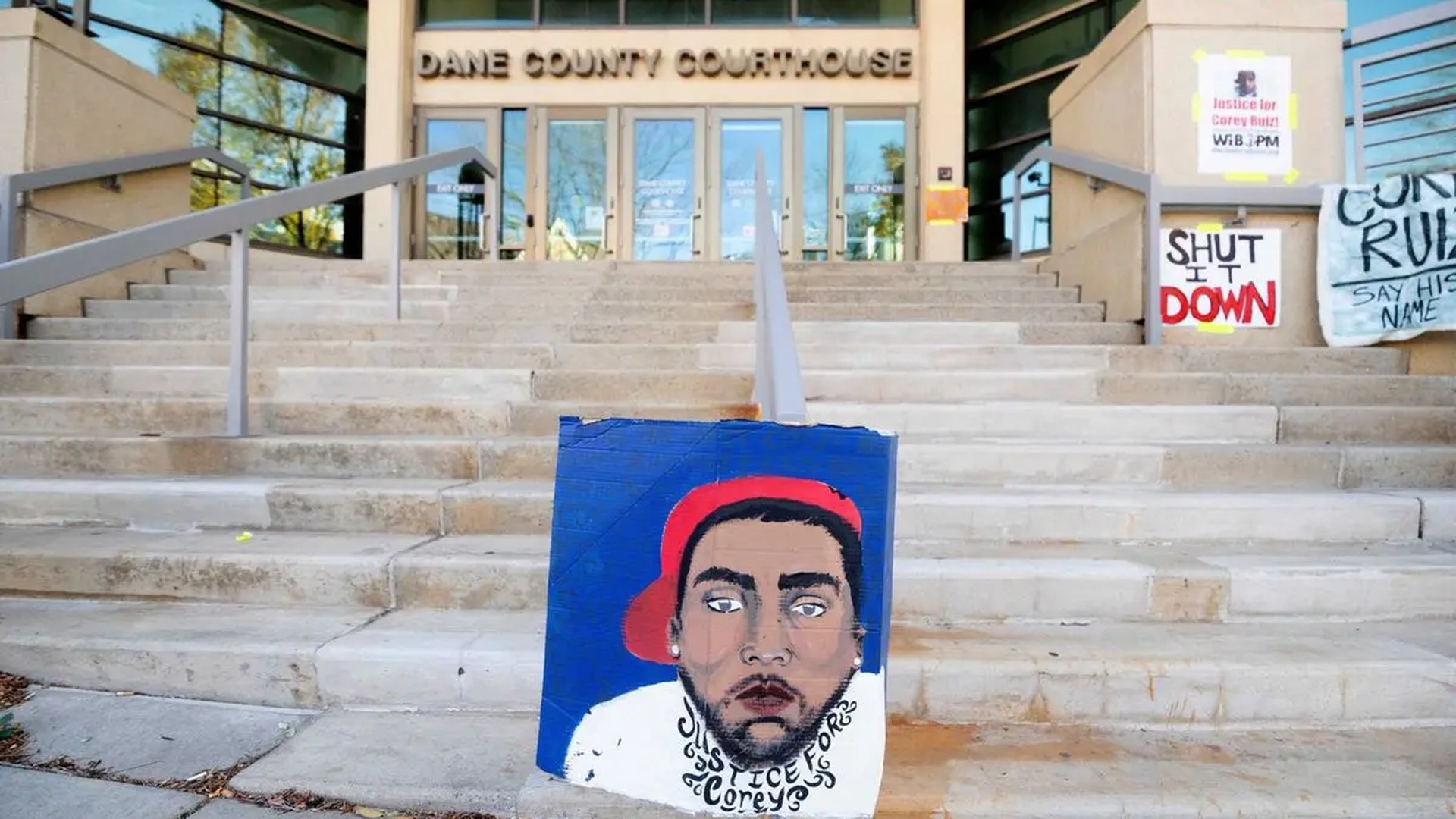
Photo: Angela Major, Wisconsin Public Radio
The Decision Came Thursday Afternoon
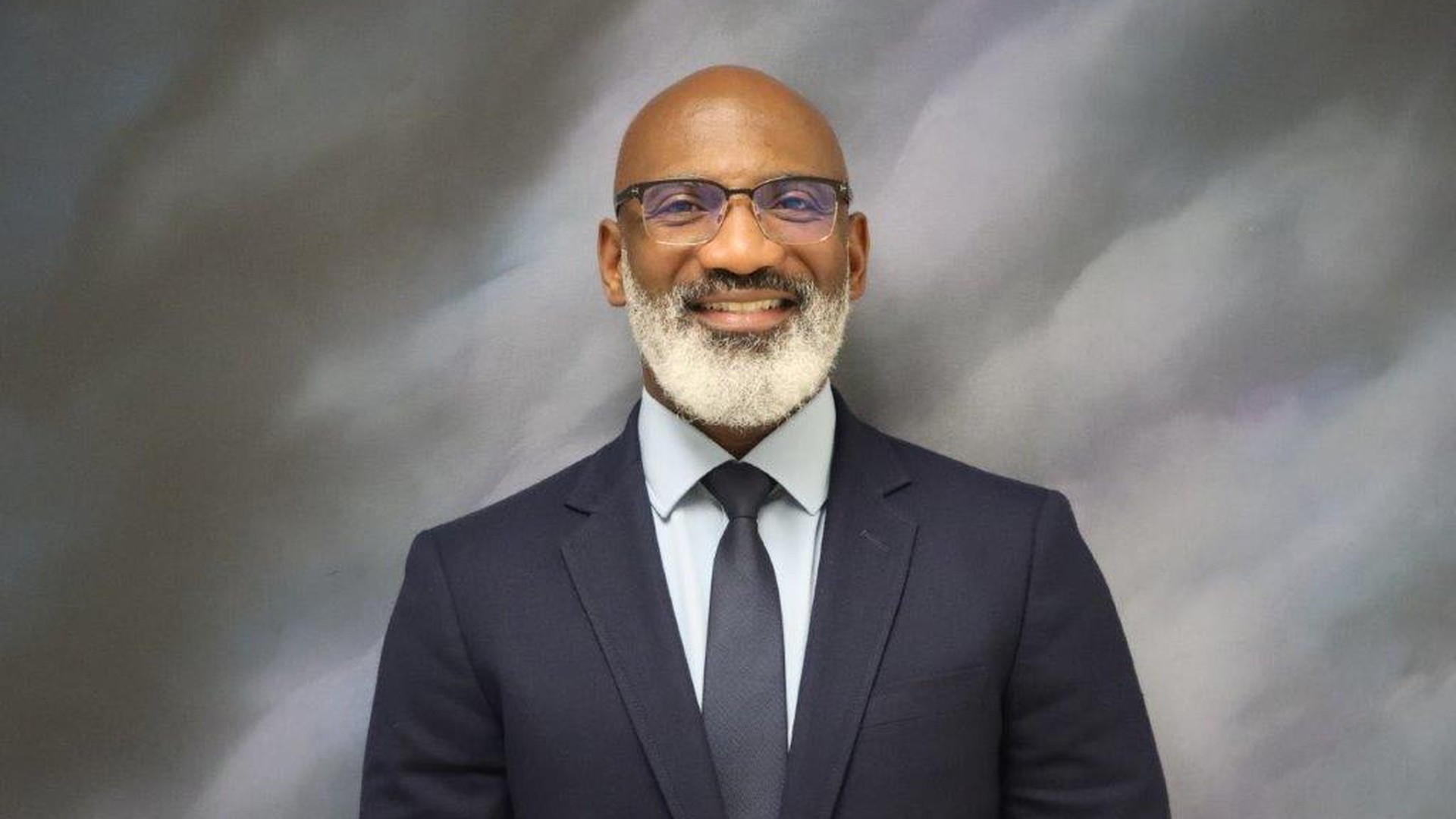
Dane County District Attorney Ismael Ozanne released his decision in a four page statement on Thursday, November 19.
The statement said there is no potential criminal liability for any of the officers involved in the shooting at the intersection of South Baldwin Street and Williamson Street.
Ozanne said the officer who fired the shots acted in self defense. He pointed to three facts. Ruiz resisted officers, produced a knife, and was not stopped by repeated attempts to use Tasers.
“I conclude it was reasonable for the officer to use deadly force when this person resisted officers, produced a knife, and was not affected by multiple attempts to use Tasers while officers attempted to take him into custody,” Ozanne said in the statement.
The prosecutor said he reached the decision after reviewing police reports, diagrams, surveillance video, squad car video, and video recorded by people standing nearby.
There was no body camera video to review. Madison police officers do not wear body cameras.
Ozanne defended his reading of the law in plain terms.
“A person does not have to like and/or agree with the law, however I am sworn to apply the law to the facts at hand,” he said. “The law applies equally to members of law enforcement and to those who are not.”

What Happened On July 22
The encounter began with 911 calls. Callers reported a man checking parked car doors and an attempted burglary of an occupied home.
Officers found Ruiz on a bicycle on the city’s near east side. He rode away when officers approached, and the officers moved to arrest him.
A struggle followed. Investigators said Ruiz produced a fixed blade knife during the struggle and injured the officer.
Two other officers tried to stop him with Tasers. The devices did not stop him. One set of Taser prongs struck his left hand. The other set struck his left side.
Ruiz fell or was taken to the ground just before the shots were fired. The officer fired three times. Two bullets struck Ruiz, one in the torso and one in the head.
He was taken to a hospital, where he died from his injuries.
The four officers involved have been on paid administrative leave since the shooting.
The Wisconsin Department of Justice Division of Criminal Investigation handled the outside investigation required by state law. Its findings reached Ozanne in late September.



The Family Saw The Video First
Before the decision became public, the family met with Ozanne and the county medical examiner on Thursday morning.
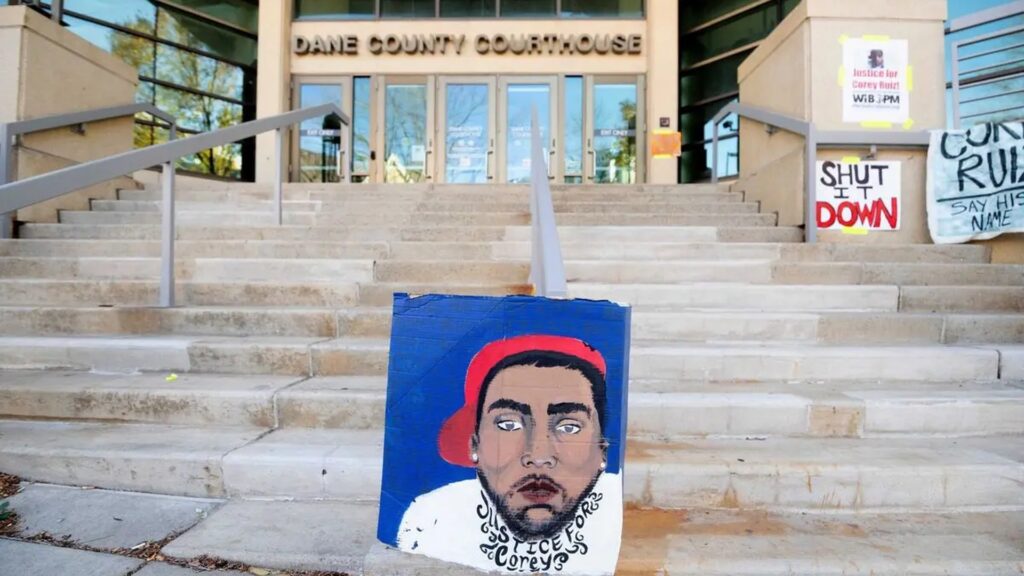
Supporters gathered outside the Dane County Courthouse carrying signs that read Justice for Corey Ruiz. Others gathered at the medical examiner office in McFarland.
Then the family held a news conference at the Center For Black Excellence and Culture in Madison. The room was packed with family, community members, and reporters.
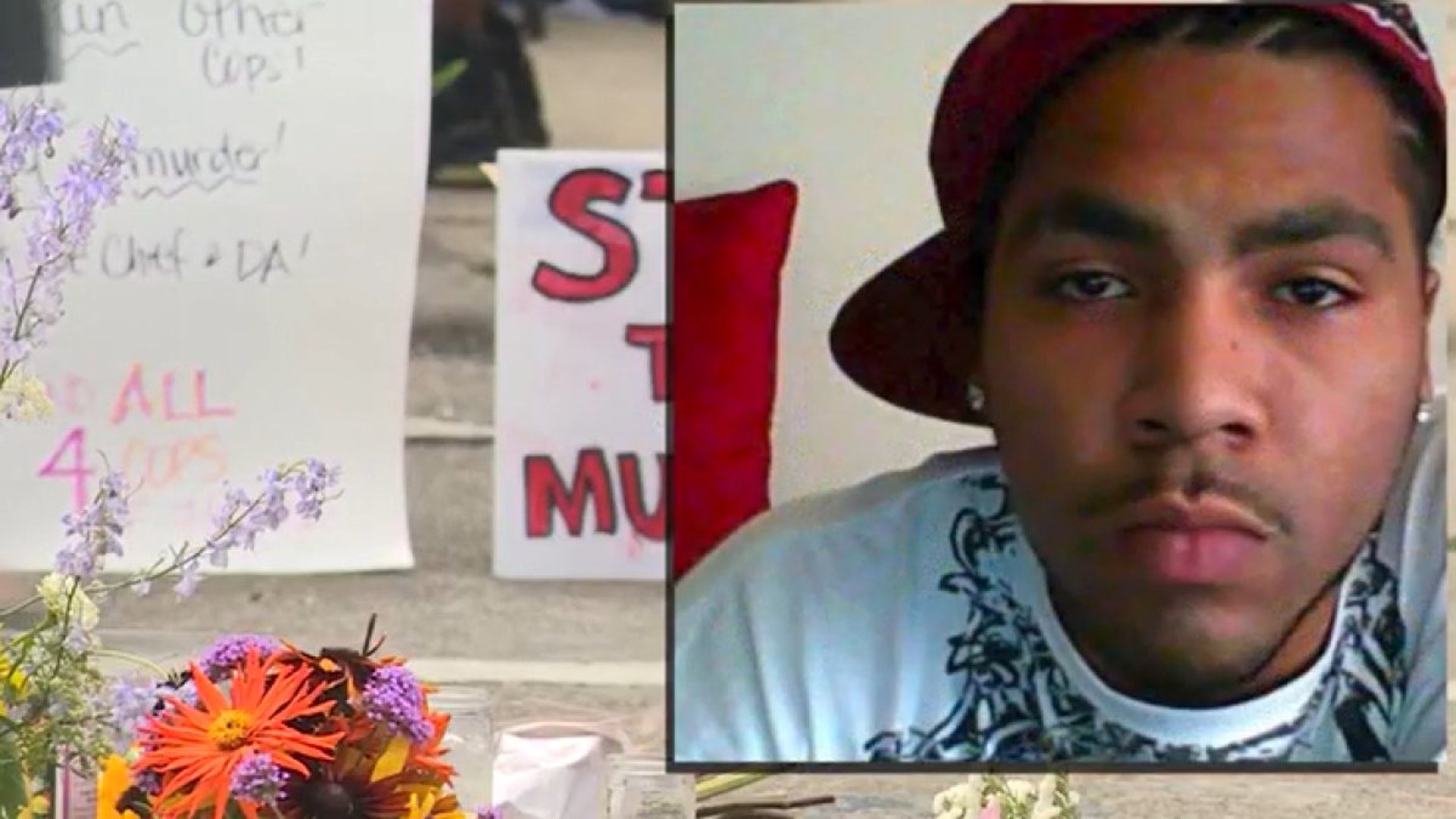
Photo: News 3 Now
Ben Crump, the civil rights attorney who represents the family, said the video the prosecutor showed them changed nothing in his mind.
“There is nothing in the videos the district attorney showed us that justifies this officer stepping back, pulling his gun, and firing three shots at point blank range at Ruiz,” Crump said.
Crump described what he saw in the recordings in blunt terms.
“In the video you see they tackle him, they tase him, they kick him and then the police officer executes him,” he said. “The video is the objective unbiased witness here.”
He called it one of the worst cases of excessive force he has worked on.
The hardest detail came from the medical examiner. Crump said the examiner told the family that Ruiz would have survived if the shot to his head had not been fired.
“The medical examiner told the family that if the officer had not fired that shot to his head, Corey would have survived,” Crump said. “It was clearly an excessive use of force. This police killing in Madison, Wisconsin, was unjustifiable, unreasonable, unnecessary, and unconstitutional.”
When reporters asked about a lawsuit, Crump said his team will explore every possible avenue, including a civil rights lawsuit.
A Family That Refuses To Accept It
Ruiz’s brother Adam spoke through grief at the news conference.
“We’re destroyed,” he said. “We won’t accept this.” He said the prosecutor has mistreated his family.
His mother Elsa spoke about the daily weight of the loss.
“This is so wrong. They have no idea what I have to live with every day, him not being here,” she said. “It hurts so bad.”
His 13 year old daughter Kah’liyah Aliomar put the moment in words no child should have to find.
“Racism is still out there,” she said.
State Senator Kelda Roys of Madison also condemned the decision. She called it a miscarriage of justice and said it was yet another example of a justice system that fails to hold the powerful to account.
State Representative Shelia Stubbs attended the family news conference, along with former interim police monitor Aeiramique Glass.
Madison Has Heard This Answer Before
For many Black residents of Madison, the decision carried a painful echo. The same prosecutor reached the same conclusion in another case that still shapes the city.
In 2015, Ozanne declined to charge Madison officer Matt Kenny in the fatal shooting of Tony Robinson, a 19 year old unarmed Black teenager. He announced that decision on May 12, 2015.
Robinson was shot on March 6, 2015, about a block and a half from where Ruiz died, on the same stretch of Williamson Street. Ozanne called that shooting a lawful use of deadly police force. The city later settled with the family for $3.35 million.
Ruiz was the third person Madison police shot and killed in the same neighborhood since 2012.
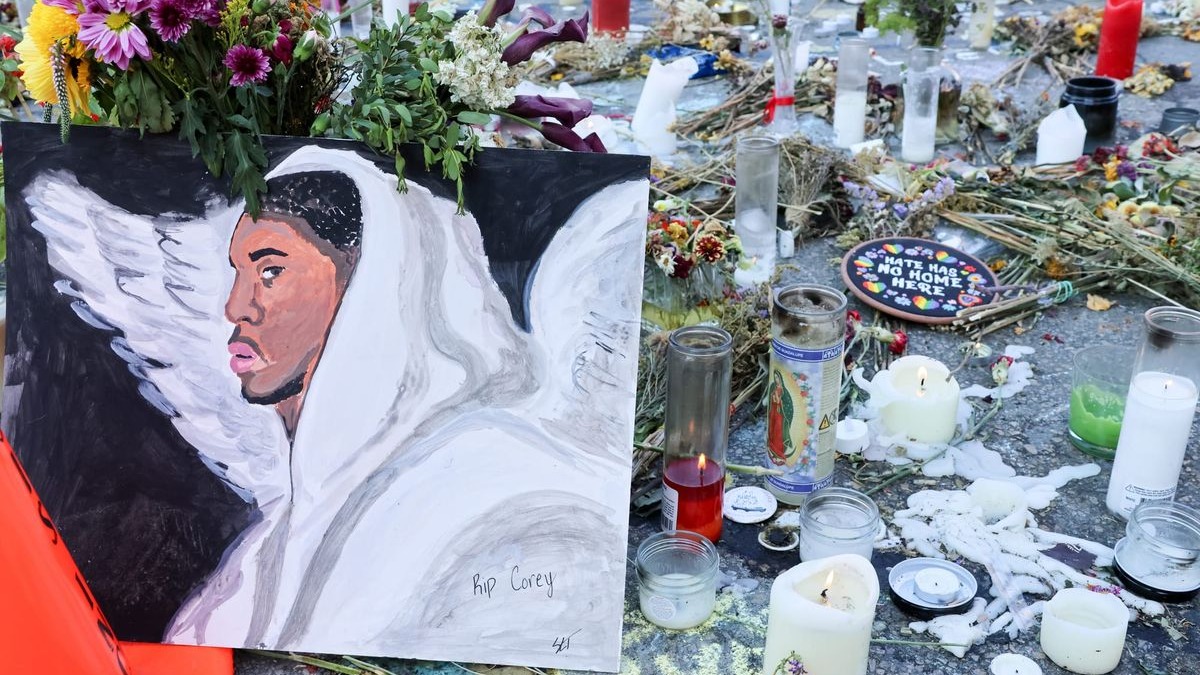
The shooting set off days of protests in July. A memorial grew at the intersection where Ruiz died. It expanded into an encampment with tents, mattresses, and grills that lasted about two weeks before the city cleared it in early August.
Mayor Satya Rhodes Conway said the day after the shooting that the death required a review of department policies. Police Chief John Patterson acknowledged the shooting damaged trust between police and the community.
“It does not matter who you are or what your past is. You should not lose your life as a result of an encounter with law enforcement,” the mayor said at the time.
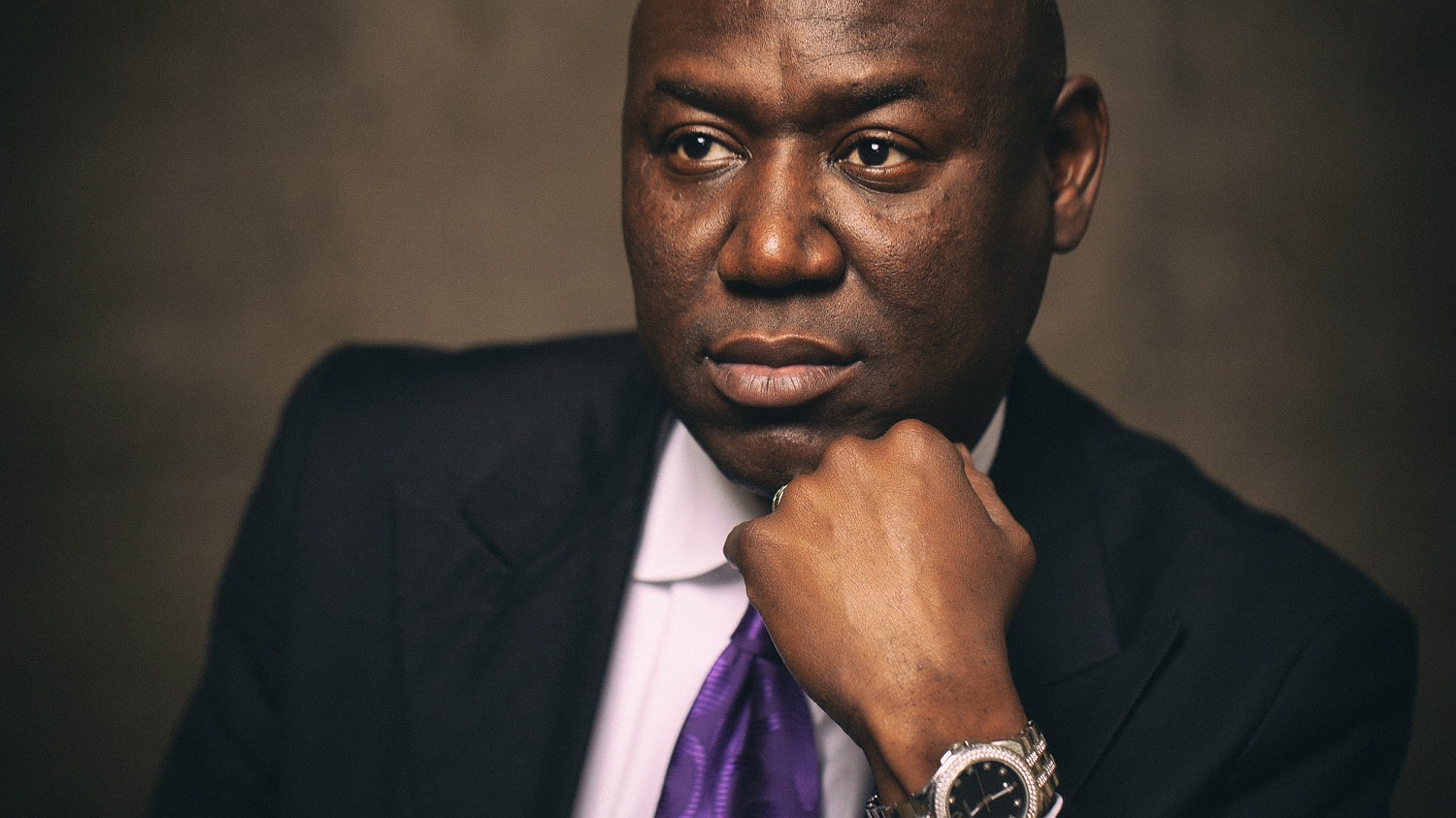
Photo: NBC News
What Changes Now
The decision does not end the fight over what happened on July 22. It moves the fight to other rooms.
Crump said the family will pursue civil action. A community group has also filed a complaint with the Madison Police and Fire Commission seeking the dismissal of the officer who fired the shots.
The complaint alleges violations tied to use of force and professional conduct. It also calls for discipline for the other officers involved in the arrest.
The shooting has already forced one change the community demanded for years. Madison will finally equip its officers with body cameras.
A local nonprofit gave $350,000 toward the program in September. City leaders approved funding in the 2027 budget. All Madison officers could be wearing cameras by the end of 2027.
That change comes too late for Ruiz. The bystander video that exists today came from phones, not from police cameras.
The department faces other questions as well. Chief Patterson announced in late October that two professors from the University of South Carolina will examine the department’s use of force recommendations. That review begins in January 2027.
The police union backed the prosecutor. Jim Palmer, executive director of the Wisconsin Professional Police Association, said the decision that the use of deadly force was legally justified is supported by the evidence and consistent with the legal standards that govern the use of force.
Meanwhile, a separate dispute still hangs over the case. Green Bay police previously recommended charges against Glass after a confrontation with Madison officers at a protest site near the shooting. Ozanne has not announced a decision in that matter.
Glass was removed from her monitor role in October by a 14 to 6 council vote. The Police Civilian Oversight Board then named former City Alder Rebecca Kemble as interim monitor, a move the city attorney’s office disputes.
Why This Decision Matters
Charging decisions in police shootings are where trust is built or broken. Families watch them. Neighborhoods remember them.
Madison is a city where Black residents have long said policing feels different for them than it does for their white neighbors. Two no charge decisions on the same street, eleven years apart, will deepen that feeling for many.
The prosecutor says the law left him no other choice. The family says the video leaves no doubt about what happened. Both sides cannot be right in the eyes of the community, and the community will judge for itself.
What is certain is that Corey Ruiz is gone, his family is grieving in public, and the questions raised by his death are still unanswered.
Body cameras are coming. A civil case is coming. A city review is coming. None of that brings back a father who loved music and whose daughter is now 13 years old and telling reporters that racism is still out there.
That is the part of this story that will stay with Madison long after the headlines fade. Read our earlier report on the decision the family awaited this morning in Madison To Decide Today Whether To Charge Corey Ruiz Officer, and keep up with the latest in our News section on Urban City Podcast.