8 min read
Bayard Rustin ran the most famous march in American history, and most of America never learned his name.
On August 28, 1963, about 250,000 people filled the National Mall in Washington.
They came for jobs and freedom, and they came because Rustin had spent eight weeks making it possible.
Dr. Martin Luther King Jr. gave his great speech that day, and the cameras found him.
Rustin stood nearby, reading the program and watching the clock, doing the work he had done for twenty years.
He was the chief organizer, the deputy director, and the man who made the trains run on time.
History remembered the speech. It forgot the organizer who built the stage.
Major Takeaways
- Bayard Rustin organized the 1963 March on Washington for Jobs and Freedom in less than three months.
- He helped to found the Congress of Racial Equality and led the first Freedom Ride in 1947.
- He taught Dr. King the practice of nonviolent resistance and helped to shape the Montgomery movement.
- He was pushed aside because he was openly gay, and his honor arrived decades after his death.
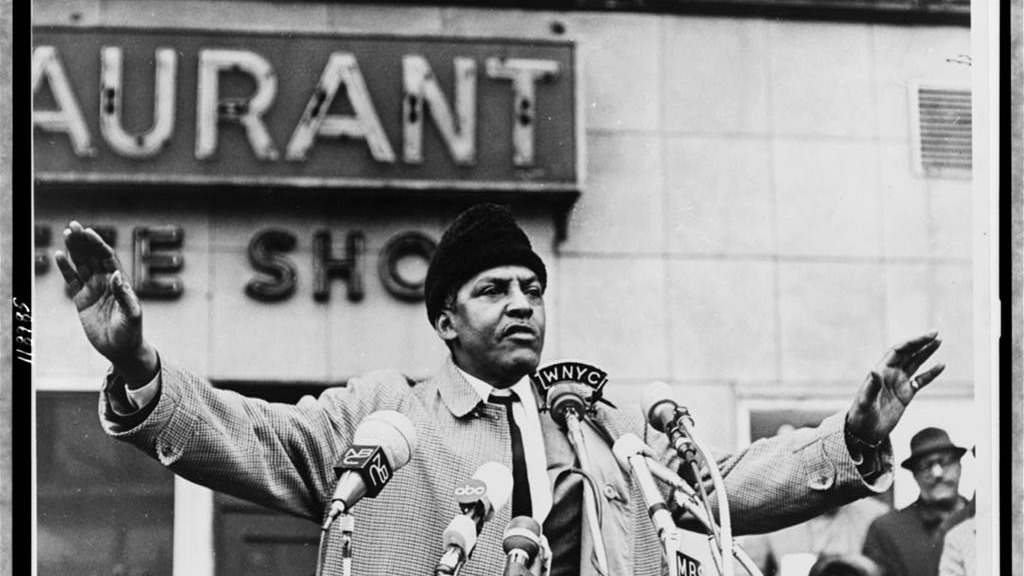
Photo: Stanley Wolfson, World Telegram and Sun, Library of Congress
A Quaker Childhood in West Chester
Bayard Rustin was born on March 17, 1912, in West Chester, Pennsylvania.
He was raised by his grandparents, Janifer and Julia Rustin, in a Quaker home.
His grandmother was a member of the NAACP, and the house ran on Quaker discipline.
Plain speech, direct action, and respect for every person were the rules of that home.
Rustin later said his activism grew from those Quaker values, not only from being Black.
He believed in one human family, and racial injustice was a challenge to that belief.
He attended Wilberforce University, Cheyney State Teachers College, and City College of New York.
He never finished a degree, but he finished his education in meeting halls and on picket lines.
He first joined a labor fight in 1933, on a picket line outside a New York restaurant chain.
Police beat the demonstrators with clubs and carried them off to jail that day.
Rustin stayed on the line. He had found his calling in the open, in public, with his body.
Bayard Rustin Tested Nonviolence on the Road
In 1941, labor leader A. Philip Randolph hired Rustin to lead the youth wing of a planned march on Washington.
That march never happened, but the partnership lasted for the rest of their lives.
Randolph taught Rustin that jobs and freedom were one fight, not two.
In 1942, Rustin helped to found the Congress of Racial Equality, known as CORE.
CORE believed in direct action, not only in court cases and polite letters.
Its members put their bodies where the wheels turned, and made injustice unworkable.
In April 1947, Rustin led the Journey of Reconciliation, the first Freedom Ride.
Eight Black men and eight white men rode buses together through Virginia, North Carolina, Kentucky, and Tennessee.
They tested a Supreme Court ruling that had struck down segregation in interstate travel.
Rustin was arrested for refusing to move to the back of a bus in North Carolina.
He served 22 days on a chain gang for breaking the Jim Crow laws of that state.
He took the punishment openly, believing that nonviolence could change the hearts of his jailers.
During World War II, Rustin refused military service as a conscientious objector.
He was convicted in 1944 and served time in prison for that refusal.
Behind bars he organized other prisoners and pressed for integrated cells.
He later traveled to India to study the nonviolent methods of Mahatma Gandhi.
He brought those lessons home, and they became the playbook of the movement.
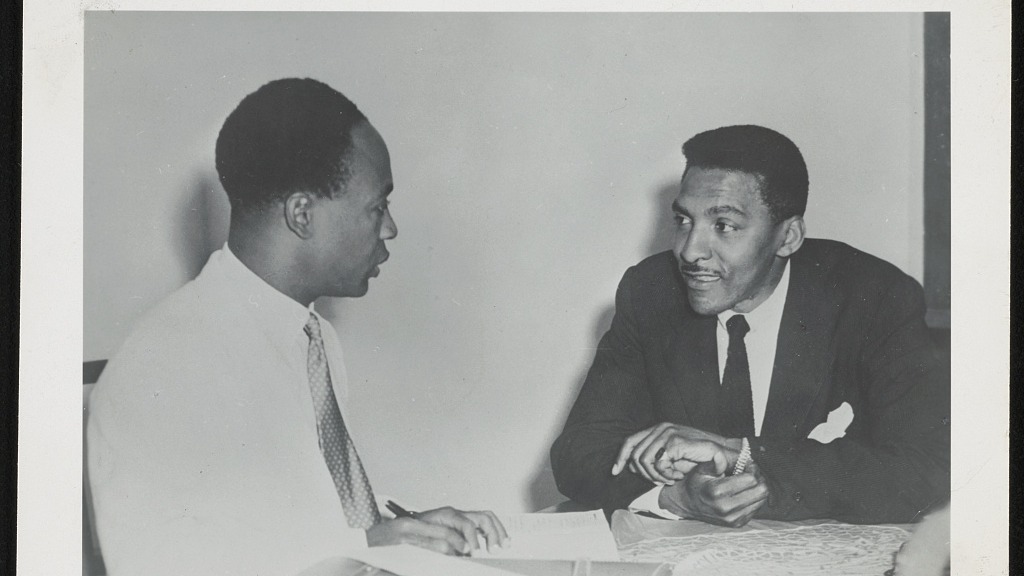
Photo: Library of Congress


The Mentor Behind Dr. King
In 1956, Rustin traveled to Montgomery, Alabama, to advise a young minister named Dr. Martin Luther King Jr.
King led the bus boycott there, but he had little experience in organizing a movement.
Rustin became his teacher in the practice of nonviolent resistance.
He showed King how to turn a protest into a disciplined campaign with a clear goal.
He also helped to build the Southern Christian Leadership Conference, the organization King led.
Rustin staged three marches on Washington before 1963, in 1957, 1958, and 1959.
Each one taught him something about moving large crowds without losing control.
By 1963, he was the most skilled organizer in the civil rights movement.
He was also the most damaged by it, because the movement kept pushing him out of sight.
Our feature on Septima Clark and her citizenship schools tells the story of another teacher the movement depended on.
The Price of Being Openly Gay
Rustin never hid that he was gay, and in his time that honesty carried a heavy price.
In January 1953, police in Pasadena, California, arrested him on a morals charge.
He was sentenced to 60 days in jail and ordered to register as a sex offender.
The Fellowship of Reconciliation, his employer for more than a decade, fired him within weeks.
Movement leaders who loved his work feared his arrest would be used against them all.
They kept him off the stage and out of the photographs, even as they used his plans.
The War Resisters League hired him next, and gave him room to keep working.
Rustin paid for his openness with his reputation, and he paid it without apology.
He once said that he had to be true to himself, because a movement built on lies could not stand.
That same honesty is why Black gay men and women today can claim him as their own.
His life proves that the fight for freedom was never only about one kind of justice.
Eight Weeks to Move a Quarter Million People
In late 1961, Randolph and Rustin began planning a march on Washington for jobs and freedom.
Randolph was the director. Rustin was the deputy who ran the whole operation.
The march was organized in less than three months, from the first call to the final day.
Rustin coordinated a staff of more than 200 activists and organizers.
He planned the marshals, the sound system, the buses, the trains, and the portable toilets.
He wrote an organizing manual that gave every local group the same talking points and logistics.
He expected more than 100,000 people to attend. The final count was about 250,000.
About 190,000 were Black and about 60,000 were white, marching together on the Mall.
Speaker after speaker roused the crowd, and Dr. King closed the day with his dream speech.
The march pressed for a civil rights bill and for jobs that paid a living wage.
The Civil Rights Act became law the next year, in 1964, and the march had helped to push it through.
None of it happens without the man who counted the buses and trained the marshals.
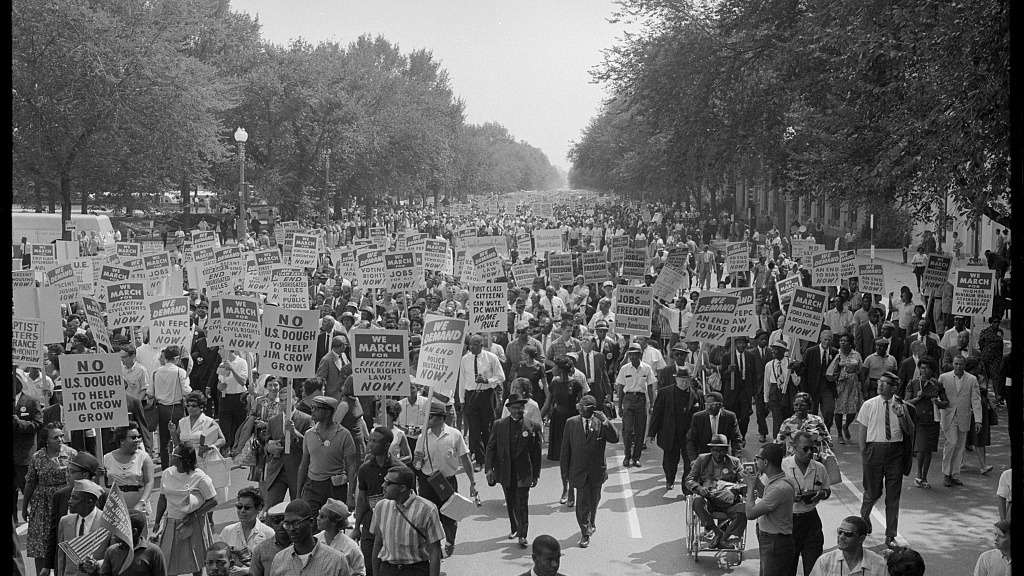
Photo: Library of Congress
The Honor Arrived Decades Later
After 1963, Rustin turned his talents toward labor and human rights around the world.
He led the A. Philip Randolph Institute as its first president from 1965 to 1979.
He worked as a human rights monitor for Freedom House in the 1970s and 1980s.
He testified in favor of a gay rights bill in New York State, in public and on the record.
He died in New York City on August 24, 1987, from a ruptured appendix. He was 75 years old.
His partner of ten years, Walter Naegle, kept his papers and kept his name alive.
On November 20, 2013, President Barack Obama awarded Rustin the Presidential Medal of Freedom.
Naegle accepted the medal at the White House, fifty years after the march.
In February 2020, California Governor Gavin Newsom pardoned Rustin for his 1953 conviction.
Newsom said Rustin had been criminalized because of stigma, bias, and ignorance.
In 2022, a court in North Carolina vacated his 1947 chain gang conviction as well.
The record finally caught up with the man, thirty five years after his death.
Why Bayard Rustin Matters Now
Every protest you see today runs on the lessons Rustin wrote down in 1963.
Somebody has to book the buses, train the marshals, and write the plan.
Somebody has to connect the jobs fight to the freedom fight, because they are the same fight.
Rustin knew that a march without a demand is only a parade, and he always had a demand.
His life also asks a hard question of every movement that claims to fight for all of us.
Who gets pushed to the back of the room while their work carries the day?
Black gay organizers, Black women, and Black workers have carried this movement from the start.
Rustin stood at the crossing of all three, and the movement asked him to hide who he was.
He refused, and he organized anyway, and the march still happened on time.
That is the lesson to carry into the next march, the next vote, and the next fight.
Read more about the leaders who built this movement in our feature on Shirley Chisholm and the doors she forced open.
Read more Black history and news in our own voice at Urban City Podcast.
Bayard Rustin built the march. It is past time we said his name when we tell the story.