6 min read
Major Takeaways
- An Erie jury acquitted Pennsylvania state parole agent Kevin Seelinger of all charges in the fatal shooting of Marchello Woodard, a 43 year old Black man.
- The July 2025 shooting during a compliance check sparked protests in Erie and became a focal point for the Black Lives Matter movement in the region.
- District Attorney Elizabeth Hirz urged calm and restraint while supporters outside the courthouse shouted for justice for Woodard, known to many as Chello.
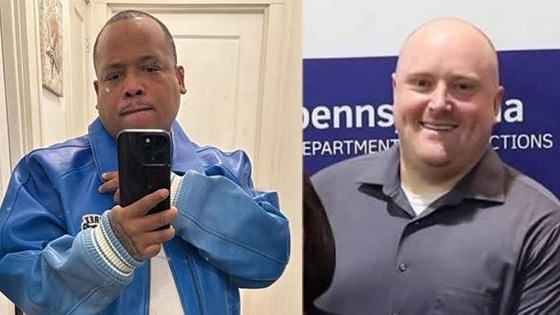
Marchello Woodard, left, and Pennsylvania state parole agent Kevin Seelinger. Photo: Black News
An Erie parole agent acquitted of every charge walked out of court a free man on Wednesday, October 14. Pennsylvania state parole agent Kevin Seelinger, 36, learned his fate at 12:18 p.m. when the verdict was read in the Erie County Court of Common Pleas.
The jury of seven men and five women deliberated for about eight hours and 15 minutes across two days. The panel cleared Seelinger of first degree murder, third degree murder, voluntary and involuntary manslaughter, aggravated assault and recklessly endangering another person.
About 80 spectators watched the verdict land. Gasps and shouts filled the courtroom. Outside the courthouse, Woodard supporters protested. Justice for Chello, they shouted, using Woodard’s nickname. Court and county officials closed the courthouse about two hours later as a precaution.
The Night Chello Died
The shooting happened at about 9:45 p.m. on July 2, 2025. Seelinger approached Woodard’s car in the 400 block of East 27th Street in Erie during a compliance check.
Woodard, 43, sat behind the wheel of a white Buick across the street from his girlfriend’s house. Seelinger fired three rounds from his department issued Glock 45 9mm pistol.
State police found Woodard’s Buick rolling at low speed near East 27th and German streets. Officers discovered Woodard in obvious medical distress and unresponsive.
He was pronounced dead at UPMC Hamot at 10:08 p.m. The Erie County coroner ruled the death a homicide caused by multiple gunshot wounds to the chest.
Two Stories, One Courtroom
The defense argued that Seelinger acted in self defense. Seelinger testified that he shot Woodard to keep from being run over while he hung onto the driver’s side door of the moving car.
He told the jury he was terrified that he would be seriously hurt or killed. The defense said Woodard was trying to flee to avoid a parole violation.
In a striking twist, a use of force expert with the Pennsylvania State Police testified for the defense, not the prosecution. Cpl. Kevin Selverian said Seelinger acted properly and followed department policy.
Prosecutor Elizabeth Hirz told a very different story. She argued that Seelinger shot Woodard immediately after approaching the car, then grabbed the driver’s side door only after Woodard drove away while mortally wounded.
One of the three shots hit Woodard in the back and pierced his lungs and aorta, Hirz told the jury. She cited Pennsylvania law that lets jurors infer intent from the intentional use of a deadly weapon on a vital part of the body.
Woodard was on parole in a gun and cocaine case, and investigators found cocaine in his pocket and in his system. Hirz urged the jury not to focus on Woodard’s background. She closed with a line that now echoes far beyond Erie. The law protects people because they are people, not because they are perfect, she said.
A Community Reacts
Woodard’s death, and the fact that Woodard was Black, led to protests in Erie. Many demonstrators connected the case to the Black Lives Matter movement, and Woodard’s family pushed hard for a murder charge.
After the verdict, District Attorney Hirz said her office respects the jury’s verdict. She also urged calm in a moment she called difficult and deeply significant for the community.

Erie County District Attorney Elizabeth Hirz, who led the prosecution and urged calm after the verdict. Photo by Joel Natalie, TalkErie.com
Violence, threats, or acts of retaliation are not acceptable responses to this verdict, she said. Her office urged everyone to respond with restraint and respect for the law.
The Fraternal Order of Police welcomed the outcome. Thomas Wines, executive director of FOP Lodge 92 in Philadelphia, said the union was grateful for the verdict. The lodge represents Pennsylvania state parole agents.
Seelinger had been held in prison with no bond set since his arrest in December. He was released from custody and left the courthouse after the verdict. His lead lawyer, Chad Vilushis, said Seelinger will not be commenting at this time.
What This Means for Black America
For Black communities, verdicts like this one land inside a long and painful pattern. Cases involving state agents and Black victims too often end with no conviction, and each one chips away at trust in the system.
There was no body camera footage here. State parole agents were not outfitted with body cameras at the time of the shooting. A surveillance video showed only part of the encounter, leaving the jury to weigh two competing stories.
That gap is exactly why transparency matters. When the public cannot see what happened, faith in the outcome depends on faith in the process. In Erie, that faith was already thin.
Earlier today, Urban City Podcast reported that the NAACP opened a legal hub as the DOJ sends 1,000 election monitors across the country. Black communities keep organizing to protect their rights in a system that too often feels uneven.
A court ruling upholding a Tennessee voting map that cracks Black Memphis shows how courtrooms keep shaping Black life in America, from the ballot box to the streets of Erie.
Woodard’s son, Woodard Jones, created Marchello Woodard Legacy Day to turn loss into community action. The event at Veterans Memorial Stadium focused on resources, financial literacy and career pipelines for young people.
That work continues no matter what a jury decides. But for a grieving family and a community that took to the streets, Wednesday’s verdict will not feel like closure.
Accountability does not end in a courtroom. It lives in policies, in cameras, and in who gets the benefit of the doubt. Erie now has to decide what comes next. As Black candidates across the South seek historic wins on November 3, the fight for a justice system that protects everyone continues on every front.