4 min read
President Donald Trump announced Thursday that he has given a complete and total pardon to Pete Rose, the hits leader in baseball history, more than two years after Rose died and one year after baseball lifted the lifetime ban that kept him out of the Hall of Fame conversation for three decades.
“I have just given a Complete and Total Pardon to the Late, Great Pete Rose, a true Baseball SUPERSTAR & LEGEND, whose record of 4,256 Hits in a Season will never be broken,” Trump wrote in the post. The 4,256 hits are a career total, gathered across 24 seasons. No player in history has more.
A presidential pardon reaches federal crimes, and Rose has exactly one on his record. On April 20, 1990, he pleaded guilty to two counts of filing false tax returns, admitting he failed to report $354,968 in income across four years, money from memorabilia sales and gambling winnings between 1984 and 1987. He served five months in a federal prison. That conviction is what the pardon wipes away.
The ban itself was never a crime. In 1989, after an investigation concluded that he bet on baseball games while managing the Cincinnati Reds, Rose accepted a permanent place on the ineligible list. He spent the rest of his life insisting he bet only on his own team to win, and he applied for reinstatement again and again. Commissioner after commissioner said no.

Rose died in September 2024 at age 83, still on the outside. In May 2025, Commissioner Rob Manfred removed Rose and several other deceased players from the permanently ineligible list, ruling that the ban ends at death. The decision opened a path to Cooperstown that had been closed for 36 years.
The pardon does not finish that journey. The Baseball Hall of Fame runs its own process, and a presidential pardon carries no vote there. Rose would go before the Era Committee, and the earliest he could be inducted is 2028. In his post, Trump argued that Rose, like Roger Clemens, was treated terribly by Major League Baseball and kept out of the Hall.
Thursday closed a promise Trump made in March 2025, when he wrote that he would sign a complete pardon of Pete Rose in the weeks ahead. He met with Manfred the following month. Asked about it again at the White House earlier this month, he returned to the same complaint, that the commissioner agreed and then waited until Rose died. “But I would give Pete Rose a pardon, I would do that,” he said.
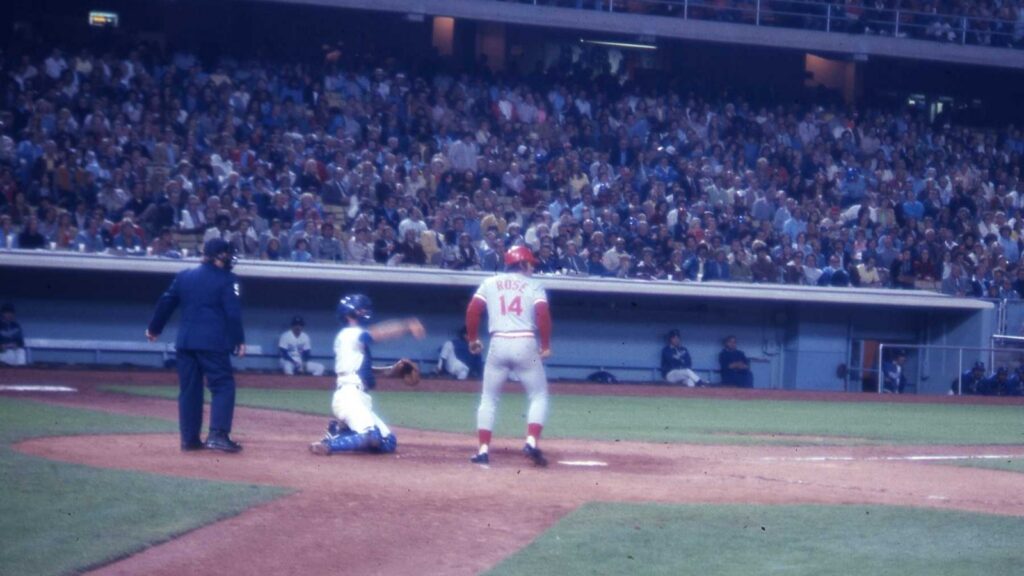
The playing record was never the argument. Rose collected 4,256 hits and played 3,562 games, both records that still stand. He batted .303, made 17 All Star teams, won three World Series titles, the 1973 National League MVP award and the 1975 World Series MVP award, and he remains the defining figure of the Big Red Machine teams that ruled the National League in the 1970s.
For generations of fans, the Rose argument has always been about what a game owes a flawed man who gave it everything except honesty at the one moment it demanded it. Fans who watched Charlie Hustle remember the headfirst slides and the sprint to first base on a walk. Others remember that the rule he broke is the one rule baseball treats as sacred, the rule written after the 1919 Black Sox scandal threw a World Series. Both memories are true at once, and the sport has never learned how to hold them together.
What Thursday changed is the paper. The criminal record is cleared, the ban is already lifted, and the only door left stands in Cooperstown, where voters will decide, no earlier than 2028, whether Pete Rose belongs. Every step of his redemption has arrived after the funeral. Whether the last one arrives at all is now out of the President’s hands. Follow the debate in our Sports coverage and the rest of the day’s stories in News.
Major Takeaways
• Trump announced a complete and total pardon for Pete Rose on Thursday, more than two years after Rose died at age 83.
• The pardon clears the 1990 federal tax conviction, the only crime on Rose’s record. The baseball ban was a league ruling, not a criminal case.
• Commissioner Rob Manfred lifted the ban in May 2025, opening a Hall of Fame path that runs through the Era Committee.
• The earliest Rose could enter Cooperstown is 2028, and the pardon itself carries no weight in that vote.