
8 min read
Major Takeaways
- Representative Haley Stevens endorsed Republican Mike Rogers on Sunday, two days before Election Day, over Democratic nominee Abdul El Sayed.
- Stevens made the move at Perfecting Church in Detroit, the Black church ground where this Senate race will be decided.
- Democratic leaders closed ranks behind El Sayed, and the state party said Stevens is no longer a member.
- A final major poll put El Sayed ahead 53 to 42, but that survey closed before the endorsement landed.
The Michigan Senate race blew wide open on Sunday afternoon.
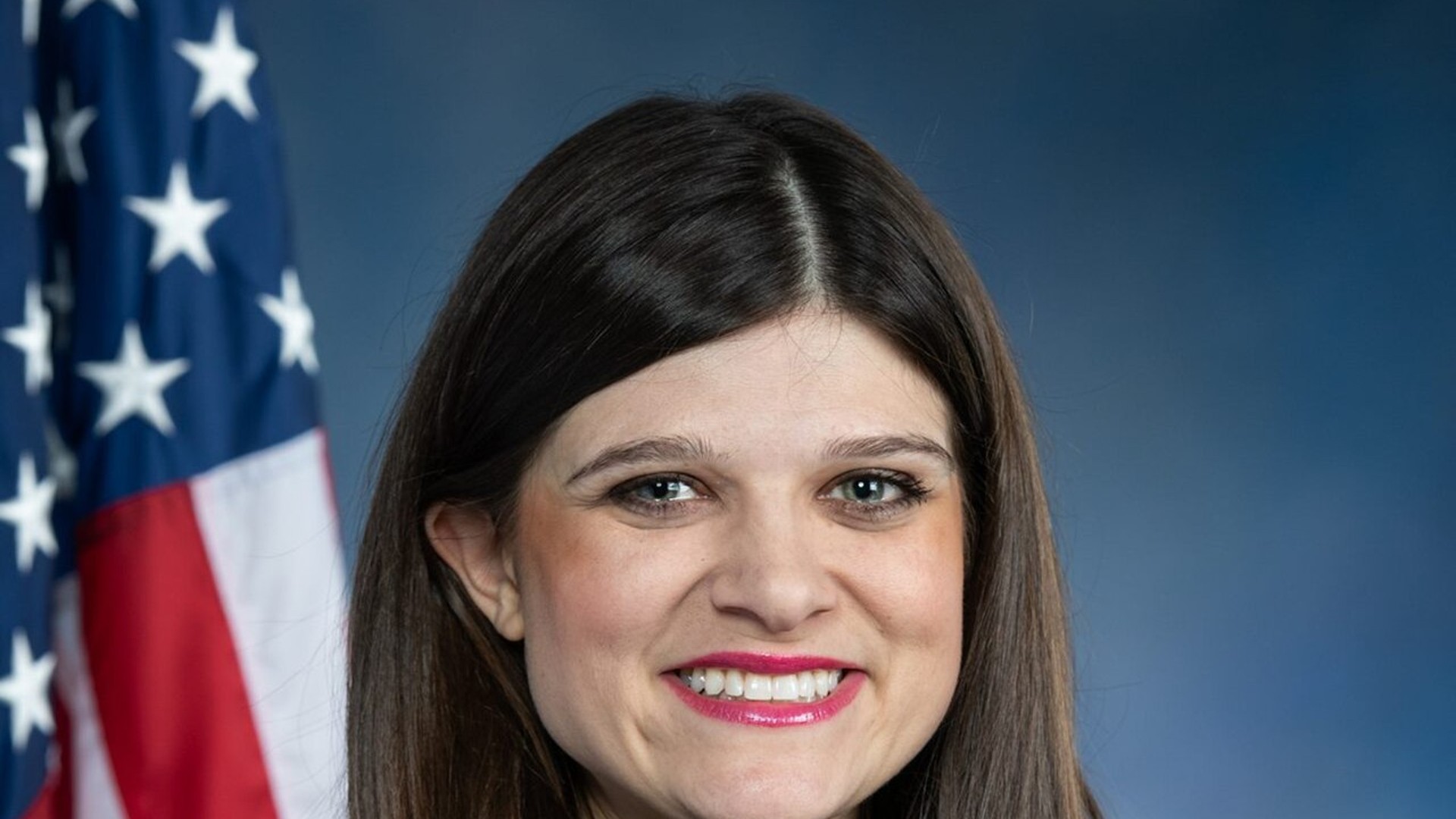
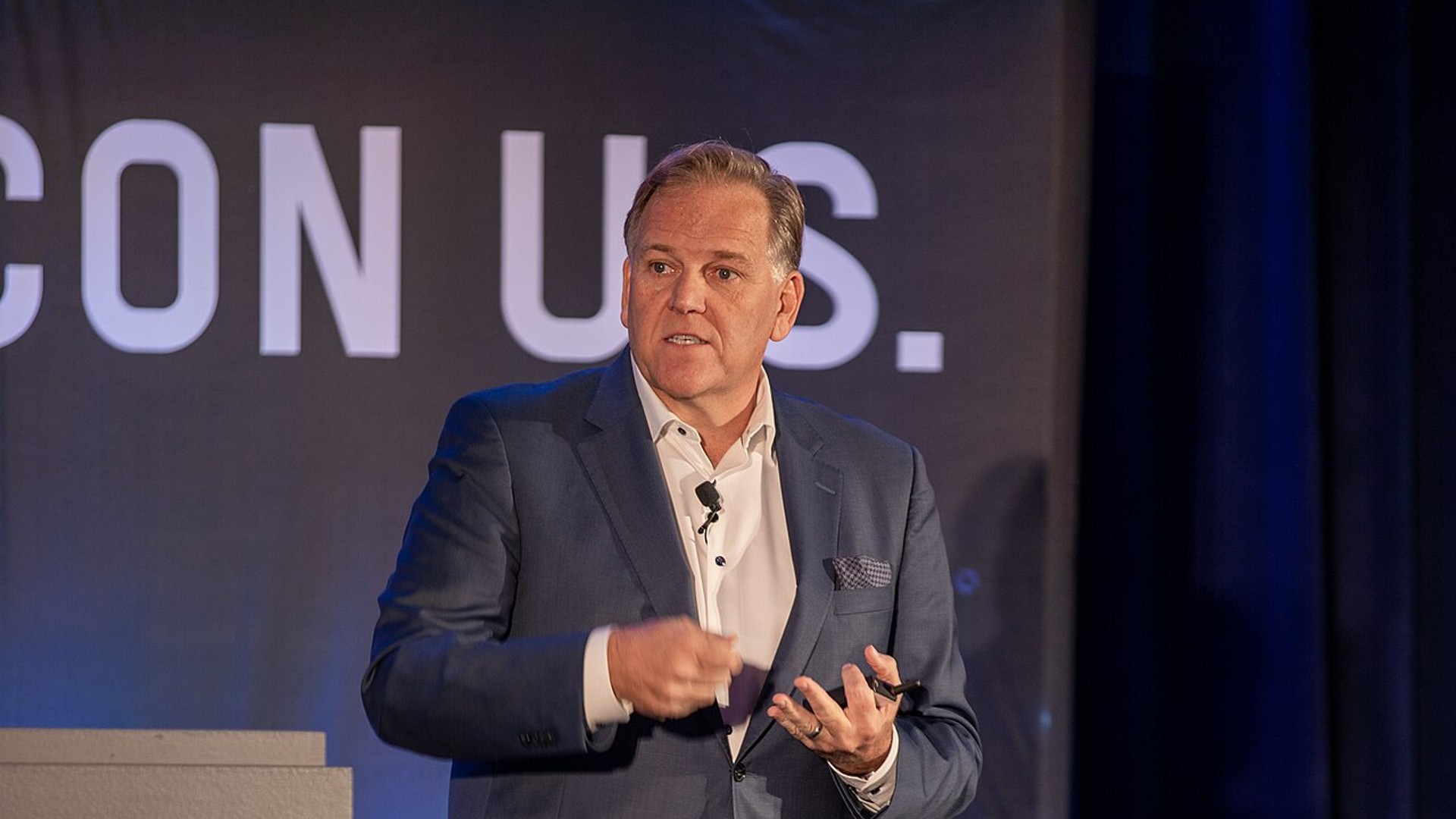
Representative Haley Stevens, a Democrat, endorsed Republican Mike Rogers for the United States Senate.
She passed over Abdul El Sayed, the nominee of her own party.
Stevens lost to El Sayed in the August 4 Democratic primary.
She had promised for months to help him win this seat.
Instead, she spent Sunday at Perfecting Church on the east side of Detroit.
She sat with Rogers and his wife during the service, her fiance beside her.
Hours later, she posted a video filmed in her car.
She said the nominee had told her she was no longer welcome in his campaign and should stay away.
“And he is right,” she said. “That is why I am endorsing Mike Rogers for the United States Senate today. I don’t belong in Abdul’s campaign.”
She called the choice the conscience of the Senate and a Michigan moment.
Rogers then stood beside her at a news conference.
“Candidly, I’m glad I’m not running against Haley Stevens today,” Rogers said.
Michigan Senate Race Blown Open by a Broken Promise
The break stunned Democrats because it reversed a public promise.
On August 5, one day after the primary, Stevens warned that Donald Trump and Mike Rogers wanted Democrats to come out of that primary tired and divided.
“I’m not going to let that happen,” she said then.
The two rivals had not campaigned together in months.
In late October, her fiance Jason Turkish announced he would vote for Rogers and appeared at an event with him.
Stevens answered that her household was divided and that she still planned to support El Sayed.
Representative Debbie Dingell then helped arrange a joint church appearance for Sunday, with Representative Jim Clyburn of South Carolina set to join them.
Readers saw that unity plan take shape in our reporting on the Detroit unity push just last week.
That plan collapsed on Friday, October 30.
Stevens demanded that El Sayed condemn an outside group ad that tied the cost of living to aid sent to Israel.
She also wanted an apology for his own words about that funding.
His campaign answered that it had nothing to do with the ad.
El Sayed accused Stevens of relitigating the primary she lost.
His team then asked her to stay away from the final campaign events.
As recently as Friday, Stevens said she would vote for El Sayed.
Representative Jamie Raskin said she told him the same thing on Saturday night, that she planned to vote for the full Democratic ticket.
After the announcement, Raskin said he was “dumbfounded that Haley told me one thing last night and changed her mind today.”
On television Sunday night, Stevens said the decision lifted a weight off her shoulders.
She said El Sayed had grown angrier and angrier, and that she woke up Sunday focused on what was in her heart.
Her longtime chief of staff Justin German resigned ahead of the endorsement, along with many members of her team.
Democrats Close Ranks as Trump Cheers
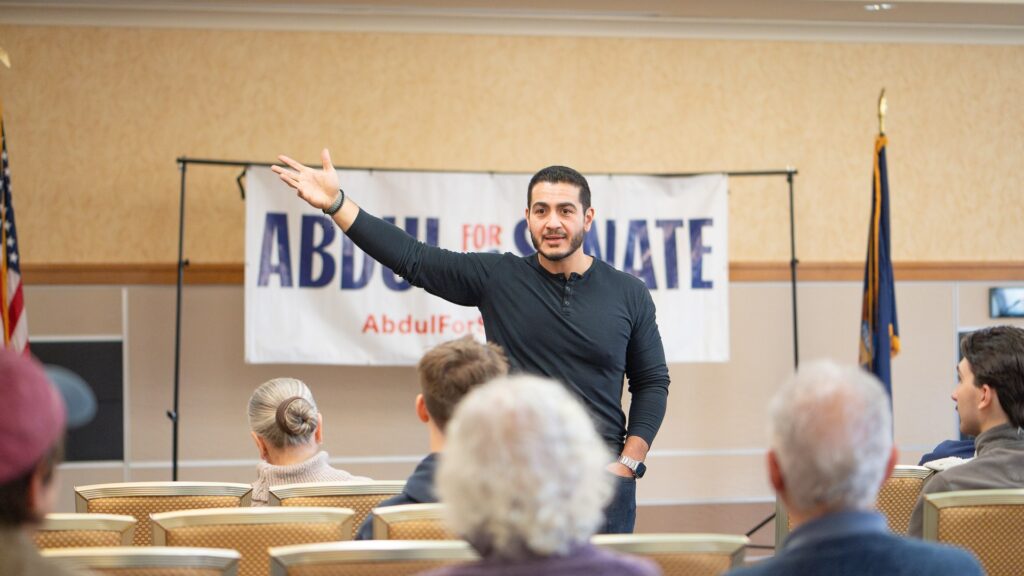
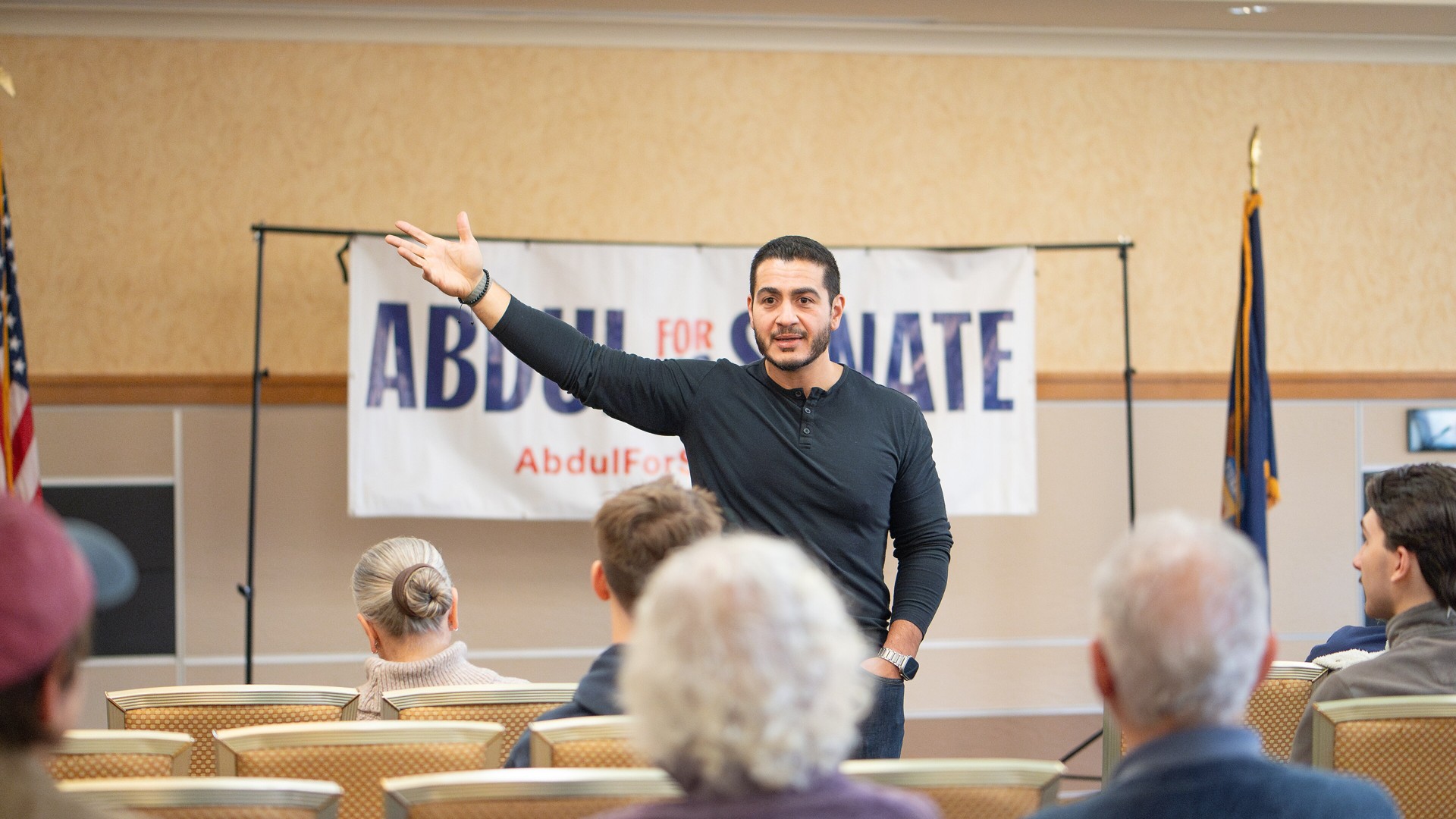
El Sayed refused to chase the story.
He campaigned with Clyburn in Detroit as planned, at another Black church in the city.
“I actually don’t think about Haley Stevens,” he told reporters. “I’m just less interested in the politics of it all than I am in the policy of it all.”
Party leaders moved fast to hold the line.
Senate Minority Leader Chuck Schumer, who backed Stevens in the primary, called the endorsement a “despicable betrayal.”
“Senate Democrats are united in our support for Abdul El Sayed, because we know he will fight for the economic interests of working families in Michigan, unlike Mike Rogers, who is a tool of Donald Trump and billionaire donors,” Schumer said.
Former Speaker Nancy Pelosi said El Sayed “must win.”
Curtis Hertel, chair of the Michigan Democratic Party, went further.
“Congresswoman Stevens is not a current member of the Michigan Democratic Party, nor will she be in the future,” Hertel said.
Retiring Senator Gary Peters, whose seat is at stake, said he was “extremely disappointed.”
President Donald Trump praised Stevens and called her move brave.
He urged her to join the Republican Party outright.
Trump paired that praise with a series of Islamophobic attacks on El Sayed.
Detroit and Wayne County Hold the Answer
Both campaigns chose Black church ground for the final Sunday before the vote.
That choice tells the real story of this race.
The path for El Sayed runs through Black voters in Wayne County, in and around Detroit.
A big margin there gives him a route to victory.
A soft margin leaves him with almost none, and the county has been a vulnerability for him.
History sets a hard bar.
In the Trump era, Democrats have generally needed 68 percent or more in Wayne County to win Michigan.
Senator Elissa Slotkin won with 63 percent there in 2024 by overperforming in the suburbs.
Kamala Harris took 62 percent in the county that year and lost the state.
Black support in the primary was split between Stevens and El Sayed.
One recent survey of the general election put Black voters at 88 percent for El Sayed against 7 percent for Rogers.
Stevens carried Wayne County in the primary even as she lost the state.
That is exactly why her voice carries weight there.
Her endorsement hands Rogers a permission slip aimed at the voters he needs most.
Whether Black voters in Detroit accept it is another question entirely.
Rogers knows how thin Michigan margins run.
He lost the 2024 Senate race by 19,006 votes, a margin of 0.34 percent.
He has spent this fall courting Detroit directly, with church visits across the city and a campaign office there.
More than a million Michigan absentee ballots were already returned a week ago, along with about 139,000 early in person votes.
What Black Michigan Voters Decide on Tuesday
Republicans hold the Senate by a count of 53 seats to 47.
Democrats need a net gain of four seats to take control.
Michigan is open because Senator Gary Peters is retiring.
If Republicans flip Michigan, Democrats would need to win five Republican held seats instead of four.
A final round of battleground polling released Monday morning put El Sayed ahead 53 to 42 in Michigan.
That survey was finished before the Stevens endorsement landed.
An average of other recent surveys showed a far tighter race, at 48.8 percent to 45.6 percent.
El Sayed, a physician and former Wayne County health leader, would be the first Muslim to serve in the Senate.
His closing message has stayed on the cost of living.
In his own words, voters will hear about “gas, groceries, good schools, and healthcare.”
Stevens built her name on the federal rescue of the auto industry under President Barack Obama.
That history runs through Detroit and its Black workforce, which is why both sides wanted her voice on Sunday.
Polls in Michigan close at 8 p.m. local time on Tuesday.
Michigan voters will settle this seat while courts in other states fight over voter lists, as our Monday morning report on the California voter list fight shows.
They will also vote on the same day Georgia closes out its deadlocked governor race, covered in our Georgia election report.
On Tuesday, Detroit decides whether Sunday was a turning point or a footnote.
Black voters in Wayne County have settled close Michigan races before.
This one may be the closest of all.