8 min read
Major Takeaways
- In 1903 Maggie Lena Walker became the first Black woman to charter a bank in the United States.
- She took over a struggling burial society with $31.61 in its treasury and built a bank, a newspaper, and a department store.
- Her bank made loans as small as five dollars and helped at least 600 Richmond families pay off their homes in full.
- She merged her bank through the Great Depression, and the institution it became kept running into the 2000s.
Maggie Lena Walker believed a penny saved by a Black family was power waiting to be used.
In 1903 she turned that belief into brick, steel, and a vault. Her bank opened in Richmond, Virginia, in the heart of Jim Crow.
She became the first Black woman to charter a bank in the United States. She then ran it for three decades and steered it through the Great Depression.
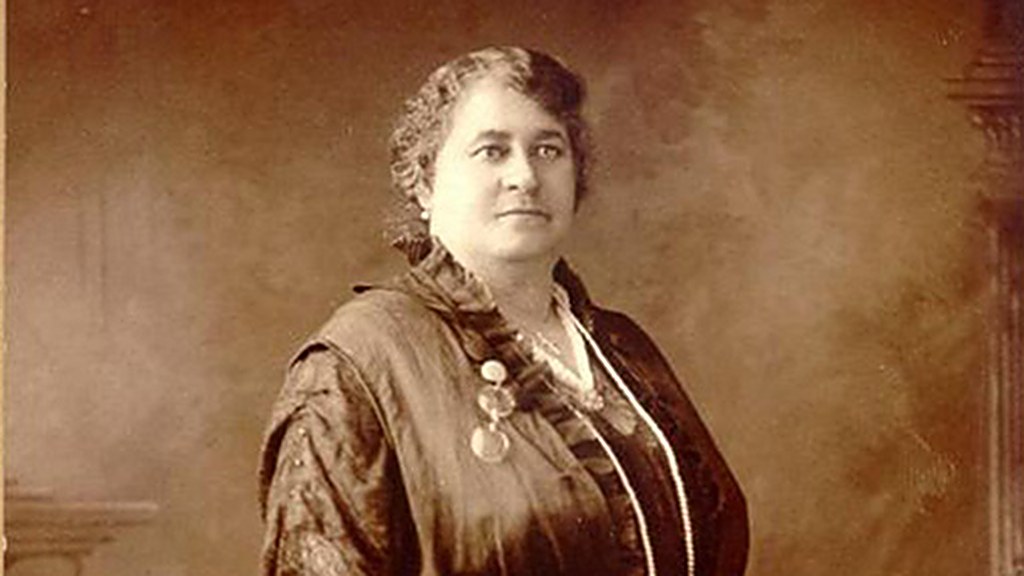
Studio portrait of Maggie L. Walker. Photo: National Park Service, Maggie L. Walker National Historic Site
A Laundry Basket and a Richmond Childhood
Maggie Lena Walker was born on July 15, 1864, in Richmond. The Civil War was still raging around the Confederate capital.
Her mother, Elizabeth Draper, had been enslaved. She worked as an assistant cook in the home of Elizabeth Van Lew.
Her stepfather, William Mitchell, worked as a butler in that same household. He died in 1876, when Maggie was eleven years old.
Her mother started a laundry business to feed the family. Young Maggie delivered clean clothes across the city.
She later joked about those years with a line that followed her for life. She said she was not born with a silver spoon in her mouth, but with a laundry basket practically upon her head.
She was among the first Black children to attend Richmond public schools. The schools were segregated and starved of resources.
She graduated from the Richmond Colored Normal School in 1883. Her class protested when Black graduates were denied the theater venue given to white students.
She taught grade school for three years. She took night courses in accounting and worked as an insurance agent on the side.
Her teaching career ended in 1886 when she married Armistead Walker. The rules of the day barred married women from the classroom.
She Saved the Order That Raised Her
At fourteen, Maggie Mitchell had joined the Independent Order of St. Luke. The burial society had been founded in Baltimore in 1867.
Orders like St. Luke were lifelines in Black America. They tended the sick, buried the dead, and pooled pennies for hard times.
Walker climbed every rung of the organization. She organized new councils across Virginia and West Virginia.
In 1899 she won its top office, Right Worthy Grand Secretary. What she inherited looked like a lost cause.
The order counted 1,080 members in 57 councils. Its treasury held $31.61 against $400 in unpaid debts.
Her salary was one third of what her male predecessor had earned. She took the job anyway and got to work.
She tightened the books and grew the membership across the country. She had started a juvenile division in 1895 to teach children thrift and duty.


Maggie Lena Walker Asked Her People for a Bank
At the annual meeting in 1901, Walker laid out a vision that stunned the room. She wanted a bank, a newspaper, and a store.
Her words became a rallying cry for Black economic power. Let us put our money together, she said. Let us put our money out at usury among ourselves, and reap the benefit ourselves.
She promised a bank that would take the nickels and turn them into dollars. The room voted to build it.
The newspaper came first. The St. Luke Herald launched in 1902 and carried the message to members everywhere.
On November 2, 1903, the St. Luke Penny Savings Bank opened at 900 St. James Street. Depositors brought more than $8,000 on the first day.
Some deposits were as small as 31 cents. Every cent was welcomed like capital.
Walker served as president from day one. She was the first Black woman to charter a bank in America, and one of the first women of any race to lead one.
A Bank Built for People With Pennies
The bank was designed for the customers other banks ignored. A single dollar could open an account.
Children received small coin banks that held 100 pennies. When the bank filled up, a child had the dollar needed to become a depositor.
Loans ran as small as five dollars. Working people could borrow without begging a loan shark.
Home loans broke the rules of the era in favor of families. Most banks demanded half the price down on short terms.
St. Luke accepted as little as ten percent down. The bank also let homeowners refinance instead of losing everything when a big payment came due.
By the early 1920s, at least 600 people in the community had paid off their home mortgages in full. Those were deeds in Black hands across Richmond.
Walker ran a strict house. Staff were expected at their desks early, dressed to a code she set herself.
One story tells of a single missing nickel at audit time. She kept two employees at work until they found it at midnight.
The discipline paid off in growth. Bank assets rose from $37,870 in 1904 to $529,883 in 1920.
She built that growth largely with Black women. From the start, she said, her first work was to draw women around her.
She stands beside Madam C. J. Walker as a titan of Black business. Both women turned the dollars of ordinary Black customers into institutions.
Jackson Ward Became Her Proof
The St. Luke Emporium opened on Broad Street in April 1905. Black shoppers could buy clothing and dry goods from Black clerks.
White retailers organized against it from the start. Wholesalers were pressed to cut off its supply or demand cash up front.
The store closed in 1911 after years of that pressure. Walker counted the attempt itself as a lesson in economic warfare.
She fought on other fronts too. In 1904 she helped lead the Richmond streetcar boycott against new segregation rules.
Her newspaper backed the boycott loudly. She and other Black bankers pledged support for a Black owned streetcar company to replace the line.
All of it rose in Jackson Ward, her neighborhood. A later federal report called it the most important center of Black business activity in the world.
Its banks, insurers, and shops stood in the same proud tradition as Black Wall Street in Tulsa. Richmond built its version a generation earlier.
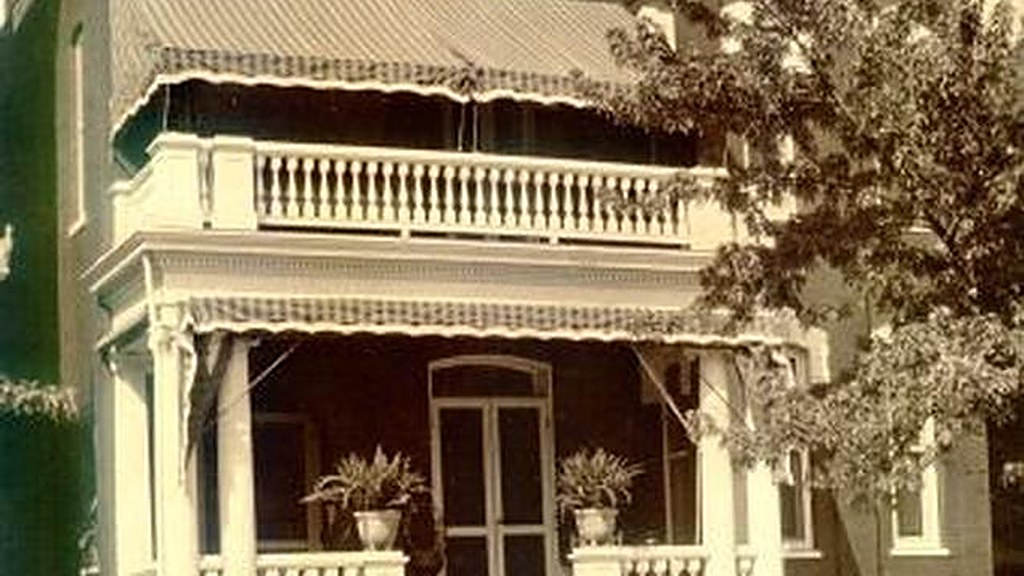
The Walker home on East Leigh Street in Richmond, pictured around 1923. Photo: National Park Service, Maggie L. Walker National Historic Site
She Merged Three Banks and Beat the Depression
When bank failures swept the nation after 1929, Walker reached for scale. She merged her bank with two other Black owned Richmond banks.
The combined institution took the name Consolidated Bank and Trust Company. Walker moved up to chairman of the board.
The merger protected the savings of Black Richmond when thousands of banks were dying. Consolidated kept operating into the twenty first century.
For decades it stood as the oldest continually run Black owned bank in the United States. Her penny bank had outlived nearly every rival.
Her public life ran just as wide. She helped organize the Richmond chapter of the NAACP and sat on its national board.
She served the National Association of Colored Women and the Virginia Interracial Commission. She even started the first Girl Scout troop for Black girls in the South.
Her body slowed before her will did. Diabetes confined her to a wheelchair by 1928, and an elevator went into her home.
She kept leading the order and chairing the bank until her death on December 15, 1934. She was seventy years old.
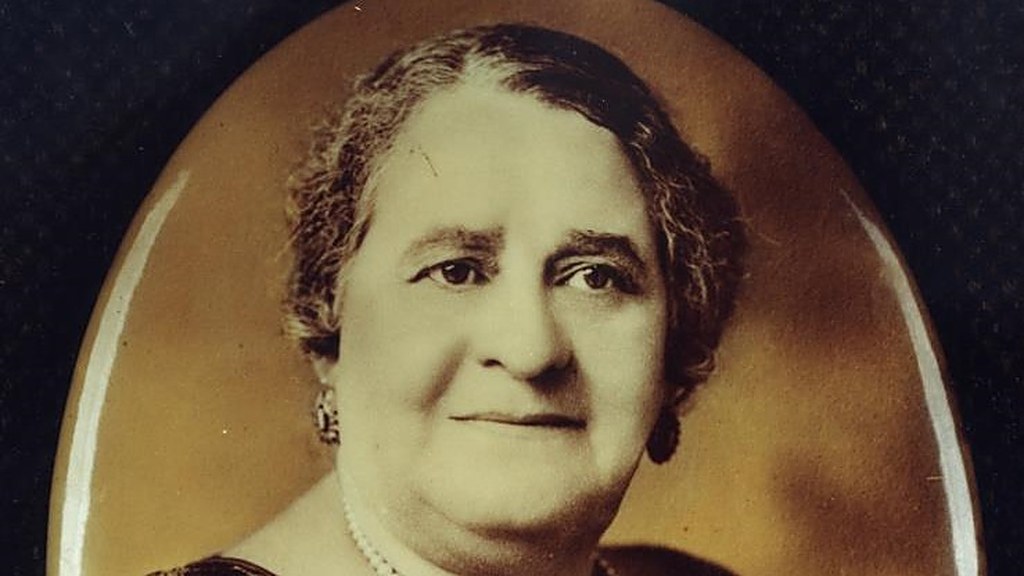
Maggie L. Walker around 1930, late in her banking career. Photo: Visual Studies Collection, Library of Virginia
Why Maggie Lena Walker Matters Right Now
Her East Leigh Street home is preserved today as a National Historic Site. Visitors walk the rooms where she raised sons, ran an empire, and hosted national leaders.
In 2017 Richmond raised a ten foot bronze statue of her on Broad Street. The banker finally stands watch over the avenue where her store once fought to survive.
Her playbook is back in the headlines today. Federal regulators counted just 17 Black owned banks in the spring of 2026, down from 32 in 2006.
This past July, Optus Bank of South Carolina and Mechanics and Farmers Bank of North Carolina announced a merger. The deal would form the largest Black owned bank in the nation, at about 1.3 billion dollars in assets.
That is the Walker move, run again more than a century later. Two proud institutions, one founded in 1907 and one rooted in 1921, combining to survive and to serve.
Walker proved that community money, pooled with discipline, becomes community power. Nickels became dollars, dollars became mortgages, and mortgages became a neighborhood that still stands.
Read more Black in the Day features at urbancitypodcast.com.