7 min read
Major Takeaways
- Six million Black Americans left the rural South between 1916 and 1970 in one of the largest internal migrations in American history.
- Jim Crow violence and sharecropper poverty pushed families out, while factory wages three times higher than farm pay pulled them north.
- Migrants met northern racism in the form of redlining and race riots, yet built thriving Black culture and real political power.
- The journey reshaped cities like Chicago, Detroit, and Harlem and still shapes Black life today, including the reverse migration back South.
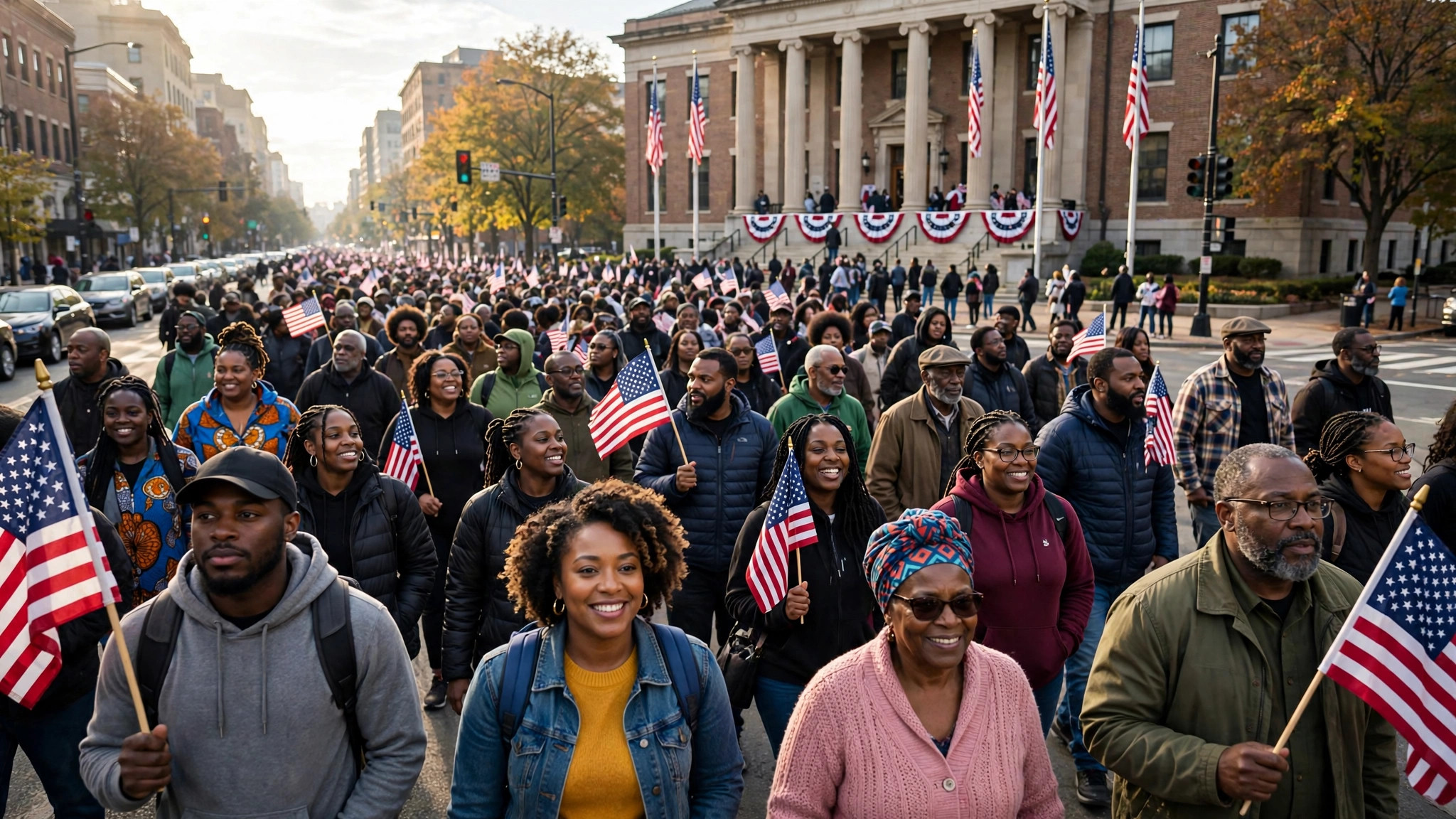
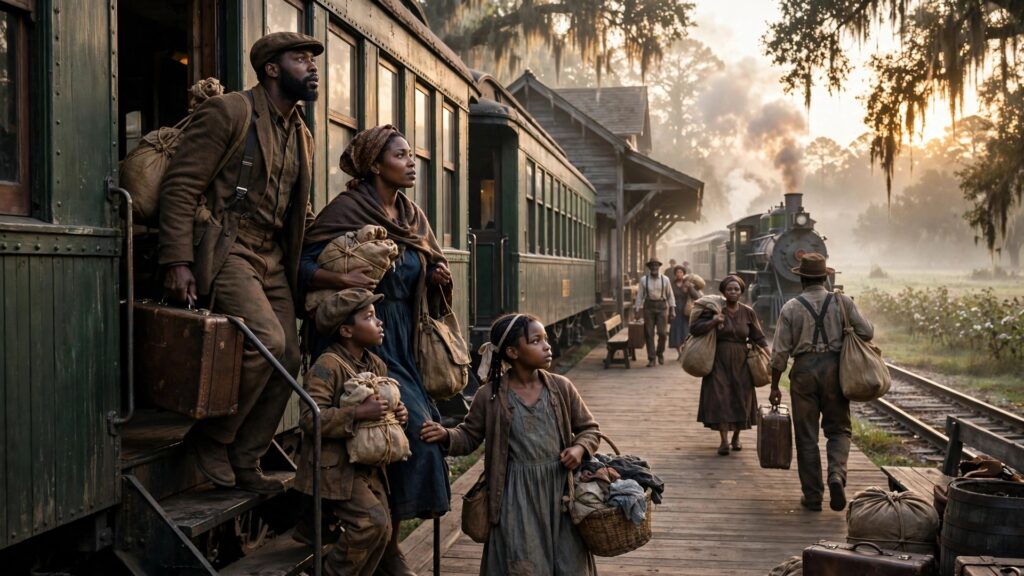
Six million people packed their bags, bought train tickets, and left everything they knew behind. Between 1916 and 1970, Black families streamed out of the rural South toward the cities of the North, Midwest, and West. Historians call it the Great Migration. It was one of the largest internal migrations in American history, and it changed this country forever.
Before the migration began, the map of Black life looked nothing like today. In every United States census before 1910, more than 90 percent of African Americans lived in the American South. In 1900, three out of four Black people in the South lived on farms. By the time the migration ended, the South held only half of the nation’s Black population, and more than 80 percent of Black Americans lived in cities.
Why They Left the South
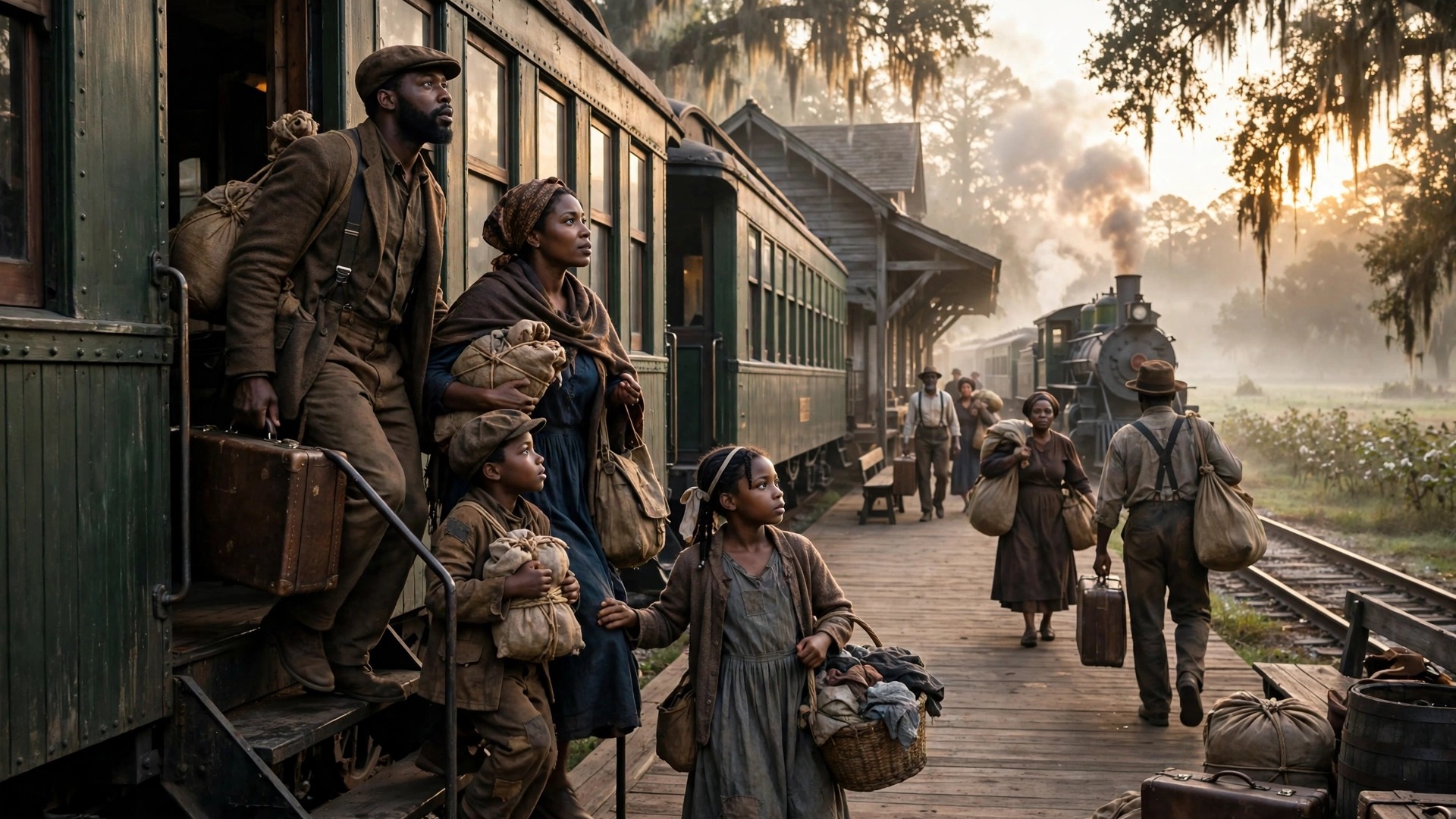
Life under Jim Crow gave Black families every reason to run. Segregation ruled every corner of daily life across the South. Lynching remained a constant threat. The vote was denied through terror and trickery.
The land itself offered little hope. Most Black Southerners worked as sharecroppers, trapped in a system that paid pennies and kept families in debt. A regional boll weevil infestation damaged crops through the 1890s and early 1900s, making hard times even harder.
Leaving was not easy. White Southern planters needed cheap Black labor and fought to keep it. But the desire for freedom, safety, and a fair wage proved stronger than every barrier placed in the way.
The North Calls: Jobs, Wages, and the Chicago Defender
When World War I broke out in 1914, Northern factories lost their supply of European immigrant workers. Recruiters traveled south looking for Black workers to fill the gap. War production created thousands of jobs that had never before been open to Black people.
The money told the story. Around 1916, a factory wage in the urban North was typically three times what Black people could earn working the land in the rural South. For families living on almost nothing, that difference was life changing.
Black newspapers spread the word. The Chicago Defender, widely read across the South, published advertisements praising opportunities in Northern and Western cities, along with first person accounts of success from those who had already made the trip. Black people called the journey a flight from an old America to a modern one, a search for dignity as much as dollars.
The numbers tell the story of scale. Scholars estimate that 400,000 Black people left the South between 1916 and 1918 alone. Most traveled by train, boat, or bus. A smaller number drove cars or even rode horse drawn carts. By the end of 1919, more than 400,000 had made the move.
New Cities, Old Barriers
Chicago became the beating heart of the migration. Nearly 10 percent of all Great Migration migrants, some 500,000 African Americans, moved to Chicago. In 1910, Black people made up only 2 percent of the city’s population. By 1970, they were 33 percent. During the second wave alone, from 1940 to 1960, Chicago’s Black population grew from 278,000 to 813,000.
Detroit’s transformation was just as dramatic. The city’s Black population stood at only 6,000 in 1910 and surged to 120,000 by 1929. Another 50,000 arrived between 1941 and 1943 to work in World War II defense industries. Even before America entered the war, more than 10 percent of Ford’s workers were Black.
New York, Philadelphia, Los Angeles, Cleveland, and Oakland also drew huge numbers. From 1910 to 1920, the Black population of New York City grew 66 percent, Philadelphia’s grew 500 percent, and Detroit’s grew 611 percent.
But the promised land had its own fences. Segregation was not written into Northern law the way it was in the South, yet racism and prejudice were everywhere. After the Supreme Court struck down racial housing ordinances in 1917, white neighborhoods used private covenants to block Black buyers, a practice the Court did not end until 1948. Redlining steered Black families into crowded, underfunded neighborhoods.
Violence followed too. The summer of 1919 brought the Red Summer, a wave of racial attacks on Black communities in cities across the country. In Chicago, a riot raged for 13 days, leaving 38 people dead, 537 injured, and 1,000 Black families without homes.
A Culture Is Born: Harlem, Bronzeville, and Motown
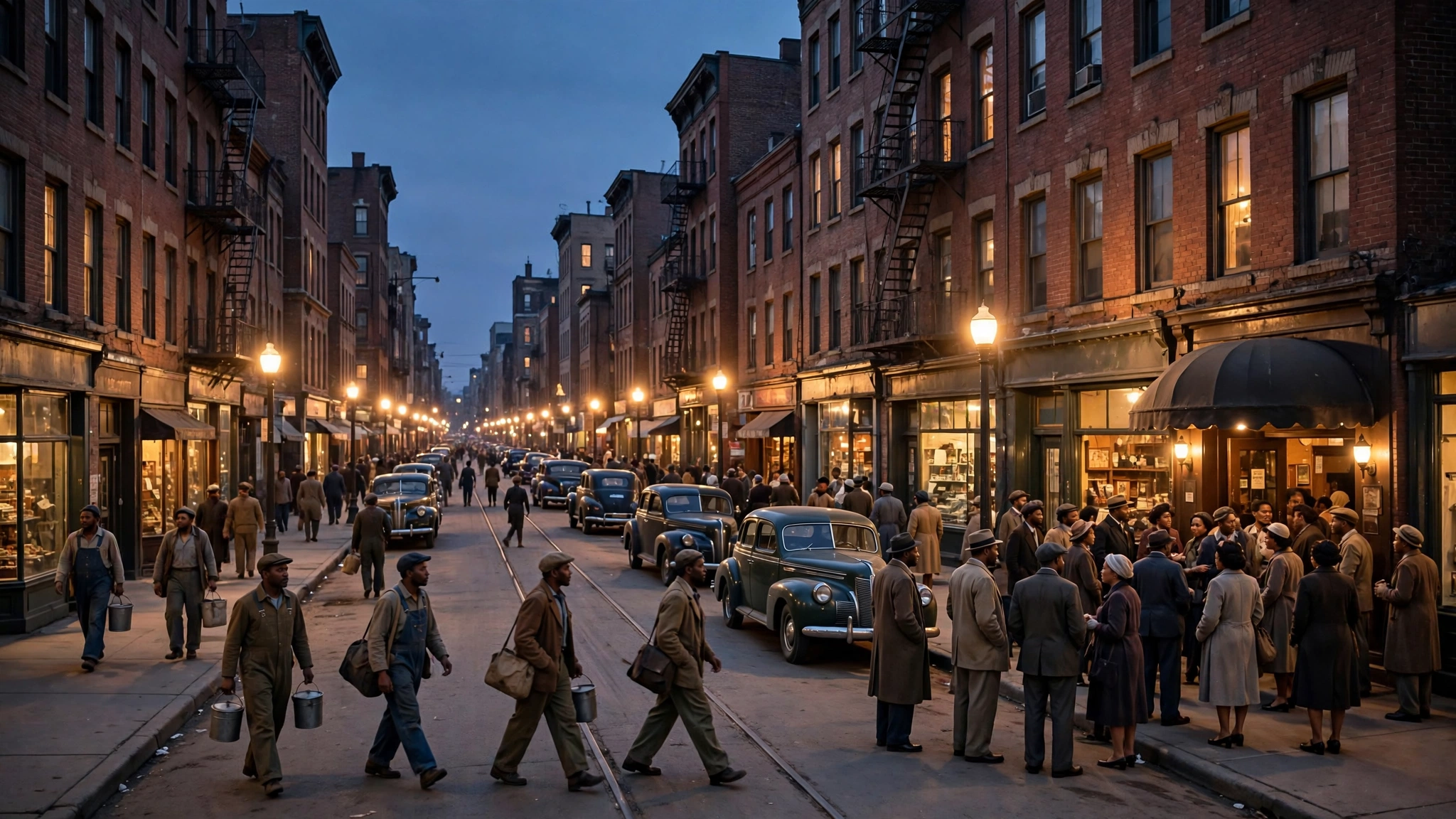
Out of the struggle came brilliance. Migrants built Black metropolises inside the great cities, whole worlds of churches, newspapers, businesses, jazz clubs, and political clubs. Harlem in New York City, once an all white neighborhood, held 200,000 Black residents by the 1920s and became the stage for the Harlem Renaissance, the explosion of Black art, music, and literature that defined an era.
Chicago’s South Side produced its own Bronzeville Renaissance. The city gave the world the literature of Richard Wright, Gwendolyn Brooks, and Lorraine Hansberry, the blues guitar that changed popular music, and the rhythm and blues juggernaut Motown in Detroit.
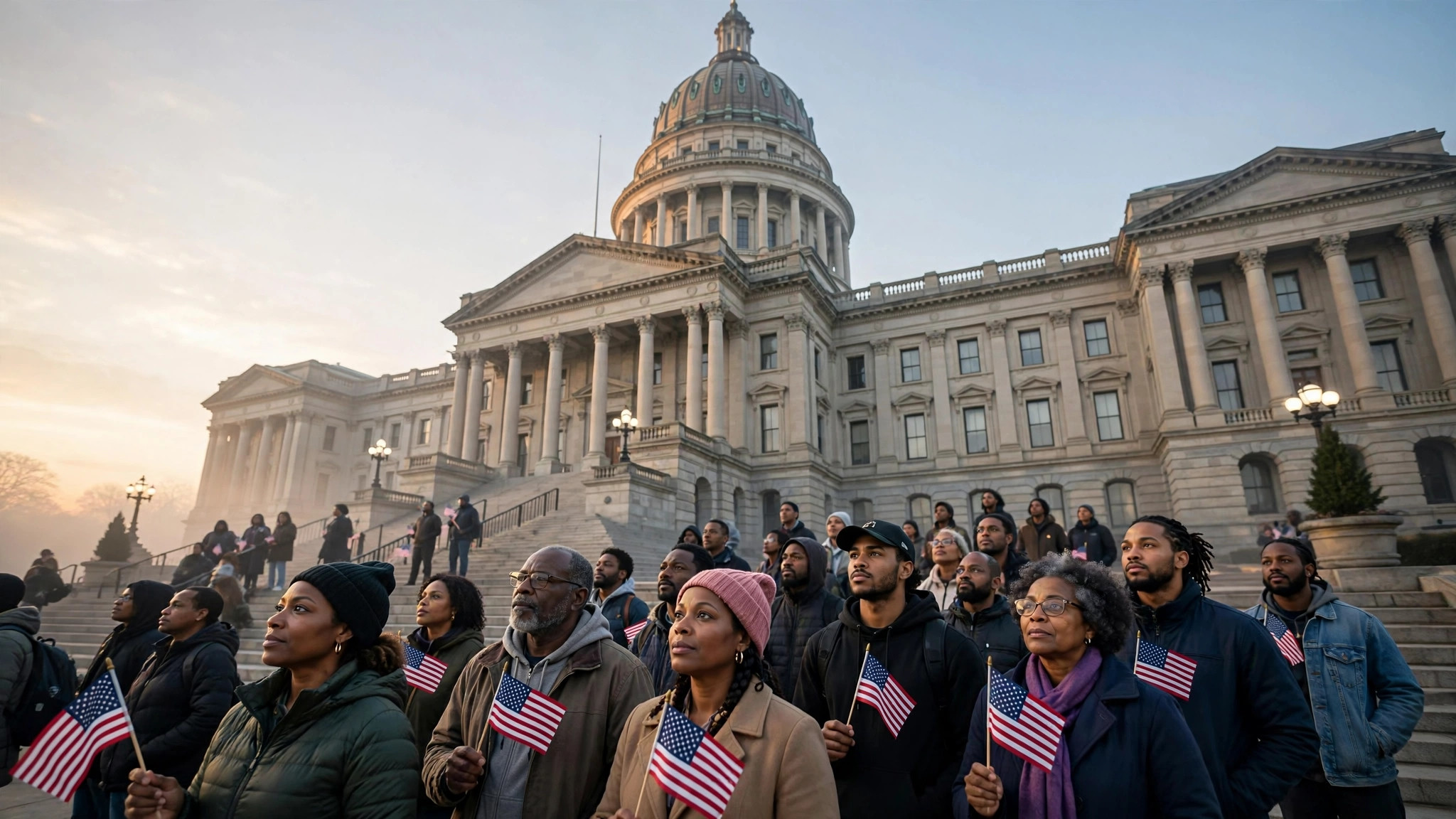
The migration also built Black political power. Concentrated in big cities, Black voters gained influence they had been denied in the South. That urban base became the foundation of the modern civil rights movement and, decades later, helped carry Barack Obama to the presidency.
The road was never smooth. Black soldiers returned from World War II to find that the GI Bill did not deliver the same benefits for everyone. Black veterans faced discrimination in housing loans and college aid while white veterans built wealth that would compound for generations. That gap still echoes in the racial wealth divide today.
The Great Migration Lives On
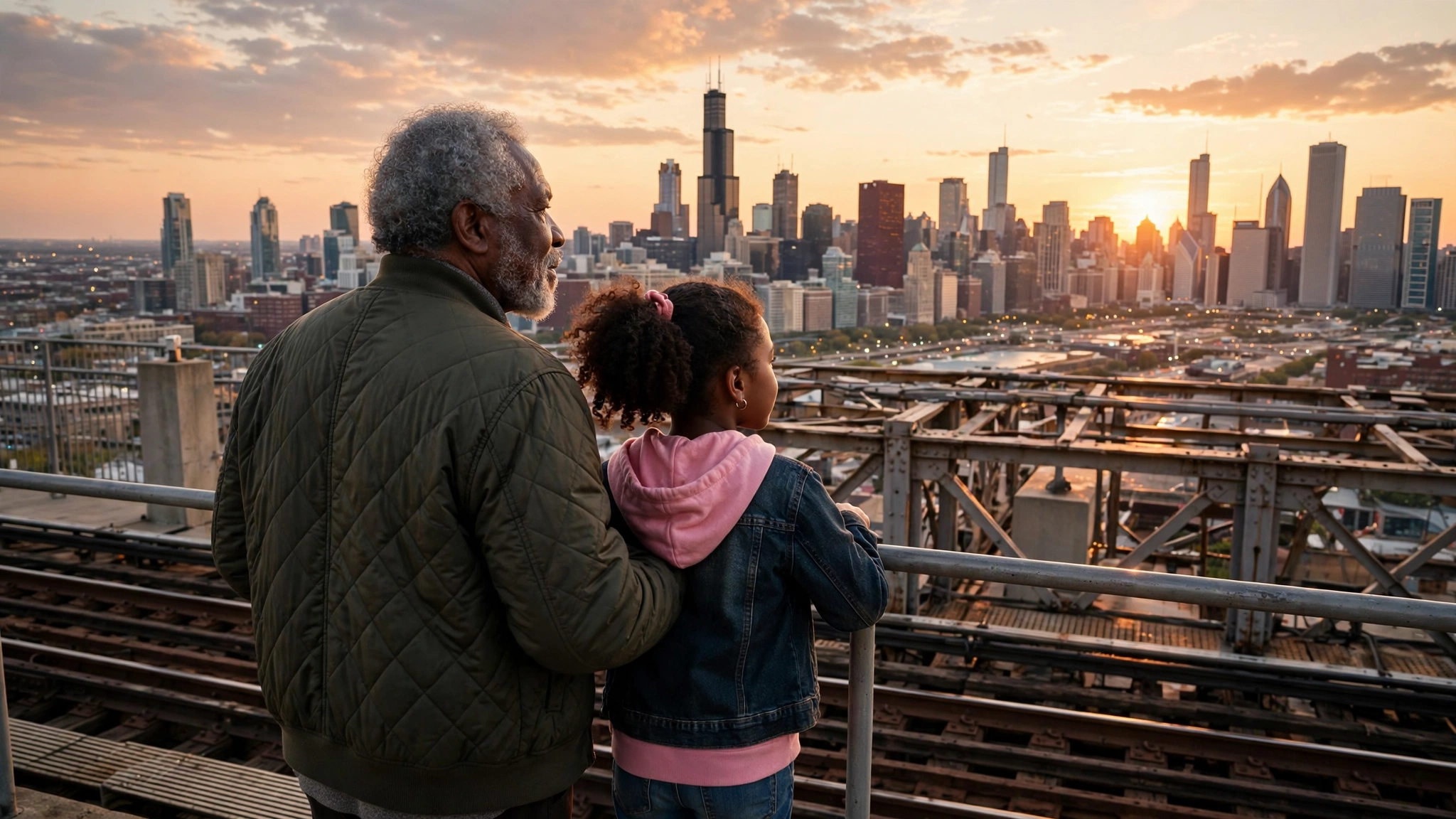
By 1970, when the migration era ended, its impact was unmistakable. More than 10.6 million African Americans lived outside the South, 47 percent of the nation’s total. Black America had become an urban people, concentrated in the very cities that now shape national culture, music, fashion, and politics.
Today the story has turned in a new direction. In recent decades, deindustrialization pushed factory jobs out of the North. Many Black families have begun a reverse migration back to the South, settling in cities like Atlanta and Charlotte. For some, the journey south feels like a homecoming generations in the making.
The Great Migration teaches a lesson worth holding close. Ordinary families, armed with faith and courage, reshaped a nation by refusing to accept the place the world assigned them. Every packed suitcase was a vote for dignity. Every train ticket was a declaration that Black life deserved better.
The writer Isabel Wilkerson captured the journey in her celebrated book The Warmth of Other Suns. Her work reminds us that the migration was not only about movement. It was about the making of modern Black America, and its fingerprints are on everything from the music on our playlists to the neighborhoods we call home.
Sources and Further Reading
- History.com: The Great Migration, Definition, Causes and Impact
- Library of Congress: The Great Migration Classroom Materials
- The African American Midwest: The Great Migration
- ThoughtCo: Causes of the Great Migration
Read more Black history on Urban City Podcast: Fannie Lou Hamer: The Sharecropper Who Challenged America and Tulsa Race Massacre: The Night Black Wall Street Burned. Visit the Urban City Podcast homepage for more.