9 min read
Duke Ellington sat at a piano in Washington and heard a full orchestra in his head.
He spent fifty years turning that sound into American art.
He led one band through clubs, ballrooms, concert halls, and sacred spaces.
Along the way he wrote more than one thousand compositions.
His story shows what Black genius builds when it refuses to shrink.
Major Takeaways
- Duke Ellington was born in Washington on April 29, 1899, to two pianists.
- His Cotton Club years in Harlem carried his orchestra to radio listeners nationwide.
- He wrote music for the exact sounds of the players in his own band.
- His 1943 Carnegie Hall debut presented Black history as a grand concert work.
- He received the Presidential Medal of Freedom on his seventieth birthday in 1969.
- He won a special Pulitzer honor in 1999, twenty five years after his death.
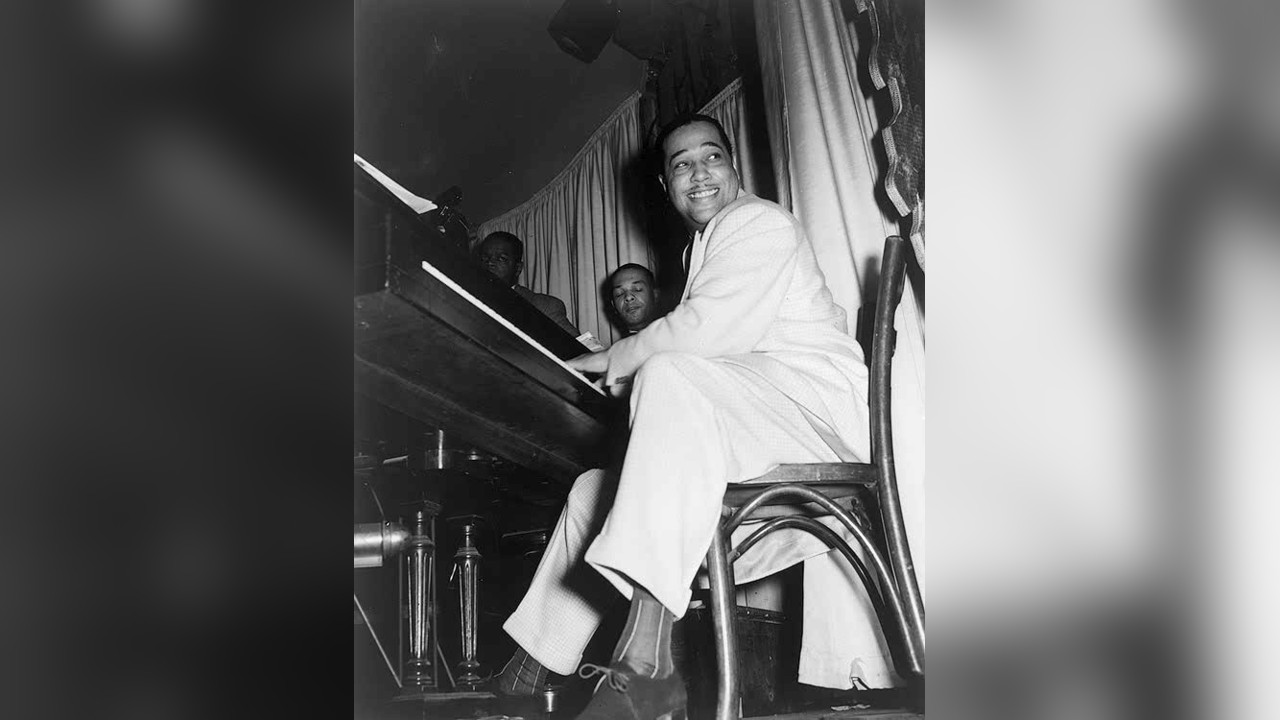
Photo by Farm Security Administration and Office of War Information, public domain via Wikimedia Commons
Duke Ellington Grew Up in a Musical Washington Home
Edward Kennedy Ellington was born on April 29, 1899, in Washington.
His parents were James Edward Ellington and Daisy Kennedy Ellington.
Both parents played piano in the family home.
His mother played gentle parlor songs for the family.
His father loved grand opera airs and sang them proudly.
Daisy raised her son around dignity, manners, and fine dress.
Friends saw a boy who carried himself like young nobility.
They began calling him Duke, and the name stayed for life.
He began piano lessons as a young boy in the city.
At first he cared far more about baseball than practice.
He sold peanuts at Washington Senators games as a schoolboy.
Work changed his ear in the summer of 1914.
He worked as a soda jerk at the Poodle Dog Cafe.
There he composed his first piece, called Soda Fountain Rag.
He created that piece by ear before he could read music.
Soon he was sneaking into a local poolroom to hear pianists.
The ragtime and stride players there lit a fire in him.
Teachers in Washington then trained him in harmony and reading music.
Music won so fully that he turned down an art scholarship.
The Pratt Institute in Brooklyn had offered him a place in 1916.
He chose the piano over the paintbrush for good.
A Sign Painter by Day Built a Band by Night
Ellington painted commercial signs during the day to earn money.
He played piano at dances and parties at night.
His sign work taught him a clever business lesson.
When a customer ordered a sign for a dance, he asked one question.
Did the party have music yet, and could his band play it?
In late 1917 he formed his first group, the Duke Serenaders.
The band played halls across Washington and into Virginia.
It performed for Black audiences and white audiences alike.
That reach was rare in a deeply divided capital city.
In 1923 drummer Sonny Greer drew him toward New York City.
Ellington left a secure living behind and moved to Harlem.
He arrived as the Harlem Renaissance was in full bloom.
His band, the Washingtonians, fought for space in a crowded scene.
A 1923 Atlantic City job led to Harlem club dates.
The band settled into the Hollywood Club that same year.
After a fire the club reopened as the Kentucky Club.
Ellington took over leadership of the band in 1924.
From that chair he would lead an orchestra for fifty years.
Readers can meet another Washington giant in this series, Dr. Charles Drew and the blood bank he built.
The Cotton Club Put Duke Ellington on National Radio
The great break came on December 4, 1927, in Harlem.
His orchestra became the house band at the famous Cotton Club.
King Oliver had turned the job down, and Ellington seized it.
He expanded his group to meet what the club demanded.
The club admitted white patrons only, while Black artists performed.
That cruel arrangement sat at the center of Harlem nightlife.
Yet weekly radio broadcasts carried his sound far beyond those walls.
Folks in small towns across America heard a Black orchestra nightly.
The band played every note for the club revues.
Comedy, dance, and song all rested on his arrangements.
Works from this era still live in the American songbook.
They include Black and Tan Fantasy and Creole Love Call.
Mood Indigo and Sophisticated Lady followed in the years after.
In 1929 he starred in his first film, Black and Tan.
He played the hero, not a clown or a servant.
That dignity on screen mattered to Black audiences everywhere.
His first Cotton Club period ended in the early 1930s.
The orchestra then became a road institution for four decades.
It toured Europe in 1933 and again in 1939.
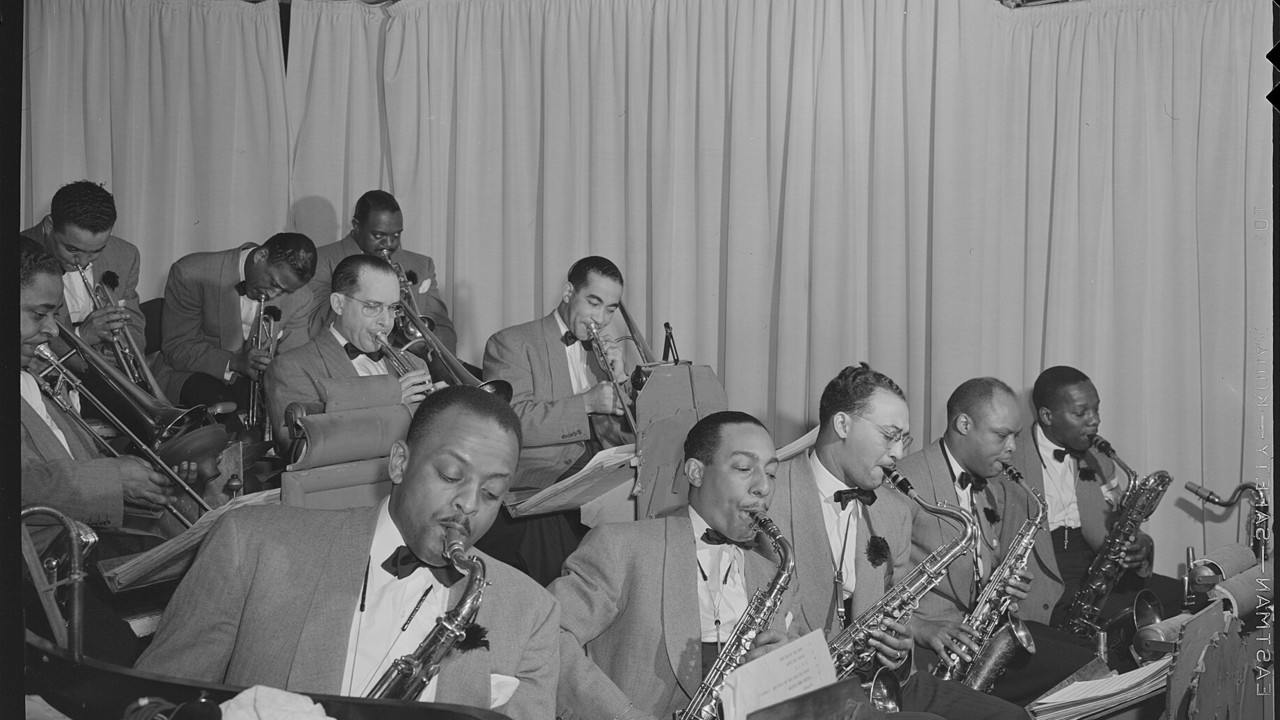
Photo by Gordon Parks, Library of Congress, public domain via Wikimedia Commons
He Wrote for People, Not for Abstract Instruments
Ellington treated his orchestra as his true instrument.
He knew each player as a voice with its own color.
He wrote parts to fit the men who would play them.
Johnny Hodges sang through his alto saxophone like no one else.
Harry Carney anchored the band on baritone saxophone for decades.
Bubber Miley gave the early band its growling trumpet fire.
Cootie Williams later carried that trumpet chair with power.
Ellington also recorded music written by his own bandsmen.
Juan Tizol brought Caravan and its Spanish tinge to the book.
In 1939 a young pianist named Billy Strayhorn joined him.
Ellington called Strayhorn his writing and arranging companion.
Their partnership lasted for decades, until Strayhorn died.
Strayhorn wrote Take the A Train, the band theme song.
Many players stayed in the orchestra for decades at a time.
That loyalty gave the band a sound no rival could copy.
It was a Black institution run with elegance and discipline.
Young musicians today still study how he voiced each section.
Carnegie Hall Heard Black History as Concert Music
On a January night in 1943, Ellington reached Carnegie Hall.
He premiered a long work called Black, Brown and Beige.
The piece told the story of African Americans in music.
It moved from slavery through freedom and into modern city life.
No Black composer had claimed that stage on that scale before.
The concert announced that his music belonged in grand halls.
After the war the orchestra toured the whole wide world.
It played across Europe, Asia, Africa, and South America.
Big band music faded at home during the 1950s.
Many famous bands folded while Ellington kept his together.
Then came the Newport Jazz Festival in July 1956.
His set thrilled the crowd and revived his national fame.
His face soon graced the cover of Time magazine.
He later wrote the film score for Anatomy of a Murder.
That 1959 score brought his sound to a new audience.
This series also honors Bessie Coleman, the first Black woman pilot, who broke barriers in the same era.
Sacred Concerts Carried His Faith Into the Sanctuary
In his sixties Ellington turned toward sacred music with boldness.
He premiered his first Sacred Concert in September 1965.
The work fused Christian liturgy with the language of jazz.
He performed the sacred works again and again with pride.
A second Sacred Concert followed in 1968.
A third Sacred Concert followed in 1973.
The piano he used to compose them now sits in a museum.
The Smithsonian National Museum of American History holds that Steinway.
For Black church families, his move felt deeply familiar.
He treated the music of the sanctuary as high art.
He refused every wall between gospel roots and concert glory.
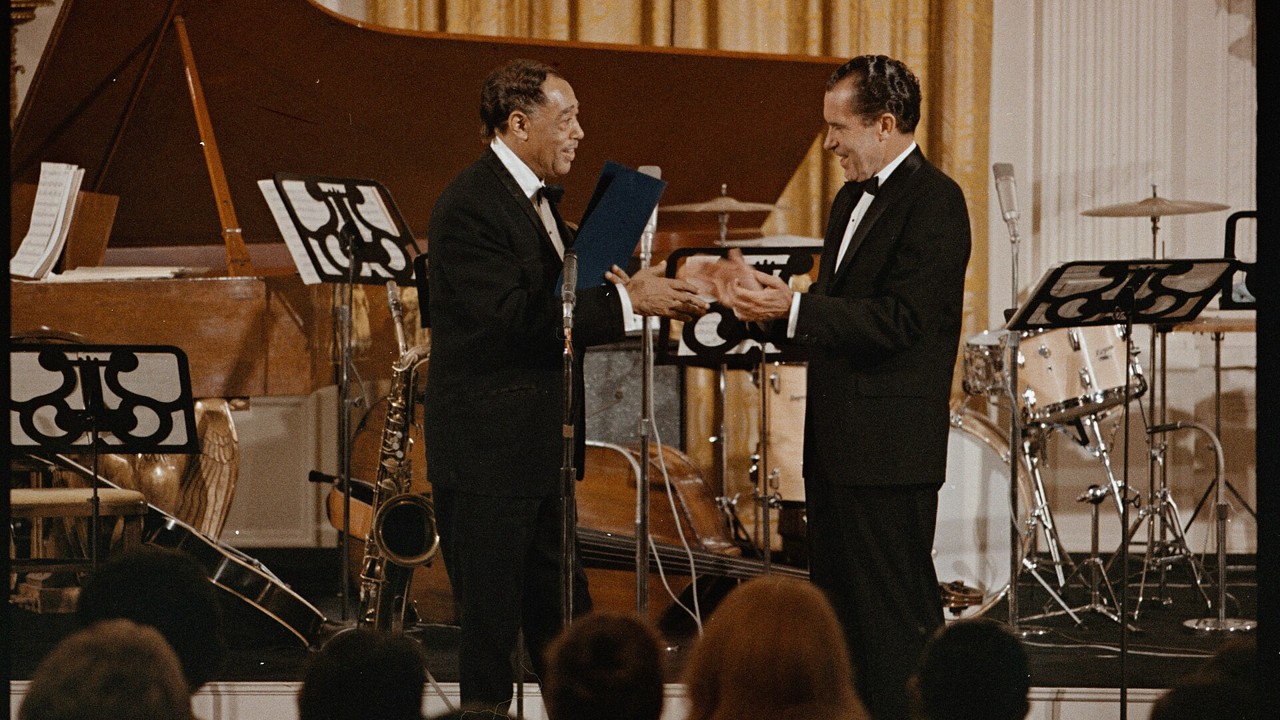
Photo by the White House Photo Office, National Archives, public domain via Wikimedia Commons
The Honors Came Late, and One Came After Death
In 1965 Ellington was shortlisted for the Pulitzer Prize for Music.
No prize was awarded at all that year.
A Black master at his peak was told to wait again.
Four years later the nation found a grander stage for him.
On April 29, 1969, he turned seventy years old.
President Richard Nixon hosted his birthday at the White House.
Nixon played Happy Birthday for him on the East Room piano.
Then Nixon presented him the Presidential Medal of Freedom.
The honor carried a quiet and powerful family echo.
His father had once worked at the White House as a butler.
The son returned to that house as its honored guest.
Ellington published his autobiography in 1973, Music Is My Mistress.
He died on May 24, 1974, in New York City.
He was seventy five years old at his death.
In 1999 the Pulitzer board finally gave him a special award.
The honor came twenty five years too late for him to hold.
Why Duke Ellington Still Sets the Standard Today
His songs remain standards that singers record every year.
Sophisticated Lady, Solitude, and Satin Doll never left the stage.
School bands learn his charts as a rite of passage.
Washington honors him at the Duke Ellington School of the Arts.
Young composers study how he blended freedom with fine structure.
He insisted on calling his work American Music, not jazz.
He described the artists he admired as beyond category.
That phrase fits the man himself better than any label.
He proved a Black bandleader could be a great American composer.
He did it while segregation tried to box him into clubs.
His orchestra was a family, a business, and a university.
It trained generations and carried Black elegance around the world.
Every big band that swings today walks a road he paved.
Every composer writing for real players follows his example still.
Start with the full story of Black history at Urban City Podcast and keep his music playing loud.