8 min read
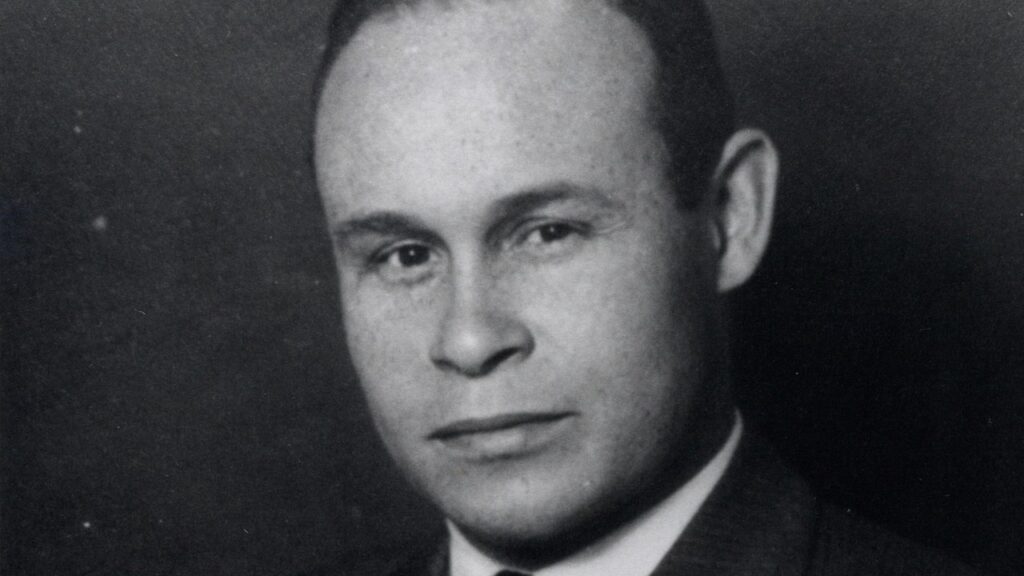
Charles Drew changed medicine by proving blood could be saved for the moment a stranger needed it most.
The Washington surgeon built systems for storing plasma that reached battlefields and hospitals across the world.
His story still speaks directly to Black families today, especially where blood donations can decide survival.
Major Takeaways
- Charles Drew proved plasma could be separated, stored and shipped safely for transfusion over long distances.
- He directed the Blood for Britain effort and helped design the first national blood banking work in America.
- He condemned segregated blood as unscientific and returned to Howard to train a generation of Black surgeons.
- His legacy lives in every blood drive and in the urgent need for more Black donors today.
A Washington Childhood Built on Learning and Sport
Charles Richard Drew was born on June 3, 1904 in Washington, District of Columbia.
His father Richard laid carpet and served his union as financial secretary.
His mother Nora graduated from Miner Normal School and raised a home centered on learning.
The family lived first in Foggy Bottom, then moved to Arlington, Virginia in 1920.
Drew attended Dunbar High School, then one of the finest college preparatory schools in the nation.
He lettered in four sports and won top athletic honors in both his junior and senior years.
Classmates voted him best athlete and the student who had done the most for the school.
His senior yearbook entry said he hoped to become an electrical engineer, not a doctor.
Loss and Injury Point Charles Drew Toward Medicine
At Amherst College in Massachusetts, Drew starred in football and track on an athletic scholarship.
He earned his degree in 1926 and still had no clear plan for medical school.
Two hard experiences stayed with him and slowly turned his mind toward healing.
His oldest sister Elsie died in 1920 from tuberculosis complicated by influenza.
His own stay in a hospital after a college football injury also shaped his thinking.
For two years he taught biology and chemistry at Morgan College in Baltimore.
He also served as athletic director and transformed its teams into serious collegiate competitors.
That work paid for the medical training he wanted and sharpened his gift for teaching.
Medical Training Under the Rules of Segregation
Segregation sharply limited where a Black student could study medicine in that era.
Drew applied to Howard University but lacked enough English credits from Amherst for admission.
Harvard accepted him but wanted him to wait a year, and he refused to wait.
He chose McGill University in Montreal, Canada, known for fairer treatment of minority students.
At McGill he became a star student and graduated second in a class of 137 in 1933.
During residency at Montreal General Hospital, he studied shock and fluid replacement with John Beattie.
That work sparked the interest in transfusion medicine that would define his career.
He hoped to train at the Mayo Clinic, but top American centers rarely accepted Black residents.
Charles Drew and the Science of Banked Blood
In 1935 Drew joined the faculty at Howard University College of Medicine in Washington.
He rose from pathology instructor to surgical instructor and chief surgical resident at Freedmen’s Hospital.
A fellowship then took him to Presbyterian Hospital in New York under surgeon Allen Whipple.
There he worked with John Scudder on shock, fluid balance, blood chemistry and preservation.
Their experimental blood bank at Presbyterian opened in August 1939 and became his dissertation project.
The thesis was titled Banked Blood and studied how blood could be preserved for later use.
In June 1940 he earned his doctorate in medical science from Columbia University.
He was the first African American to earn that degree there, a landmark in American medicine.
Plasma, the fluid portion of blood, could last longer than whole blood in storage.
Drew showed plasma could be separated, tested, stored and shipped where whole blood could not go.
Readers who admire breakthrough science will also value our Katherine Johnson feature on another Black pioneer.
Blood for Britain and a National System
In September 1940 Drew was called back to New York to direct Blood for Britain.
Britain was under attack by Germany and urgently needed plasma for soldiers and civilians.
Drew set uniform standards for collecting blood and processing plasma across six New York hospitals.
The project collected more than 14,500 donations and sent 5,000 liters of plasma to Britain.
When that program ended in January 1941, national leaders turned to Drew again.
He became assistant director of a pilot program for a national blood banking system.
Among his innovations were mobile blood donation stations that later became known as bloodmobiles.
Those rolling stations brought donation into neighborhoods instead of waiting for donors to travel far.
He Stood Against Segregated Blood
As war approached, the armed forces first barred Black Americans from donating blood at all.
The policy later changed to accept Black donors, but it required their blood to be segregated.
Drew called those policies unscientific and insulting to African Americans, and he said so publicly.
Blood type decides a transfusion match, and skin color has no scientific role in that decision.
His time in the national role was short, and he left and returned to Howard University.
In October 1941 he became chair of surgery at Howard and chief of surgery at Freedmen’s Hospital.
He also became the first African American appointed an examiner for the American Board of Surgery.
That appointment placed a Black surgeon in judgment of surgical standards for the whole nation.
The Howard Years Trained a Generation
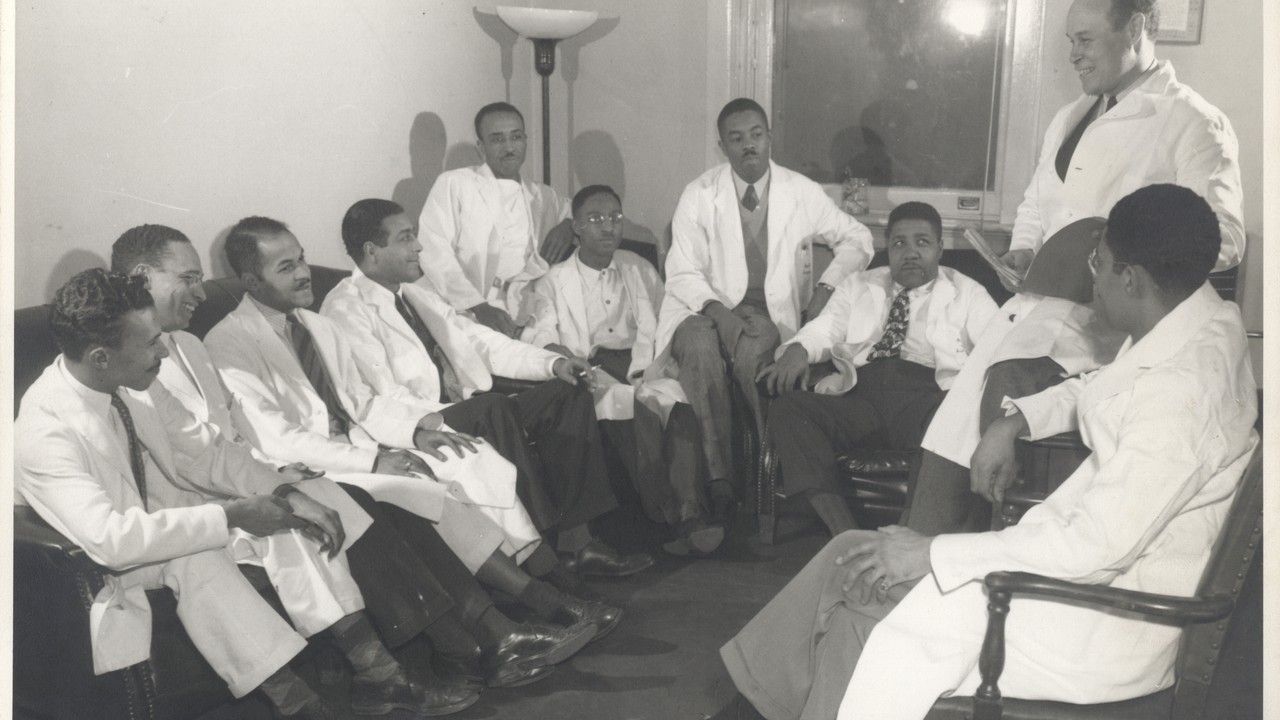
For the next nine years, Drew poured himself into teaching Black medical students and surgical residents.
Between 1941 and 1950, more than half of the Black surgeons in America studied under Drew.
He fought to raise standards in Black medical education and to open closed professional doors.
He campaigned against the exclusion of Black physicians from local and national medical societies.
Honors followed his work, including the Spingarn Medal from the NAACP in 1944.
Virginia State College gave him an honorary doctorate in 1945, and Amherst followed in 1947.
Drew once wrote that students in science should knock bricks from the wall around them.
In his words, each student should aim to knock down at least one or two bricks through accomplishment.
Our Bessie Coleman feature tells a parallel story of talent refusing closed doors.
A Short Life and a Story Told Straight
On April 1, 1950, Drew was driving with three colleagues toward a conference in Tuskegee, Alabama.
His car overturned near Burlington, North Carolina, and he was badly injured in the crash.
Doctors at a nearby hospital gave him prompt and competent care, including a blood transfusion.
His injuries were simply too severe, and he died that day at age 45.
A painful rumor later spread that he had been denied care or denied a transfusion.
That story has been examined and debunked repeatedly, including by his own family.
Telling his story straight honors him more than any myth could, because the truth is powerful enough.
He left his wife Lenore, four children and a body of work that still saves lives daily.
Why Charles Drew Still Matters Today
Every modern blood bank runs on principles Drew helped prove and organize at scale.
A university in Los Angeles now carries his name, Charles R. Drew University of Medicine and Science.
That school says it draws inspiration from his service and works to eliminate health disparities.
In 1981 the United States Postal Service honored him with a stamp in its Great Americans series.
His name also belongs in a present crisis Black readers know well, the blood supply itself.
About 100,000 people in the United States live with sickle cell disease, most of African descent.
The disease affects about one in every 365 Black or African American births in this country.
Some patients with sickle cell disease may need as many as 100 units of blood each year.
One in three Black blood donors is a match for a patient with sickle cell disease.
That makes Black donors not a footnote in the blood system, but a lifeline within it.
Giving blood to honor Drew is more than symbolism, and it can be done in under an hour.
Start at Urban City Podcast for more Black history that connects the past to the work still in front of us.