6 min read
Major Takeaways
- Enslaved people in Saint Domingue rose in August 1791 and fought for thirteen years.
- Toussaint Louverture turned the revolt into an army and a government.
- Jean Jacques Dessalines declared Haitian independence on January 1, 1804.
- The victory helped push France to sell Louisiana, doubling the size of the United States.
- France later forced Haiti to pay for recognition, a debt burden that lasted until 1947.
The Haitian Revolution is the only enslaved uprising in history that built a free nation.
Between 1791 and 1804, enslaved Africans in the French colony of Saint Domingue fought off French, Spanish, and British forces.
They ended slavery there, founded Haiti, and forced the world to confront a truth it feared.
For Black readers today, this is not distant history. It is proof that our ancestors did not wait for freedom.
They organized, fought, governed, and won.
A Colony Built on Sugar and Suffering
Before the revolt, Saint Domingue was among the richest colonies on earth.
It supplied about 40 percent of the sugar and 60 percent of the coffee reaching Britain and France.
That wealth rested on brutality. By 1789 the colony held roughly 556,000 people.
About 500,000 of them were enslaved Africans. Around 32,000 were European colonists.
Another 24,000 were free people of color, many of them denied equal rights.
Enslaved workers faced long days, hunger, disease, and violent punishment. Many died young.
France grew rich while the people who cut the cane were treated as property.
August 1791: The Haitian Revolution Begins
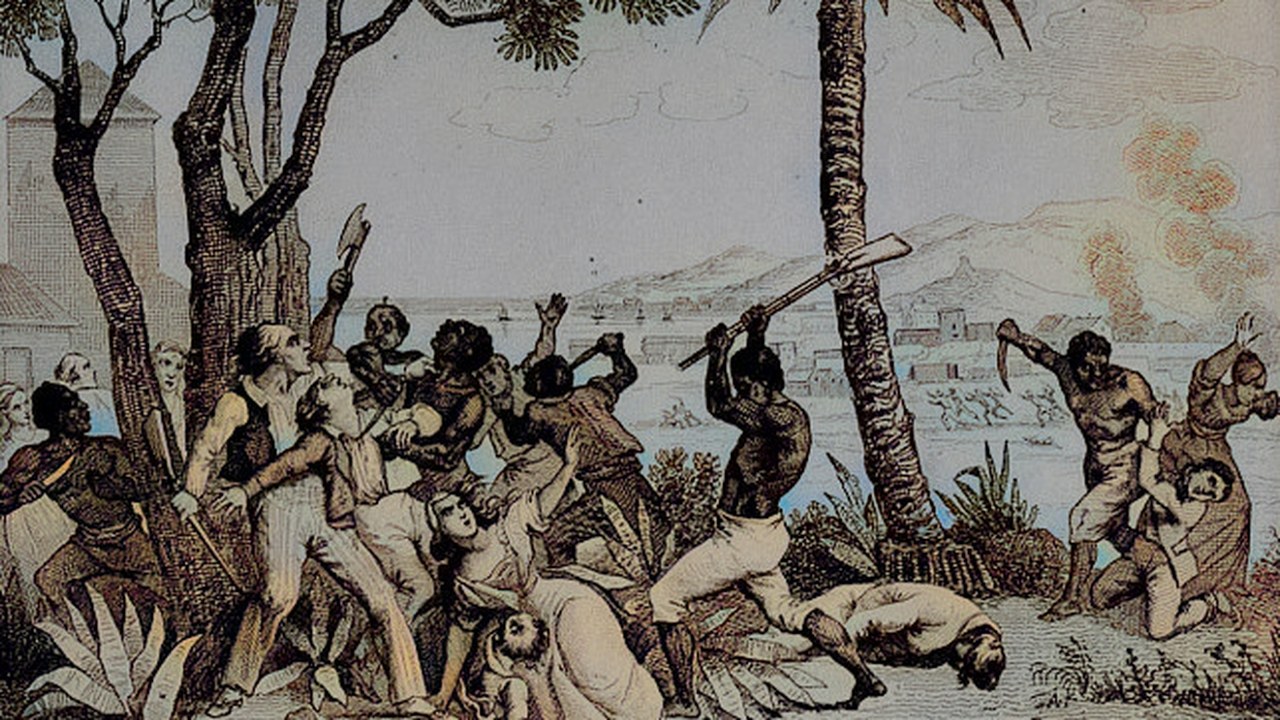
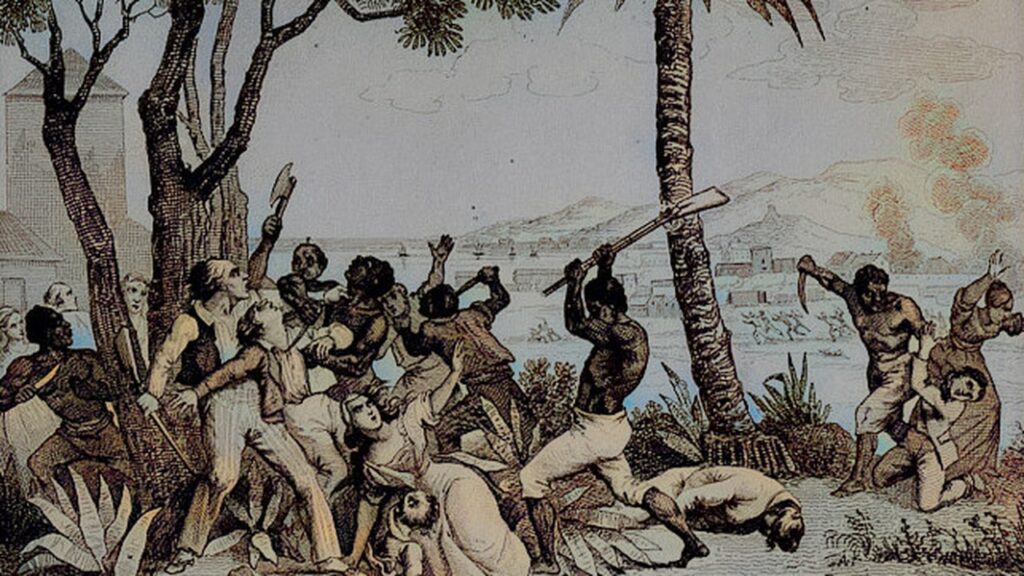
Photo credit: Historical engraving from 1833, via Wikimedia Commons, public domain
In August 1791, thousands of enslaved people rose across the northern plains.
They burned plantations, seized weapons, and refused every order to return to bondage.
Leaders such as Dutty Boukman helped lead the first rising that shocked the colony.
France tried to end the chaos by ending slavery itself.
A French commissioner abolished slavery in the colony in 1793. The French government confirmed abolition in 1794.
Freedom was now law. The hard part was defending it against every empire nearby.
Toussaint Louverture Turns Revolt Into a State
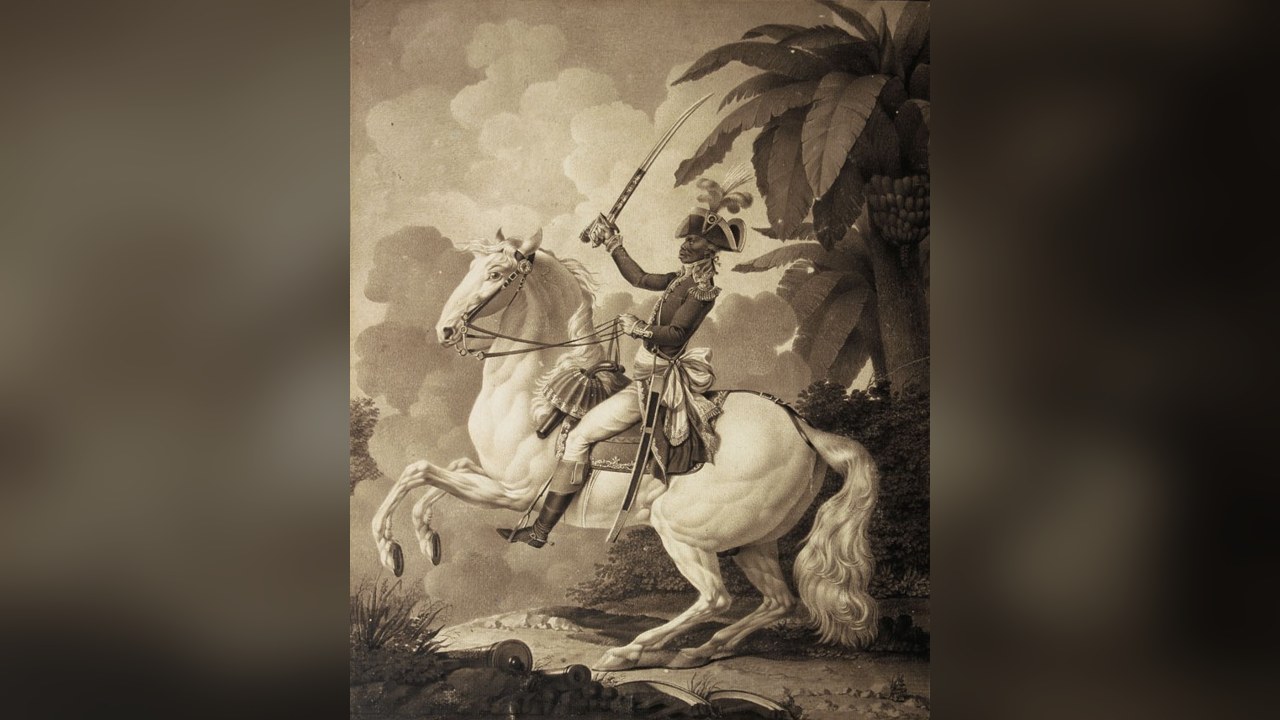
Photo credit: Portrait by Denis Alexandre Volozan, circa 1800, via Wikimedia Commons
Toussaint Louverture had been enslaved and later freed. He proved to be a brilliant general.
He trained formerly enslaved fighters into a disciplined army. He also negotiated with rival powers.
By the late 1790s he controlled most of the colony. His forces pushed back Spain and Britain.
In 1801 he took control of the whole island. A new constitution named him governor general for life.
That constitution kept slavery abolished and promised equality before the law.
Louverture never declared independence from France. He wanted autonomy, security, and time to rebuild.
Napoleon Bonaparte wanted the old colony back. In December 1801 he sent a large expedition under General Charles Leclerc.
Louverture fought, then accepted an armistice in May 1802. French officers seized him anyway.
He was shipped to a prison in France. He died there on April 7, 1803.
Dessalines Finishes the Fight for Freedom
His capture did not end the revolution. It hardened it.
Jean Jacques Dessalines and Henri Christophe resumed the war against France in 1802.
Word that France had restored slavery in other colonies enraged Black leaders and free people of color alike.
Yellow fever devastated the French army. Leclerc himself died in November 1802.
On November 18, 1803, Dessalines and François Capois won the Battle of Vertières.
The French surrendered their last major stronghold at Cap Français soon after that victory.
On January 1, 1804, Dessalines declared independence. The new nation took the name Haiti.
The name came from an Indigenous word for the island and its mountains.
Haiti became the first country founded by formerly enslaved people. It was the second independent nation in the Americas.
How Haiti Doubled the Size of America
Napoleon had dreamed of a new French empire in the Americas. Saint Domingue was its beating heart.
Louisiana was meant to feed and supply that Caribbean empire. Without Haiti, the plan collapsed.
In 1803 France sold Louisiana to the United States for 15 million dollars.
The sale covered about 828,000 square miles. It doubled the size of the United States overnight.
American schoolbooks often skip the cause. Enslaved Haitians helped redraw the map of North America.
Tragically, that new land also expanded slavery in the United States for decades to come.
Freedom Won, Then a Bill Arrived in 1825
The world punished Haiti for winning. Major powers isolated the young Black republic.
Slaveholding leaders feared the Haitian example would spread. News of the revolt was suppressed in parts of America.
In April 1825, French warships arrived with a demand. France would recognize Haiti at a price.
Haiti had to pay 150 million gold francs to former plantation owners for lost property.
That property included the very people who had freed themselves. Haiti borrowed from French banks to pay.
The burden became a double debt. Payments tied to that debt lasted until 1947.
As late as 1914, more than 75 percent of the national budget went toward repaying French banks.
Economists estimate the payments equal about 560 million dollars in modern terms.
Kept at home, that money could have built schools, ports, and hospitals for generations.
Why the Haitian Revolution Still Matters Today
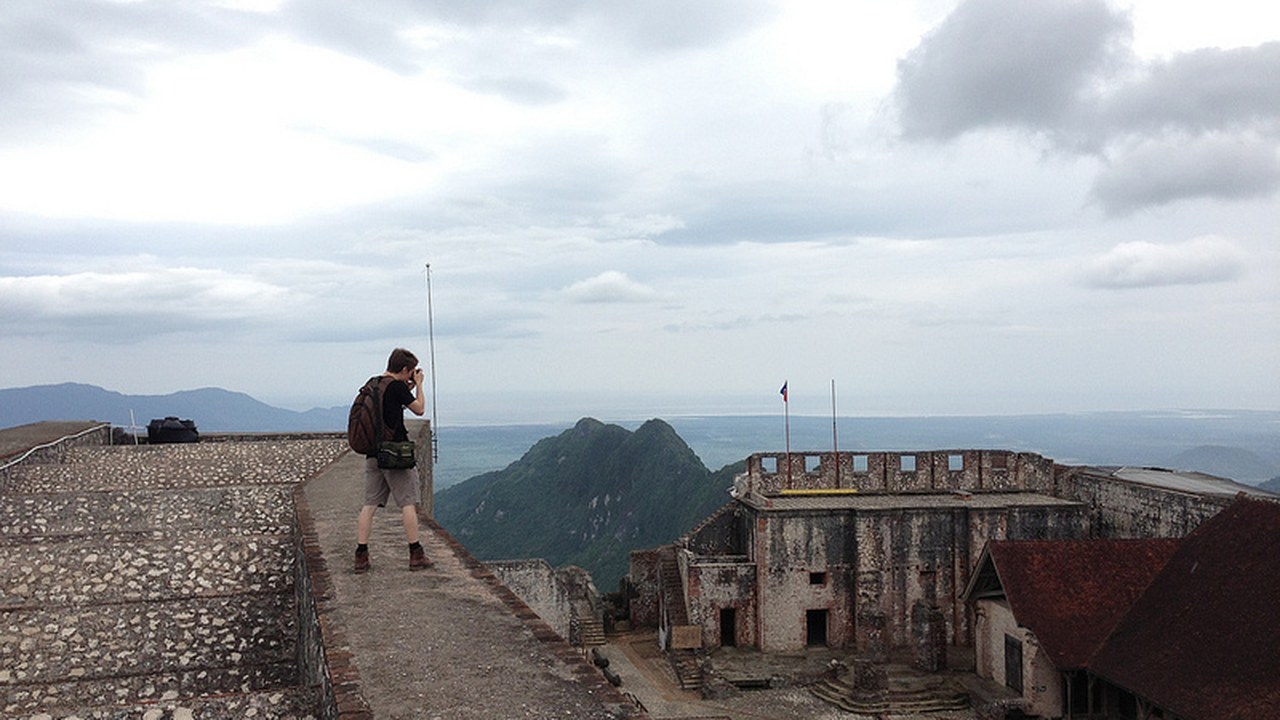
Photo credit: Photo by Andrew Wiseman, via Wikimedia Commons, Creative Commons Attribution Share Alike 3.0
The argument is not finished. In April 2025, a United Nations forum heard renewed calls for restitution.
France announced a joint commission of Haitian and French historians to study the 1825 indemnity.
Haitian voices at the forum called the payment a ransom. They asked for truth, repair, and returned wealth.
The Citadelle Laferrière still stands above northern Haiti, built after independence to guard against a French return.
Its stone walls tell the same story as the revolution itself. Freedom had to be defended, then defended again.
For our community, Haiti is a mirror. It shows what Black courage can build against impossible odds.
It also shows how freedom can be taxed, isolated, and undermined when it threatens powerful interests.
That is why this history belongs in every American classroom, right beside the story of 1776.
Explore more Black in the Day features, including our story of the Great Migration and our look at Black Wall Street and Tulsa. Visit Urban City Podcast for daily coverage that centers our people.