4 min read
Mississippi ballot initials are now at the center of a warning.
Fake texts are spreading across the state this week.
They tell voters to refuse a ballot with writing on it.
That advice is wrong, and it could cost people their vote.
State law requires the initials those texts warn against.
Election Day in Mississippi is Tuesday, Nov. 3.
Major Takeaways
- Fake texts tell Mississippi voters to refuse ballots with poll manager initials.
- Mississippi law requires a poll manager to initial each blank ballot.
- The initials go on the back and never change choices on the front.
- A ballot is cast only after a manager confirms the initials are genuine.
- Voters with questions can ask a poll manager or their circuit clerk.
1. Mississippi Ballot Initials Are Required by Law
The Mississippi Legislative Black Caucus issued the warning on Oct. 13.
The caucus shared its message in a public Facebook post.
It urged voters not to fall for the misleading texts.
The caucus said those initials belong there.
It said they do not change your voting choices.
The rule comes from Mississippi Code Section 23 15 541.
A poll manager must initial the back of each blank ballot.
If that manager steps away, an alternate manager initials it instead.
The initials sit where workers can see them after folding.
Your choices go on the front of the ballot.
The initials go on the back of the ballot.
One never touches or changes the other.
2. The Initials Help Make Sure Your Vote Counts
The initials show that poll workers issued that ballot properly.
They help workers account for every ballot at the site.
A ballot goes into the box only with genuine initials.
That check happens after you mark your choices in private.
So refusing an initialed ballot works against your own vote.
The caucus asked voters to send the facts back.
It asked them to correct whoever sent the fake text.
It also urged voters to ask questions at the polls.
Ask the poll manager to explain before you cast it.

3. How Voting With a Paper Ballot Works
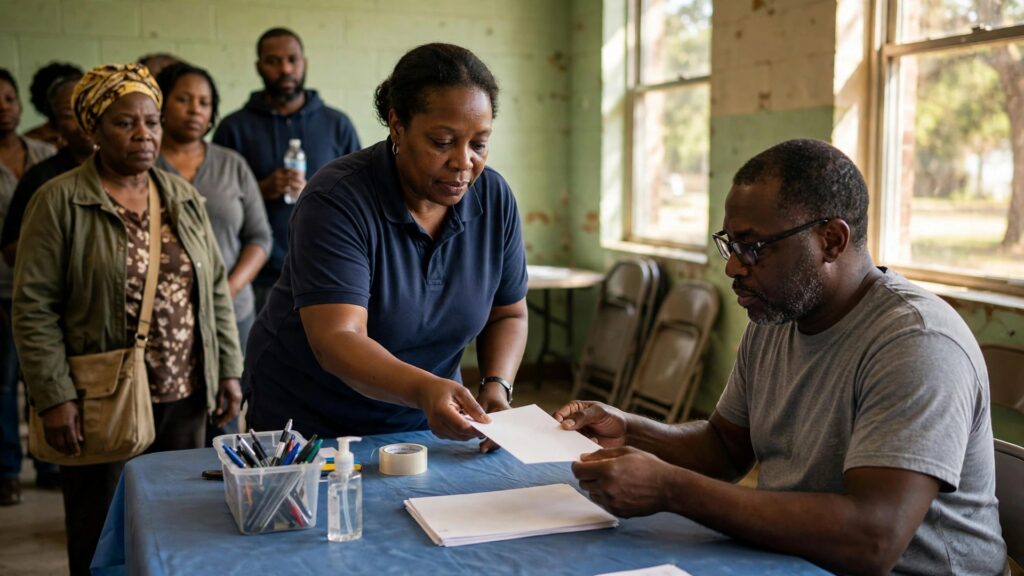
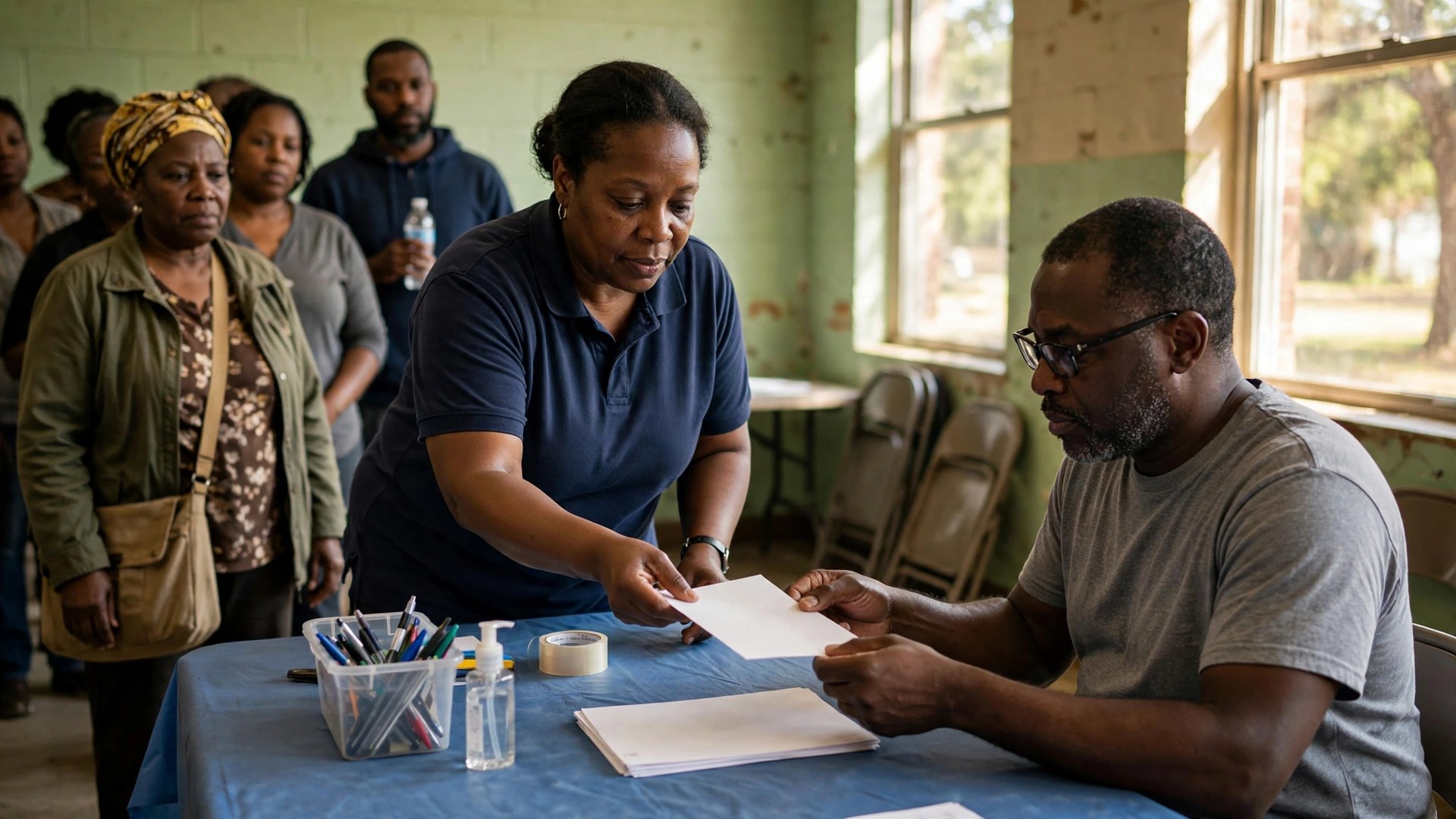
First, you sign the voter receipt book at check in.
Next, the poll manager initials the back of your blank ballot.
Then that worker hands the ballot to you.
You mark your choices in private, on the front.
Finally, a manager checks the initials before the ballot is cast.
The ballot then goes into the box or the scanner.
That order is normal procedure, not a warning sign.
If anything feels unclear, pause and ask before casting.
Poll workers are there to explain each step.
Your county circuit clerk can also answer questions.
The Secretary of State office offers help by text as well.
Text the word HI to 601.586.7600 for that service.
4. The Same False Claim Is Spreading Nationally
Mississippi is not the only place seeing this claim.
Similar posts are spreading on social platforms across the country.
They claim any poll worker marking means a ballot is disqualified.
Election officials in multiple states say that claim is false.
Some places require workers to mark ballots by law.
Marks can show a ballot type or a precinct name.
They can also help officials retrieve a challenged ballot later.
Experts urge voters to trust local election officials for facts.
They urge voters not to trust forwarded posts from friends.
Similar claims have circulated in Mississippi in past elections.
Each time, officials pointed back to the same state law.

5. Why This Matters So Much for Black Voters
Confusion at the polls hits Black communities especially hard.
Black voters have faced suppression tactics for generations in Mississippi.
A confusing text can make a busy voter walk away.
That risk grows for elders and for first time voters.
It grows for shift workers with little time to spare.
Misinformation spreads fast through group chats and family threads.
Those same threads can carry the correction just as fast.
Churches and civic groups can share the real steps early.
Our news coverage will keep tracking voting alerts.
Our Black history series recalls the long fight for the ballot.
Read more reporting at Urban City Podcast and share it widely.
Do not let a misleading text silence your voice.
Accept the properly initialed ballot, mark it, and cast it.
Your vote is your power in this election.