
6 min read
They were told, in official studies and in plain conversation, that Black men could not fly warplanes.
The United States Army set up their training program as an experiment.
Many of the men running that experiment expected it to fail.
Instead, the Tuskegee Airmen built one of the finest combat records of World War II.
They guarded American bombers over Europe in fighters painted with bright red tails.
Bomber crews who once doubted them began asking for the Red Tails by name.
And when the war ended, their record helped force the integration of the entire United States military.
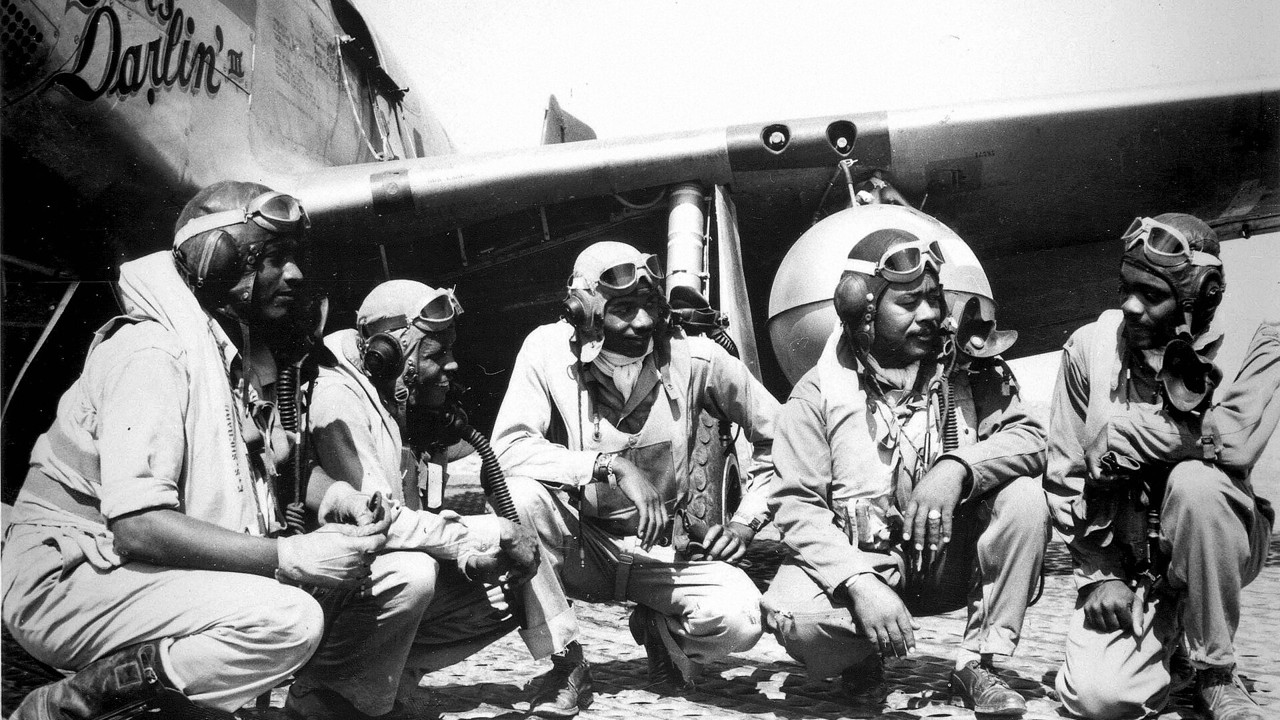
Photo: Public domain via Wikimedia Commons
Major Takeaways
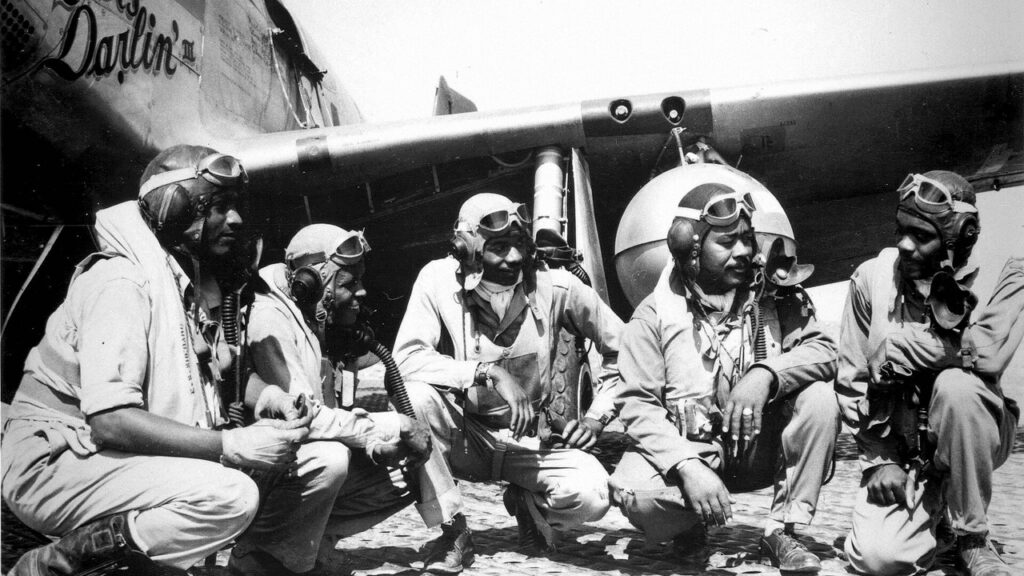
The Tuskegee Airmen were the first Black military aviators in the United States armed forces, trained at Tuskegee, Alabama, beginning in 1941.
A total of 992 pilots graduated from the program, and 450 of them served in combat over North Africa, Sicily and Europe.
Flying as the 332nd Fighter Group, they completed 1,578 missions and 15,553 sorties, and bomber crews prized their escort work.
Behind every pilot stood a vast ground team, more than 16,000 men and women in total took part in the Tuskegee experience.
Their success helped lead President Truman to integrate the armed forces in 1948, and Congress honored them with its Gold Medal in 2007.
An Experiment Designed to Fail
The road to Tuskegee began with a fight in Washington.
Black leaders, the Black press and civil rights organizations demanded that Black Americans be allowed to serve as military pilots.
A federal lawsuit filed on behalf of Howard University student Yancy Williams pressed the War Department to open its doors.
In 1941, President Franklin D. Roosevelt overruled his top generals and ordered an all Black flight training program.
The Army chose Tuskegee Institute in Alabama, a school with one of the strongest aviation training programs in the nation.
Primary training ran at Moton Field, with advanced training at Tuskegee Army Air Field nearby.
But the program carried a poison at its core.
Army War College studies written between 1924 and 1939 had declared Black Americans unfit for leadership and incapable of aviation.
From all accounts, the training was set up as an experiment expected to prove exactly that.
The cadets at Tuskegee understood the assignment better than anyone.
Failure would be used against every Black American who came after them.
Tuskegee Airmen Earned Their Wings the Hard Way
The first class began training on July 19, 1941.
Thirteen cadets started the program, and every one of them held a college degree.
Among them stood Captain Benjamin O. Davis Jr., a West Point graduate.
The training was rigorous by design, covering meteorology, navigation and instruments.
Only five of those first thirteen men survived the program to earn their wings on March 7, 1942.
Class after class followed them through Moton Field.
By the time the last class finished in June 1946, 992 Black pilots had graduated.
The pilots were only the visible edge of the effort.
For every pilot, roughly a dozen other Black men and women served in support roles.
Mechanics, armorers, navigators, bombardiers, radio technicians and flight instructors kept the machine running.
More than 16,000 people in all formed part of the Tuskegee experience.
They did this work while enduring segregation on their own bases.
They were shut out of officers clubs, pushed aside by base police and insulted by men who wore the same uniform.
The discrimination did not break their mission.
It sharpened it.
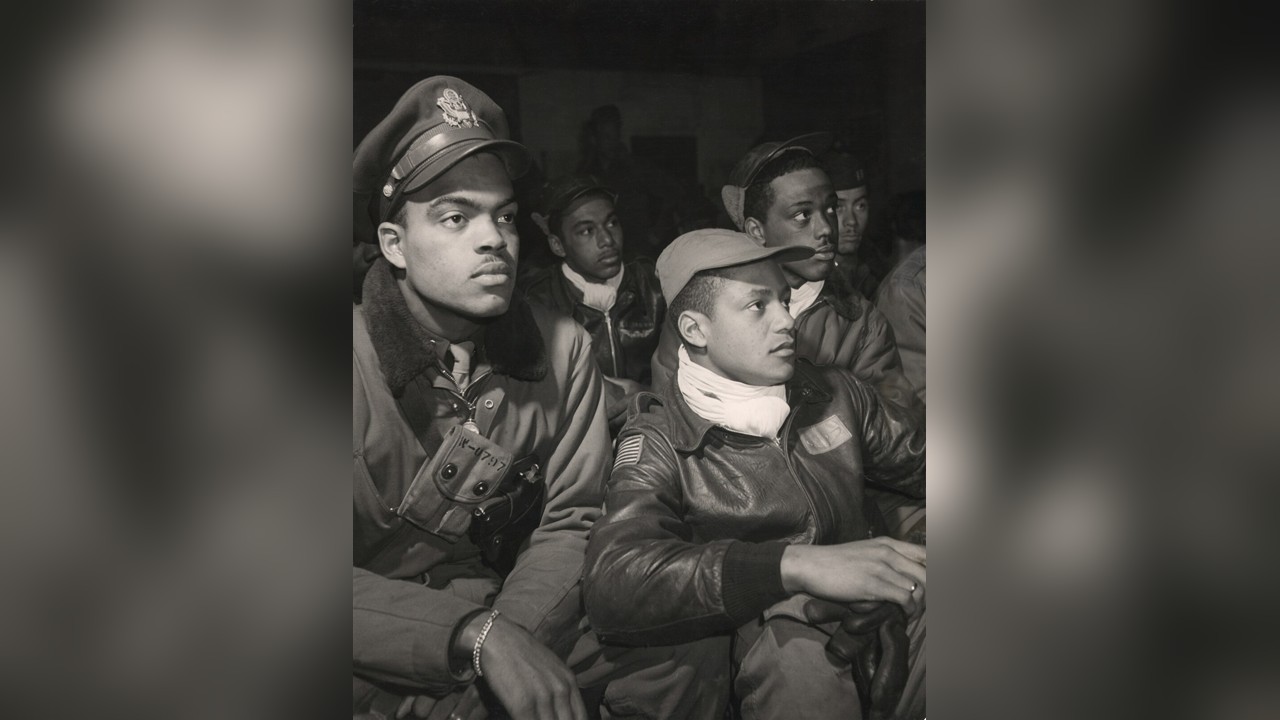
Photo: Public domain via Wikimedia Commons
Red Tails Over Europe
The 99th Fighter Squadron deployed first, reaching North Africa in 1943.
It fought over North Africa, Sicily and Italy, flying in succession the P 40, the P 39, the P 47 and finally the P 51 Mustang.
In 1944 the 99th joined the 100th, the 301st and the 302nd to form the 332nd Fighter Group.
Under the command of Colonel Benjamin O. Davis Jr., the 332nd became the largest fighter unit in the 15th Air Force.
The group painted the tails of its fighters a bright, unmistakable red.
German pilots came to call them the Black Birdmen, with a respect earned the hard way.
American bomber crews gave them a warmer name: the Black Redtail Angels.
The 332nd specialized in close escort, staying with the bombers instead of chasing glory.
Bomber crews noticed, and they began requesting the Red Tails for the longest and most dangerous runs.
On March 24, 1945, Davis led a 1,600 mile round trip escort mission to Berlin.
His pilots downed three German jet fighters that day and brought every bomber home.
The mission earned the group a Distinguished Unit Citation.
By the end of the war, the Tuskegee Airmen had flown 15,553 sorties across 1,578 missions.
They destroyed 262 enemy aircraft and sank a German destroyer in strafing attacks.
The cost was written in names, not numbers.
Sixty six Tuskegee pilots were killed in combat, and 32 more were shot down and captured as prisoners of war.
Those who came home carried 150 Distinguished Flying Crosses among a long list of honors.
The Double Victory at Home
The Airmen fought what Black America called the Double V campaign.
Victory over fascism abroad.
Victory over racism at home.
On the second front, their weapon was an undeniable record.
A segregated military could not explain why its most requested escort group was a Black one.
The graduates pressed the point after the war, demanding equal treatment as proven professionals.
In 1948, President Truman ordered the integration of the armed forces.
Congress later declared that the Tuskegee Airmen had paved the way for that full integration.
The men themselves kept climbing.
Benjamin O. Davis Jr. became the first Black general officer in the United States Air Force.
Daniel Chappie James, another Tuskegee graduate, became the first Black four star general in American history.
The experiment had produced the very leaders it claimed could not exist.
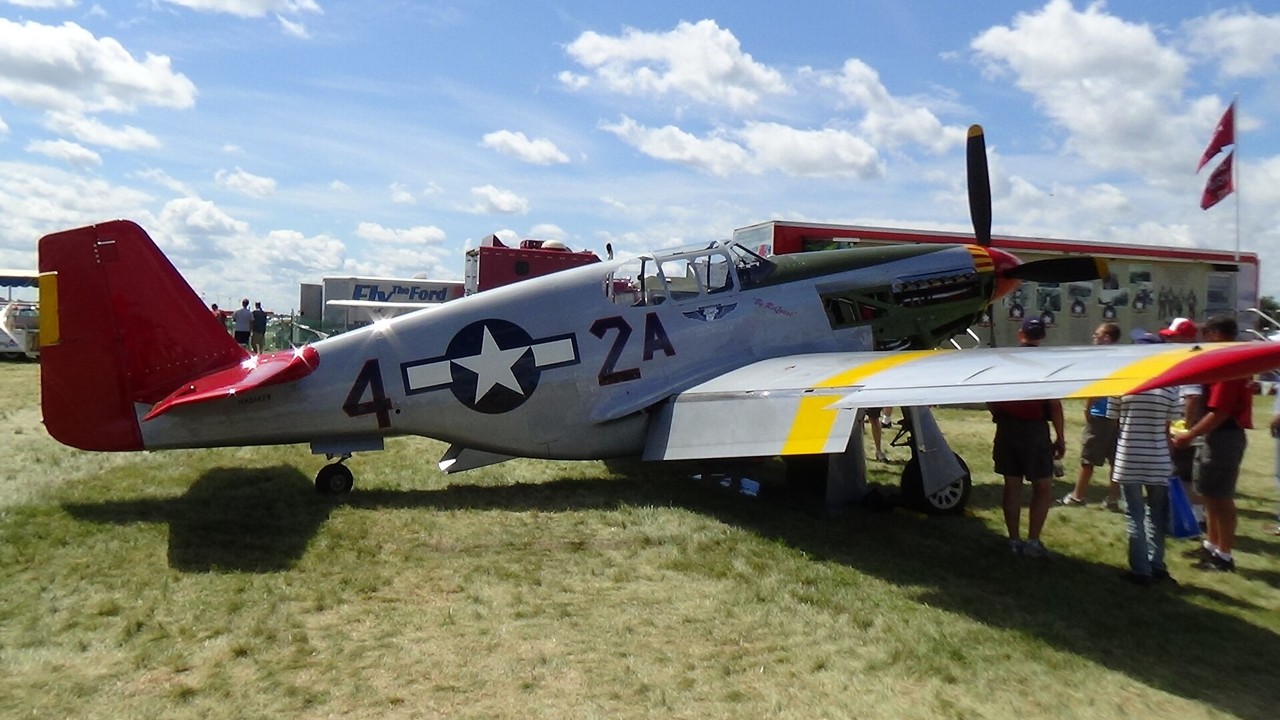
Photo: Wikimedia Commons
Why the Tuskegee Airmen Still Matter Today
Recognition arrived slowly, and some of it arrived very late.
For nearly thirty years after the war, the Airmen lived in relative anonymity.
In 1972 they founded Tuskegee Airmen Incorporated to preserve their story and inspire young Americans.
Moton Field is now a National Historic Site, where visitors walk the ground where the first classes trained.
In 2007, the surviving Airmen received the Congressional Gold Medal, the highest honor Congress can give.
Today the ranks of the original Airmen grow smaller every year.
That makes the telling of their story more urgent, not less.
Their lesson speaks directly to this moment.
Every generation of Black Americans has faced some official voice declaring what Black people cannot do.
The Tuskegee Airmen answered that voice the way our people always have.
They mastered the craft, carried the burden of proving it twice over, and changed the institution that doubted them.
Young people chasing flight school, engineering degrees and military careers still walk a runway these men built.
The Red Tails are not just history.
They are instructions.
Keep exploring the series with our features on Bessie Coleman and the Six Triple Eight, and find more Black history coverage at Urban City Podcast.