5 min read
Major Takeaways
- House Democrats are weighing a four term cap on committee leaders, and the plan would push three of the most senior Black lawmakers in Congress out of their posts after the coming Congress.
- Bennie Thompson, Bobby Scott and Maxine Waters have each led their committees for at least a decade, and all three want their gavels back when Democrats take the majority in January.
- The Congressional Black Caucus has defended seniority for decades as the equalizer that turned small numbers into real power for Black members.
- Younger members are openly backing limits and challenging veteran chairs, and a rules vote in early December will show which side is winning.
A Triumph at the Ballot Box, a Fight Inside the Building
The Congressional Black Caucus is about to grow larger than it has ever been.
More than 60 Black lawmakers will serve in the new Congress, which opens on January 3.
Black candidates held their ground even as Republican mapmakers tried to erase districts where Black voters choose their own representation.
In the Senate, Black membership climbs to a record seven.
Scott Colom of Mississippi and Juliana Stratton of Illinois join a chamber that counted five Black members this year.
It is, by any measure, a moment of triumph.
Yet inside the Capitol, the caucus is arguing with itself about power.
The argument is over seniority, the rule that has governed who leads in the House for generations.

Seniority Built Black Power in the House
For Black lawmakers, seniority was never just a custom.
It was a shield.
Black members often arrived in Washington with less access to big donors and party insiders.
Time served was the one currency nobody could take from them.
Serve long enough, and the gavel came to you by right.
That system carried Black members to the top of the most powerful committees in Congress.
It is why veterans of the movement and the lawmakers who followed them guarded the rule so fiercely.
Every earlier attempt to loosen it failed, and the caucus led the defense each time.


The Proposal That Changes the Math
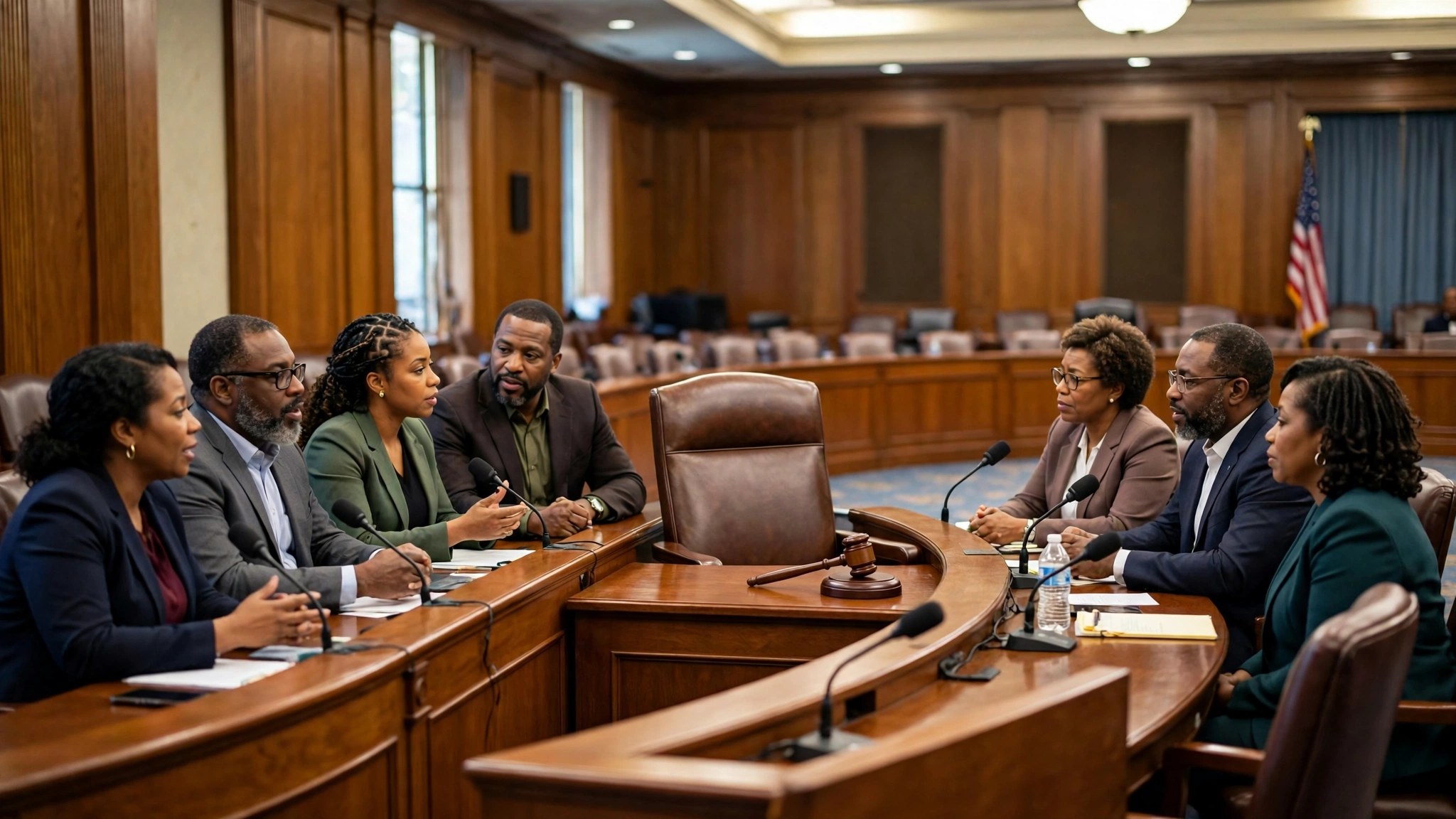
Now House Democrats are weighing a four term limit for committee chairs and ranking members.
Representative Susie Lee of Nevada is carrying the proposal.
A rules vote is expected in early December, after two weeks of debate.
If the limit passes, the longest serving leaders would have to step aside after the coming Congress unless they win a waiver.
Three names sit at the center of the storm.
Bennie Thompson of Mississippi, 78, leads Democrats on Homeland Security.
Bobby Scott of Virginia, 79, leads Democrats on Education and Workforce.
Maxine Waters of California, 88, leads Democrats on Financial Services.
Each of them has run a committee for at least a decade.
Gregory Meeks of New York, who leads Democrats on Foreign Affairs, would face the same clock.
Republicans have lived under a three term limit for more than 30 years, though waivers have stretched it for some.
The Elders Say the Voters Decide
The defense of seniority is loud and proud.
Jim Clyburn of South Carolina says the voters make the determination on term limits.
He argues that the House has to protect seniority in this place.
Clyburn has long noted that Black lawmakers of his generation started later, because the doors stayed closed longer for them.
Gregory Meeks and Yvette Clarke of New York, the current caucus chair, also oppose the limits.
Their case is simple.
Seniority is the equalizer that lets members without wealthy networks still rise.
Clarke has declared the caucus unwavering in its support for Waters.
Waters is seeking an eighth term at the top of Financial Services.
A New Generation Knocks on the Door
But the ground is shifting under the old rule.
Jahana Hayes of Connecticut, herself a caucus member, is challenging Scott for the Education gavel.
Sean Casten of Illinois is challenging Waters at Financial Services.
Shontel Brown of Ohio is running for the open top spot on Agriculture against a more senior rival.
Hayes says the caucus is getting bigger, and people come with different backgrounds and different perspectives.
Shomari Figures of Alabama calls the debate a good thing, and notes the caucus looks far different than it did ten years ago.
Member elect La Shawn Ford of Illinois says limits should be considered, because experience should not be the only factor in a chair vote.
Member elect Melat Kiros of Colorado backs Waters personally, while saying term limits are important for building the bench.
Retiring member Bonnie Watson Coleman of New Jersey says she sees both sides, and points to younger members who won gavels by beating senior rivals.
Jeffries Lets the Conversation Run
Hakeem Jeffries, the presumptive speaker, is not shutting the debate down.
He called it the right conversation to have.
Troy Carter of Louisiana, who is running unopposed to lead the caucus next year, says the caucus is not a monolith.

That posture marks a real change.
A generation ago, questioning seniority inside the caucus was close to heresy.
Today the question is being asked in the open, by Black members themselves.
The December vote will not end Black power in the House.
The caucus is bigger than ever, and its members hold seats across the map.
What the vote decides is how that power passes from one generation to the next.
For Black voters who sent this historic class to Washington, the answer matters.
Committees write the bills on housing, banking, schools and homeland security.
Who holds the gavels decides whose priorities move first.
The same new majority will also settle fights like the last Senate push on the SAVE America Act.
Follow our continuing coverage in Big Back Politics.