8 min read
Major Takeaways
- A group called Enough Promises Ohio spent at least 2 million dollars boosting Greg Levy and attacking Sherrod Brown.
- A filing made public on Thursday showed its only donor in early October was Conservative Americans PAC, a Republican super PAC, which gave 2.5 million dollars.
- The mailers spoke directly to Black voters, with one declaring an end to the war on Black America and accusing Brown of building a system to lock us up.
- Levy says his campaign has no ties to the group and condemned the effort as an attempted deception of voters.
- Polls show Brown and Jon Husted in a statistical tie, so even a small shift among Black voters could decide who wins the seat.
The Ohio Senate race took a sharp turn on Thursday.
A campaign finance filing showed who paid for a wave of mailers aimed at Black voters.
The money did not come from the candidate the mailers praised.
It came from a Republican super PAC.
For Black families in Cleveland, Columbus, Cincinnati, Dayton and Akron, the reveal matters far beyond one mailbox.
It shows how far outside money will go to move our votes in a race that could help decide control of the Senate.
Our coverage of other close Senate fights, including the Mississippi Senate race drawing millions as the contest tightens, shows the same pattern across the country this fall.
The Ohio Senate Race Filing That Changed the Story
Enough Promises Ohio has spent at least 2 million dollars in the race.
The group poured money into ads and mailers that criticize former Senator Sherrod Brown.
The same ads lift up Greg Levy, an independent candidate who calls himself a socialist.
Until Thursday, voters had no clear public record of who funded the group.
The filing changed that hours before a disclosure deadline for the period before the election.
It showed the group took in money from only one donor between October 1 and October 14.
That donor was Conservative Americans PAC.
The Republican super PAC contributed 2.5 million dollars.
Conservative Americans PAC drew attention earlier this cycle for a different kind of meddling.
It took credit for stepping into Democratic primaries for the House.
Its stated aim there was to lift candidates it viewed as easier to beat in November.
Now its money sits behind a push aimed at voters Brown needs most.
Federal law bars super PACs from coordinating with campaigns.
That legal wall is why each campaign in this story rushed to separate itself from the group.
A Mailer Built to Speak to Black Voters
One online ad says Brown sold us out.
The ad calls Levy the real progressive in the race.
A mailer carries an even louder message on its front.
It reads, in all capital letters, END THE WAR ON BLACK AMERICA.
Images of Levy, who is Black, fill that side of the mailer.
The back shows Brown with a charge written for maximum sting.
It says Sherrod Brown built the system to lock us up.
Nothing in the design is subtle.
The language borrows the pain of mass incarceration and policing in Black communities.
It then points that pain at one candidate and steers the reader toward another.
An earlier mailer in the same push highlighted planks from the Levy platform.
Those planks included universal health care and a 30 dollar minimum wage.
They also included support for Palestinians.
For a voter meeting Levy for the first time through that mailer, the picture looks like a bold insurgent bid.
What the mailer could not show was the Republican money paying the printing bill.
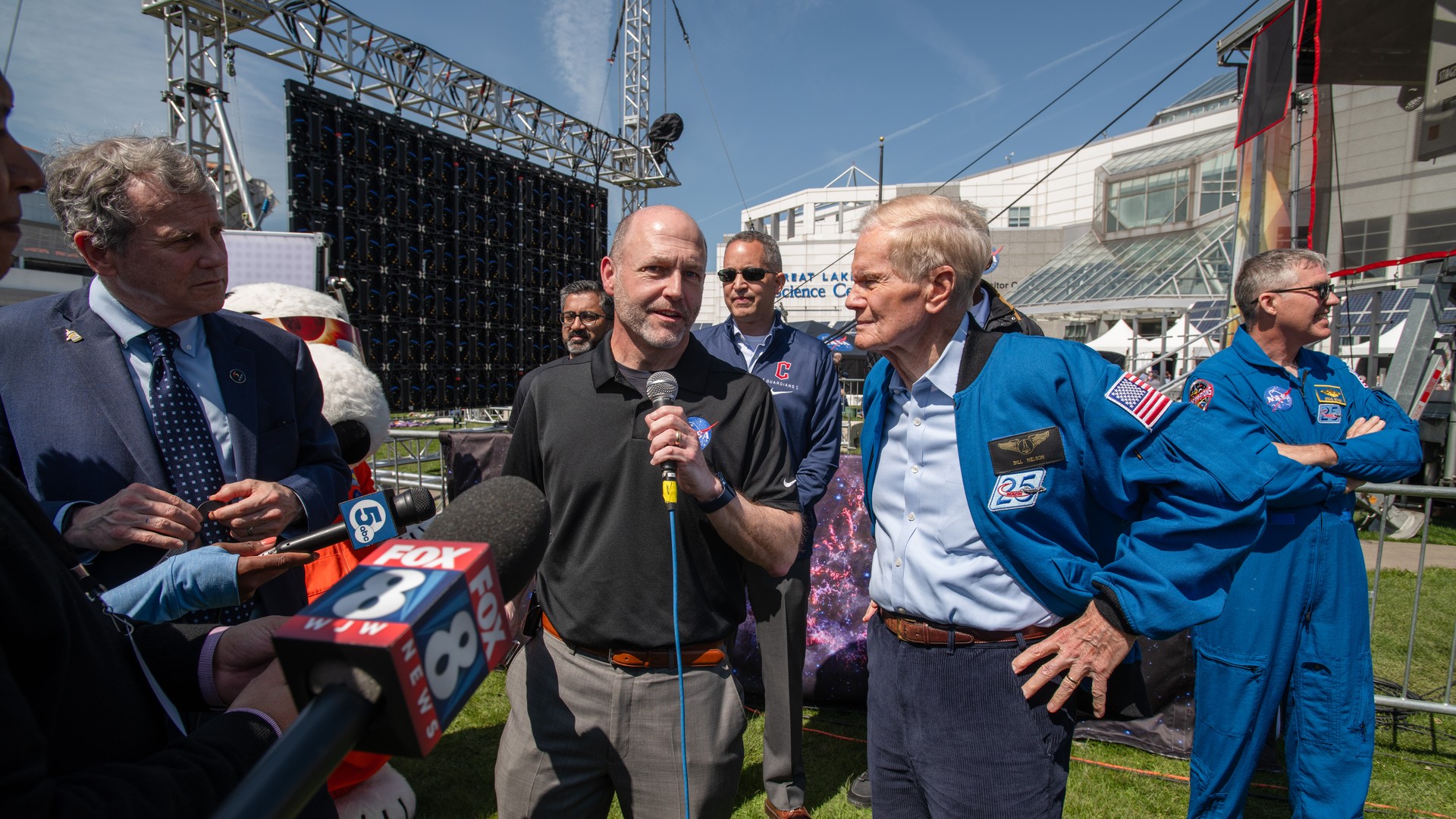
Sherrod Brown listens during a public event in Ohio. Photo: NASA Glenn Research Center via Wikimedia Commons, public domain
The Candidate at the Center Says He Was Used
Levy has spent weeks trying to escape a campaign he never approved.
His campaign said in a statement this month that it has no ties to Enough Promises Ohio.
It condemned what it called the attempted deception of voters.
Earlier, the campaign said it was considering legal action over the flyers.
It called the practice highly undemocratic.
It also used language that should stop every Black voter cold.
The campaign called the ads a racist caricaturing of its candidate.
It described the tactic as a form of digital blackface.
In plain terms, the candidate being promoted says the promotion demeans the very communities it claims to honor.
Brown and his team answered with a promise that voters will see through it.
Ohioans will not be deceived, campaign spokesperson Lauren Chou said in a statement.
Chou said voters will hold Jon Husted accountable.
She pointed to votes by Husted against limits on the war powers of President Donald Trump in the Iran conflict.
Husted and his team denied any role at all.
Campaign spokesperson Amy Natoce said the campaign had no involvement with Enough Promises Ohio.
That denial may be legally true and still leave voters with hard questions.
A group can help a candidate without ever speaking to that candidate.
That is exactly the gap in the law that makes this tactic so useful and so hard to police.
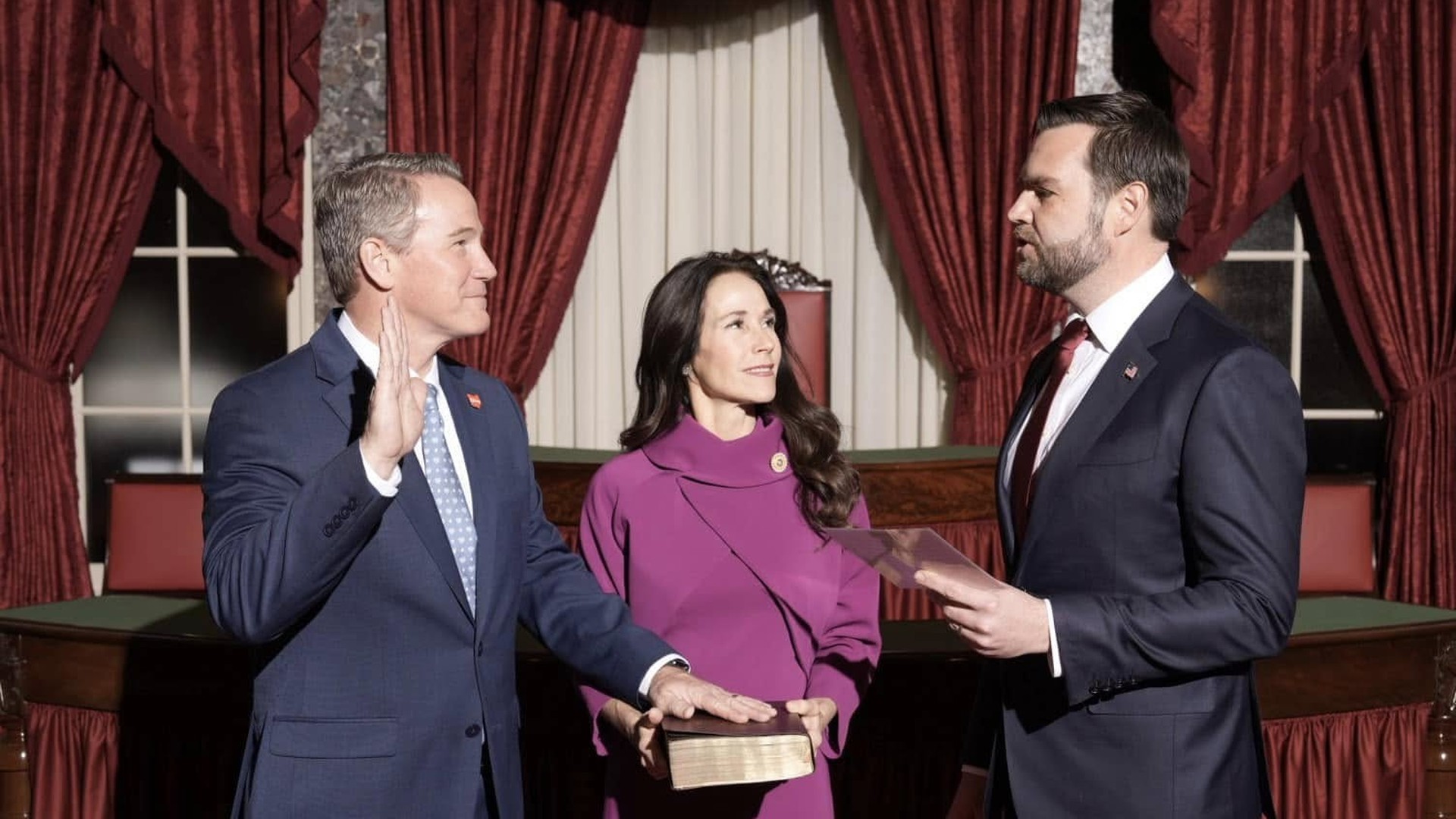
Jon Husted takes the oath of office in the Senate. Photo: Office of Senator Jon Husted via Wikimedia Commons, public domain
Why a Small Slice of Votes Matters So Much
This race is close enough that tiny shifts carry huge weight.
Most polls show Brown and Husted in a statistical tie.
Brown is trying to unseat Husted and return to the Senate.
The winner will serve the rest of the term once held by Vice President JD Vance.
That term ends in 2028, so another campaign could begin almost at once.
A September poll gave Levy just 1 percent of the vote.
It gave Libertarian Bill Redpath 2 percent.
Numbers that small can still flip a tied race on November 3.
University of Cincinnati political scientist David Niven explained the math plainly.
The Republicans do not have any margin for error in this campaign, Niven said.
Even peeling off the fraction of the fraction of folks who might be willing to vote socialist is meaningful to them, he added.
Read that logic through a Black lens and the targeting makes sense.
Black voters in Ohio cities are not a side note in this election.
They are a decisive bloc that both parties say they respect.
Respect, in this case, arrived as a mailer funded in secret until the final stretch.
A Flood of Money on Every Side
The Levy push is only one stream in a river of cash.
Campaigns and their allies have funneled more than 460 million dollars into this race.
At this pace, spending will likely pass the record sum from the Ohio race of 2024.
That contest pitted Brown against Bernie Moreno, who beat him that year.
The biggest allied groups have spent at a scale few states ever see.
WinSenate, backed by Democrats, spent nearly 45 million dollars in Ohio as of October 22.
The Senate Leadership Fund, aligned with Republicans, put in 69.1 million dollars.
A group backed by Trump and called No Going Back PAC spent more than 27 million dollars attacking Brown and lifting Husted.
America PAC, tied to Elon Musk, poured in roughly 9.3 million dollars.
A group called Defend American Jobs, which speaks for crypto interests, spent more than 46 million dollars.
Crypto groups lobbied hard against Brown during his 2024 race as well.
Brown still holds one clear edge in the money race.
Filings released on October 22 showed Brown raised 68.4 million dollars this cycle.
Husted raised 19.9 million dollars over the same span.
Both campaigns held about 4 million dollars as the final days began.
There is also a mirror image push on the other side.
Another super PAC, Buckeye Freedom PAC, has spent even more targeting Husted.
That group promotes Redpath, the Libertarian candidate.
It has not yet disclosed any donors.
Ohio voters are thus getting squeezed from both directions by money they cannot yet trace.
Our look at how Hakeem Jeffries could become the first Black House Speaker shows what rides on who controls each chamber after November 3.

Cleveland skyline at dusk seen across the water. Photo: Erik Drost via Wikimedia Commons, CC BY 2.0
What Black Voters in Ohio Should Watch Now
First, read every mailer down to the smallest line of print.
The group paying for a message tells you as much as the message itself.
Second, separate the candidate from the campaign built around his name.
Levy himself has disowned the very ads that carry his face.
Third, expect more spending in the final days, not less.
Groups that waited until Thursday to name a donor have no reason to slow down now.
Fourth, remember that a tied race magnifies every single ballot.
A voter who stays home in protest hands power to the people who designed the trick.
A voter who studies the funding and votes with clear eyes takes that power back.
Black Ohio has decided close elections before.
From Cleveland union halls to Columbus churches to Cincinnati barbershops, our communities know what organized money looks like.
We also know the difference between a candidate who earns our trust and a mailer that rents our image.
The filing on Thursday pulled back a curtain.
What Ohio voters do with what they saw will shape the Senate for years.
Keep following the money and the full midterm picture at Urban City Podcast.