

Major Takeaways
- Domestic violence can be hidden in plain sight. Warning signs may be subtle, and victims may not always be able to safely communicate that they are in danger.
- Awareness and preparation can save lives. Understanding warning signs, establishing code words, communicating openly, and knowing how to seek help can create opportunities for intervention.
- Demetria’s story is a call to prevention. Her life was more than a statistic or a tragedy; her story reminds us why families, communities, and young people must take dating violence seriously.
A mother’s grief. A daughter’s legacy. A conversation that could save lives.
By Felicia Brookins
Award-Winning Author & Screenwriter | Host of Cultural Autopsy 7 min read
June was recognized as Children’s Awareness Month. A time meant to highlight protection,
prevention, and the safety of young lives, a context that makes the story of Demetria Bracey
especially difficult, and especially necessary, to tell.
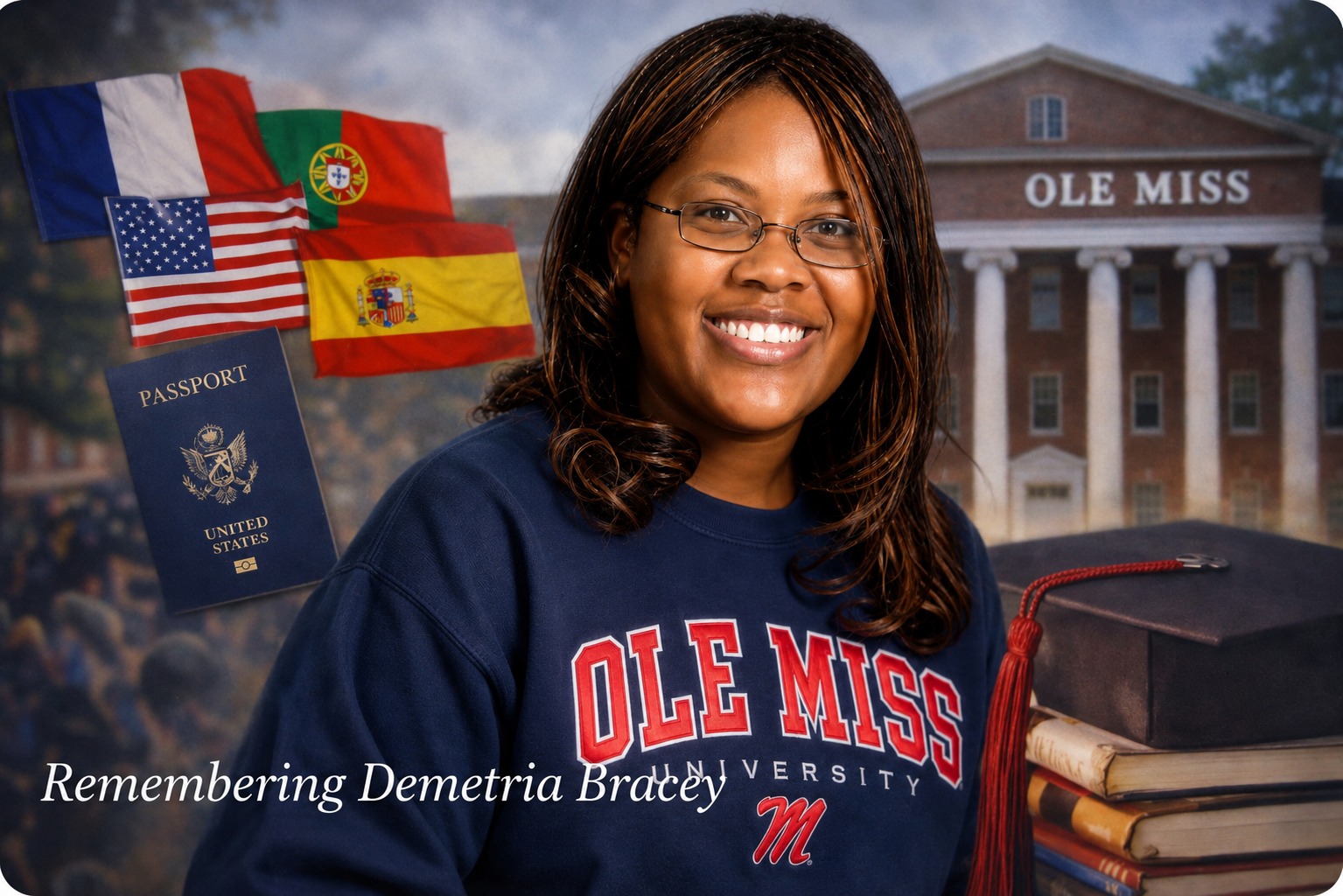
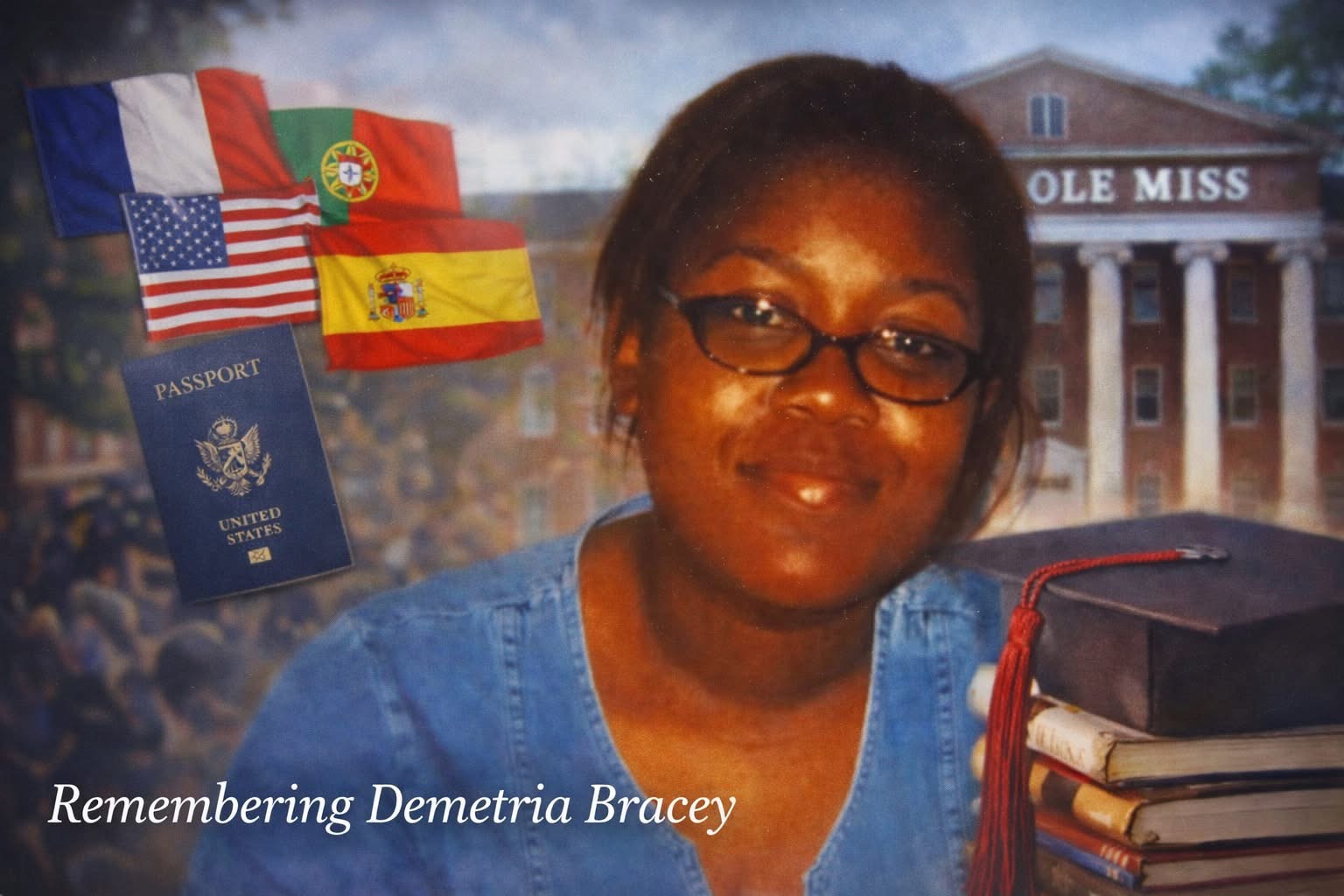
The 2005 murder of Ole Miss College Student, Demetria Bracey, a 21-year-old Black woman
nearing graduation, rippled through Mississippi and captured national attention. Bracey
was fatally stabbed six times in the chest by her boyfriend, David Jackson Williams, a brutal
act that abruptly ended a life full of promises and left lasting devastation for her loved ones,
her university, and her community.
Her killing was not an anomaly. It reflects a wider and ongoing crisis of intimate partner
and dating violence in the United States, one that disproportionately affects young adults.
Too often, domestic violence remains unseen, taking place behind closed doors, dismissed
as personal relationship conflict or minimized until it escalates beyond repair. In situations
like Bracey’s, early warning signs may have been subtle, socially normalized, or
misunderstood.
This reality highlights the critical need for earlier awareness, comprehensive education
around consent and boundaries, and stronger protective systems to intervene before
violence becomes deadly.
Domestic violence includes a range of harmful behaviors, physical, sexual, emotional, and
psychological, perpetrated by an intimate partner, and it impacts millions of individuals
nationwide each year. According to the Centers for Disease Control and Prevention (CDC),
an estimated 41 percent of women and 26 percent of men in the United States experience
some form of intimate partner violence over the course of their lives, including physical
abuse, sexual violence, or stalking.
However, these statistics do not fully capture the scope of the problem. A significant
number of incidents remain unreported, often due to fear of retaliation, social stigma,
financial dependence, or limited access to supportive resources. Black woman Mississippi Woman Indicted for SNAP Fraud, but Let’s Talk About Who Really Got Away With Millions ranks among
the states most deeply affected by violent crime, and the severity of its domestic
violence related deaths further distinguishes it on a national level.
Recent reviews show
that nearly 100 people in Mississippi, adults and children alike, lost their lives in domestic
violence incidents within a single recent year, prompting advocates to call for the creation
of a statewide fatality review board to identify patterns and develop prevention strategies.
Over a five-year period, data compiled from law enforcement records and media reporting
indicate that more than 300 Mississippians were killed in domestic violence homicides.
These figures serve as a sobering reminder that intimate partner violence can escalate to
fatal outcomes when early warning signs are missed or ignored.
Statewide data further reveal that close to 40 percent of women in Mississippi and more
than 30 percent of men will experience some form of intimate partner violence during their
lifetimes, including stalking, physical abuse, or sexual violence.
Together, these statistics point to a deeply rooted and ongoing crisis, one shaped by
economic inequality, limited access to survivor services, cultural stigma surrounding
disclosure, and insufficient protective systems.
Young people, particularly those in college settings, face heightened risk for dating and
domestic violence. Research suggests that approximately 20 to 30 percent of college
students nationwide experience some form of dating abuse during their academic years,
ranging from emotional manipulation to physical and sexual assault.
National surveys also indicate that one in three college women and one in ten college men
may experience sexual violence within dating relationships. Many students report
personally knowing someone who has been affected by abusive behaviors while in college.
Although federal law under the Campus SAVE Act requires institutions to report incidents
of domestic and dating violence, a substantial number of cases are never reported. Fear of
retaliation, social stigma, and concerns about being dismissed or disbelieved continue to
prevent many students from seeking help through formal channels.
Statistics can outline the scope of a crisis, but they cannot carry the weight of a mother’s
voice. That weight arrived for me over the phone, in the quiet aftermath of numbers and
research, when Demetria Bracey’s mother began to tell me about the last conversation she
had with her daughter, the night her life was taken.
She told me she spoke to Demetria that evening, and she believes now that her daughter’s
boyfriend allowed the call to happen, one final moment of contact. As they talked, Demetria
drifted into memories, revisiting moments from the past in a way that felt unfamiliar,
almost out of place. Then there was something else that stayed with her mother: Demetria
mentioned that she had been saving money in a checkbook. At the time, it seemed ordinary.
In hindsight, it felt like a message left unfinished.
Her mother believes, Dementia was trying to say something more, something urgent, but
didn’t know how. She also believes David Jackson Williams, the young man who would later
kill her daughter, was in the room as they spoke. She believes that whatever fear her
daughter, Demetriafelt, whatever danger she sensed, she could not name out loud.
The regret her mother carries is not rooted in blame, but in longing, for the chance to have
taught her daughter how to protect herself, how to signal danger without saying it, how to
use code words when speaking freely was not an option. She wonders whether a plan, a
signal, or even physical self-defense training might have changed the outcome. Whether
knowing how to ask for help could have helped her daughter survive.
It is a haunting reminder that for many victims, the moment to escape is not loud or
dramatic. It is quiet. It sounds like a normal phone call. And it ends before anyone realizes it
was a goodbye. The weight of that unanswered urgency would not reveal itself until three
days later, when it arrived not as a warning, but as a knock at the door.
Demetria Bracey’s mother told me she was notified face to face, that her daughter was
dead. Her first response was disbelief. There had to be a mistake. They must have the
wrong person. Her daughter could not possibly be gone.
But as the words settled in her mind and her heart, one name surfaced immediately in her
mind, the boyfriend, David Jackson Williams. She knew in her gut it was him. It was him
that had murdered her daughter. She recalled the first time she had spoken with him over
the phone, how something in his voice unsettled her.
She had warned Demetria then, telling her she believed he was the devil. It was not said
lightly. She told me she recognized that spirit because she had known it before, having once
married a man she now describes as Satan himself at eighteen years old, just to escape her
own mother’s home. She said she knew that voice. She had heard it before. She’d tried to
warn her daughter back then about this man, the same way her mother had tried to warn
her about the man that would become her husband.
As she replayed her final conversation with Demetris, one detail rose above the rest. The
last words spoken between mother and daughter before hanging up the phone were simple
yet, the anchor her mother would need, “I love you.” Her daughter told her, her response to
Demetria was the same. “I love you.” She told her.
Three days later, she would learn what followed that call. Investigators told her that
Demetria had been stabbed and left inside her boyfriend’s apartment, her body hidden in a
closet. It remained there, undiscovered, until neighbors began complaining about a smell so
strong that maintenance was called to investigate.
That is how her mother learned the truth.
In 2007, a jury in Lafayette County convicted David Jackson Williams of murder in the
stabbing death of Demetria Bracey. He was sentenced to life in prison and remanded to the
custody of the Mississippi Department of Corrections, a verdict that at the time appeared to
bring finality to a case that had shaken the community.
But the legal process did not end there.
Williams appealed the conviction, and while Mississippi courts initially upheld the jury’s
decision, subsequent legal review raised concerns about trial procedures and jury
instructions. Those issues ultimately led to the conviction being reversed, clearing the way
for a new trial years after Bracey’s death.
In 2012, the case reached a different conclusion. Williams entered a guilty plea to
manslaughter, acknowledging responsibility for Bracey’s killing. Under the terms of that
plea, he was sentenced to 20 years in prison, bringing a close to a case marked by delay,
legal complexity, and enduring grief for those left behind.
At the center of this reporting is a young woman whose life mattered beyond the
circumstances of her death. Demetria Bracey was more than a statistic, more than a case
file. She was a daughter deeply loved, a student on the verge of graduation, and a young
woman whose future was stolen by violence. To her family, and especially to her mother,
who carries the weight of unanswered questions and enduring love, this work is offered
with care and respect. It is written with the hope that telling Demetris’ story, and others
like hers, may help prevent another family from receiving a knock at the door that forever
changes their lives.
Author Note: This article marks the beginning of a broader examination into domestic and
dating violence, how it begins, how it escalates, and what can be done to intervene before lives
are lost.











One Response
This is a powerful 3 part series and a cautionary tale about dating and being observant.