9 min read
Major Takeaways
Frederick Douglass was born enslaved in Maryland in February 1818 and escaped to freedom on September 3, 1838, disguised as a sailor on a northbound train.
He taught himself to read and write as a child in Baltimore, even though Maryland law forbade teaching enslaved people to read.
His 1845 autobiography, his newspaper The North Star, and his speeches made him the most famous Black abolitionist in the world.
He recruited Black soldiers in the Civil War, pressed President Abraham Lincoln on equal pay, and later held high federal office under five presidents.
A Child Enslaved on the Eastern Shore
Frederick Douglass entered the world as Frederick Augustus Washington Bailey, born into slavery in Talbot County on the Eastern Shore of Maryland.
He barely knew his mother, Harriet Bailey. She lived on a different plantation and died while he was still a young child.
He never learned who his father was. That silence was part of the design of slavery, which worked to erase Black family lines.
At about age six he was taken from his grandmother and sent to the Wye House plantation. At eight he was sent to Baltimore to serve in the home of Hugh and Sophia Auld.
Baltimore changed his life. Sophia Auld began teaching him the alphabet before her husband ordered her to stop, warning that learning would make an enslaved person unfit for bondage.
Douglass heard that warning as a map. If reading could ruin a person for slavery, then reading was the road out of it.
Frederick Douglass and the Book That Lit the Fuse
Denied a teacher, Douglass became his own. He traded bread to poor white boys in his Baltimore neighborhood in exchange for reading lessons.
He copied letters from ship timber at the Baltimore docks, where he later worked as a caulker making ships watertight.
At about age twelve he bought a book called The Columbian Orator. It held famous speeches and writings on liberty and natural rights.
That book gave his private thoughts a public language. He now had words for what he already knew in his bones, that no person was born to be owned.
At fifteen he was sent back to the Eastern Shore as a field hand under a man known for breaking enslaved workers. Douglass fought back and survived.
He also taught other enslaved people to read in secret gatherings, spreading the very skill his enslavers feared most.
After a failed escape plan, he was sent back to Baltimore. There he met Anna Murray, a free Black woman who believed in his freedom enough to fund it.
September 3, 1838: The Train Ride to Freedom
Anna Murray sold a feather bed to help buy his train ticket. On September 3, 1838, Douglass boarded a train in Baltimore dressed as a sailor.
He carried borrowed seaman papers and kept his nerve through every inspection. In less than 24 hours he reached New York City a free man in fact, if not yet in law.
New York was not safe for a fugitive, so the couple moved on to New Bedford, Massachusetts. They married on September 15, 1838, and took the surname Douglass.
In New Bedford he earned his first wages as a laborer and began raising a family that grew to five children, Rosetta, Lewis, Frederick Jr., Charles, and Annie.
He also found his calling. At abolitionist meetings he stood up and told the truth about slavery in a voice audiences could not forget.
By 1841 the Massachusetts Anti Slavery Society had hired him as a speaking agent. The man who had been property was now paid to move crowds with words.
Read more from this series: Thurgood Marshall: The Lawyer Who Beat Jim Crow in Court.
The Narrative That Proved His Life
Some listeners doubted that so polished a speaker had ever been enslaved. In 1845 Douglass answered them in print.
His book Narrative of the Life of Frederick Douglass named names and places from his years in bondage. It sold widely and made him famous on two continents.
Fame brought danger. His former enslaver could use the book to find him, so Douglass sailed for Britain and Ireland and spoke there for nearly two years.
British supporters raised the money to buy his legal freedom. He came home in 1847 a free man under the law as well as in fact.
He settled his family in Rochester, New York, and in December 1847 he launched his own newspaper, The North Star. Its motto declared that right is of no sex and truth is of no color.
Rochester became his base for helping freedom seekers on the Underground Railroad and for building an independent Black press voice.
Explore more Black history features: Montgomery Bus Boycott: 381 Days That Changed America and Bessie Coleman: First Black Woman Pilot Took Flight.
What to the Slave Is the Fourth of July
On July 5, 1852, Douglass stood in Corinthian Hall in Rochester before the Rochester Ladies Anti Slavery Society and delivered the speech that still defines him.
He asked what the Fourth of July meant to the American slave. His answer was that the celebration revealed the gross injustice and cruelty to which enslaved people were constant victims.
He called the nation’s shouts of liberty and equality a hollow mockery while millions remained in chains. The room had expected praise, and he gave them a mirror instead.
Yet he did not abandon the founding documents. He read the Constitution as a glorious liberty document and demanded that America live up to its own words.
That balance is why the speech endures. He condemned the country’s practice with fury while claiming its promises as property of the enslaved too.
In July 1848 he had stood at Seneca Falls as the only African American at the first women’s rights convention, backing the call for women’s votes.
His doctrine never changed. The rights he claimed for Black men, he claimed for women as well, and he said so in The North Star within days of that convention.
War, Lincoln, and Black Soldiers in Blue
When the Civil War began in 1861, Douglass demanded that ending slavery become a central aim of the war.
He recruited Black men to the Union Army with a simple charge. Once a Black man wore the uniform and carried a rifle, no power on earth could deny that he had earned citizenship.
Two of his own sons, Lewis and Charles, served in the famed 54th Massachusetts Volunteer Infantry. The father put his own family where his words were.
When Black soldiers were paid less than white soldiers, Douglass carried their case to President Abraham Lincoln at the White House in 1863.
He pressed Lincoln again on the right of Black men to vote. Freedom without the ballot, he argued, would leave freed people at the mercy of their former enslavers.
The amendments that followed the war carried his arguments into law. The Thirteenth ended slavery, the Fourteenth granted birthright citizenship, and the Fifteenth barred denying the vote on account of race.
An Elder Statesman Who Never Retired From the Fight
Douglass moved to Washington in 1872 and remained a national figure through the collapse of Reconstruction.
He served as United States Marshal for the District of Columbia from 1877 to 1881 and as Recorder of Deeds for the District from 1881 to 1886.
From 1889 to 1891 he represented the United States in Haiti as Minister Resident and Consul General, a Black American diplomat serving a Black republic.
He published his third autobiography, Life and Times of Frederick Douglass, in 1881 and revised it in his final years.
Anna Murray Douglass, the woman whose savings bought his ticket to freedom, died in 1882. In 1884 he married Helen Pitts, a fellow activist.
His last home was Cedar Hill in the Anacostia section of Washington, a hilltop house he bought in 1877. It is now preserved as a national historic site.
On February 20, 1895, he attended a meeting of the National Council of Women, came home to Cedar Hill, and died of a heart attack at age 77. He had spent his final day still working for women’s rights.

Why Douglass Still Speaks to Black America
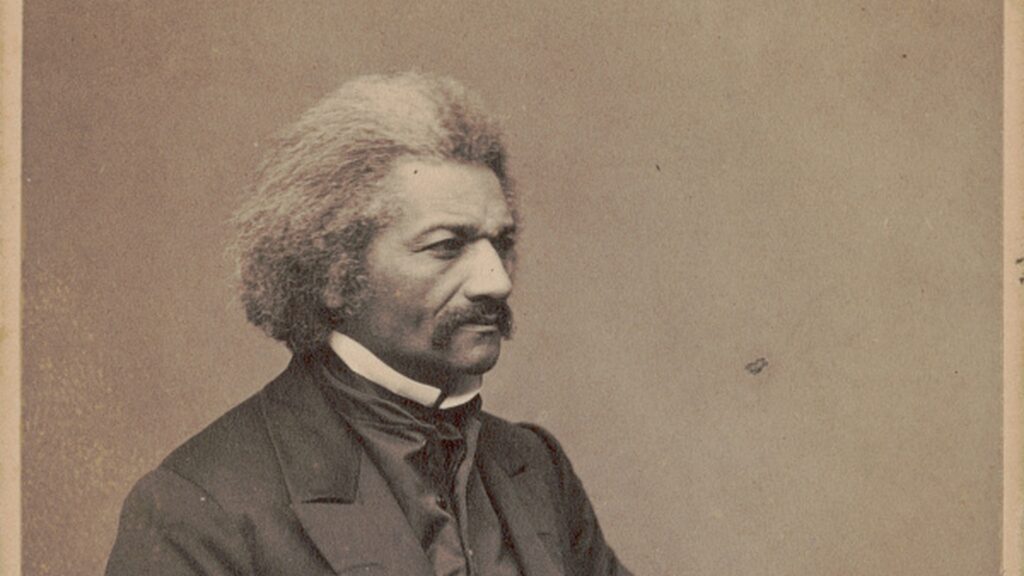
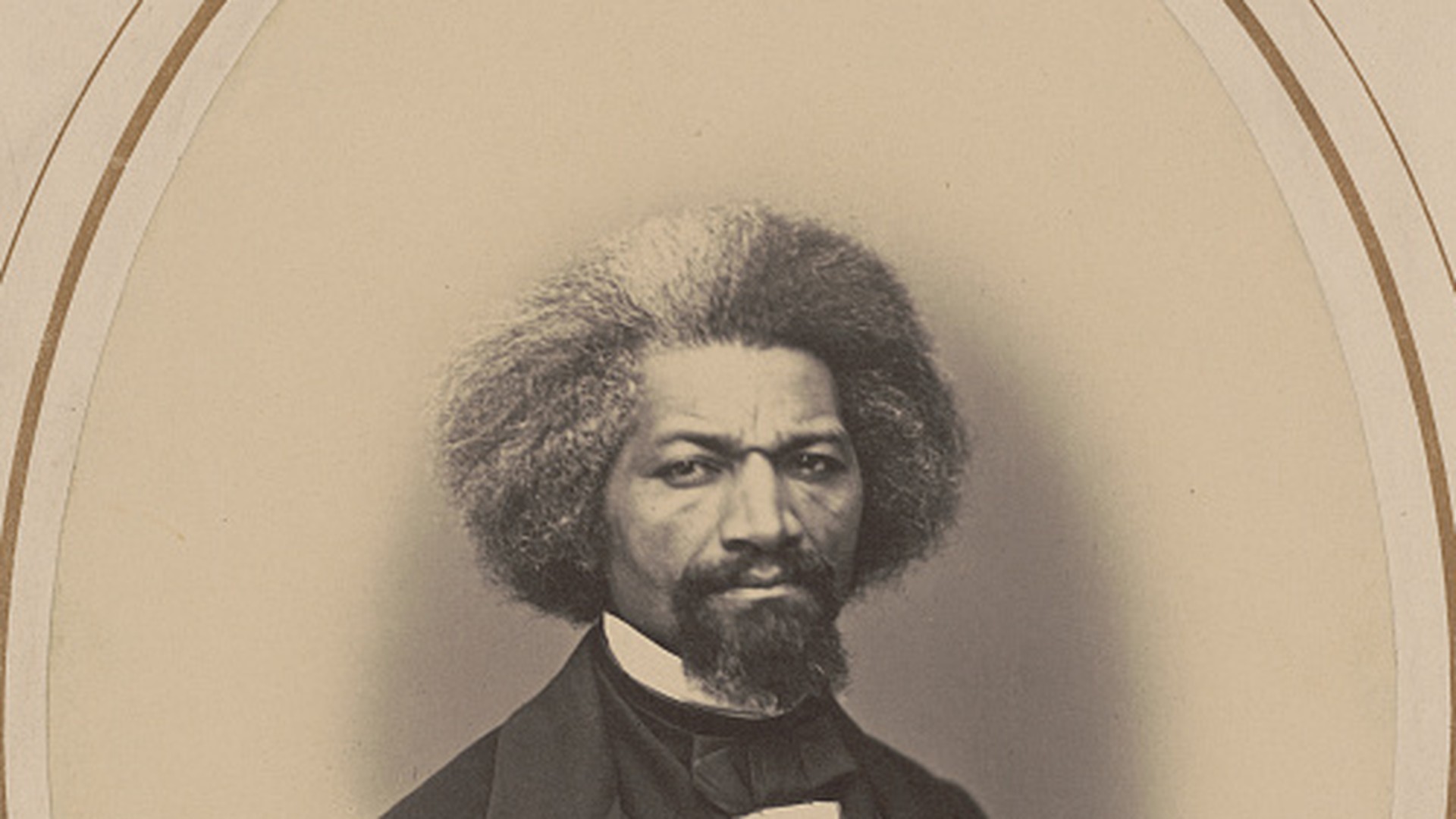
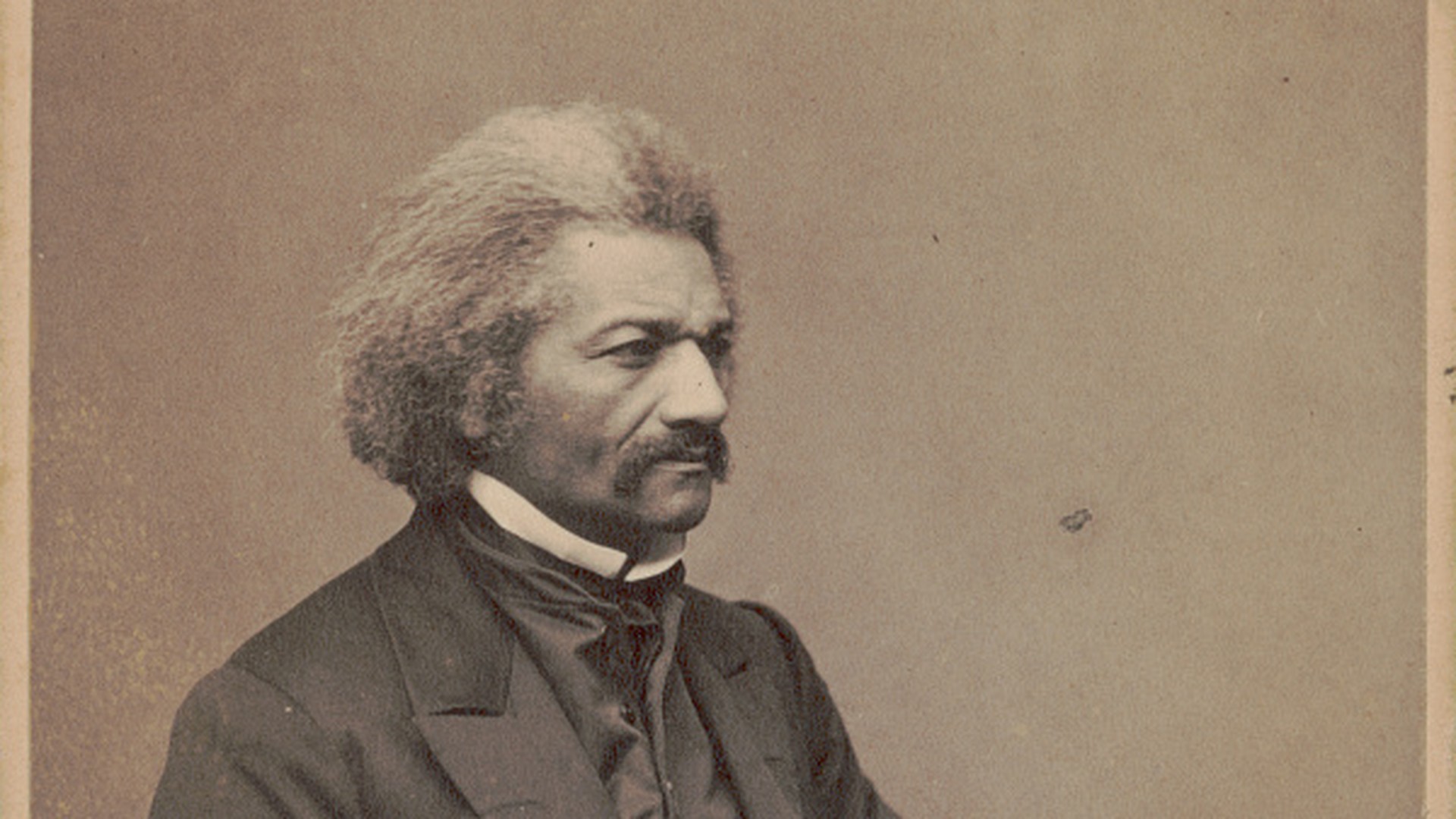
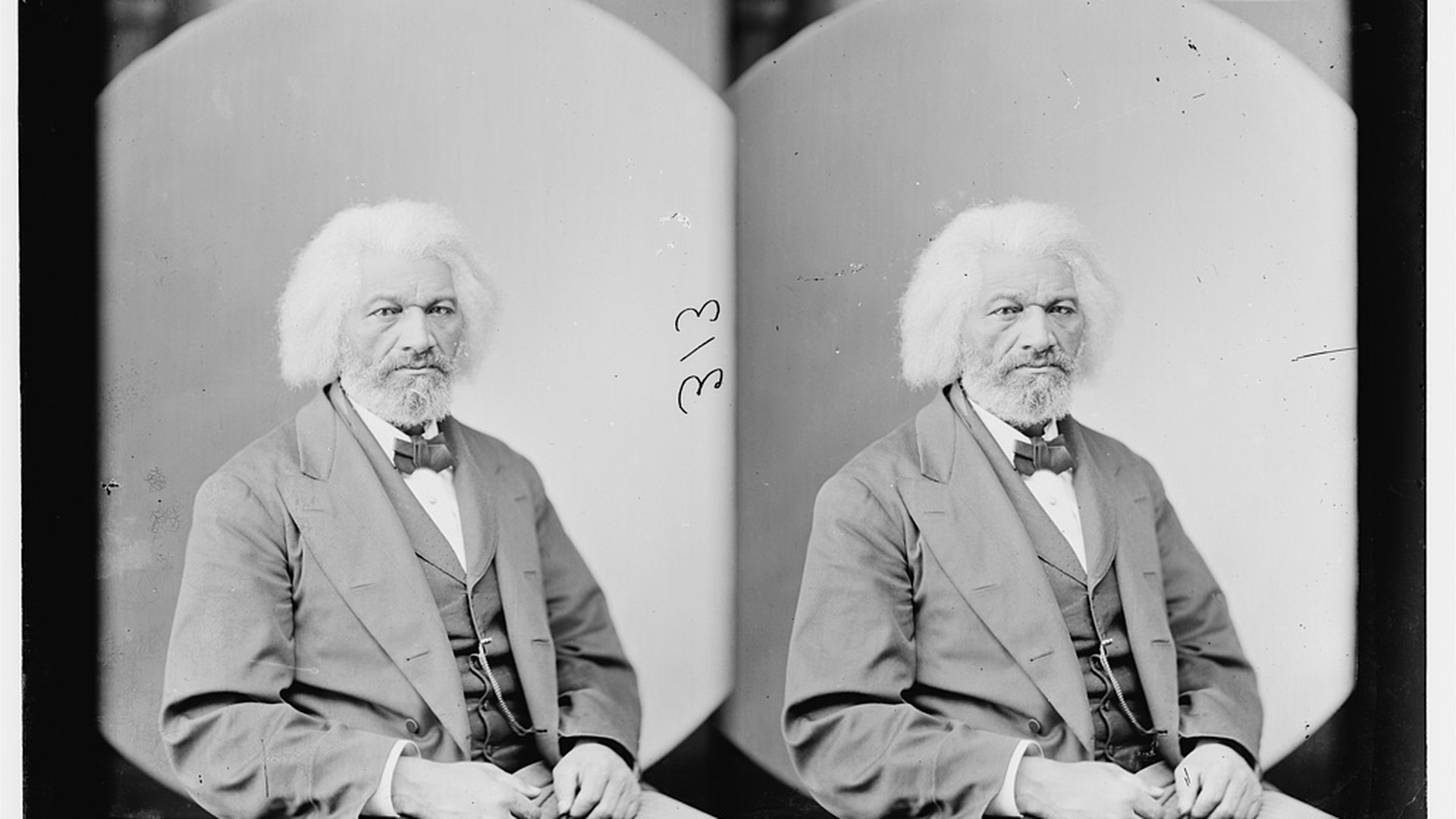
Douglass sat for more than 160 photographs, more than any other American of his century. He used the camera on purpose, presenting a dignified Black face to a nation fed on racist caricature.
That instinct feels modern because it is. He understood media, image, and narrative long before those became the language of American politics.
For Black families today, his life offers a practical inheritance. Literacy was his first act of resistance, and every library card, classroom, and newsroom still carries that charge.
His Fourth of July speech is read aloud every summer by descendants and by schoolchildren because its question has never gone away. Who gets to claim America’s promises, and who is still waiting at the door?
He also modeled a hard truth about progress. He praised what was worthy, condemned what was false, and never confused the two, even when the truth made his audience uncomfortable.
A boy who was beaten for learning to read became the conscience of a nation. Frederick Douglass did not wait to be given a voice. He built one, letter by letter, and then he used it to free millions.