7 min read
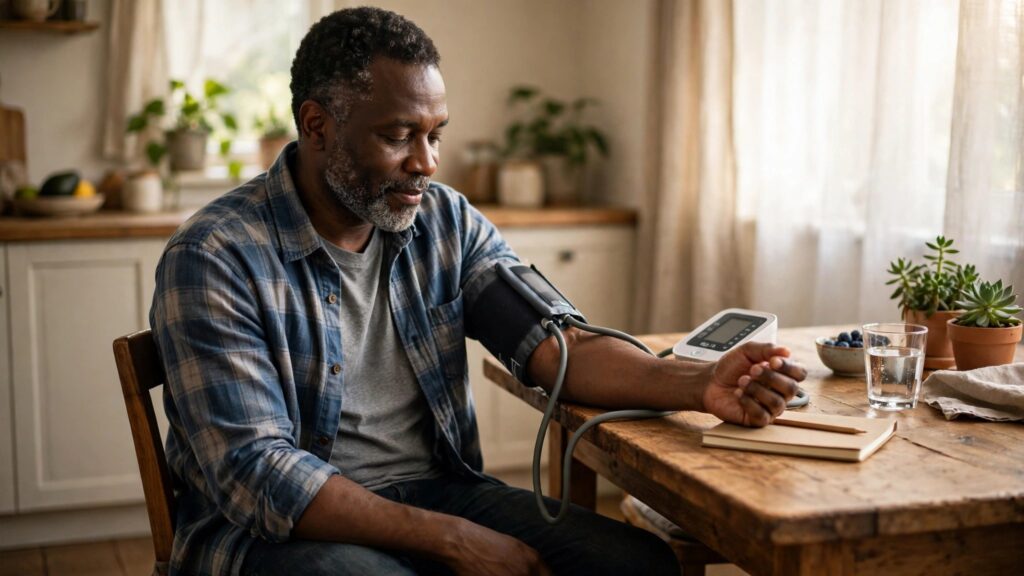
This weekend offers a quiet chance to check on the number that protects your heart.
Blood pressure rarely sends a warning before it starts to harm the body.
Most people feel fine while high pressure quietly strains the heart and brain.
That is why a simple home check belongs on your weekend list.
Ten calm minutes and a good cuff can tell you a powerful truth.
Major Takeaways
Close to six in ten Black adults in this country live with high blood pressure.
Three in four adults with high blood pressure do not have it under control.
A home check works best after five minutes of rest with your arm supported.
Less sodium, more movement, and good sleep all help bring numbers down over time.
A reading above 180 over 120 with chest pain or weakness means call 911 now.
Why This Number Matters For Black Families
Nearly half of all adults in the United States have high blood pressure.
Among Black adults the share reaches 59.6 percent, the highest of any group.
Our families also tend to develop the condition earlier in life and more severely.
In 2024 high blood pressure was a primary or contributing cause of over 680,000 deaths nationwide.
It raises the risk of heart attack, stroke, kidney disease, and vision loss.
It can also raise the risk of dementia and heart failure over time.
Those outcomes are not destiny, and they are not a matter of personal failure.
Access to care, food, safe places to walk, and steady income all shape this picture.
What you can control this weekend still matters a great deal for your future.
Knowing your number is the first step toward changing that number for good.
Know What Your Numbers Mean
Blood pressure is recorded as two numbers, such as 117 over 76.
The top number measures pressure in the arteries when the heart beats.
The bottom number measures pressure while the heart rests between beats.
A normal reading is below 120 on top and below 80 on the bottom.
A top number from 120 to 129 with a bottom below 80 is called elevated.
Stage 1 high blood pressure starts at 130 to 139 on top or 80 to 89 on bottom.
Stage 2 begins at 140 or higher on top or 90 or higher on the bottom.
Control generally means keeping readings below 130 over 80 for most adults.
Your own target can differ based on your age and your full health picture.
Only a health professional can confirm a diagnosis, so bring your log to your visits.
How To Check At Home The Right Way
Use a validated upper arm cuff that fits your arm well and snugly.
A cuff that is too small or too large can give a false reading.
Skip caffeine, exercise, and tobacco for at least 30 minutes before you check.
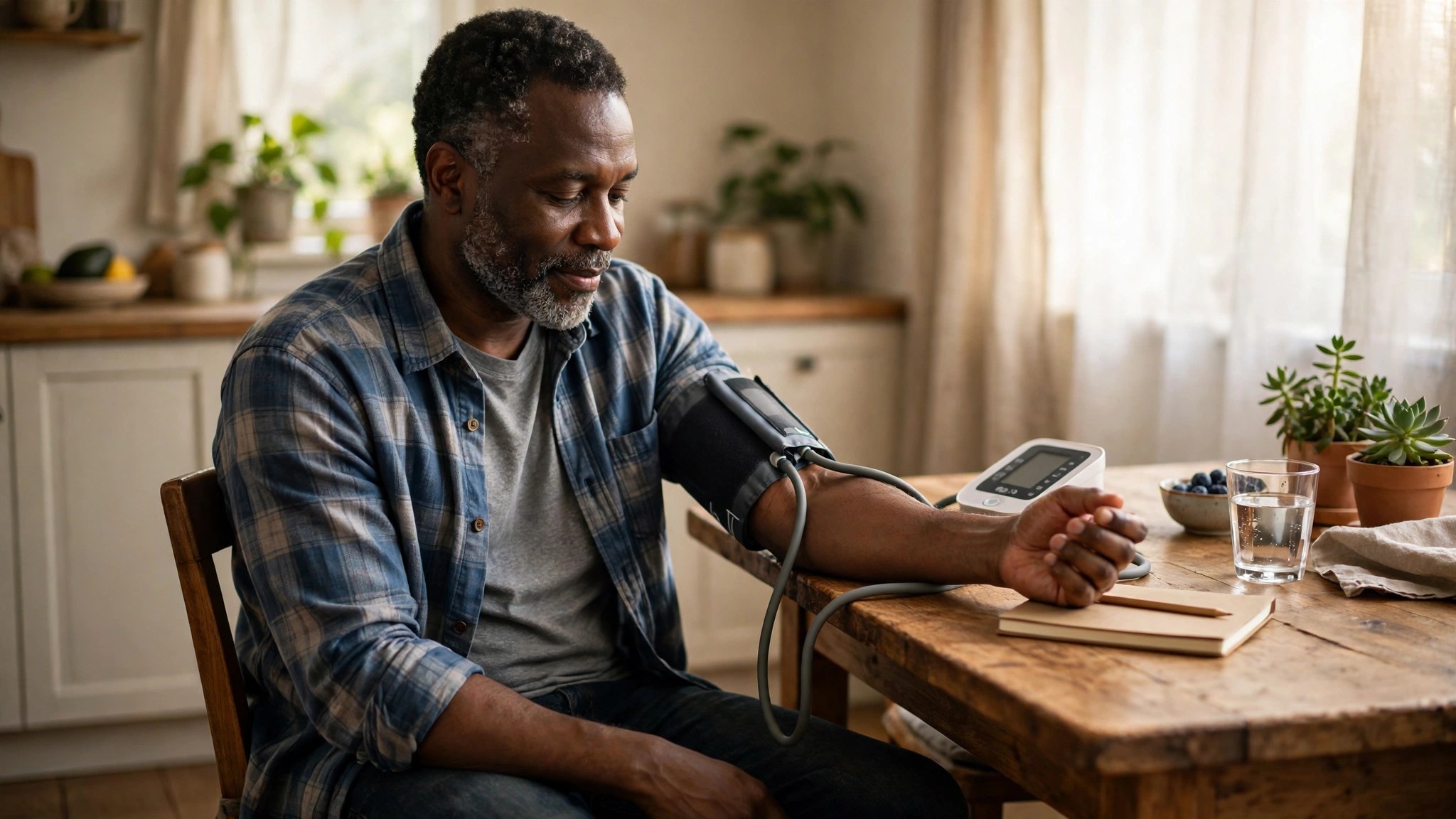
Empty your bladder first, then sit quietly for a full five minutes.
Sit with your back supported and your feet flat on the floor.
Keep your legs uncrossed and rest your arm at heart level on a table.
Place the cuff on bare skin just above the bend of your elbow.
Take two readings one minute apart and write down the average of both.
Check at the same times each day, such as morning and evening, for a week.
Patterns across days matter far more than any single reading on one day.
Some pharmacies, clinics, and fire stations offer free stations if you lack a cuff.

Food Moves That Help Your Heart
Most sodium hides in packaged foods, restaurant meals, sauces, and processed meats.
Aim to stay below 2,300 milligrams of sodium each day for general heart health.
An ideal goal for many adults is closer to 1,500 milligrams each day.
Read labels this weekend and compare brands before you place items in your cart.
Build plates around vegetables, fruits, beans, whole grains, nuts, and leafy greens.
Add potassium rich foods such as bananas, sweet potatoes, beans, and yogurt.
Choose fish, seafood, and lean poultry more often than red or processed meats.
Cook at home when you can, and season with herbs, citrus, and spices.
Small swaps done daily add up to real change across a full season.
Bring the family into the kitchen so new habits feel shared and joyful.

Move Sleep And Stress This Weekend
Regular movement helps lower blood pressure and lifts mood and clears the mind.
Aim for at least 150 minutes each week of moderate activity such as brisk walking.
A 30 minute walk on Saturday and Sunday is a strong place to start.
Dancing, swimming, yard work, and cycling all count toward that weekly goal.
Sleep matters too, since short sleep under seven hours is linked to higher pressure.
Set a steady bedtime this weekend and dim screens well before you rest.
Stress raises pressure in the moment and can undo good habits over time.
Prayer, deep breathing, music, and quiet time can help calm your whole system.
If you smoke or vape, each use can raise your pressure for a short time.
Ask your care team about support if quitting nicotine feels hard right now.
A Simple Weekend Plan That Puts You First
On Saturday morning, check your pressure before coffee and before any medicine you take.
Write the numbers in a notebook or phone log with the date and time.
Take a family walk after breakfast and talk about health goals with love.
Shop with a list that favors fresh foods and lower sodium choices for the week.
On Sunday, check again at the same time and compare the two days calmly.
Call your clinic on Monday if your readings stay at or above 130 over 80.
Bring your cuff to that visit so the team can confirm it reads true.
Never stop or change a prescribed medicine on your own because readings look good.
Good readings often mean the medicine and habits are working exactly as planned.
Explore more care ideas in our Health and Wellness coverage for steady encouragement each week.
Find uplifting stories in our Culture section that honor Black family life and strength.
Stay close to our News coverage for health updates that affect our community most.
When To Call For Help Right Away
A reading above 180 on top or above 120 on bottom needs prompt attention.
If you also feel chest pain, call 911 right away without waiting or driving yourself.
Shortness of breath, back pain, numbness, or weakness are also urgent warning signs.
A change in vision or trouble speaking with a very high reading is an emergency.
Without symptoms, sit quietly, recheck in a few minutes, and call your clinician.
This article offers general wellness information and never replaces care from your own clinician.
Your heart carries everyone you love, so give it ten quiet minutes this weekend.
Check the number, write it down, and take one kind step toward control today.