

Major Takeaways
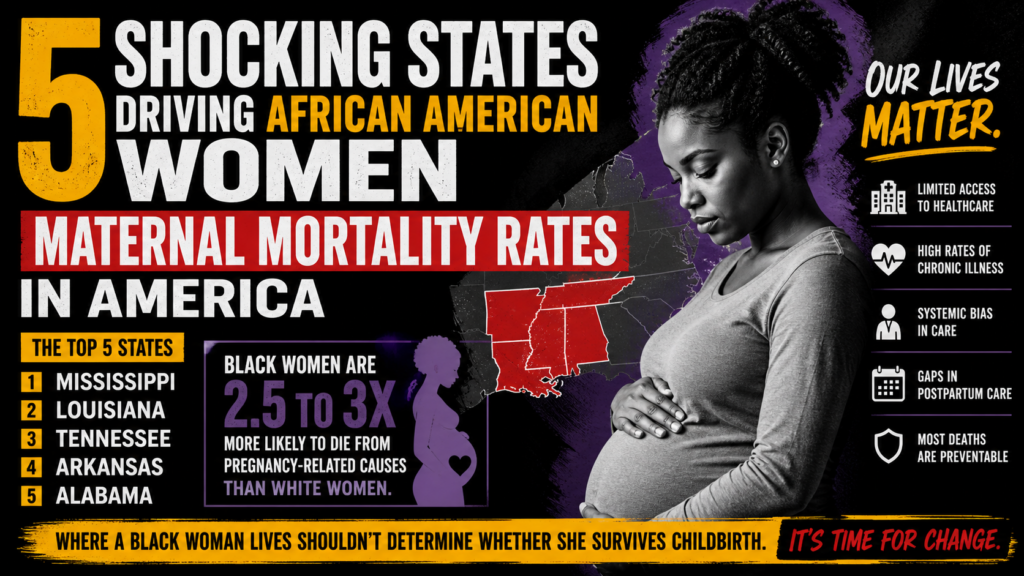
- African American women face maternal mortality rates up to three times higher than White women, regardless of income or education.
- Southern states like Mississippi, Louisiana, Tennessee, Arkansas, and Alabama show the highest concentration of risk factors and deaths.
- Most pregnancy-related deaths are preventable, but gaps in healthcare access, postpartum care, and treatment equity continue to drive outcomes.
A hard look at where geography, healthcare gaps, and systemic failures are putting Black mothers at the highest risk in the United States
Urban City Podcast Digital News Desk• 7 min read
Maternal mortality in the United States is already a problem, but when you zero in on African American women, it becomes something else entirely. This isn’t just a health issue. It’s a pattern, it’s systemic, and it’s been sitting in plain sight for years. According to the Centers for Disease Control and Prevention, Black women are two and a half to three times more likely to die from pregnancy-related causes than White women. That gap doesn’t disappear with money, education, or access to resources. It holds steady across the board, which tells you this runs deeper than lifestyle or income.
Recent data shows the maternal mortality rate for Black women hovering around 50 deaths per 100,000 live births, compared to roughly 14 for White women. That’s not a small gap. That’s a canyon. And when you start breaking it down by state, the numbers get even more uncomfortable. Geography plays a major role in survival, and certain states consistently rise to the top for all the wrong reasons.
Mississippi is one of those places that keeps showing up in these conversations. It has one of the highest maternal mortality rates in the country, and African American women carry the heaviest burden within those numbers. The state deals with a combination of high poverty rates, limited healthcare infrastructure, and a large rural population. Hospitals have been closing, especially in smaller communities, and that creates longer travel times for prenatal care, delivery, and emergency services. When complications hit, minutes matter, and in Mississippi, those minutes are often lost on the road. Add in higher rates of hypertension and diabetes, and you’ve got a situation where risk stacks on top of risk.
Louisiana isn’t far behind. The state has reported maternal mortality rates that push well above the national average, and again, Black women are disproportionately affected. What makes Louisiana stand out is that the issue isn’t confined to rural areas. Even in cities like New Orleans, where hospitals and specialists are more available, disparities remain. That points to something beyond access alone. There are consistent concerns about gaps in quality of care and how quickly symptoms are taken seriously. When people talk about implicit bias in healthcare, Louisiana is often part of that conversation, and not in a good way.
Tennessee is another state that doesn’t always get national attention, but the numbers tell a clear story. It ranks high in pregnancy-related deaths, and African American women are at significantly higher risk than their White counterparts. One of the biggest issues in Tennessee is what happens after the baby is born. A lot of maternal deaths occur in the postpartum period, not during delivery itself. Follow-up care can be inconsistent, and when coverage ends or access drops off, warning signs get missed. That’s how manageable complications turn into life-threatening situations.
Arkansas sits in that same cluster of high-risk states. The healthcare system in many parts of Arkansas is stretched thin, particularly in rural communities where specialists are scarce. African American women in the state experience higher rates of preterm birth, low birth weight, and pregnancy complications overall. When you combine those outcomes with limited access to high-quality care, the margin for error disappears. It doesn’t take much for a routine pregnancy to turn into something far more serious under those conditions.
Alabama rounds out this group, and like the others, it shows a consistent pattern of elevated maternal mortality rates. There are significant gaps in hospital access, especially in underserved areas, and a noticeable shortage of OB-GYN providers in certain regions. Chronic health conditions are more common, and when those conditions intersect with pregnancy, the risks increase quickly. For African American women, those risks are even higher, and the system hasn’t done enough to close that gap.
When you step back and look at these five states together, the similarities are hard to ignore. Limited access to healthcare is a major factor. When hospitals close or providers are spread thin, care becomes harder to reach and less consistent. Chronic illnesses like high blood pressure and diabetes are more common in these regions, and those conditions are already known to complicate pregnancies. Socioeconomic barriers also play a role. Lower income levels, transportation challenges, and gaps in insurance coverage all add pressure to an already fragile situation.
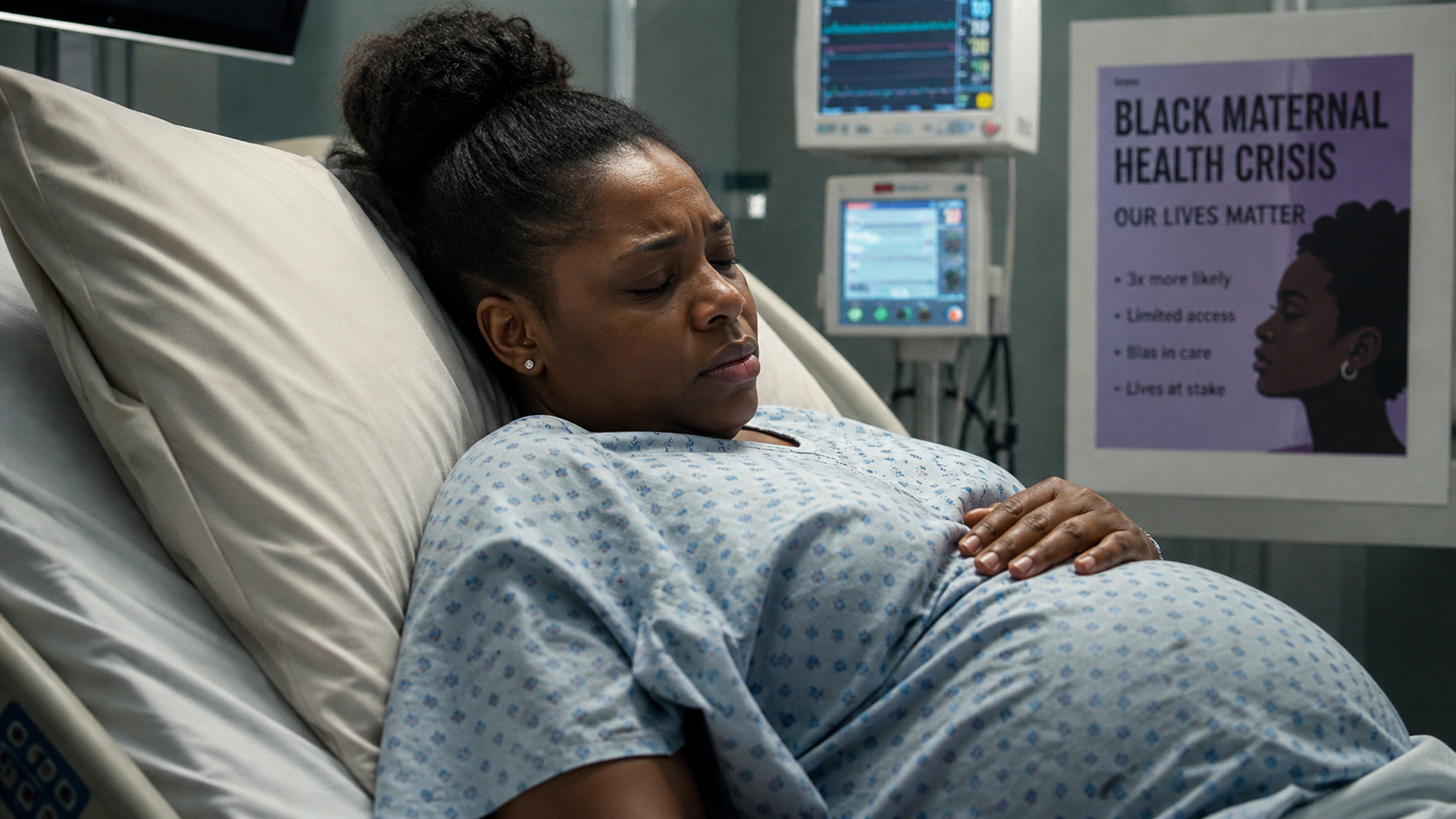
Then there’s the issue that doesn’t get talked about enough in everyday conversation but shows up clearly in the data. Bias in healthcare. Multiple studies have shown that Black women’s symptoms are more likely to be dismissed or delayed in treatment compared to others. That’s not opinion. That’s documented. When someone says they’re in pain or something feels off, and that concern isn’t taken seriously, the outcome can change fast.
Another major factor is postpartum care, or the lack of it. A significant portion of maternal deaths happen after childbirth, sometimes weeks later. But once the baby is delivered, the level of medical attention drops off. Follow-up appointments may be limited, and in some cases, coverage doesn’t last long enough to catch complications early. That gap leaves too much room for things to go wrong.
Across the country, the maternal mortality rate for Black women has stayed stubbornly high for years. It hasn’t meaningfully declined, and in some areas, it’s getting worse. What makes that even more frustrating is that a large percentage of these deaths are considered preventable. With the right care, the right timing, and the right attention, many of these outcomes could be avoided.
So the real question becomes, what changes? Expanding healthcare coverage before and after pregnancy is a big step. Increasing access to hospitals and trained providers, especially in underserved areas, is another. Community-based programs that focus on maternal health can also make a difference, particularly when they are designed to reach women where they are. And then there’s the harder conversation about accountability in care. Recognizing bias, addressing it directly, and making sure every patient is treated with urgency and respect isn’t optional. It’s necessary.
At the end of the day, this isn’t just about statistics. It’s about survival. Where a woman lives should not determine whether she makes it through pregnancy, but right now, in these states, it often does. Until those underlying issues are addressed in a serious way, the numbers aren’t going to move much, and the same communities will keep carrying the weight of a problem that should have been solved a long time ago.











One Response
THIS IS SO TIMELY! WE DESERVE MORE THAN WE GET FROM HEALTH CARE PROVIDERS….STIGMAS AND BIASES SHOULDN’T BE IN HEALTH CARE.