8 min read
The Georgia governor race has come down to the last four days, and both sides know exactly where it will be decided.
It will be decided by who shows up.
On Wednesday night, former President Barack Obama stepped onto a stage in Clayton County to make that case in person.
He came to rally voters for Keisha Lance Bottoms, the former Atlanta mayor running to become governor of Georgia.
He came at the precise moment when the early vote that could carry her there entered its final stretch.
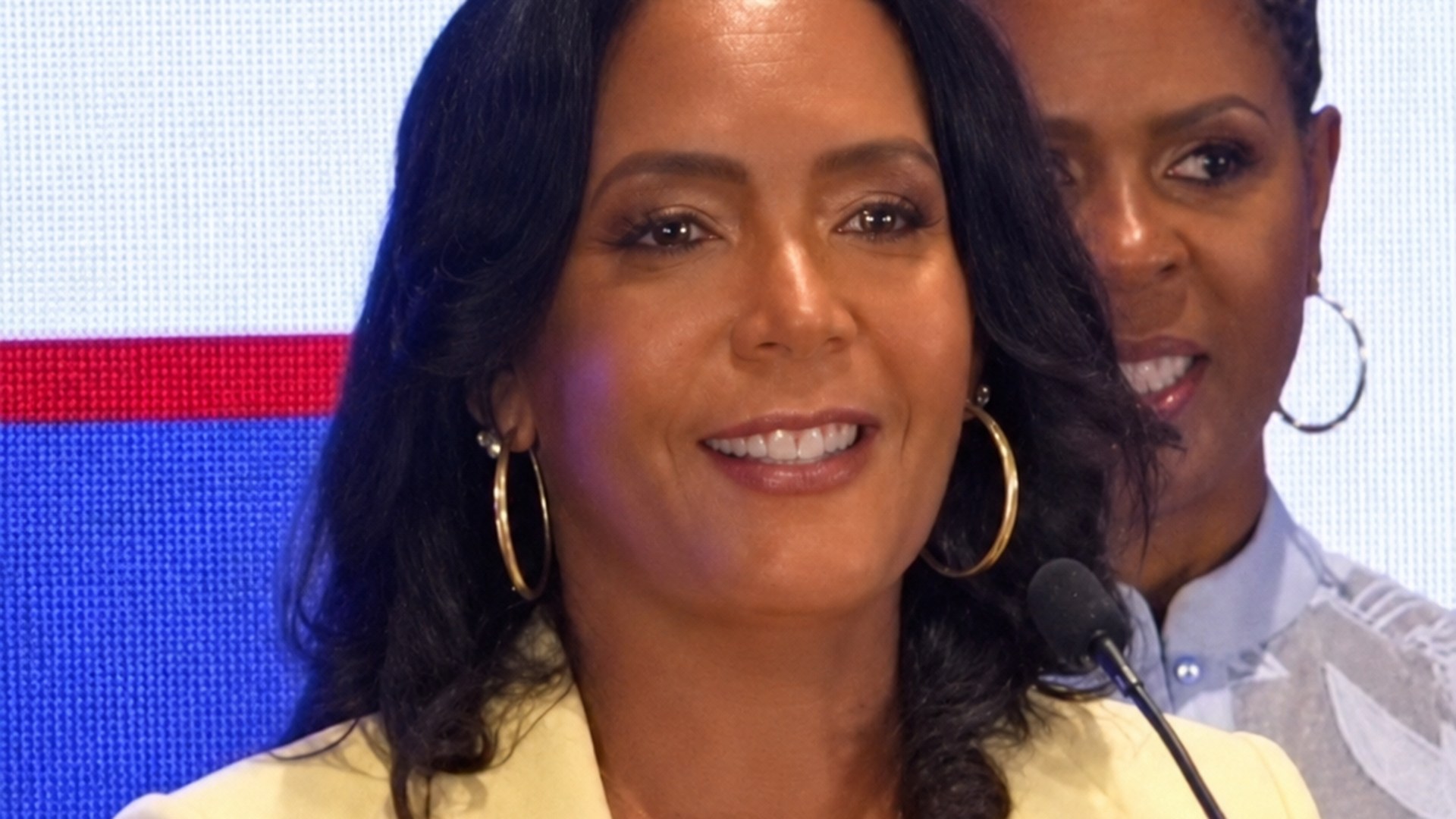
Keisha Lance Bottoms speaks at a podium in a file photo from May 2026. Photo by Sikis2021 via Wikimedia Commons, CC0.
Major Takeaways
Obama packed an arena in Clayton County on Wednesday night to rally for Bottoms and Senator Jon Ossoff.
More than 2.2 million Georgians had already voted by Thursday morning, far ahead of past midterm pace.
Early voting in Georgia ends today, Friday, and Election Day follows on Tuesday, November 3.
Black voters cast 33 percent of the early ballots counted through Monday, a share big enough to decide a tied race.
Bottoms would become the first Black woman elected governor of any state if she wins on Tuesday.
Georgia governor race draws Obama back to Clayton County
The rally filled an arena built for 8,000 people, with more supporters waiting outside.
Democrats branded the night United for Georgia, and the whole ticket stood on one stage.
Secretary of state candidate Penny Brown Reynolds used her turn to talk about voting rights.
She spoke about mobilizing the Black vote in this election cycle.
Attorney general candidate Tanya Miller called herself the people’s lawyer.
Then Bottoms took the microphone and framed the stakes in generational terms.
“The next six days will determine the future of our state for generations to come,” Bottoms said.
“Not only are we showing up to early vote, but we will show up on election day, remembering that our votes are our voices, and our voices will never be silenced.”
She reminded the crowd of a year and a half spent traveling the state and listening to families.
“This election is about whether every Georgian, no matter their ZIP code or background, has a fair chance at building a better future,” she said.
She also drew the sharpest contrast of her campaign against Rick Jackson, the billionaire health care executive on the Republican line.
“He’s running to be Trump’s favorite governor. I’m running to be yours,” Bottoms said.
She calls Jackson by the nickname Slick Rick and accuses him of trying to buy the election.
Ossoff, who faces Republican Representative Mike Collins in the Senate race, aimed his fire at Washington.
“For nearly two years, we have seen our government transformed into a tool for one man’s personal vengeance and power and enrichment,” Ossoff said.
“A wave is building, the kind of wave that comes once a generation when the people have been pushed too far,” he said.
“We have six days, Georgia, and Georgia will bow to no king.”
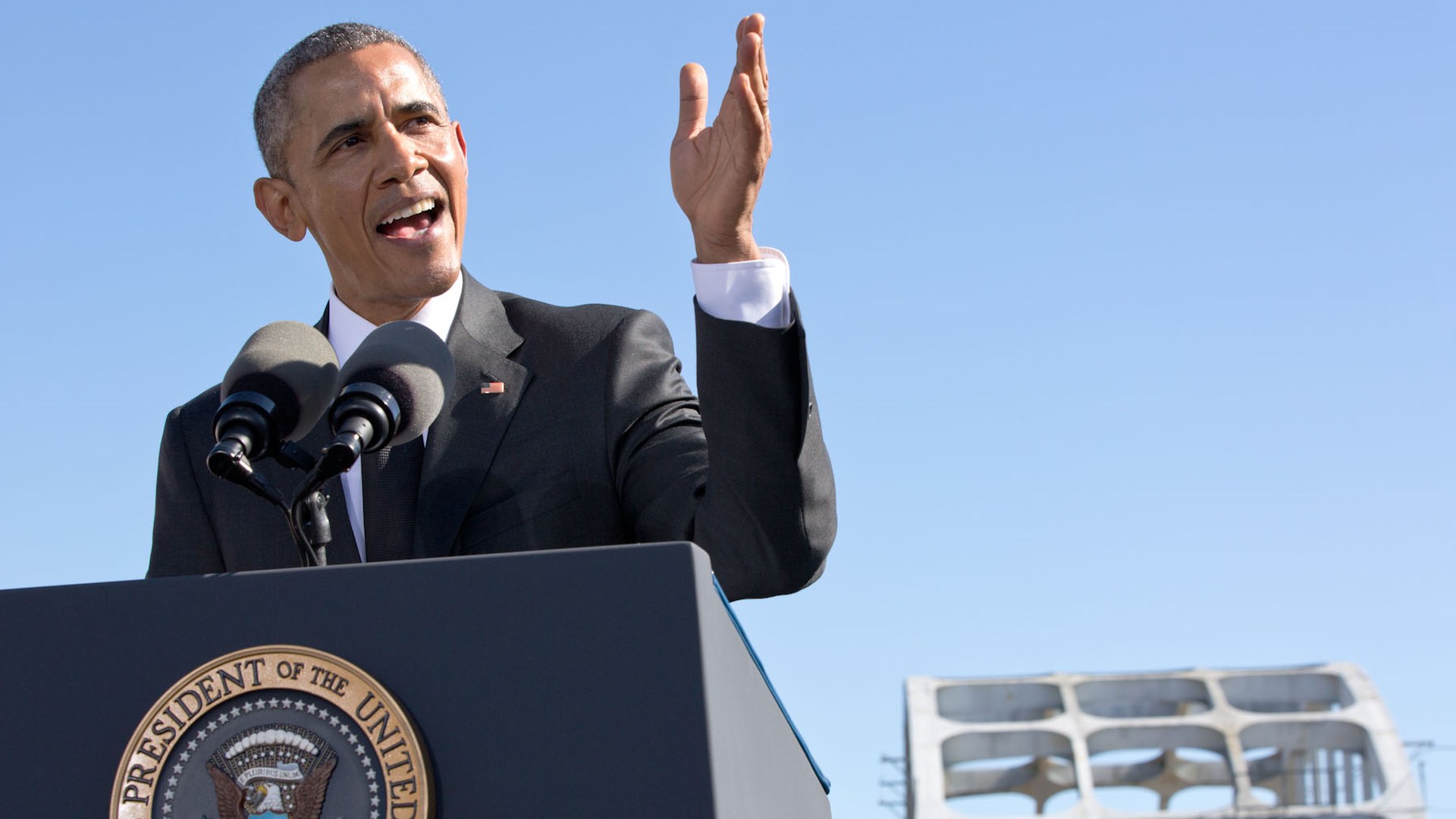
President Barack Obama delivers remarks at the Edmund Pettus Bridge in Selma in a file photo. Photo by Pete Souza via Wikimedia Commons, public domain.
Obama closed the night with a message built on the cost of living.
“If you thought everything cost too much before, guess what? Everything is more expensive now,” Obama said.
He called the current administration one of chaos and cruelty and corruption and incompetence.
He pointed to higher prices for food, gas, health care and other basic needs.
“These are serious times,” Obama said.
“We need serious people who are listening to your concerns, who see you and care about you, like Jon Ossoff, like Keisha Lance Bottoms.”
Black voters hold the balance in a deadlocked race
The excitement inside the arena matches what election workers have seen for more than two weeks.
More than 2.2 million Georgians had cast a ballot by Thursday morning, by mail or in person.
That total is far ahead of previous midterm cycles at the same point.
Clayton County, where the rally was held, is a predominantly Black county south of Atlanta.
One third of its voting population had already cast a ballot before the rally even began.
Through Monday, the statewide count stood at more than 1.78 million ballots.
Black voters accounted for 587,756 of those ballots, a full 33 percent of the early electorate.
White voters made up 53 percent, Hispanic voters 3.2 percent and Asian voters 2.7 percent.
Women cast 55.7 percent of the early ballots, and voters aged 65 and older cast 42.5 percent.
About a third of the early voters who skipped the 2022 election entirely are Black.
The first day of voting, October 13, set a midterm record with 188,667 ballots cast.
That surge is part of a wider Southern pattern that has reshaped races across the South this fall.
Georgia voters can cast an early ballot today at any advance voting site in their county of registration.
After today, the only remaining chance is Election Day itself, when polls stay open from 7 in the morning to 7 at night.
Money pours in, but the polls refuse to move
No amount of spending has separated the two candidates for governor.
A University of Georgia survey taken in the first half of October put Jackson at 46 percent and Bottoms at 45 percent.
Eight percent of voters were undecided, and the margin of error was 3.1 points.
An InsiderAdvantage survey put Jackson ahead 49 to 47.
An Echelon Insights survey put Bottoms ahead 49 to 48.
Three surveys, three answers, one conclusion: the race is tied.
Bottoms has already polled stronger than Stacey Abrams did before her losses in 2018 and 2022.
Abrams lost both of those races to Governor Brian Kemp, who is term limited and backing Jackson.
Jackson has spent at least 108 million dollars of his own money on the race.
Groups backing Jackson have spent 107.2 million dollars since June, against 28.1 million dollars from groups backing Bottoms.
Democratic governors have answered with a late 5 million dollar contribution, bringing their total support to about 16 million dollars.
A separate 2.5 million dollar gift is funding turnout work aimed at voters like the ones who filled the Clayton County arena.
Kemp has campaigned beside Jackson while warning Republicans that they trail in the early vote.
Jackson himself told supporters in Cedartown that the race is tied at best.
He said rural Georgia has to show up for him to win.
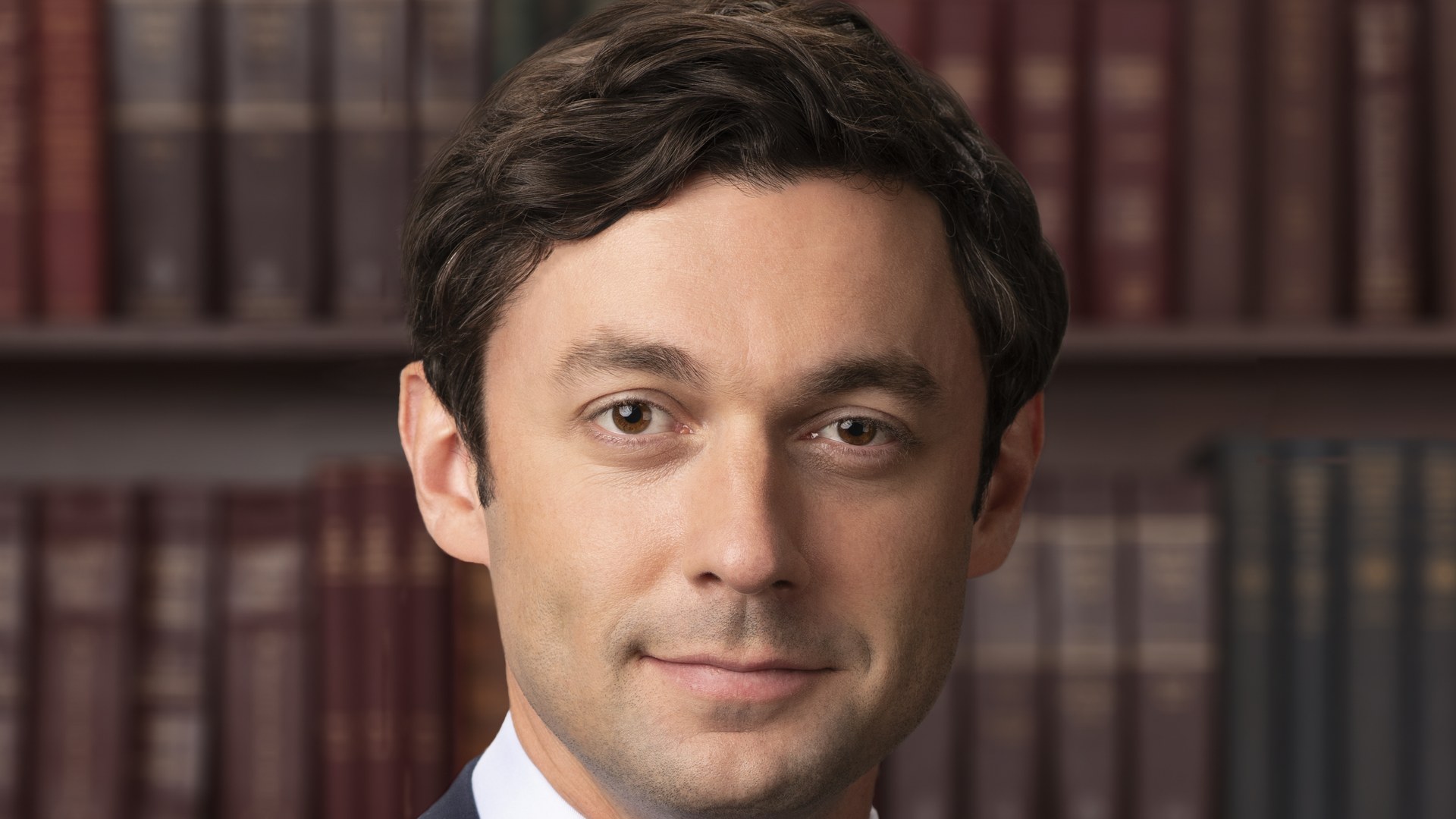
Senator Jon Ossoff in his official Senate portrait. Photo by the United States Senate via Wikimedia Commons, public domain.
The Senate race on the same ballot tells a different story.
Surveys put Ossoff ahead of Collins by 48 to 40, by 51.8 to 44.9 and by 55 to 40.
That gap raises the real possibility of split ballots, with voters choosing one party for senator and the other for governor.
What a Bottoms win would mean on Tuesday
Georgia has not seated a Democratic governor in more than two decades.
A Bottoms victory would make her the first woman to govern Georgia.
It would make her the first Black governor in Georgia history.
It would make her the first Black woman elected governor of any state in the nation.
She stands at the front of a record field of Black governor candidates in eight states this year.
That history is exactly why national figures keep landing in Georgia during this final week.
Obama rallied in Clayton County on Wednesday, and Kamala Harris was scheduled to visit on Thursday.
President Donald Trump has also camped in Georgia this month, holding a rally in Perry on October 24.
The pattern reaches beyond Georgia, as strong Black turnout and softer Republican turnout have put red states in play.
Mississippi is living the same story this week, with its Senate race tightening into the final days.
Georgia law requires a majority winner for governor, and a December 1 runoff would follow if nobody cleared half the vote.
No Libertarian qualified for this ballot, so a runoff looks unlikely.
That means Tuesday most likely settles the question outright.
For Black Georgians, the math has rarely been this plain.
A third of the early electorate is already Black, in a race where a single point decides everything.
The voters who have not yet cast a ballot now hold the outcome in their hands.
Early voting ends when the sites close today.
After that, everything rides on Tuesday.