7 min read
Major Takeaways
The Harlem Renaissance was a flowering of Black writing music art and dance centered in Harlem from the end of World War I into the mid 1930s.
Writers such as Langston Hughes and Zora Neale Hurston and musicians such as Duke Ellington and Bessie Smith told Black stories in Black voices.
Alain Locke called this generation the New Negro and urged Black artists to trade old stereotypes for honest portraits of Black life.
The movement faded as the Great Depression cut support for Black publishers and clubs yet its pride laid groundwork for later freedom struggles.
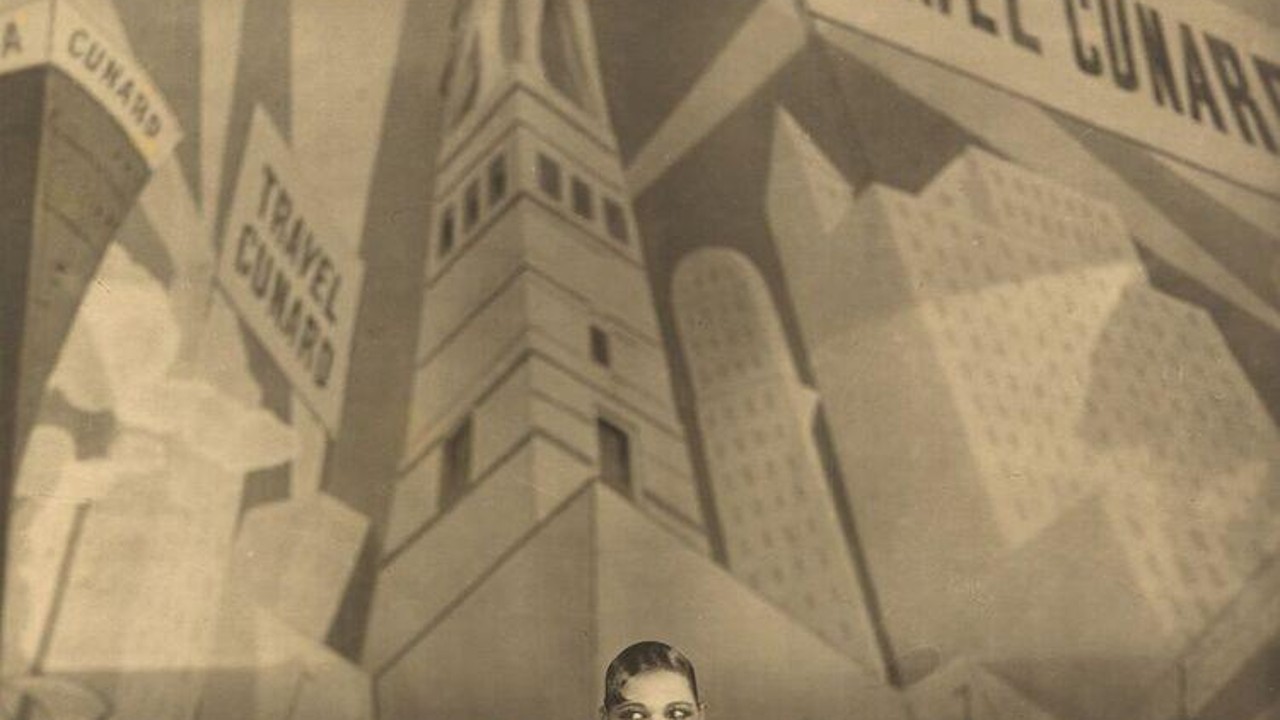
Photo: Josephine Baker in 1926 by Stanislaus Julian Walery, National Portrait Gallery, Smithsonian Institution
In three square miles in upper Manhattan Black America built a new mirror for itself and held that mirror up to the watching world.
Nearly 175,000 Black residents had gathered in Harlem by the height of the movement. That gave the neighborhood the largest concentration of Black people in the world at that time.
They came from farms in the South and towns in the Caribbean and cities across the North. They carried church songs and work songs and family stories and hard memory with them.
Harlem Renaissance Grew From the Great Migration
Jim Crow laws and lynching and sharecropping pushed Black families out of the South. Factory jobs during World War I pulled many of those families toward northern cities.
Our look at the Great Migration tells how six million journeys remade this nation. Harlem was where many of those journeys found a cultural home.
Life in Harlem was not easy. Rents were high and good jobs were scarce and discrimination followed Black families north in new forms.
Yet that density created something powerful. Writers found readers on the same block. Musicians found dancers in the same hall. Painters found walls and patrons and students within walking distance.
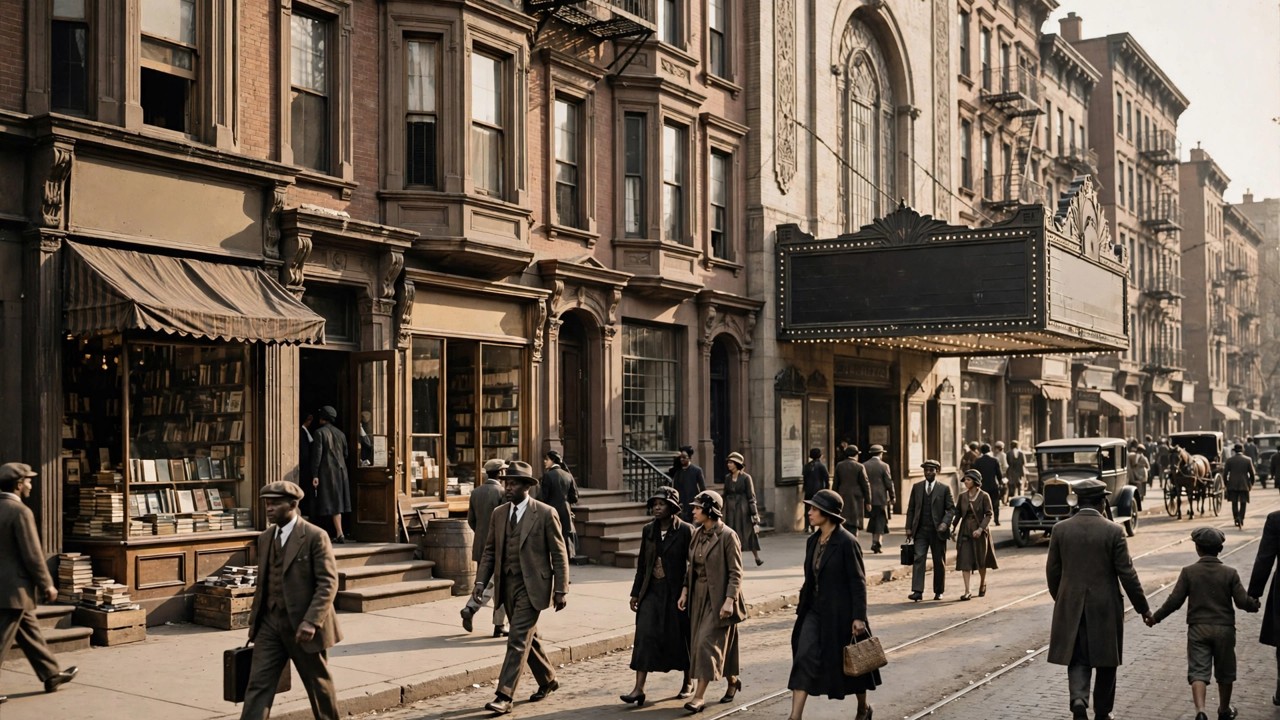
Illustration of a Harlem street in the 1920s
Locke Named the Mood and Hughes Gave It a Voice
Alain Locke was a Harvard educated philosopher and the first African American Rhodes Scholar. He taught for decades at Howard University and became known as the dean of the movement.
In 1925 Locke published The New Negro. The book gathered fiction and poetry and essays from young Black writers and announced a generation ready to define itself.
Locke described the moment as a spiritual coming of age. In his telling Black Americans were transforming social disillusionment into race pride through their art.
Langston Hughes gave that pride a sound. Born in Joplin Missouri he published The Negro Speaks of Rivers in 1921 and his first book The Weary Blues in 1926 at age twenty four.
Hughes poured jazz rhythms and blues feeling and everyday Black speech into his poems. He wrote that younger Black artists intended to express their individual selves without fear or shame.
That sentence became a mission. Black life did not need permission or translation or apology. It needed honest telling in the voices of the people who lived it.
Writers Filled Shelves With New Black Stories
Claude McKay was born in Jamaica and wrote with fire about racial violence. His poem If We Must Die answered the Red Summer riots of 1919 with a call to stand and fight back.
McKay published the poetry collection Harlem Shadows in 1922. His novel Home to Harlem in 1928 became one of the most widely read books by a Black author of that era.
Jean Toomer wove poetry and prose and drama into Cane in 1923. The book moved between rural Georgia and city life and showed the cost and beauty of migration.
Countee Cullen published Color in 1925 and quickly stood among the leading poets of the new generation. His work wrestled with faith and race and the pull of an African past.
Jessie Fauset edited The Crisis and mentored younger writers while publishing her own fiction. Her novel There Is Confusion in 1924 examined class and color inside Black communities with care.
Zora Neale Hurston brought the folk tales and speech of the rural South into literature as an anthropologist and storyteller. Mules and Men gathered folklore and Their Eyes Were Watching God in 1937 gave Black women a heroine who finds her own voice.
Music Carried Harlem Far Beyond Harlem
The musical Shuffle Along opened in 1921 and helped open Broadway doors for Black shows. Soon Harlem stages and clubs were setting the sound of a national era.
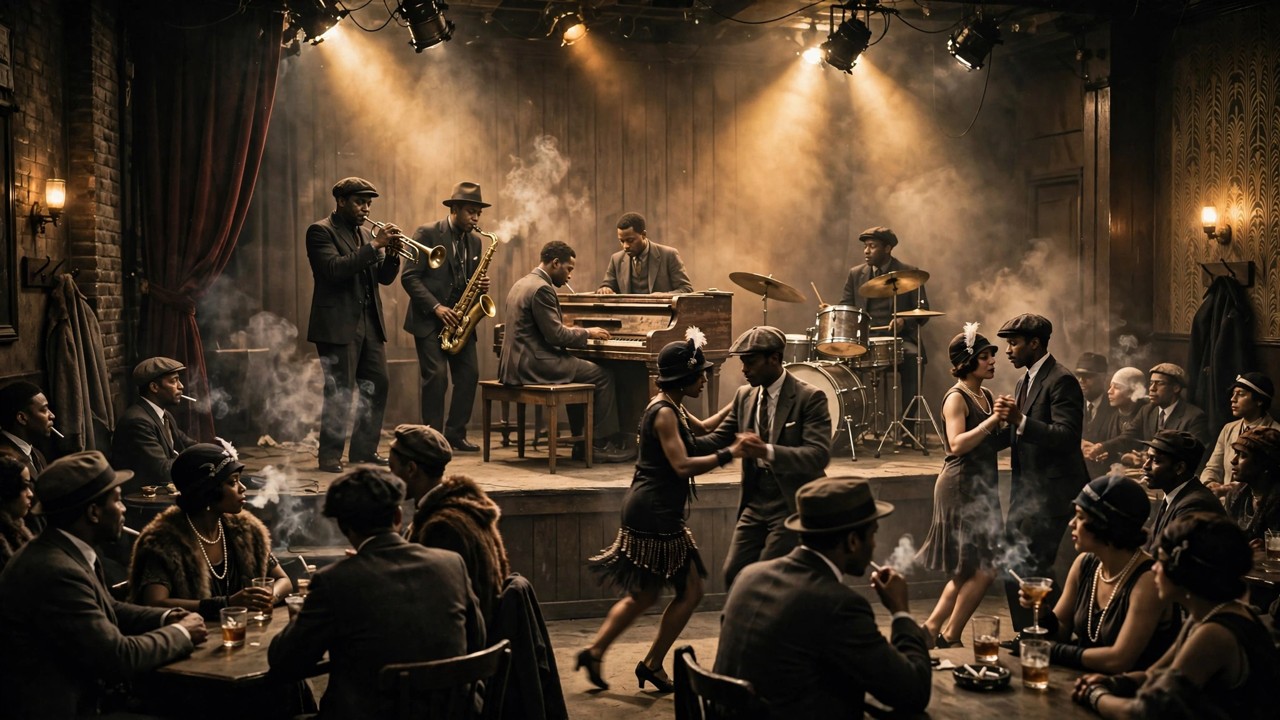
Illustration of a jazz orchestra on stage in a Harlem club in the late 1920s
The Cotton Club opened in 1923 on 142nd Street at Lenox Avenue. Duke Ellington and his orchestra became the house band in 1927 and radio broadcasts carried their sound across the country.
Ellington used that stage to build a sophisticated new jazz language. Works such as Mood Indigo in 1930 proved that Black dance music could also be great American composition.
The club also exposed a hard truth of the era. Its audiences were white by policy while the artists on its stage were Black and Harlem residents themselves were kept out.
Other rooms told a fuller Harlem story. The Savoy Ballroom could hold thousands of dancers and its floor shook nightly with new steps and new sounds.
Louis Armstrong remade jazz with his trumpet and his voice and his gift for improvisation. Bessie Smith ruled as the Empress of the Blues and her 1925 recording of St. Louis Blues with Armstrong still stuns listeners.
Together these artists did more than entertain. They proved that the music Black people made for themselves could define the culture of an entire nation.
Artists Drew and Carved a New Image
Aaron Douglas gave the movement a visual style. His murals and illustrations blended African motifs with bold modern shapes to tell the long story of Black people in America.
Augusta Savage sculpted Black strength and grace and then taught others to do the same. In 1934 she opened the Savage Studio of Arts and Crafts in Harlem.
That studio later became the Harlem Community Art Center. The young Jacob Lawrence was among the students who learned there before he painted his own migration epic.
Photographers preserved the faces of the era in sharp detail. Their portraits remind us that this was not an abstract movement. It was neighbors and friends choosing how they would be seen.
Why the Renaissance Faded and Why It Never Ended
The stock market crash of 1929 opened the Great Depression. Black owned businesses and publications lost money and patrons and foundations cut support for the arts.
By the mid 1930s the party had thinned out. Some historians point to the Harlem riot of 1935 as a closing mark for the era.
The work did not disappear. The Renaissance instilled a new spirit of pride and self determination and a new commitment to political activism across Black America.
That spirit provided a foundation for the Civil Rights Movement of the 1950s and 1960s. Later builders such as Mary McLeod Bethune carried the same insistence on dignity into education and national policy.
Readers can follow more stories in this series at Urban City Podcast. Each feature in the series connects a past victory or struggle to the choices Black families face right now.
Today the poems are still taught and the records are still played and the paintings still stop museum visitors mid stride. A new generation of Black creators works in the freedom those Harlem artists claimed.
The lesson of Harlem endures for every Black writer and singer and painter starting out with little money and a clear voice. Culture is power when a people tells its own story first.