6 min read
Major Takeaways
- A federal court let Tennessee keep a congressional map that cracks Memphis into three districts, erasing the state’s only majority Black seat.
- The judges called the map partisan politics, not racism, despite evidence that Black voters were targeted.
- The decision stands weeks before the November 3 midterms, so Black Memphians will vote under the new lines.
- Organizers are answering with turnout campaigns, while the ruling may invite copycat maps in other states.
A federal court order made public on Monday delivered a crushing blow to Black voting power in Tennessee. The ruling lets the state use a new congressional map that cracks Memphis, the largest majority Black city in America, into three separate districts. This Tennessee voting map wipes out the only majority Black congressional seat in the state.
How The Map Cracks Black Memphis
Tennessee lawmakers enacted the map on May 7, 2026. They moved fast after the Supreme Court weakened protections against racial discrimination in redistricting in the case called Louisiana v. Callais. Within days of that decision, the General Assembly rushed a new map through what civil rights lawyers call a sham process.
The new lines split Memphis into three districts. Black residents of the city are submerged in districts that stretch into largely white, rural territory. The Legal Defense Fund says the arrangement appears designed to deny Black voters any real chance to elect the candidates they prefer.
For decades, the 9th Congressional District was anchored in Shelby County and Memphis. It had not been won by a Republican in more than 50 years. Now that seat is carved into pieces, and Black political power in Memphis is scattered across lines drawn to dilute it.
State Representative Gino Bulso of Brentwood defended the map. He said the lines were based strictly on partisan considerations. He called the map 100 percent constitutional and 100 percent compliant with Section Two of the Voting Rights Act.
The Court Chose Politics Over Protection
A panel of three federal judges dismissed the lawsuit challenging the map last week. The order became public on Monday. The suit was brought by the Legal Defense Fund on behalf of the NAACP and the Memphis Urban League.
The lawyers argued that the map intentionally discriminated against Black voters. They were joined by the Lawyer’s Committee for Civil Rights Under Law and two private firms. The court rejected their case and wrote that politics is an obvious alternative explanation.
Two of the three judges were appointed by President Donald Trump. The third was appointed by former President Barack Obama. With this ruling, all five lawsuits challenging the Tennessee map have now failed.
Gale Jones Carson, president of the Memphis Urban League, condemned the ruling. She said, “The decision to dismantle Tennessee’s only majority Black congressional district is a devastating blow to the people of Memphis.” She added that voting rights were sacrificed for partisan power.
Legal Defense Fund senior counsel Kathryn Sadasivan said the court brushed aside clear discrimination as ordinary partisan politics. She warned that the failure to enforce the Fourteenth Amendment leaves its promise of equal protection hollow. Black voters in Memphis now head into November with that warning ringing in their ears.
Black Voters Plan To Show Up Anyway
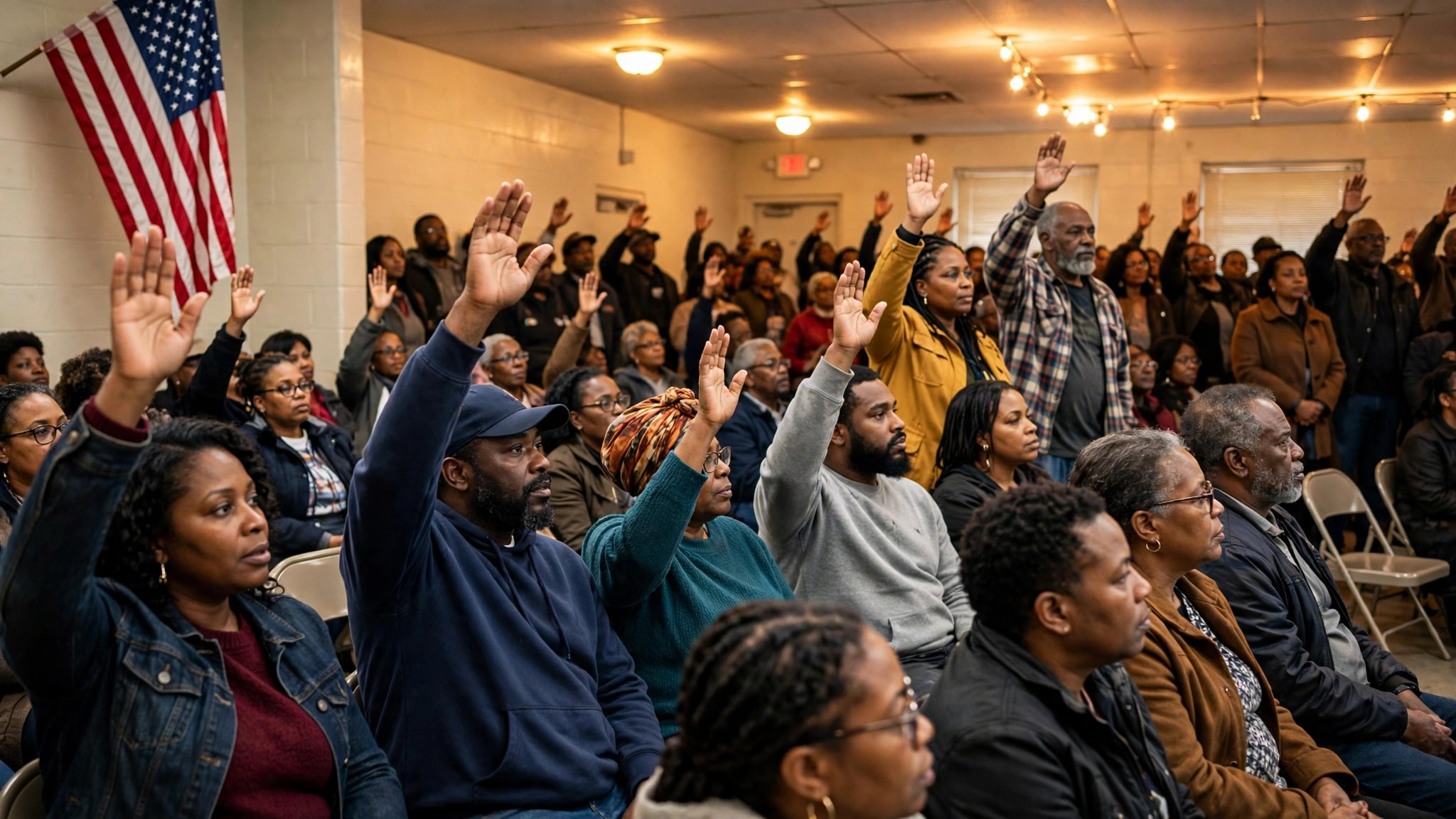
The ruling lands in a season of deep distrust. Early results from the 2026 Black Census Project, released by Black Futures Lab, found that 95 percent of Black respondents plan to vote this year. Yet only 3 percent say they trust the federal government.
Trust in Black elected officials was higher but still low, at 22 percent. Among voters with little trust in government, 23 percent said they would abolish the Electoral College. The numbers describe a community voting out of resolve, not out of faith in the system.
Organizers are answering with action. The Congressional Black Caucus Institute launched its SO VOTE campaign, a multimillion dollar effort to register and mobilize young voters and voters in majority Black and rural communities. The outreach spans the South, the Midwest, and the West, working with dozens of local groups.
On the legal front, the NAACP is opening a national legal hub on October 24 to support voters through Election Day. The hub pairs with a coalition of community observers fanning out across Michigan, Ohio, Georgia, and North Carolina. The Department of Justice is also sending about 1,000 election monitors, in what officials call the largest effort of its kind.
What This Means For The Midterms
Tennessee will conduct the November 3 elections under this map. That means Black Memphians will vote in districts drawn to scatter their strength. The outcomes in the redrawn districts could help shape control of Congress.
The legal fights are not fully over. An independent congressional candidate named Pamela Moses has appealed the dismissal of her challenge. Other cases were dropped along the way, including a suit filed by Democratic Representative Steve Cohen and State Representative Justin Pearson. Pearson is the Democratic candidate running in the redrawn 9th District.
The bigger danger is the precedent. Other states are watching Tennessee use the Callais decision to draw maps between censuses that weaken Black representation. If courts keep calling racial dilution simple partisanship, more legislatures will follow this playbook.
This map fight is part of a larger attack on Black political power. Urban City Podcast has also covered the push to change how Black people are counted in the 2030 Census, another battle that could erase Black communities from power. The map and the census are two fronts of the same war.
Black voters in Memphis have fought for the ballot before. They will fight for it again, through turnout, lawsuits, and public pressure. But this ruling shows how fragile the protections around that ballot have become. The fight for fair maps is now a fight in every statehouse in America. Urban City Podcast will keep tracking this story as November approaches.
Sources and Further Reading
- Legal Defense Fund: LDF Condemns Federal Court’s Order to Uphold Tennessee’s Racially Discriminatory Congressional Map
- The Star News Network: Federal Court Dismisses Final Lawsuit Challenging New Tennessee Congressional Map
- Essence: Black Voters Are Turning Out, but Not Out of Trust
- Associated Press via guardonline: Black Caucus Launches Effort to Boost Voting Among Black, Rural and Young Voters in Midterms