
4 min read
Houston City Hall had a moment on Tuesday that nobody in the room saw coming.
Mayor John Whitmire had already signed an order limiting when Houston police contact federal immigration agents. Three members of the City Council then tried to write that order into law, word for word.
The vote never happened.
City Attorney Arturo Michel ruled the ordinance unlawful under a Texas law known as SB 4, and the proposal died at the Tuesday, November 18 council meeting before a single vote was cast.
SB 4 is the Texas law that requires local law enforcement to cooperate with federal immigration enforcement. It also exposes local officials to penalties when they adopt policies that limit that cooperation. Michel’s ruling said the council ordinance ran into that law head on.
What the Mayor Ordered
Whitmire signed the executive order on November 6. It directs the Houston Police Department to stop contacting Immigration and Customs Enforcement over civil immigration warrants, except when a person is being arrested on a charge that carries jail time.
A civil immigration warrant is not a criminal charge. It is a paperwork matter, and under the old practice it could still end with a call to federal agents.
The numbers behind the order are stark. From April through September of this year, Houston police contacted ICE nearly 200 times. At least 36 people were handed over.
For Black Houston, those numbers land close to home. This city is home to large Black immigrant communities with roots in Haiti, Nigeria, Jamaica, and across West Africa and the Caribbean.
When any encounter with police can turn into a call to immigration agents, families think twice about calling for help at all. That fear does not stay inside one household. It moves through whole neighborhoods.
Why the Council Moved
Council Members Alejandra Salinas, Edward Pollard, and Tiffany Thomas brought the ordinance forward together.
Their logic was simple. An executive order can be erased by the next mayor with a single signature. A law passed by the council stays on the books.
So they took the mayor at his word. The ordinance they filed copied his executive order word for word, nothing added and nothing taken away.
It was, in effect, the council offering to make the mayor’s own policy permanent.

The Answer From the Three Members
Michel’s ruling said the ordinance itself broke state law, so the council could not even vote on it.
On Wednesday, Salinas, Pollard, and Thomas answered in a joint statement that cut straight to the point.
“Courts, not an unelected city legal department, determine what is lawful,” the three members said.
That one sentence is the whole fight. An appointed city lawyer stopped elected lawmakers from voting on the elected mayor’s own words.
Whatever side a resident takes on immigration enforcement, the question of who decides is a democracy question, and Black voters in Houston have heard promises about that question for generations.
The Fight in Court
The council chamber is only one front in this fight.
On November 13, the office of Attorney General Ken Paxton filed in Fort Bend County to block Whitmire’s November 6 executive order itself.
So the state is suing to kill the mayor’s order in court, while the city’s own attorney says the council version cannot even come up for a vote.
The mayor’s policy is being squeezed from both directions at once, and the people who live under it have no seat at either table.
What happens next will be decided in a courtroom, not at City Hall. Houston residents who want a say will have to watch the filings, call their council members, and hold every office in this fight accountable in public.
For now, the order the mayor signed on November 6 remains the policy of the city while the state tries to undo it. Every traffic stop and every call for help in Houston now sits inside a legal fight between City Hall, the council, and Austin, and the residents caught in the middle are the ones with the most at stake.
Major Takeaways
The city attorney blocked the council from voting on an ordinance that copied the mayor’s ICE limits word for word.
Three council members say courts, not an unelected city legal department, decide what is lawful.
The attorney general has already sued to block the mayor’s executive order itself.
Houston police contacted ICE nearly 200 times in six months and handed over at least 36 people.
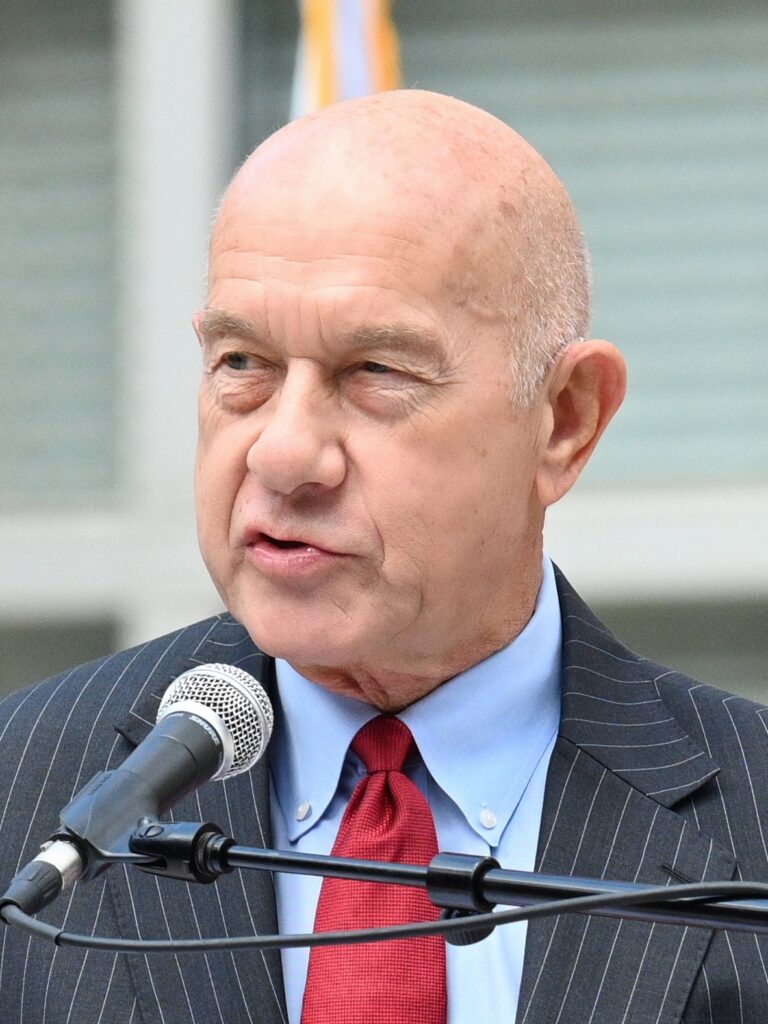
Photo: Mayor John Whitmire speaking at the 2024 Veterans Day ceremony in Houston. Photo by Ed Uthman, Wikimedia Commons, CC BY 2.0.