8 min read
Major Takeaways
- A Census Bureau rule proposed on September 10 would bar race and ethnicity questions from the 2030 count and every count after it.
- State officials estimate about 16.1 million people could be excluded from the population totals that divide seats in the House.
- Congressional Black Caucus Chair Yvette Clarke joined 153 House Democrats demanding the rule be withdrawn before a final decision.
- A November 12 analysis warns the Supreme Court ruling in Callais may have removed the strongest legal barrier to dropping the race question.
The fight over the 2030 census has become one of the biggest political battles in America, and Black communities stand at the center of it.
A rule proposed by the Census Bureau on September 10 would remake the national count in three sweeping ways.
It would exclude millions of residents from the totals used to divide seats in the House of Representatives.
It would bar questions about race and ethnicity from the 2030 census and every census that follows.
It would also scrap the usual residence standard that has guided the count since 1790.
The public comment period closed on November 2 with more than 143,000 comments filed.
Now the Bureau must review those comments and answer them before any final rule can take effect.
What happens next will shape political power and federal money for a full decade.
2030 Census Rule Would Rewrite Who Counts in America
Under the proposal, only citizens and lawful permanent residents would be included in the apportionment count.
People on work visas and student visas would be left out of those totals.
Refugees and asylum seekers would be left out as well, along with undocumented residents.
A coalition of state officials estimates about 16.1 million people nationwide could be excluded.
The coalition includes 24 attorneys general and two governors, and it filed a 39 page comment letter on November 2.
The letter argues the plan violates the Fourteenth Amendment and the federal Census Act.
The amendment apportions House seats by the whole number of persons in each state.
No past census has ever excluded residents solely because of immigration status, the letter notes.
The administration argues the count should reflect sufficient ties or allegiance to the United States.
States with large immigrant populations would lose the most representation under the new math.
California officials estimate about 3 million of their residents could vanish from the count.
New Jersey officials put their share at more than 600,000 residents.
Because Electoral College votes track House seats, the shift would also move presidential politics.
Federal funding for schools, roads, health care and transit follows the same population figures.
People excluded from the count would still live in their communities and still need those services.
Clarke and 153 House Democrats Demand the Rule Be Withdrawn
Congressional Black Caucus Chair Yvette Clarke of New York is leading the fight inside Congress.
She joined Oversight Ranking Member Robert Garcia and the chairs of three allied caucuses in a public demand for withdrawal.
Their comment letter carries the signatures of 153 House Democrats.
Clarke called the census a constitutional mandate and not a political tool to be manipulated for partisan gain.
She said an accurate census is essential to ensuring our communities receive the representation, resources and protections they are entitled to under the law.
She added a plain warning about the intent she sees behind the plan.
Clarke said the caucus will not stand by while this administration attempts to erase people from the count and silence the communities whose voices must be heard.
Garcia said lawmakers will fight this rule in Congress and in the courts.
The stakes connect directly to the map fights already covered in our reporting on Black House seats slipping to 60 on redrawn maps.
A count that shrinks Black and immigrant communities would feed the next round of those maps.


The Race Question Has Been Asked Since 1790
The second front in this fight is about data itself.
The census has collected information about race since the very first count in 1790.
The proposed rule would end that practice on the main count and bar questions on sexual orientation as well.
Administration officials call racial categories arbitrary and say such questions could discourage participation.
The Bureau has argued that questions about immaterial personal characteristics such as race can distort the data.
Opponents answer that race data is the backbone of civil rights enforcement in this country.
States use it to identify disparities, evaluate programs and enforce laws against discrimination.
Civil rights groups note the decennial count is the only source of complete block level data on race and ethnicity.
A smaller ongoing survey would still ask about race, but a sample can never replace a full enumeration.
Without full count denominators, even basic birth, death and disease rates by race become unreliable.
The same logic is moving on a second track inside the federal government.
On July 21 the Equal Employment Opportunity Commission voted 2 to 1 to advance a rule ending employer reports on workforce race and sex.
Those reports cover about 50 million workers and have tracked job segregation for six decades.
Paul Starr, a sociologist and policy analyst, summed up the danger in a commentary published November 12.
Suppressing data about race will not suppress racism itself, he wrote.
Starr also flagged a contradiction in the administration position.
The Education Department is requiring colleges to report race and sex data for applicants and enrollees at the same time.
What Black Communities Lose When the Data Goes Dark
For Black America, this is not an abstract paperwork dispute.
Census race data helps prove whether voting maps dilute Black votes or respect them.
It helps show whether federal dollars reach Black neighborhoods or pass them by.
It helps document gaps in health, housing, education and employment that polite silence would hide.
Erasure on paper has a long history of becoming erasure in budgets and in district lines.
Chioma Chukwu of American Oversight put the principle in one sentence.
The census is supposed to count everyone, she said, and it is the foundation of fair representation.
Her group joined the NAACP and the Legal Defense Fund in filing expedited records requests about how the rule was built.
They want to know what officials understood about the consequences and who shaped the proposal.
The Legal Ground Shifted After the Callais Ruling
The hardest warning in the new analysis concerns the courts.
Starr argues the administration holds firmer legal ground on removing the race question than on narrowing the apportionment count.
He says the Supreme Court decision in Louisiana v. Callais in April may have removed the only legal obstacle to dropping the question.
That 6 to 3 ruling narrowed the ability of minority voters to challenge maps that diminish their political influence.
Our coverage of Troy Carter and the largest Black Caucus in history shows the leadership that will carry this fight.
The residence change adds one more layer of risk to the count.
Instead of counting people where they usually live and sleep, the rule would count where a person lawfully spends the most days between January 3 and April 1.
Tax records would serve as evidence of residency under the new test.
State officials warn that students, military families and people in vacation homes could be counted in the wrong places.
A New Congress Could Fight Back Next Year
The rule is not final, and the calendar now matters as much as the arguments.
The Bureau must review and respond to the public comments before it can finalize a plan for 2030.
Opponents are urging the Bureau to withdraw the proposal outright rather than defend it in court.
Starr notes that Democrats largely avoided the issue during the midterm campaign.
He says a new Democratic Congress could try to reverse the changes through legislation next year.
Such a bill would need a presidential signature, likely as part of a larger package he wants.
Whether the new majority treats the census as a first order priority remains an open question.
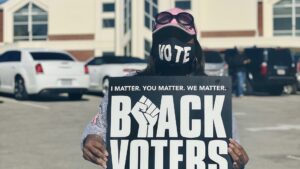
Black voters just delivered historic wins across the South in this election.
The lesson of this fight is that winning seats is only half the work of representation.
The other half is making sure every person is counted when the seats themselves are divided.
Read more politics coverage and follow the full agenda at Urban City Podcast.