6 min read
Major Takeaways
- An international panel of health experts has ruled that measles is once again spreading freely inside the United States.
- The nation held elimination status for 26 years, from 2000 until now.
- More than 5,400 cases have been confirmed this year, the highest count since 1991.
- Falling childhood vaccination rates opened the door, and Black families face some of the widest gaps in protection.
Measles is back in America, and this time it is official.
An independent commission of health experts has determined that the United States no longer qualifies as a nation that eliminated measles.
The ruling ends a run of 26 years. Federal health officials first declared measles eliminated here in 2000, after vaccination campaigns crushed a disease that once infected millions of Americans.
The commission met in Washington from November 10 to November 13 to review the evidence from across the country.
Its recommendation goes to the director of the Pan American Health Organization, who makes the final call. A formal public announcement is expected on Tuesday.
How the Country Crossed the Line
Elimination never meant zero cases. Travelers still carried measles into the country now and then, but strong community protection smothered those sparks before they could spread.
The status falls when one strain of the virus passes from person to person inside the country for twelve straight months. That is the line America just crossed.
Scientists with the Utah public health laboratory showed that the same strain had circulated in that state for more than a year.
That single chain drove more than 95 percent of Utah cases and more than 600 infections.
Sustained outbreaks also took hold in South Carolina, Pennsylvania, Wisconsin and New York, a map that made the outcome hard to dispute.
Dr. Angela Rasmussen, a virologist and the editor of the journal Vaccine, said the Utah evidence alone would have been enough to make the case.
The Numbers Behind the Fall
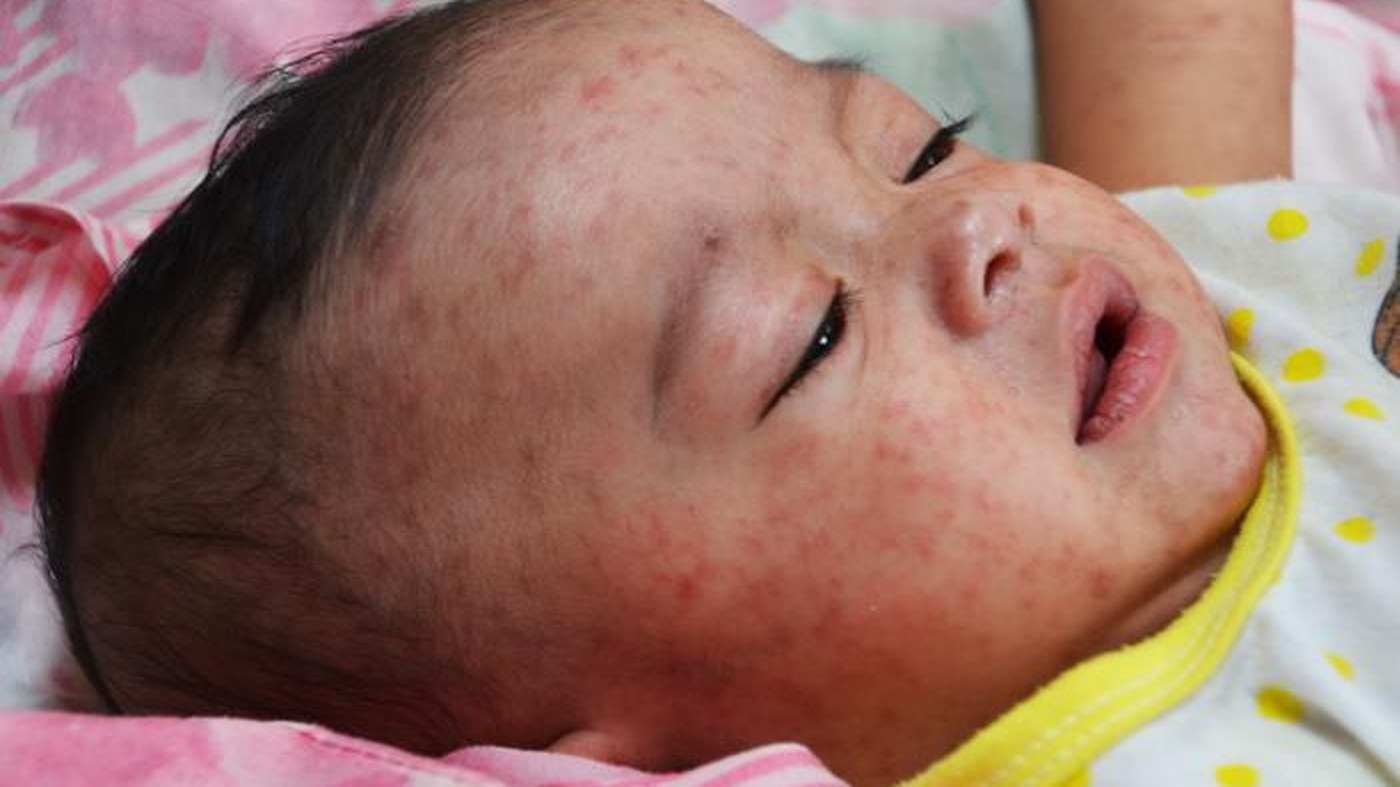
The Centers for Disease Control and Prevention counted 5,412 confirmed measles cases this year as of November 12. That is the highest yearly total since 1991.
Health officials have logged 43 separate outbreaks in 2026, and 96 percent of all cases trace back to an outbreak. Another 1,385 cases came from outbreaks that began in 2025.
Last year brought 2,289 confirmed cases and three deaths, numbers that already ranked among the worst in decades. This year left them far behind.
The CDC has confirmed six measles deaths in 2026 and cautions that the count could change as reviews are completed. State health departments have reported at least ten deaths tied to the disease.
Roughly one in every nine people sickened this year landed in a hospital. Nearly every case struck someone who had skipped the vaccine or whose shot record was unknown.

Falling Shots Opened the Door
None of this happened by accident. The share of kindergartners current on the measles, mumps and rubella vaccine dropped from 95.2 percent before the pandemic to 92.5 percent last school year, while exemptions climbed to a record 3.6 percent.
That slide left roughly 286,000 kindergartners without documented measles protection in a single school year.
Measles spreads too fast for numbers like that. Communities need about 95 percent coverage to stop it cold.
One sick person can infect twelve to eighteen others, and the virus can linger in the air of a room for hours after that person walks out.
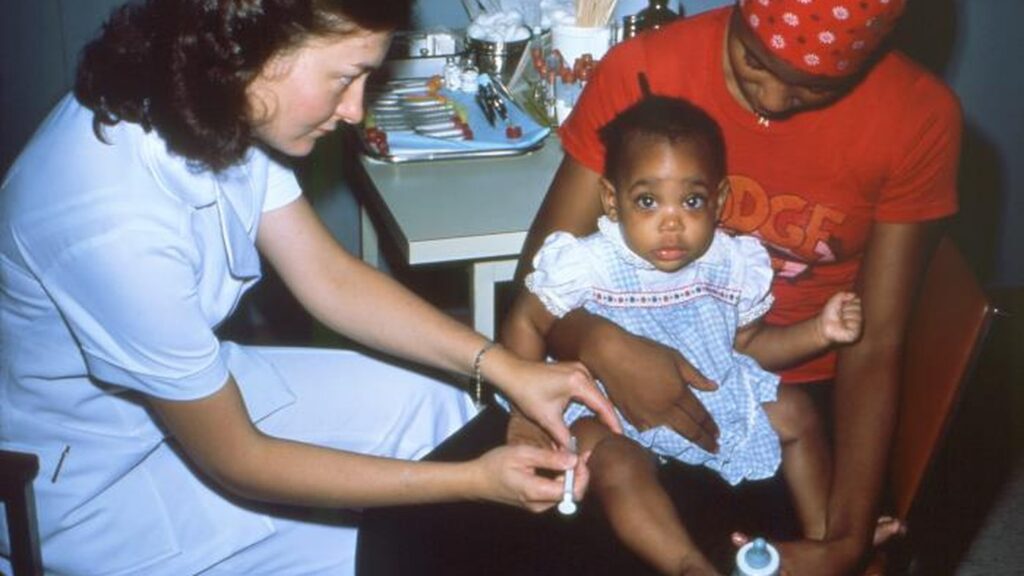
Two doses of the MMR vaccine protect about 97 percent of the people who receive them. The tool works. The delivery is what broke.
Dr. Demetre Daskalakis, who once led immunization work at the CDC, put it plainly. “Measles elimination is a vital sign for our public health system,” he said. “It shows cracks in our foundation.”
What This Means for Black Families
Outbreaks do not land evenly, and neither does protection. Federal survey data shows Black children remain less likely to be current on the MMR vaccine than white or Asian children.
Children living in poverty trail furthest of all. That gap is measured in missed clinic visits, shifting insurance and pharmacies that closed their doors, an access problem before it is anything else.
Those gaps matter because measles hunts for the unprotected. Babies too young for the shot and neighbors fighting cancer depend on the immunity of everyone around them.
The disease also reaches beyond a week of fever and rash. Measles can erase the memory of the immune system itself, leaving survivors exposed to infections they had already beaten.
The good news is that protection is still within reach. The MMR shot is free for children through the federal Vaccines for Children program, and local health departments vaccinate families every week.
Our Flu Shot Weekend Plan That Protects Black Families walks through the same simple steps for finding free and low cost shots near home.
The Long Road Back
Winning the status back is simple to describe and hard to do. The country must stop continuous spread for at least twelve months, and health experts warn the work could take years.
The Pan American Health Organization recommends that nations in this position file a corrective action plan and rebuild immunization and disease tracking.
Canada lost the same status last year, a reminder that no nation is exempt. The whole Americas region was declared free of ongoing measles transmission in 2016.
CDC Director Dr. Erica Schwartz has said her agency will not fundamentally change how it responds to outbreaks. State and local health departments remain the front line either way.
Dr. Peter Hotez of Texas Children’s Hospital put the moment in five words. “Basically, measles is back,” he said.
Whether it stays back is now a choice this country makes one clinic visit at a time. More coverage for our families lives in our Health and Wellness section.