
6 min read
Major Takeaways
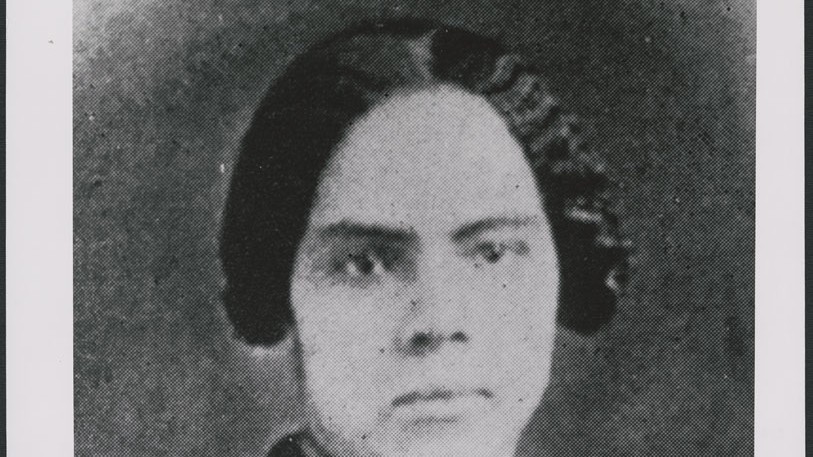
Mary Ann Shadd Cary became the first Black woman publisher in North America when she launched her own newspaper in 1853.
She grew up in a family home that sheltered people escaping slavery on the Underground Railroad.
During the Civil War she served as a recruiting officer who signed Black men up for the Union Army.
At sixty years old she earned a law degree from Howard University and kept fighting for the vote.
Long before Black women owned media companies, Mary Ann Shadd Cary owned the press itself. She wrote the stories, sold the subscriptions, and carried the message from town to town on her own two feet.
Her life stretched from a free Black childhood in Delaware to a newspaper office in Canada and then to a law degree in Washington. Every step of that journey carried the same conviction. Black people deserved freedom, education, and a voice that nobody could take away.
Her story belongs in every conversation about the Black press. Readers can find more features like this one in our Black History series, where the ancestors get their full credit.
A Freedom House in Wilmington
Mary Ann Shadd was born free on October 9, 1823, in Wilmington, Delaware. She was the oldest of thirteen children born to Abraham and Harriet Shadd.
Her parents were committed abolitionists. Their home served as a refuge for freedom seekers traveling the Underground Railroad toward Pennsylvania.
Delaware law barred Black children from education. The Shadd family moved to Pennsylvania so the children could learn.
Mary Ann attended a Quaker boarding school until 1839. She then spent twelve years teaching Black children in Delaware, Pennsylvania, and New York.
Teaching was only the beginning. In her early twenties she wrote a bold letter to Frederick Douglass that challenged free Black people to do more for the cause.
Douglass printed her letter in his newspaper, The North Star. A young schoolteacher had just entered the national debate, and she never really left it.
Mary Ann Shadd Cary Built a Newspaper in Canada
Everything changed in 1850. Congress passed the Fugitive Slave Act, a law that put even free Black families in danger of being seized and carried into bondage.
Mary Ann and her brother Isaac crossed into Canada. She settled in Windsor, Ontario, right across the river from Detroit.
In Windsor she opened a school that welcomed Black and white students together. Integrated education was a radical statement, and she made it without apology.
She also wrote a pamphlet titled A Plea for Emigration. It urged Black Americans to consider Canada, where the law treated them as equals.
Then came the boldest move of her life. On March 24, 1853, she published the first issue of The Provincial Freeman, a weekly antislavery newspaper.
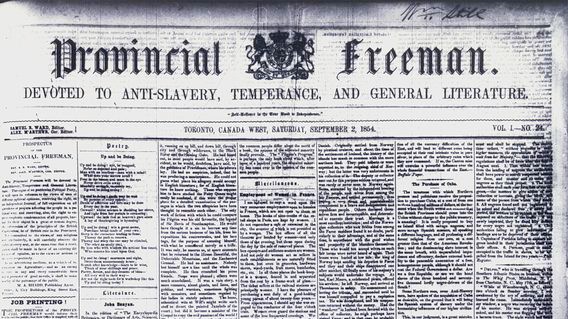
The paper made her the first Black woman publisher in North America and the first woman publisher in Canada. Its pages pushed abolition, temperance, education, and the vote for women.
Publishing was a trade closed to women, so the masthead carried the names of men. Readers across Canada and the United States still knew whose hand guided the paper.
Friends called her the Rebel, and the name fit. She lectured in both countries to sell subscriptions and raise money for people escaping slavery.
In 1856 she married Thomas Cary, a Toronto barber who supported the paper. The Freeman later moved to Chatham, a town where her brother hosted a secret 1858 gathering at his home with John Brown.
She Recruited Soldiers for the Union Army
Thomas Cary died in 1860, leaving her with children to raise. A year later the Civil War began, and she answered the call in a way few women of her era could.
She returned to the United States and served as a recruiting officer in Indiana. Her job was to persuade Black men to enlist in the Union Army and fight for their own liberation.
That work took courage. A Black woman urging men toward the battlefield faced ridicule from some and danger from others, yet she kept recruiting.
When the war ended, she went back to the classroom. She taught in Wilmington and then moved to Washington, where she taught in public schools for years.
A Law Degree at Sixty Years Old
Most people slow down at sixty. Mary Ann Shadd Cary walked into a courtroom career instead.
She had enrolled in the law program at Howard University back in 1867, studying while she taught school during the day. The road took sixteen years to finish.
In 1883 she graduated with a law degree at the age of sixty. She was only the second Black woman in the United States to earn one.
The degree never slowed her activism. She wrote for Black newspapers in Washington, including The New National Era and The Peoples Advocate.
In 1880 she founded the Colored Womens Progressive Franchise Association. The group organized Black women to demand the ballot on their own terms.
She also joined the National Woman Suffrage Association and addressed its 1878 convention. Before a House committee she backed the Fourteenth and Fifteenth Amendments while protesting that their words left women out.
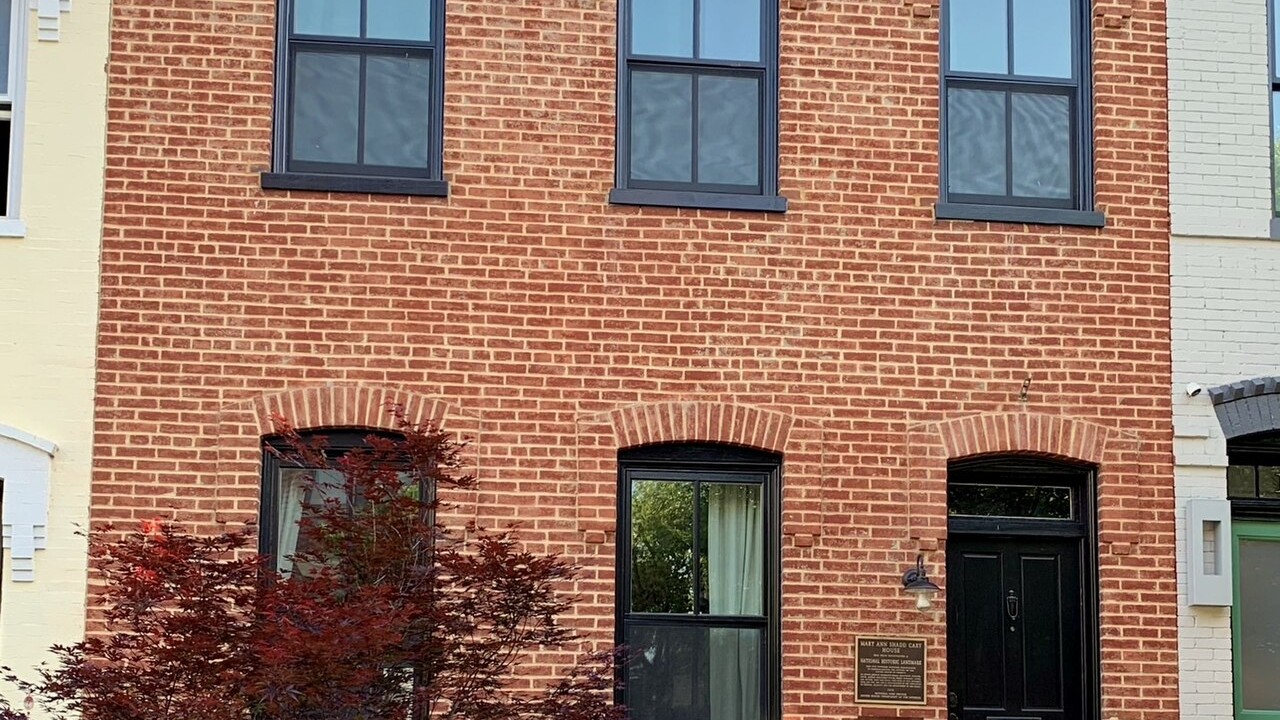
She died in Washington on June 5, 1893. The brick rowhouse where she spent her last years, at 1421 W Street NW, became a National Historic Landmark in 1976.
Why Her Story Matters Right Now
Black women still fight for ownership in American media. Mary Ann Shadd Cary settled that argument in 1853 by owning the newspaper outright.
Her example speaks to every young journalist building an audience without permission. She teaches that a press, a classroom, and a courtroom can all become weapons for freedom.
She also modeled range. Teacher, editor, recruiter, lawyer, and suffragist were not separate lives for her. They were one mission carried into every room she entered.
That mission runs through the stories we tell in our Culture coverage today. It echoes in pioneers like Daniel Hale Williams, who built institutions when doors stayed shut.
Remember her name the next time someone asks who built the Black press. A freeborn daughter of Delaware built it, carried it across a border, and defended it for forty years.