


Major Takeaways
• March Madness continues to draw massive national audiences despite changes in television and streaming habits.
• HBCU basketball programs face financial and recruiting challenges but still gain major exposure through NCAA tournament appearances.
• Streaming services and multi network broadcasting have made it easier than ever for fans to watch tournament games across multiple platforms.
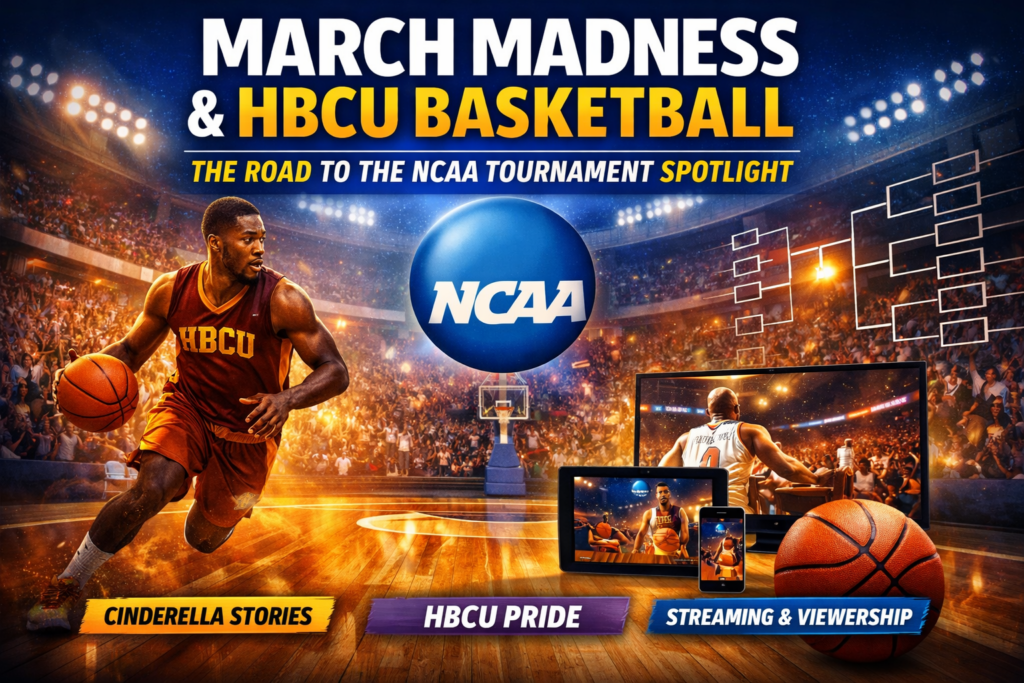
How the evolving NCAA tournament landscape is shaping the future of HBCU basketball and how fans can watch the excitement across television and streaming platforms.
By Urban City Podcast Digital News Desk• 5 min readEvery March, the sports world turns its attention to one of the most iconic events in American athletics: the NCAA Division I men’s basketball tournament, widely known as March Madness. Sixty eight teams enter a single elimination battle that unfolds over three weeks, producing dramatic buzzer beaters, shocking upsets, and unforgettable championship moments. For many fans, March Madness is more than a tournament. It is a national tradition that dominates television, social media, office conversations, and living rooms across America.
Yet as the sports media landscape changes, an interesting question is emerging. Is March Madness still climbing in popularity, or is it beginning to level off compared with the tournaments of previous decades? And where do Historically Black Colleges and Universities fit into the modern picture of college basketball’s biggest stage?
The reality is that March Madness remains one of the most powerful events in American sports. Despite changing viewing habits and the rise of streaming platforms, the tournament continues to deliver massive audiences. In recent years the early rounds of the tournament have averaged more than nine million viewers per game, with championship games drawing audiences well above eighteen million. Those numbers are remarkable in a time when most traditional television programs are seeing steady declines in ratings.
One reason March Madness continues to dominate is the unpredictability that defines the tournament. Unlike professional sports playoffs, the NCAA tournament is single elimination. One bad night sends even the most dominant teams home. That format opens the door for underdogs and creates the famous Cinderella stories that make the tournament unforgettable.
Fans still talk about historic upsets decades later. One of the most memorable came in 1997 when Coppin State stunned the basketball world by defeating South Carolina as a fifteen seed. Moments like that remind fans that anything can happen once the tournament begins.
Another major factor in the tournament’s success is the tradition of filling out brackets. Millions of people participate in bracket contests every year, including many who rarely watch college basketball during the regular season. Office pools, family competitions, and online challenges transform casual viewers into passionate fans almost overnight. Suddenly everyone becomes a temporary basketball analyst trying to predict which teams will survive and which will fall.
The way people watch the tournament has also changed. In the past, fans depended almost entirely on television broadcasts. Today viewers can watch games on traditional networks like CBS, TNT, TBS, and truTV, while also streaming games on mobile devices, smart televisions, and laptops. Services like the NCAA March Madness Live app, Paramount Plus, YouTube TV, Hulu Live, and Sling TV make it possible to watch games almost anywhere.
For younger audiences especially, the ability to stream games has made the tournament even more accessible. Fans can now watch multiple games simultaneously, switch between matchups instantly, and follow their brackets in real time.
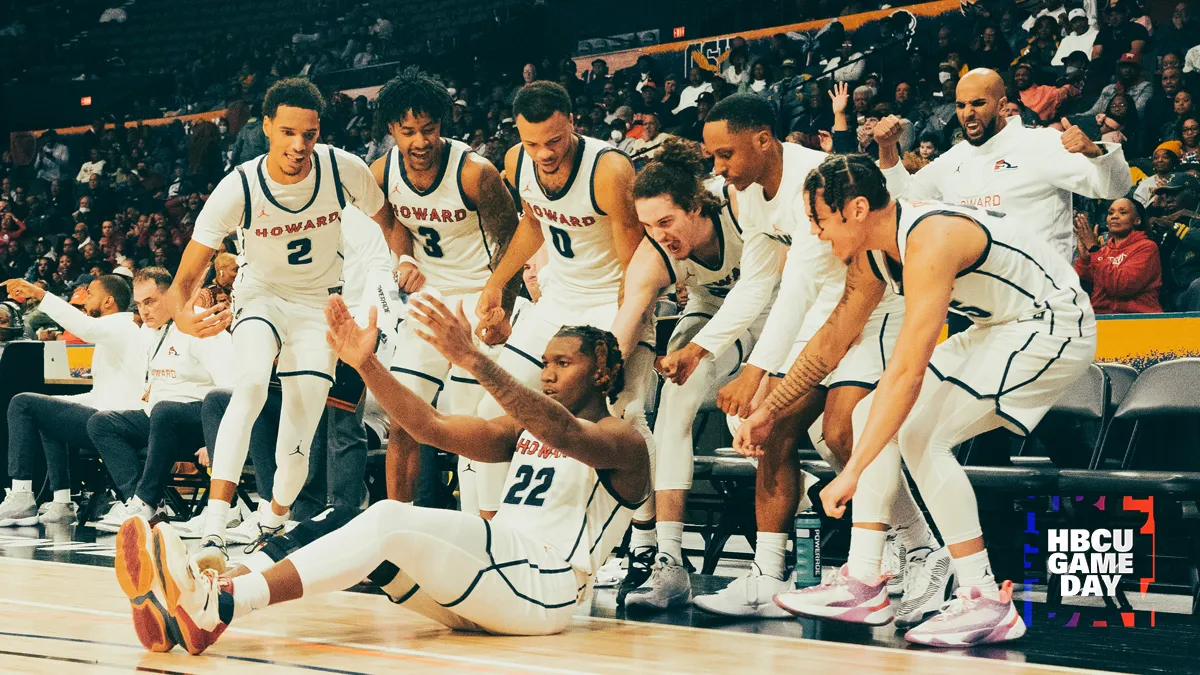
While the spotlight of March Madness typically shines on powerhouse programs from major conferences, Historically Black Colleges and Universities continue to play an important role in the tournament’s story. HBCU teams most often reach the tournament by winning their conference championships, particularly in leagues such as the Southwestern Athletic Conference and the Mid Eastern Athletic Conference.
These teams frequently appear in the tournament’s opening play in round, often referred to as the First Four. Although these games receive less attention than the later rounds, they still provide a national platform for programs that rarely receive major media coverage during the regular season.
Despite financial disadvantages and recruiting challenges, HBCU basketball programs have produced several remarkable moments in NCAA tournament history. Over the years multiple HBCU teams have recorded victories in the tournament, proving that talent and determination can overcome significant obstacles.
For many HBCU athletic departments, simply reaching the tournament carries enormous benefits. A nationally televised game exposes the university to millions of viewers, including potential students, alumni donors, and corporate sponsors. The exposure can elevate a school’s brand far beyond the basketball court.
In addition, tournament appearances can create long term recruiting advantages. Young athletes who may not have previously considered an HBCU program suddenly see those schools competing on a national stage. That visibility can influence future recruiting classes and gradually strengthen programs over time.
Still, HBCU basketball faces real challenges. Many of these programs operate with significantly smaller budgets than schools from the major conferences. Facilities, travel resources, and recruiting budgets often lag behind those of larger universities. That financial gap makes it difficult to compete consistently against programs that have far greater resources.
Seeding in the NCAA tournament can also create obstacles. HBCU teams frequently receive lower seeds, which means they must face top ranked opponents early in the tournament. The road to a deep tournament run becomes extremely difficult when a team must defeat multiple powerhouse programs in succession.
At the same time, there are signs of progress. Social media and digital sports coverage have helped bring more attention to HBCU athletics. Conferences are expanding streaming opportunities, allowing fans to watch games that once received little or no national exposure.
The rise of Name, Image, and Likeness opportunities could also reshape the future of HBCU recruiting. Athletes now have the ability to profit from endorsements and partnerships, and some HBCU programs are beginning to use community support and brand identity as recruiting advantages.
The cultural importance of HBCUs also continues to resonate with many athletes. Some players are choosing these schools not only for basketball opportunities but also for the unique campus culture, history, and sense of identity that HBCUs provide.
When looking at the bigger picture, March Madness itself is not losing altitude. If anything, it is evolving alongside the modern sports media environment. Live sports remain one of the few forms of entertainment that people still watch in real time. Advertisers value that immediacy because it guarantees audiences are actually watching instead of skipping past commercials.
The tournament’s future will likely include deeper integration with streaming platforms, more digital coverage, and continued expansion across mobile and connected television devices. Fans already expect to watch games on phones, tablets, laptops, and smart TVs, and broadcasters are adapting quickly to that reality.
For HBCU basketball programs, the next decade could be especially important. Increased exposure through streaming, stronger alumni engagement, and smarter recruiting strategies could help these schools strengthen their presence on the national stage. Even one major upset in March can change the narrative around a program overnight.
History shows that underdogs have always been a vital part of the magic of March Madness. The roar of a small school knocking off a powerhouse team is what keeps fans glued to the screen year after year.
And if the tournament’s history tells us anything, it is this: never underestimate the power of a team that nobody expects to win.
March Madness continues to capture the imagination of sports fans across the country. The brackets, the buzzer beaters, the heartbreak, and the triumph all combine to create a spectacle unlike any other in American sports.
As the tournament continues to evolve, one thing remains certain. The madness of March is not going anywhere, and the opportunity for HBCU basketball programs to make their mark on the national stage is still very much alive.