8 min read
Jury selection began on Tuesday in the federal Buffalo Tops trial, the landmark case that will decide whether Payton Gendron faces the death penalty for the racist massacre that killed 10 Black people at a Buffalo supermarket in 2022. Gendron, age 23, already serves life in prison without parole for the May 14, 2022 attack at Tops Friendly Markets on Jefferson Avenue. Now a federal jury will decide his ultimate punishment in what is believed to be the deadliest hate motivated shooting targeting Black people by a lone gunman in the past century.
This trial matters far beyond Buffalo. It is a national reckoning with the racist violence that continues to stalk Black life in America, and with the online radicalization that armed a teenager with a semiautomatic rifle and a manifesto. For Black families in Buffalo and across the country, the case is a painful reminder that grocery shopping, worship, and everyday errands can become targets in a nation that has never fully confronted its war on Black bodies.
Major Takeaways
- Jury selection began October 13 in Buffalo federal court in the death penalty case against Payton Gendron, the white supremacist who murdered 10 Black people at Tops Friendly Markets in 2022.
- Gendron faces 10 federal hate crime counts resulting in death, plus three hate crime counts involving bodily injury and attempts to kill and multiple firearm charges. He offered to plead guilty in exchange for a life sentence, but the Justice Department rejected the offer and is seeking the death penalty.
- His defense team is not disputing his guilt. Their sole goal is to keep him off death row by presenting mitigating evidence about his background.
- Victims’ families are divided on capital punishment. Some want him executed, while others say life in prison without parole is the truer justice.
- The trial puts a national spotlight on the racist radicalization pipeline that fed the attack and on FBI data showing Black people remain the number one target of hate crimes in America.
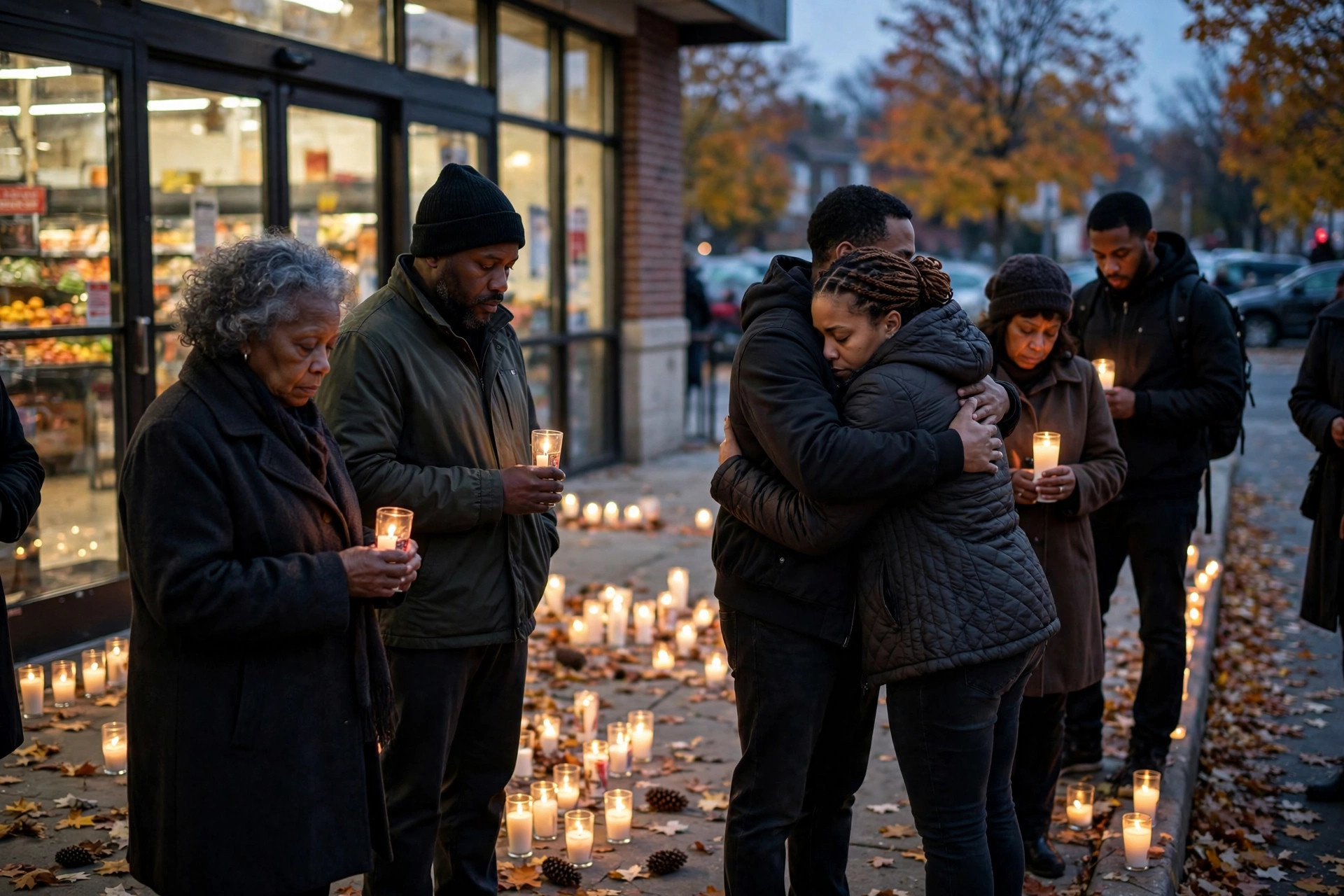
The Case: Jury Selection and the Death Penalty
The federal trial is the second prosecution of Gendron for the same massacre. He pleaded guilty in November 2022 to 10 counts of first degree murder, three counts of attempted murder and hate motivated domestic terrorism under New York state law. An Erie County judge sentenced him on February 15, 2023 to life in prison without parole, the automatic sentence for the terrorism charge, with life sentences for each murder count running consecutively.
The federal case, however, opens the door to capital punishment, which New York state law does not allow. A federal grand jury indicted Gendron on July 14, 2022, charging him with 10 counts of hate crimes resulting in death, three counts of hate crimes involving bodily injury and attempts to kill, and 10 counts of using a firearm to commit murder during a crime of violence, among other charges. The Justice Department decided in 2024, under then Attorney General Merrick Garland, to seek a death sentence, making it the first capital case of Garland’s tenure after he had placed a moratorium on federal executions.
The shooter tried to take the death penalty off the table, offering to plead guilty in his federal case in exchange for a life sentence. The Justice Department said no. According to federal prosecutors, the attack was motivated by a desire to prevent Black people from replacing white people and to inspire others to commit similar attacks. The government recently won a key victory when the United States Second Circuit Court of Appeals reinstated three aggravating factors for the penalty phase that a lower court had thrown out: the effect of the crimes on the surviving victims, Gendron’s attempt to incite further violence, and the racial motive behind the killings. Jurors will decide early next year whether he should be sentenced to death.
The Victims and the Families They Left Behind
The 10 people murdered were all Black, ages 32 to 86. They were Celestine Chaney, Geraldine Talley, Katherine Massey, Pearl Young, Andre Mackneil, Heyward Patterson, Ruth Whitfield, Roberta Drury, Margus Morrison and Aaron Salter, a retired Buffalo police officer working as a security guard who confronted the gunman. Three others were shot and survived.
The families carry this grief in different ways, and they do not agree on what justice looks like. Wayne Jones Sr., whose mother Celestine Chaney was killed, plans to attend the trial but opposes the death penalty. “I really think that he should just sit and have to think about it year after year after year and just be miserable,” Jones said. He has spent the past four years speaking on media panels and gun violence forums, and he said the long appeals process of a death sentence would only prolong the pain.
Buffalo Common Council member Zeneta Everhart sees it differently. Her son Zaire Goodman, now age 25, was shot in the neck and survived, and still has shrapnel in his body. She has described the shooting as domestic terrorism and believes hate crime enhancements and the death penalty may be the only real deterrent. Garnell Whitfield, who lost his 86 year old mother Ruth, takes no position on capital punishment. He says the federal government will do what it deems it must do. What he wants most, he said, is for the trial to expose the radicalization, the social media pipeline, and the hatred in American society that produced the killer.
Why This Case Matters to Black America
The Buffalo Tops trial is not just about one gunman. It is about a pattern that federal data says has never broken. Black people have been the number one numerical target of hate crimes in America every year since the FBI began collecting bias crime data in 1991. According to FBI data released in August, law enforcement agencies reported over 2,800 anti Black hate crime incidents in 2025, nearly three times the number targeting Latinos. Even with a 7 percent decline in overall hate crime incidents from 2024 to 2025, attacks on Black people still dominate the numbers.
The attack also exposed how online radicalization now functions as domestic terrorism. Gendron, then age 18, drove more than 200 miles from Conklin, New York to a predominantly Black neighborhood in Buffalo he had scouted in advance. Investigators found a manifesto in which he chose the area because it had the highest percentage of Black people close enough to where he lived. He fired about 60 shots, livestreamed the killings, and wrote the baseless great replacement theory on his rifle, the claim that people of color are replacing white people through birth rates and immigration.
Hate crime analyst Brian Levin has described Gendron as fitting the pattern of young, mostly white males carrying out targeted massacres justified by manifestos that reference prior attacks and seek to inspire future ones. The Buffalo massacre stands alongside the 2015 Charleston church shooting, in which a white gunman murdered nine Black churchgoers, as proof that Black sacred and communal spaces remain targets. For the East Side of Buffalo, the trial reopens a wound that never fully closed, in a neighborhood that lost its only full service supermarket to a killer who picked it because of who shops there.
As Urban City Podcast reported this morning, Black voters and Black communities are at the center of this year’s most consequential battles, from the governor’s race in Florida to the fight for equal funding at HBCUs. The thread connecting these stories is the same: Black life in America remains a site of both targeted attack and determined resilience. And as our Black in the Day series on Fannie Lou Hamer reminds us, the fight against racist violence has always demanded that the nation look directly at what was done.
What Happens Next
Jury selection in a federal death penalty case can take weeks, as attorneys question potential jurors about their views on capital punishment, racial bias, and pretrial publicity. Once a jury is seated, the trial phase will establish the facts of the crimes, which the defense does not dispute, and the penalty phase will follow, where jurors will decide early next year whether Gendron lives out his days in a federal prison cell or is sentenced to die.
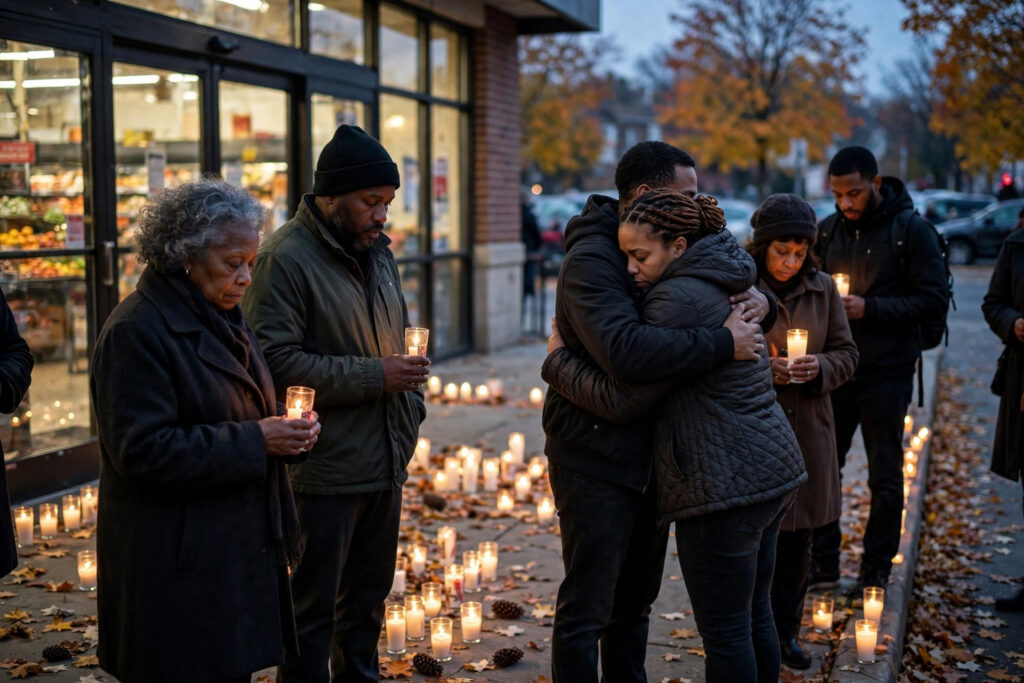
Victims’ families will be in the courtroom. Buffalo will be watching. So will Black America, for whom this case is a test of whether the justice system can answer racist mass murder with the full weight of the law. Visit the Urban City Podcast homepage for continuing coverage of this trial and every story that matters to our community.
Sources and Further Reading
- CNN: Jury selection to begin in federal hate crimes trial over Buffalo supermarket shooting
- Press Connects: Federal trial begins for Conklin man in Buffalo Tops mass shooting
- Democrat and Chronicle: Jury selection begins in death penalty case for Buffalo mass shooter
- QNC News: Jury Selection Begins in Buffalo Gunman Federal Death Penalty Trial