7 min read
Katherine Johnson counted everything as a little girl. She counted her steps to the road and the forks she washed after dinner.
That love of numbers carried her from West Virginia to the Moon. America trusted her math with the lives of its first astronauts.
She did that work inside a segregated space program. The doors were closed to Black women, and she walked through them anyway.
For Black families today, her story is proof and promise. Brilliance in our community has always powered this nation forward.
Major Takeaways
- Katherine Johnson was born on August 26, 1918, in White Sulphur Springs, West Virginia, and entered high school at age ten.
- She joined the Langley computing pool in 1953 and spent 33 years doing math that flight depended on.
- John Glenn refused to fly in 1962 until Johnson personally checked the orbital numbers by hand.
- Her calculations served the first American spaceflight, the Apollo 11 Moon landing, and the rescue of Apollo 13.
- President Barack Obama awarded her the Presidential Medal of Freedom in 2015, when she was 97 years old.
Katherine Johnson Counted Her Way Out of West Virginia
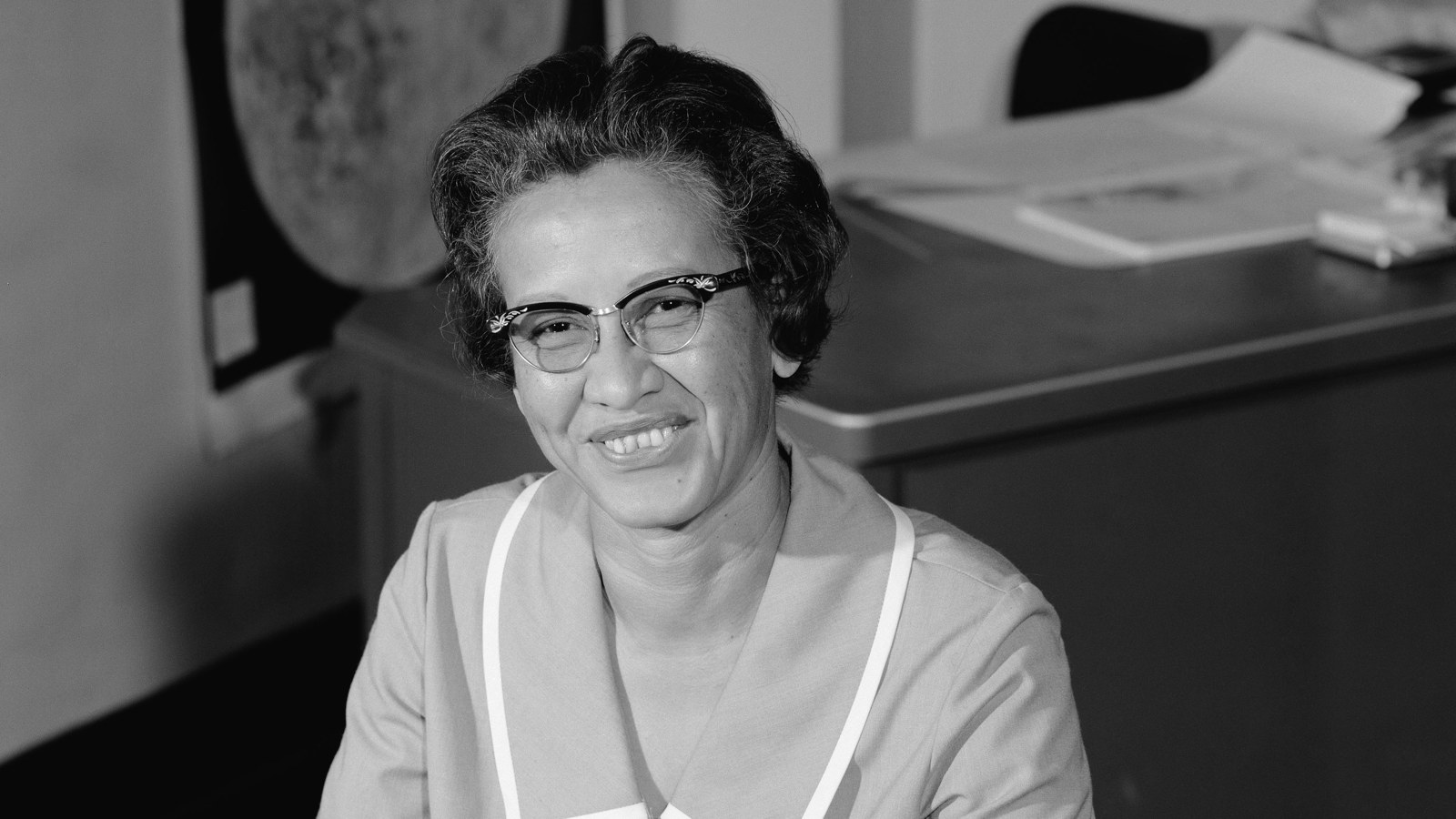
Creola Katherine Coleman was born on August 26, 1918. White Sulphur Springs, West Virginia, was home from her first day.
School in her hometown stopped at eighth grade for Black children. Her family arranged schooling in Institute, West Virginia, so she could keep going.
She entered high school at age ten. She started college at age fifteen, hungry for every math class on the books.
At West Virginia State College, professor William W. Schieffelin Claytor saw her gift clearly. He told her she would make a great research mathematician.
Claytor did more than praise her. He created a course on the geometry of space just for her.
She graduated in 1937 with highest honors. Her degrees covered mathematics and French, earned before she turned nineteen.
In 1939 she was among the first three Black students chosen for graduate study at West Virginia University. A new chapter in state history opened with her name in it.
Teaching Came First Because Doors Stayed Shut
Segregation left teaching as her main professional road. She taught at a Black public school in Virginia after graduation.
She married James F. Goble and raised three daughters. Family life paused her studies, but it never dulled her ambition.
Word reached her that Langley was hiring Black women mathematicians. The laboratory in Hampton, Virginia, needed people who could compute.
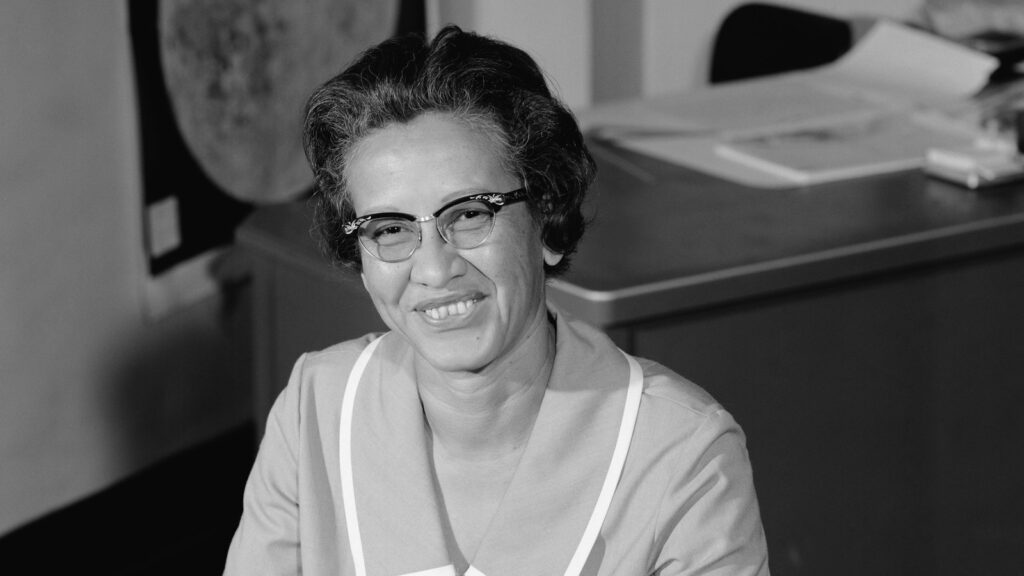
She applied and joined the staff in the summer of 1953. Her title was computer, in an age before machines owned that word.
She reported to the segregated West Computing section. Dorothy Vaughan led that unit of Black women mathematicians.
Just two weeks later, Vaughan sent her to the Flight Research Division. The temporary assignment quickly became permanent.

She Asked Questions Until the Room Changed
Johnson refused to simply run numbers in silence. She asked how each calculation worked and why it mattered.
She asked to sit in on editorial meetings. No woman from her side of Langley had entered those rooms before.
Her questions made engineers rely on her judgment. Knowledge of analytic geometry became her calling card across the center.
She spent four years studying flight test data. She also helped investigate a plane crash caused by wake turbulence.
Her husband James died of cancer in December 1956. She carried grief and three daughters and still reported for work.
She married James A. Johnson in 1959. By then the space race had pulled her skills to the center of history.
The First Woman Author in Her Division
In 1960 she coauthored a landmark research report with engineer Ted Skopinski. It set out equations for placing a satellite over a chosen spot on Earth.
No woman in her division had ever received author credit before. Her name on that cover announced a new era.
In May 1961 she did trajectory analysis for Alan Shepard. His flight made him the first American in space.
Then came the mission that made her name legend. John Glenn prepared to become the first American to orbit the Earth.
Get Katherine Johnson, Glenn Said
Electronic computers had run the orbital equations for Glenn. The machines were new, and the astronauts did not fully trust them.
Glenn asked the engineers to get the girl. He meant Katherine Johnson, and everyone at Langley knew it.
She ran the same numbers by hand on her desktop mechanical calculator. She checked the machine work figure by figure.
Her verdict settled the matter for the astronaut. If she says they are good, then I am ready to go.
Glenn flew in February 1962 and orbited the Earth in Friendship 7. The nation celebrated, and her pencil had cleared his path.
For Black America, the lesson landed hard. The man America sent around the planet trusted a Black woman with his life.
Her Math Reached the Moon and Brought Crews Home
Johnson calculated the trajectory for the Apollo 11 flight in 1969. Astronauts walked on the Moon for the first time that July.
She later named her proudest contribution herself. Her calculations helped synchronize the Apollo lunar lander with the command and service module orbiting the Moon.
She also computed backup navigation charts for astronauts. Those charts existed for the day the electronics might fail.
That day came in 1970 with Apollo 13. Her backup work helped guide the crippled craft and its crew safely home.
Her later years at Langley stayed ambitious. She worked on the Space Shuttle program and the Earth Resources Satellite.
She even worked on plans for a mission to Mars. She retired in 1986, closing a career of 33 years.
The Honors Arrived Late but They Arrived Large
For decades, America told the space story without her name. The women of West Computing stayed hidden while the rockets got the glory.
That silence finally broke in her lifetime. A 2016 book by Margot Lee Shetterly told the story of the Black women computers.
The film that followed cast Taraji P. Henson as Johnson. Millions met a hero their textbooks had skipped.
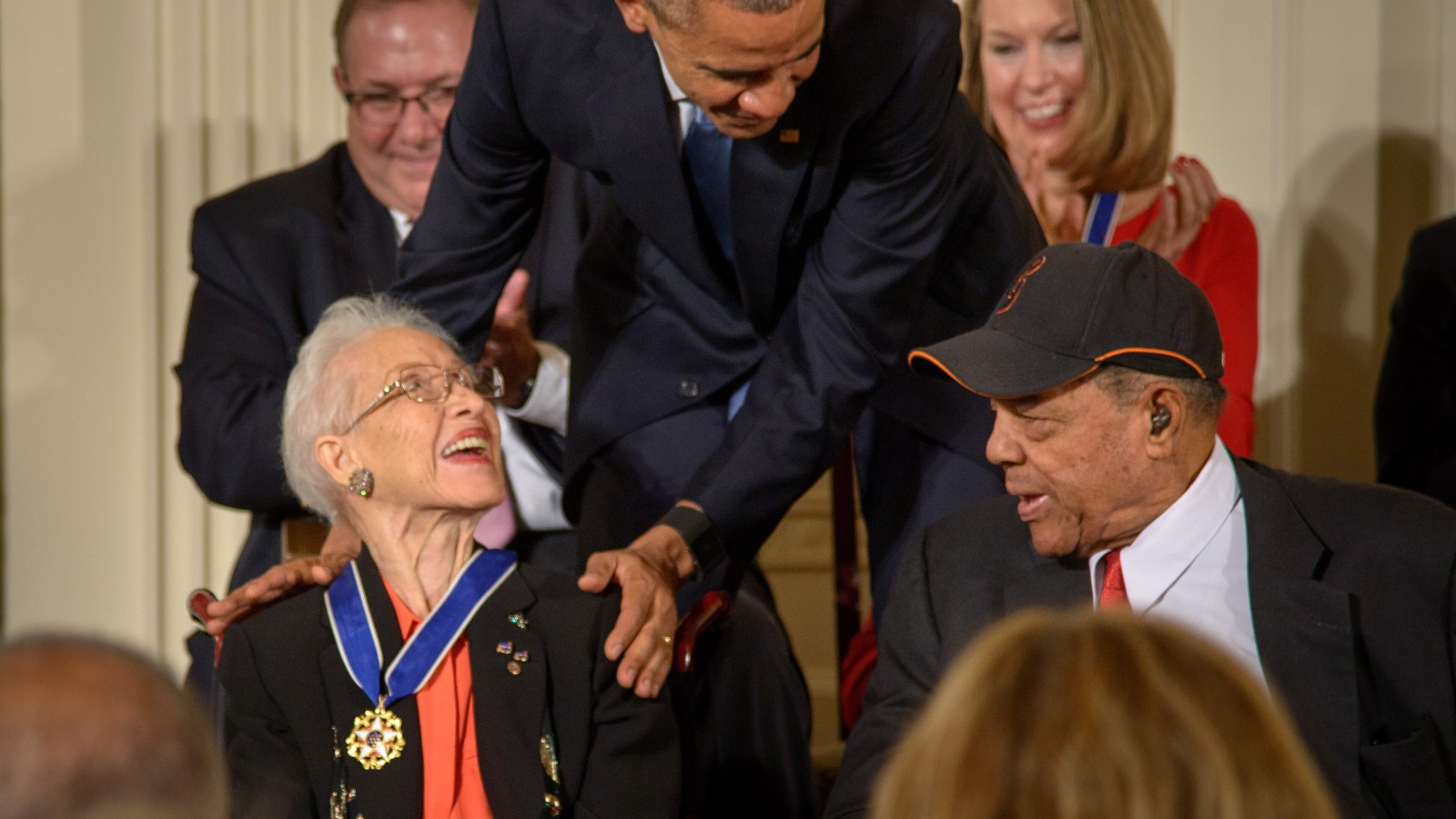
On November 24, 2015, President Barack Obama placed the Presidential Medal of Freedom around her neck. She was 97 years old.
The medal is the highest civilian honor in the nation. In 2016 NASA named its new Langley computational research facility for her.
Congress awarded her its Gold Medal in 2019. Her family received it at the Capitol in September 2024, alongside the families of her colleagues.
She died on February 24, 2020, at age 101. She had outlived the silence that once surrounded her work.
Why Katherine Johnson Still Matters Right Now
Every Black girl who loves math walks a road she paved. Johnson proved that genius needs opportunity more than permission.
Her story also honors the power of the HBCU classroom. West Virginia State College trained the mind that steadied the space program.
Explore more giants in this series, like Matthew Henson, who reached the top of the world. Then read how Madam C. J. Walker built wealth and work for Black women.
More Black history lives every day at Urban City Podcast. Our past is not a footnote, and neither was she.
Katherine Johnson never rode a rocket herself. She did something just as bold, because she sent others safely and brought them home.
She counted everything as a child in West Virginia. In the end, she made every number count for a nation.