She picked cotton at age six. By her mid forties, Fannie Lou Hamer had the President of the United States working to keep her voice off live television. Her testimony before the 1964 Democratic National Convention in Atlantic City still ranks among the boldest confrontations with American power ever delivered by a Black woman. It happened more than six decades ago. Its message rings true right now, as Black voters across the South once again stand at the center of the nation’s political future.
Major Takeaways
- Born in 1917 to Mississippi sharecroppers, Fannie Lou Hamer picked cotton from age six and left school after the sixth grade.
- Trying to register to vote in 1962 cost her job, her home, and nearly her life after a brutal jail beating. She never fully recovered, and she never backed down.
- Her 1964 testimony for the Mississippi Freedom Democratic Party forced the nation to confront the violence behind Black voter suppression.
- In January 2025, nearly five decades after her death, she received the Presidential Medal of Freedom, the nation’s highest civilian honor.
From the Cotton Fields of Sunflower County
Fannie Lou Townsend was born on October 6, 1917, in Montgomery County, Mississippi, the youngest of twenty children born to sharecroppers. Her family moved to Sunflower County in 1919, and she began picking cotton on the plantation at age six. After sixth grade she left school entirely to help support her family in the fields. In 1944 she married Perry “Pap” Hamer, and the couple moved to the W. D. Marlow plantation outside Ruleville, where she worked in the fields, performed domestic work, and served as timekeeper for the plantation.
For Black women in the Delta, even medicine carried danger. In 1961, during surgery to remove a small cyst, a white doctor performed a hysterectomy on Hamer without her knowledge or permission. The next year changed everything. After attending a meeting organized by the Student Nonviolent Coordinating Committee, she decided to try to register to vote in Indianola. The day after, Marlow evicted the Hamers from the plantation where they had lived for eighteen years. Her husband lost his job too. Hamer went to work as a field organizer for SNCC.
Beaten in the Winona Jail
In June 1963, Hamer and other activists were returning by bus from a citizenship training school in Charleston, South Carolina, when they stopped in Winona, Mississippi. Police arrested them after they tried to be served at a cafe. Inside the Winona jail, Hamer was severely beaten. It took her nearly a month to recover, and she never completely recovered from the injuries.
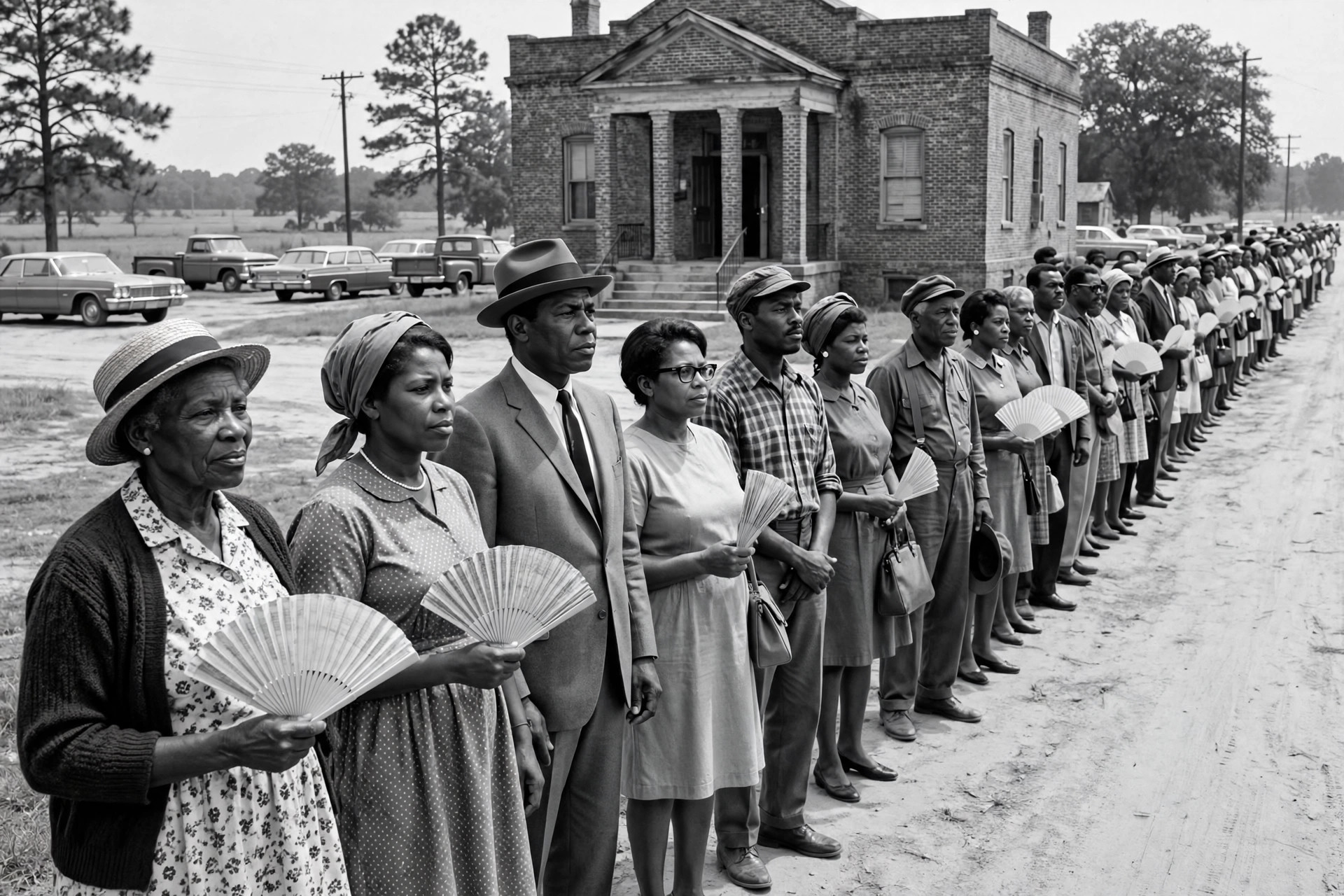
The beating was meant to break her. It did the opposite. Hamer went back to Mississippi and threw herself into voter registration drives, including the mock Freedom Ballot campaign of 1963 and the Freedom Summer of 1964, when more than 700 volunteers traveled to the state to help Black residents register. In the end, some 17,000 Black Mississippians tried to register that summer, but only 1,600 succeeded.
“I Question America” at Atlantic City
In 1964, Hamer helped found the Mississippi Freedom Democratic Party, an integrated party open to all races that challenged the all white Mississippi Democratic Party. That August, more than 60 MFDP members traveled to the Democratic National Convention in Atlantic City, New Jersey, seeking to replace the state’s official delegation, chosen through a segregated process that violated party rules. Hamer served as vice chair of the 68 person delegation.
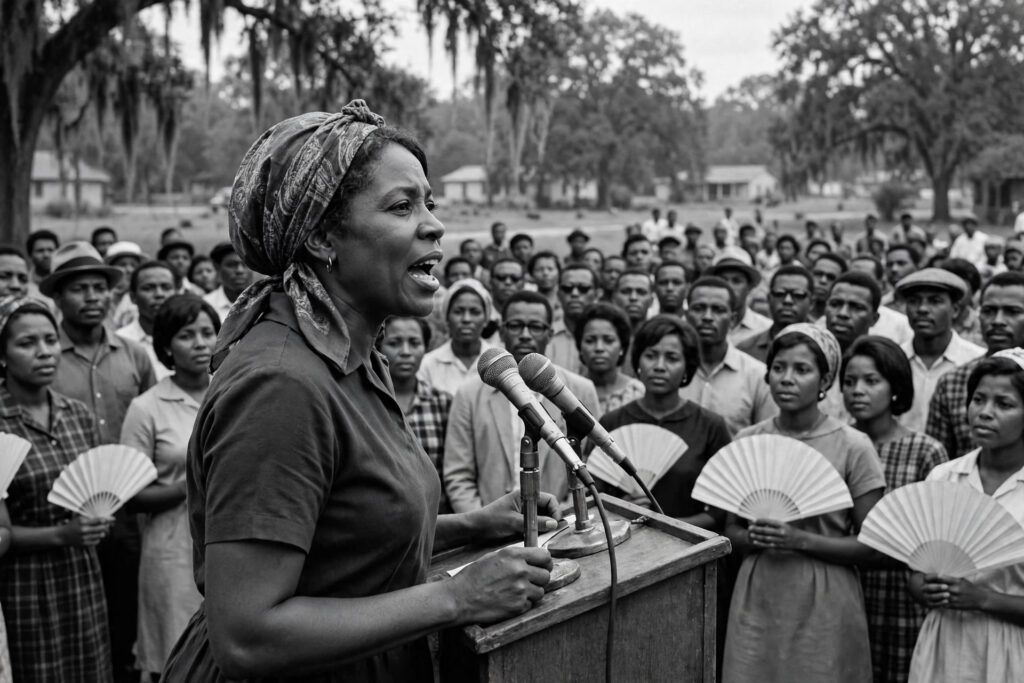
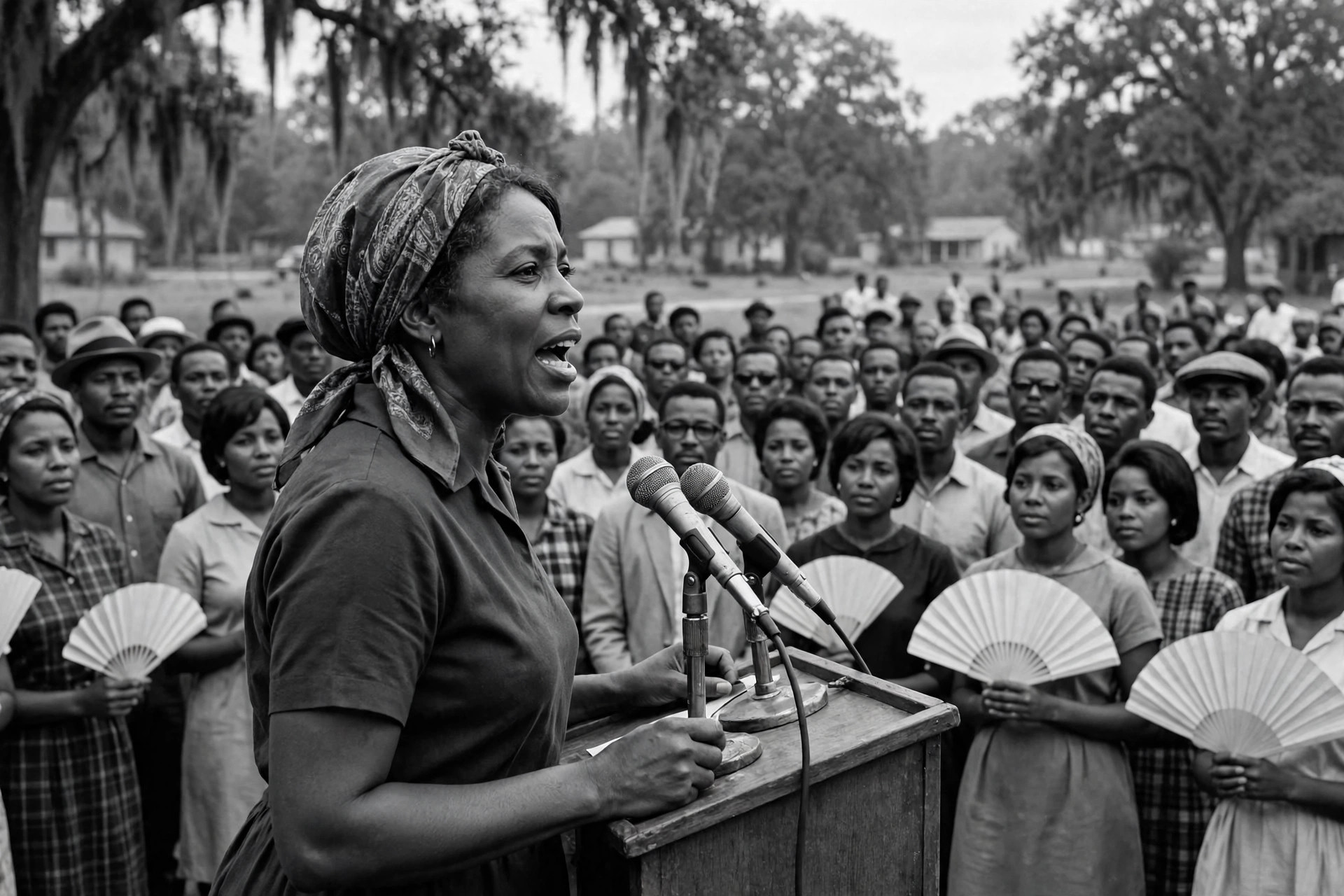
On August 22, she testified before the convention’s Credentials Committee in a session carried on television. Fearing that seating the MFDP would cost him Southern support against Republican Barry Goldwater, President Lyndon Johnson called an impromptu press conference to cut away from her live testimony. The move backfired. That night, the major networks broadcast her testimony in full to an even larger audience. She described the violence she had suffered for the simple act of trying to register, and she asked the question that would define her: is this America, the land of the free and the home of the brave?
Johnson’s team offered the MFDP two seats at large, neither of them for Hamer. She refused. “We didn’t come all this way for no two seats,” she said. The challenge failed in 1964, but the pressure cracked the system open. In 1968 the Democratic Party adopted a rule requiring equality of representation from every state delegation, and Hamer took her seat as a member of Mississippi’s first integrated delegation. She served again as a delegate in 1972.
Freedom Farm: Fannie Lou Hamer’s Fight Beyond the Ballot
Hamer understood that the vote alone would not feed a family. She twice ran for Congress from Mississippi’s Second District. Her lawsuit against Sunflower County registration officials, Hamer v. Campbell, helped bring down discriminatory procedures such as the poll tax. In 1971 she helped found the National Women’s Political Caucus.
Then she turned to economics. In 1968 she started the Pig Bank, giving free pigs to Black farmers to breed and raise. A year later she launched the Freedom Farm Cooperative, buying 640 acres that Black families could farm collectively. The cooperative grew into a store, a sewing enterprise, food stamps, scholarships, and some 200 units of low income housing. At its peak it was among the largest employers in Sunflower County, a legacy carried on today by Black owned businesses building wealth in their communities.

Hamer died on March 14, 1977, of heart failure brought on by cancer, hypertension, and diabetes. She was 59. In January 2025, President Joe Biden posthumously awarded her the Presidential Medal of Freedom. Her family donated the medal to the Mississippi Department of Archives and History, where it is displayed at the Mississippi Civil Rights Museum.
Why Hamer Still Speaks to Black America in 2026
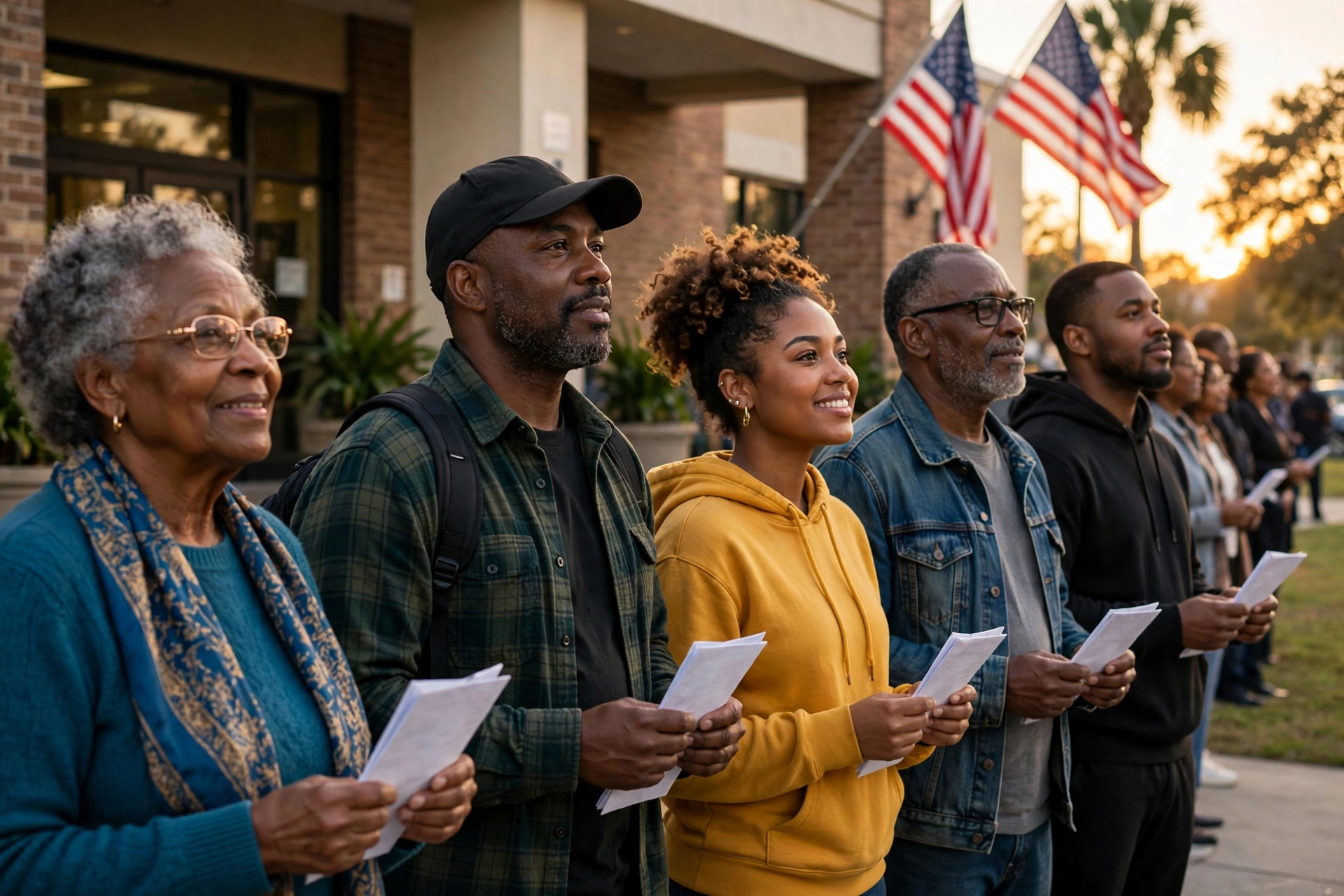
Fannie Lou Hamer is not a museum piece. Her battle is our battle, renewed in every election cycle. Today Black voters across the South are again being courted, counted, and too often suppressed. In Florida, analysts say Black voters could decide the governor’s race, a reminder that the ballot Hamer nearly died for still carries world changing power. The tactics have evolved, from literacy tests and poll taxes to purged voter rolls and shuttered polling places, but the question has not. Is this America?
Hamer gave us the answer and the assignment in the same breath: “Nobody’s free until everybody’s free.” Register. Vote. Organize. The woman who picked cotton at six and faced down a president at forty six showed us that a voice rooted in faith and truth can shake a nation. The least we can do is use ours. Explore more of our coverage at Urban City Podcast.
Sources and Further Reading
- Mississippi Encyclopedia: Fannie Lou Hamer
- Facing History and Ourselves: Fannie Lou Hamer, Unsung Woman of the Civil Rights Movement
- Facing South: “I question America”: Remembering Fannie Lou Hamer’s challenge to white supremacy
- Encyclopaedia Britannica: Fannie Lou Hamer
- Mississippi Department of Archives and History: Hamer’s Presidential Medal of Freedom