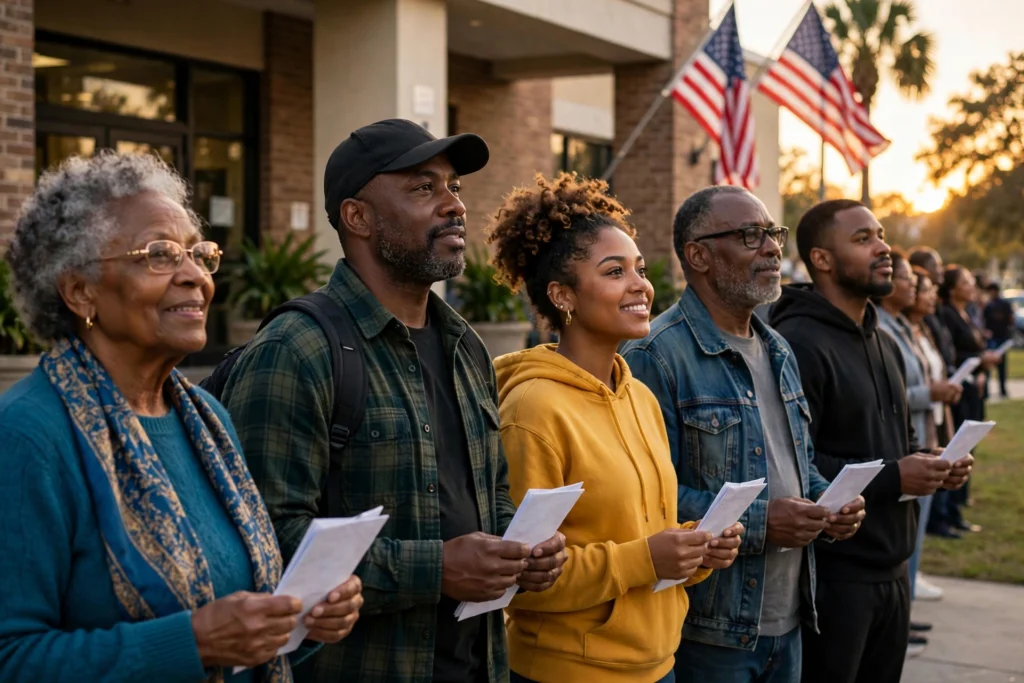
The Florida governor race is tied, the clock is ticking toward Election Day, and both candidates now agree on one thing: Black voters will decide who wins. Democratic nominee David Jolly said it plainly this week, telling the Miami Herald that undecided Black voters are the most important battleground left in the contest against Republican Byron Donalds.
Jolly made the comment after a charged town hall Monday night at Florida A and M University, the state’s only public historically Black university, where he spent nearly two hours making his case to Black students and community members. With early voting set to begin October 24 and polls showing a dead heat, the fight for the Black vote has moved to the center of Florida politics.
Major Takeaways
- David Jolly says the race could come down to the 10 percent of Black voters in Florida who remain undecided.
- Polling averages show Jolly and Byron Donalds in a virtual tie, with Jolly holding a substantial advantage among Black voters.
- At a FAMU town hall on October 12, Jolly pledged to defend DEI programs, elevate FAMU to flagship status, and expand Medicaid.
- Donalds, who would be Florida’s first Black governor, is courting Black voters with a coalition of Black leaders, pastors, and elected officials.
- Early voting in Florida begins October 24, and both campaigns say Black turnout will determine the outcome.
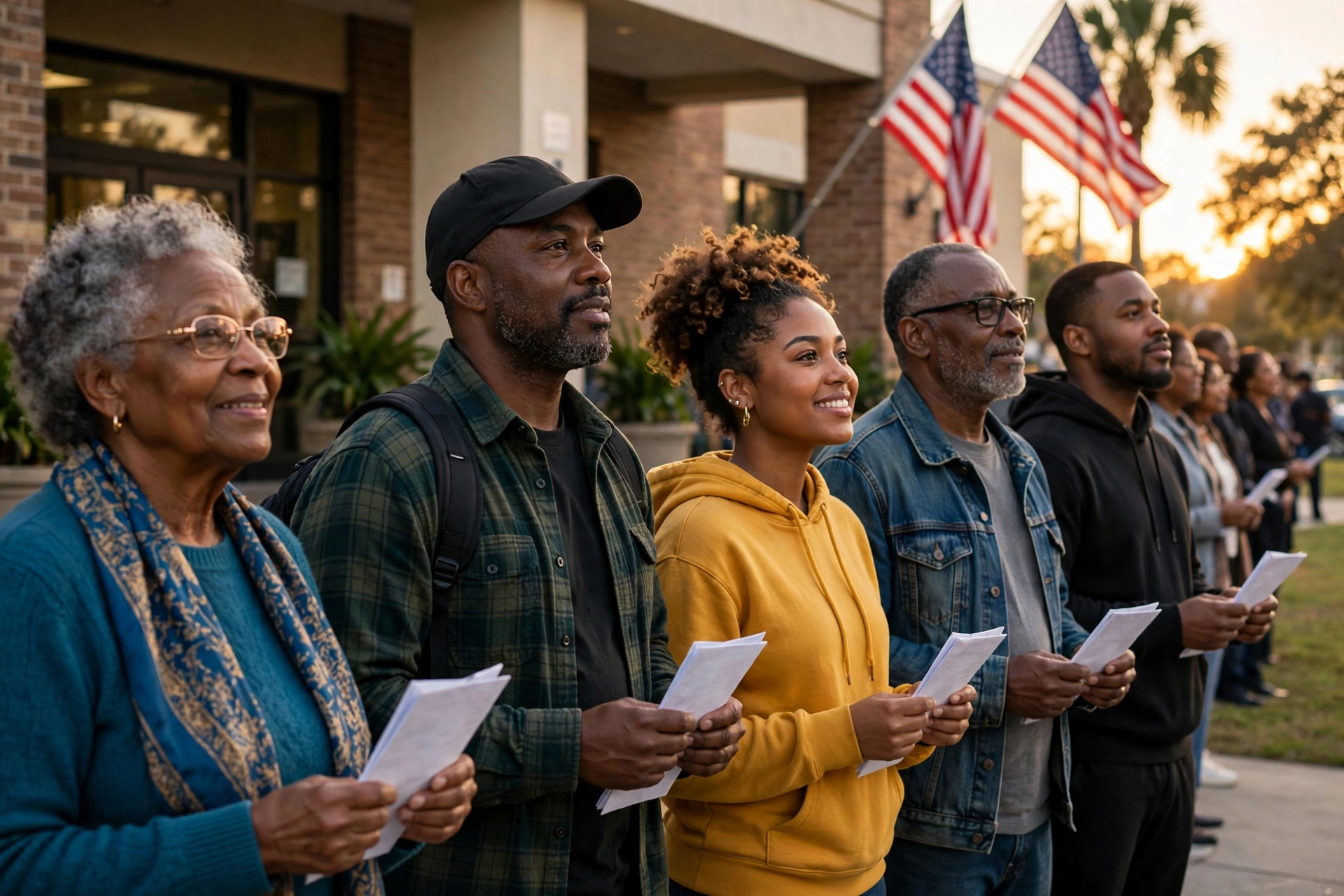
5 Things Black Voters Need to Know About the Florida Governor Race
1. The Race Is Tied, and Early Voting Starts October 24
A St. Pete Polls survey released October 7 showed Jolly and Donalds tied at 45 percent each, while other surveys give Donalds a small advantage, according to the Tallahassee Democrat. A separate Mason Dixon poll of 625 registered Florida voters, released through NBC6 and Telemundo, put Donalds ahead 48 percent to 41 percent with 10 percent undecided. With numbers that close, neither campaign can win without strong support from Black Floridians, who make up 13 percent of the state’s registered voters, according to the James Madison Institute. One third of Florida voters are nonwhite, which makes coalition building and turnout the name of the game in the final weeks.
2. Both Candidates Made Their Case at FAMU
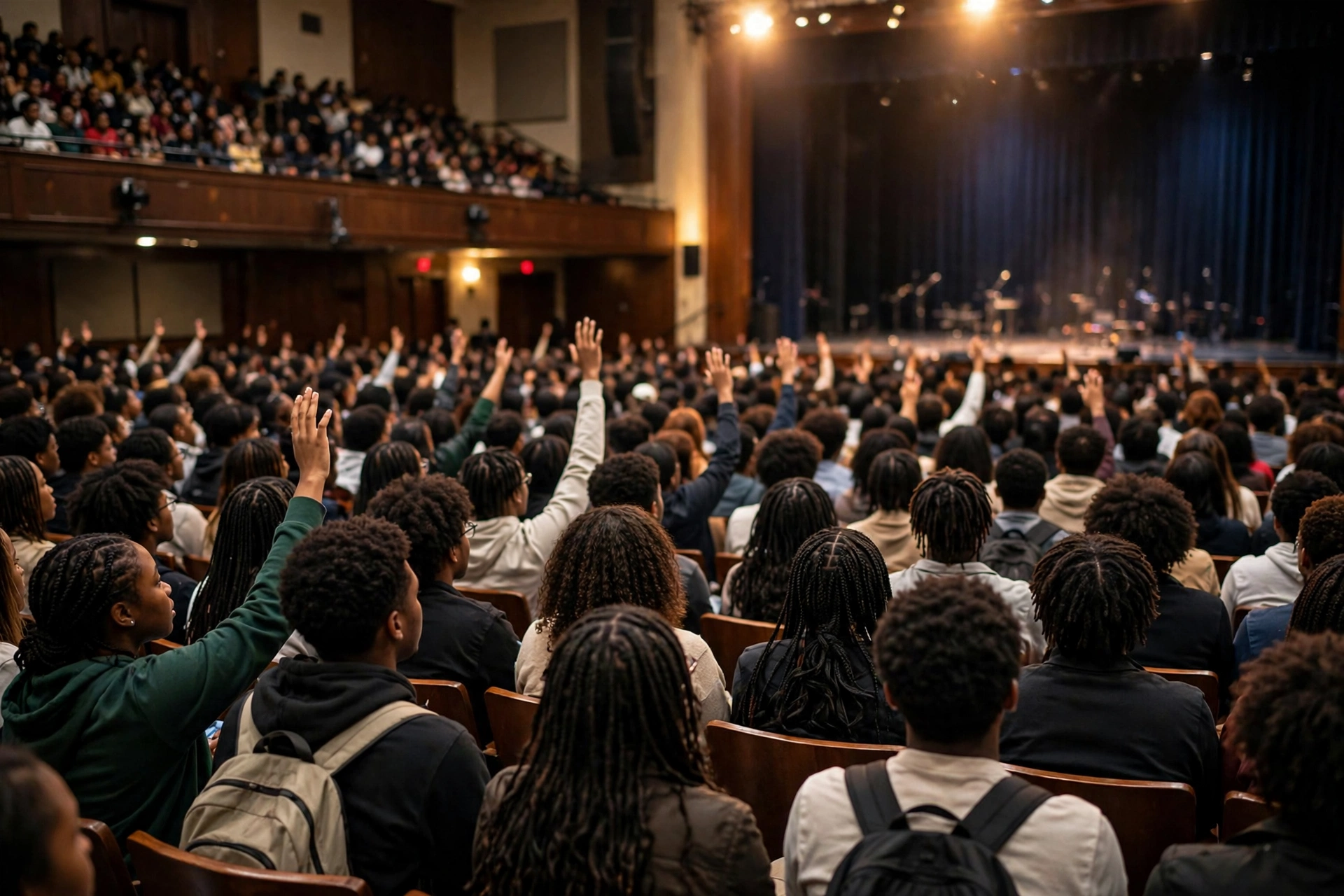
Florida A and M has become the symbolic center of this race. Donalds held a town hall there on September 29 that was interrupted for about 40 minutes when a fire alarm forced an evacuation. Jolly followed with his own town hall on October 12, and he could not resist a joke about it. When FAMU student Devin Nobles pressed him on why Black voters should trust him after so many politicians made promises and disappeared after Election Day, Jolly paused and joked that he wanted to pull the fire alarm, drawing laughter from students who remembered the earlier disruption. Then he turned serious. “I don’t think the problem is that I used to be a Republican,” Jolly said. “I think the problem is that one of us in this race is still a Republican.”
3. What Jolly Promised a Black Audience
Jolly used the FAMU stage to lay out an agenda aimed squarely at Black Floridians and the broader community. He defended diversity, equity, and inclusion programs, promised to elevate FAMU to flagship university status, and backed Medicaid expansion. He pledged to reverse several policies of Governor Ron DeSantis affecting higher education and immigration enforcement, including suspending Florida’s participation in expanded 287(g) immigration enforcement agreements, removing Surgeon General Joseph Ladapo from office, and imposing a one year moratorium on new hyperscale data centers. He also renewed his call for FAMU to receive funding that supporters say the university was denied for decades. “There is a bill that is due to this campus,” he told the crowd. Hours before the town hall, U.S. Representative Jim Clyburn of South Carolina joined Jolly in Tallahassee and urged Black voters to focus on turnout, arguing that in a close governor’s race, turnout decides who wins.
4. How Donalds Is Courting the Black Vote
Donalds is not conceding the Black vote. The congressman, who would become Florida’s first Black governor if elected, has built a coalition of two dozen Black leaders from across the state, including elected officials, pastors, sheriffs, and business leaders. The group includes Gainesville City Commissioner Cynthia Chestnut, a longtime Democrat whose endorsement drew wide attention. The campaign says coalition members will promote Donalds’ agenda in churches, barbershops, college campuses, and small businesses. Donalds has said his campaign is doing more outreach to Black voters than typical Republican campaigns attempt. “Typically, Republican campaigns don’t do the amount of work we’ve been doing talking to Black voters,” he said recently. “I’m not interested in 50 percent plus one. I’m interested in 100 percent.” Former U.S. Representative Al Lawson, who endorsed Jolly, pushed back hard, urging Black voters to look closely at Donalds’ record. Lawson noted that Donalds voted against the John Lewis Voting Rights Act and praised a Supreme Court ruling that weakened a section of the Voting Rights Act. Lawson, the first Black politician since Reconstruction to win a North Florida legislative seat in a predominantly white district, warned the Black community not to be swayed by shared race alone.
5. The Turnout Math Favors Whoever Shows Up
History shows how decisive Black voters are in Florida. Democrats traditionally need more than 90 percent of the Black vote to compete statewide. Former President Barack Obama carried Florida twice while winning roughly 95 percent of Black voters. Democrat Andrew Gillum captured about 90 percent of the Black vote in 2018 and still narrowly lost to DeSantis. That history is why both campaigns are treating Black turnout as the ballgame. Jolly’s own framing makes the stakes clear: with one in ten Black voters still undecided, persuasion and turnout in the Black community could swing the entire election. For more coverage of stories shaping Black America, visit our News section.
What This Means for Black Florida
Strip away the campaign spin and this race is a test of Black political power in the South’s largest swing state. For generations, Black Floridians have been told their votes matter most, and this October that claim is being proven in real time. Both candidates are showing up at FAMU, both are building Black coalitions, and both are speaking directly to Black concerns about education funding, health care, voting rights, and economic opportunity. That attention is the direct result of Black voters being organized, registered, and willing to hold candidates accountable, exactly as the FAMU students did when they demanded answers instead of applause.
The deeper question is what Black Florida gets in return. Jolly is offering concrete policy commitments on DEI, HBCU funding, Medicaid, and voting protections. Donalds is offering historic representation and an economic message aimed at Black families and business owners. As one FAMU graduate student put it during the town hall, many young Black voters have concluded that race is one thing, but action behind that race is another. That sentiment should echo far beyond Tallahassee. Whether you lean toward Jolly or Donalds, the power in this moment belongs to Black voters who show up informed. Check your registration, make a plan to vote early starting October 24, and demand specifics from every candidate who asks for your support. Economic power matters too, which is why our recent reporting on new risk tools for Black owned businesses is worth a read alongside this race. And for daily updates that center our community, keep it locked to Urban City Podcast.
Sources and Further Reading
- David Jolly makes his pitch to be Florida governor to FAMU students, Tallahassee Democrat, October 12, 2026
- Jolly Says Black Voters Could Decide Florida Race, Political Wire (via Miami Herald), October 13, 2026
- Al Lawson backs David Jolly, blasting Byron Donalds’ voting record, Tallahassee Democrat, October 8, 2026
- Rick Scott makes the case for Byron Donalds as poll shows him tied with David Jolly, Watermark Out News, October 9, 2026
- John James, Byron Donalds, and Black Voters in Governor Races, Black America Web, October 6, 2026