Major Takeaways
- Do-rags and bonnets began as practical hair maintenance and protective tools before becoming heavily politicized cultural symbols.
- Respectability politics within Black communities were often shaped by survival, dignity, and navigating racial discrimination in America.
- Public debates surrounding Black appearance reflect deeper societal issues involving race, gender, identity, and cultural double standards.
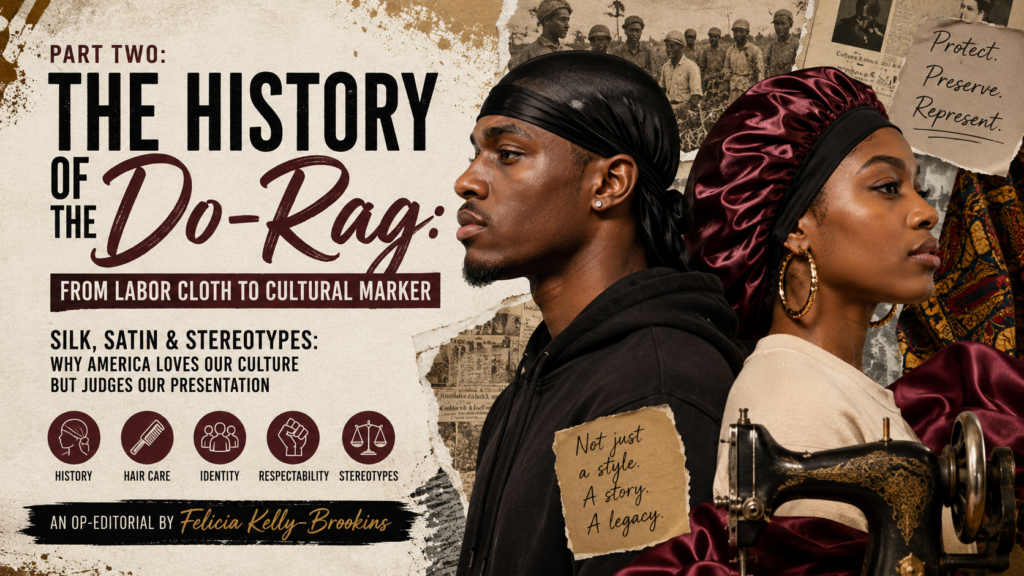
PART TWO:
Bonnets, Do-rags, Satin & Stereotypes: Why America Loves Our Culture But Judges Our Presentation
Op Editorial by Felicia Kelly-Brookins• 5 min read
Long before the do-rag became attached to hip-hop culture, social media debates, or public
controversy, it was something far more practical. It was maintenance and
culture.
The history of the do-rag stretches back generations within Black communities. Historically,
head wraps and cloth coverings were commonly worn by enslaved Africans, Black laborers, and
later Black workers performing physically demanding labor under harsh conditions. These
coverings helped absorb sweat, protect hair, and provide functionality during long hours of work.
Like many things within Black culture, what began as necessity eventually evolved into identity.
By the mid-to-late 20th century, the do-rag became deeply connected to Black grooming culture,
especially within urban communities where wave culture emerged as both style and discipline.
Maintaining waves required consistency, compression, care, and routine. The do-rag became part
of that process. But somewhere between barber chairs, street culture, sports, and music videos,
the do-rag transformed into something larger . By the 1990s and early 2000s,
hip-hop culture
pushed the do-rag into mainstream visibility. Rappers wore them proudly. Athletes made them
recognizable.
Music videos commercialized them. Fashion brands capitalized on them.
The
do-rag no longer represented only hair maintenance, Now it represented image. Masculinity,
Urban identity,Toughness, Swagger, Street authenticity, And honestly, that visibility came with a
price. Because America has always had a complicated relationship with Black expression,
especially when Black people wear our culture unapologetically.
The same do-rag celebrated in entertainment spaces suddenly became “inappropriate” in others.
Schools banned them, Restaurants refused entry over them, Workplaces labeled them
“unprofessional.” Airports and public spaces often treated Black men wearing them with
heightened suspicion. Media narratives began attaching the do-rag to gang culture, violence,
criminality, and “thuggishness,” despite the fact that fabric itself carries no morality. Because
cloth does not create fear. Bias does. Stereotypes do. Conditioning does.
The do-rag became another example of how Black identity is often interpreted through fear
before humanity. And if we are being honest, Black men have historically carried a unique
burden when it comes to appearance and public perception in America.
Clothing, hairstyles, posture, tone, and even body language have often been scrutinized through
racialized assumptions long before character is ever considered.
The do-rag entered that same unfortunate category. But the bonnet carries a different story.
A story deeply tied to Black womanhood. And Black women know all too well what it feels like
to have our appearance constantly politicized.For generations, Black women’s hair has existed
under public scrutiny in ways that few other groups fully understand. Too natural. Too ethnic.
Too loud. Too straight. Too nappy. Too big. Too “urban.” Too Black. There has always seemed to
be some invisible scoreboard determining whether Black women’s appearance is acceptable
enough to deserve dignity.
That pressure shaped entire generations. Many Black mothers and grandmothers taught their
daughters that looking “presentable” was connected to pride, safety, and respectability. You did
not leave the house in rollers. You did not go outside in pajamas. And you absolutely did not
wear your bonnet in public. Not because bonnets were shameful. But because older generations
believed presentation could shield Black people from racist assumptions and public humiliation.
And whether people agree with that philosophy or not, we cannot discuss it honestly without
acknowledging where it came from. Those beliefs were shaped by survival. By generations who
understood that Black people were often denied grace, opportunity, and dignity over the smallest
perceived flaw. For many older Black women, presentation became armor. But younger
generations increasingly challenge that idea. To many younger
Black women today, wearing a
bonnet publicly is not viewed as embarrassing at all.
It is practical. Comfortable. Convenient and Authentic. And for some women, it is also deeply
intentional.
A refusal to constantly perform perfection, A refusal to exhaust themselves trying to appear
“acceptable” in every public space and A refusal to carry respectability politics as a permanent
burden. Because Black people have spent generations navigating the exhausting balance between
authenticity and acceptability. Between self-expression and survival, Between comfort and
public perception, Between cultural pride and societal judgment. And perhaps that is why
conversations about
bonnets and do-rags become so emotional inside our own community.
Because underneath the satin and fabric is something much deeper, our history, fear, pride,
resistance, freedom and the ongoing fight to exist fully as ourselves without constantly being
interpreted through stereotypes.
In Part Three of this op-ed series, The Double Standard: Cultural Theft and Selective
Acceptance, I’ll explore the painful contradiction of how Black aesthetics, language, fashion,
hairstyles, and cultural expression are frequently criticized,
criminalized, or labeled
“unprofessional” on Black bodies,only to later become celebrated, monetized, and mainstream
when adopted by others.
3 Important Truths About Do-Rags, Bonnets & Black Identity
1. Protective Style Does Not Equal Negative Character
Do-rags and bonnets originated as functional hair maintenance tools within Black culture. The
stereotypes attached to them were socially created,not historically inherent.
2. Respectability Politics Were Rooted in Survival
Older generations often emphasized public presentation because they believed appearance could
reduce racial discrimination and protect Black dignity in hostile environments.
3. The Real Debate Is About Identity, Not Fabric
The public conversation surrounding bonnets and do-rags reflects larger issues involving race,
generational differences, gender expectations, cultural pride, and society’s policing of Black self-
expression.
About the Contributor
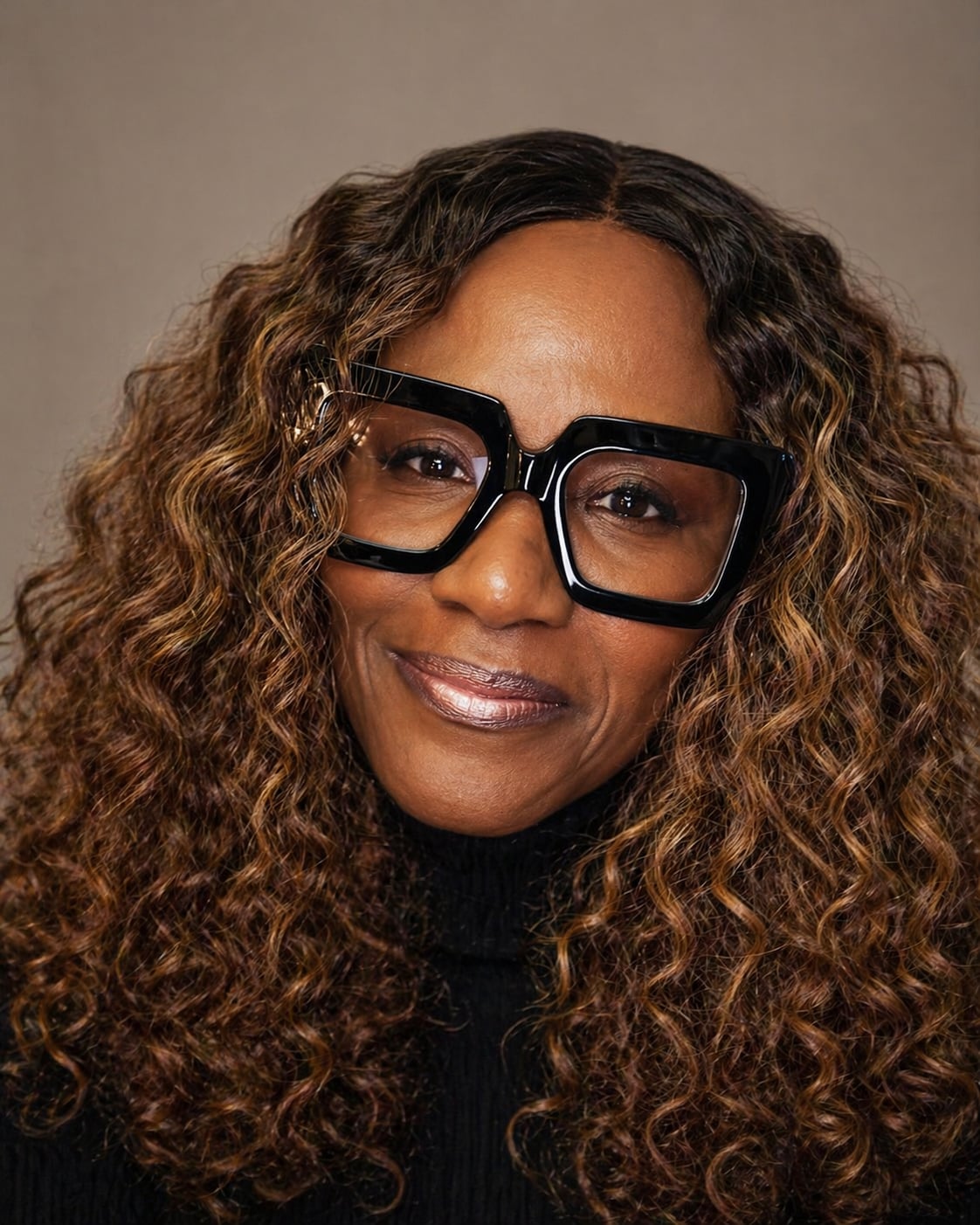
Felicia Kelly-Brookins is an award-winning author, screenwriter, playwright, and the Founder
and Executive Director of the S.A.F.E. S.P.A.C.E. TheaterTherapy Foundation, an organization
dedicated to creating emotionally safe spaces for youth, teens, families, and communities
through storytelling, theatrical dialogue, literacy, and mental health advocacy.
Known for blending cultural commentary, emotional truth, faith, family dynamics, and social
awareness into her work, Brookins uses her voice to challenge difficult conversations
surrounding identity, trauma, generational silence, mental health, relationships, and the
complexities of Black culture. Her work is deeply rooted in advocacy, authenticity, and the belief
that storytelling has the power not only to entertain, but to heal, confront, educate, and
transform communities

3 Important Truths About Do-Rags, Bonnets, Black Identity, Respectability & Stereotypes
Table of Contents
Major Takeaways
PART TWO: Bonnets, Do-rags, Satin & Stereotypes: Why America Loves Our Culture But Judges Our Presentation
Op Editorial by Felicia Kelly-Brookins• 5 min read Long before the do-rag became attached to hip-hop culture, social media debates, or public controversy, it was something far more practical. It was maintenance and culture. The history of the do-rag stretches back generations within Black communities. Historically, head wraps and cloth coverings were commonly worn by enslaved Africans, Black laborers, and later Black workers performing physically demanding labor under harsh conditions. These coverings helped absorb sweat, protect hair, and provide functionality during long hours of work. Like many things within Black culture, what began as necessity eventually evolved into identity. By the mid-to-late 20th century, the do-rag became deeply connected to Black grooming culture, especially within urban communities where wave culture emerged as both style and discipline. Maintaining waves required consistency, compression, care, and routine. The do-rag became part of that process. But somewhere between barber chairs, street culture, sports, and music videos, the do-rag transformed into something larger . By the 1990s and early 2000s, hip-hop culture pushed the do-rag into mainstream visibility. Rappers wore them proudly. Athletes made them recognizable. Music videos commercialized them. Fashion brands capitalized on them. The do-rag no longer represented only hair maintenance, Now it represented image. Masculinity, Urban identity,Toughness, Swagger, Street authenticity, And honestly, that visibility came with a price. Because America has always had a complicated relationship with Black expression, especially when Black people wear our culture unapologetically. The same do-rag celebrated in entertainment spaces suddenly became “inappropriate” in others. Schools banned them, Restaurants refused entry over them, Workplaces labeled them “unprofessional.” Airports and public spaces often treated Black men wearing them with heightened suspicion. Media narratives began attaching the do-rag to gang culture, violence, criminality, and “thuggishness,” despite the fact that fabric itself carries no morality. Because cloth does not create fear. Bias does. Stereotypes do. Conditioning does. The do-rag became another example of how Black identity is often interpreted through fear before humanity. And if we are being honest, Black men have historically carried a unique burden when it comes to appearance and public perception in America. Clothing, hairstyles, posture, tone, and even body language have often been scrutinized through racialized assumptions long before character is ever considered. The do-rag entered that same unfortunate category. But the bonnet carries a different story. A story deeply tied to Black womanhood. And Black women know all too well what it feels like to have our appearance constantly politicized.For generations, Black women’s hair has existed under public scrutiny in ways that few other groups fully understand. Too natural. Too ethnic. Too loud. Too straight. Too nappy. Too big. Too “urban.” Too Black. There has always seemed to be some invisible scoreboard determining whether Black women’s appearance is acceptable enough to deserve dignity. That pressure shaped entire generations. Many Black mothers and grandmothers taught their daughters that looking “presentable” was connected to pride, safety, and respectability. You did not leave the house in rollers. You did not go outside in pajamas. And you absolutely did not wear your bonnet in public. Not because bonnets were shameful. But because older generations believed presentation could shield Black people from racist assumptions and public humiliation. And whether people agree with that philosophy or not, we cannot discuss it honestly without acknowledging where it came from. Those beliefs were shaped by survival. By generations who understood that Black people were often denied grace, opportunity, and dignity over the smallest perceived flaw. For many older Black women, presentation became armor. But younger generations increasingly challenge that idea. To many younger Black women today, wearing a bonnet publicly is not viewed as embarrassing at all. It is practical. Comfortable. Convenient and Authentic. And for some women, it is also deeply intentional. A refusal to constantly perform perfection, A refusal to exhaust themselves trying to appear “acceptable” in every public space and A refusal to carry respectability politics as a permanent burden. Because Black people have spent generations navigating the exhausting balance between authenticity and acceptability. Between self-expression and survival, Between comfort and public perception, Between cultural pride and societal judgment. And perhaps that is why conversations about bonnets and do-rags become so emotional inside our own community. Because underneath the satin and fabric is something much deeper, our history, fear, pride, resistance, freedom and the ongoing fight to exist fully as ourselves without constantly being interpreted through stereotypes. In Part Three of this op-ed series, The Double Standard: Cultural Theft and Selective Acceptance, I’ll explore the painful contradiction of how Black aesthetics, language, fashion, hairstyles, and cultural expression are frequently criticized, criminalized, or labeled “unprofessional” on Black bodies,only to later become celebrated, monetized, and mainstream when adopted by others. 3 Important Truths About Do-Rags, Bonnets & Black Identity 1. Protective Style Does Not Equal Negative Character Do-rags and bonnets originated as functional hair maintenance tools within Black culture. The stereotypes attached to them were socially created,not historically inherent. 2. Respectability Politics Were Rooted in Survival Older generations often emphasized public presentation because they believed appearance could reduce racial discrimination and protect Black dignity in hostile environments. 3. The Real Debate Is About Identity, Not Fabric The public conversation surrounding bonnets and do-rags reflects larger issues involving race, generational differences, gender expectations, cultural pride, and society’s policing of Black self- expression. About the Contributor Felicia Kelly-Brookins is an award-winning author, screenwriter, playwright, and the Founder and Executive Director of the S.A.F.E. S.P.A.C.E. TheaterTherapy Foundation, an organization dedicated to creating emotionally safe spaces for youth, teens, families, and communities through storytelling, theatrical dialogue, literacy, and mental health advocacy. Known for blending cultural commentary, emotional truth, faith, family dynamics, and social awareness into her work, Brookins uses her voice to challenge difficult conversations surrounding identity, trauma, generational silence, mental health, relationships, and the complexities of Black culture. Her work is deeply rooted in advocacy, authenticity, and the belief that storytelling has the power not only to entertain, but to heal, confront, educate, and transform communitiesFelicia Kelly-Brookins
Felicia Kelly-Brookins
Urban City Podcast Weather sponsored by
Get the latest news, events, and subscriber-only offers when you subscribe to the Urban City Podcast newsletter! Subscribe now!
SHARE THIS ARTICLE
Articles You May Like
4 Harsh Realities From Rashee Rice’s Marijuana Test Fallout
5 Deadly Facts From the San Diego Mosque Shooting That Shook Clairemont
7 Powerful Jamahl Mosley Pelicans Moves That Could Transform New Orleans Basketball
ADVERTISERS
more content
43 Songs, 3 Albums, 1 Drake: Did Drake Just Flood the Internet on Purpose?
5 Historic Shai Gilgeous-Alexander MVP Achievements That Put Him Among NBA Legends
3 Powerful Truths About Bonnets, Do-Rags & Black Identity
5 Explosive Jackson Bribery Scheme Revelations Rocking Mississippi Politics
5 Vegas Golden Knights Playoff Moments That Crushed Anaheim’s Stanley Cup Dream
5 Powerful Black Politics, Culture & Entertainment Stories Shaping America This Weekend