
Major Takeaways
• Silence may help someone survive trauma temporarily, but healing begins when truth is finally spoken.
• Mental health healing after fifty often comes through reflection, accountability, and breaking generational cycles.
• Emotional maturity means learning to respond with awareness rather than reacting from past wounds.
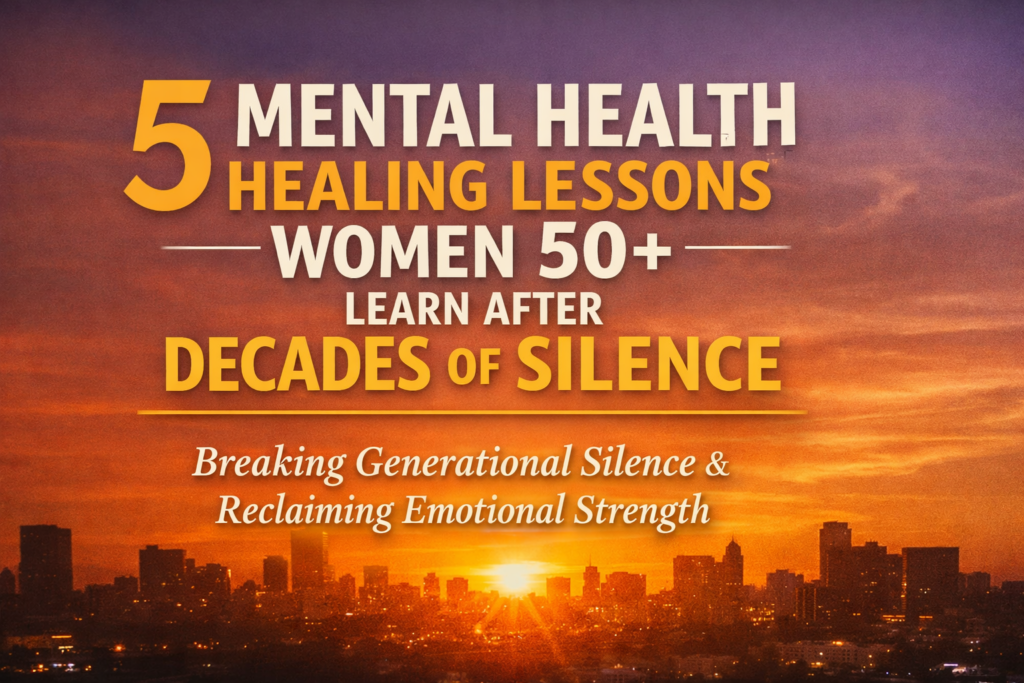
Breaking generational silence and reclaiming emotional strength, identity, and healing after fifty.
Q&A With Felicia Brookins• WHM Presented By Urban City Podcast 5 min read
FOCUS AREA: Mental Health: What Healing Looks Like After Decades of Silence WOMEN 50+ WISDOM & LEGACY Women 50+ Wisdom & Legacy I created the Women 50+ Wisdom & Legacy Series because I am no longer interested in watching powerful women disappear quietly into the background of their own lives. I am 59. I have survived silence. I have wrestled with faith. I have loved imperfectly and been loved imperfectly. I have come from struggle, strength, spiritual tension, emotional chains, and deep resilience. I have been a daughter shaped by two flawed but formative parents. I have been a wife who chose to do marriage differently. I have been a mother who decided that safety, mentally, emotionally, and spiritually, would not be optional in my home. And I have become. This series begins with me because legacy must start with courage. I am not presenting perfection. I am presenting process. I am sharing who I am, how I healed, what I inherited, what I confronted, and what I chose to interrupt. Women 50+ are not fading. We are reclaiming. We are redefining what strength looks like. This series is my offering and my declaration. Felicia Kelly-Brookins
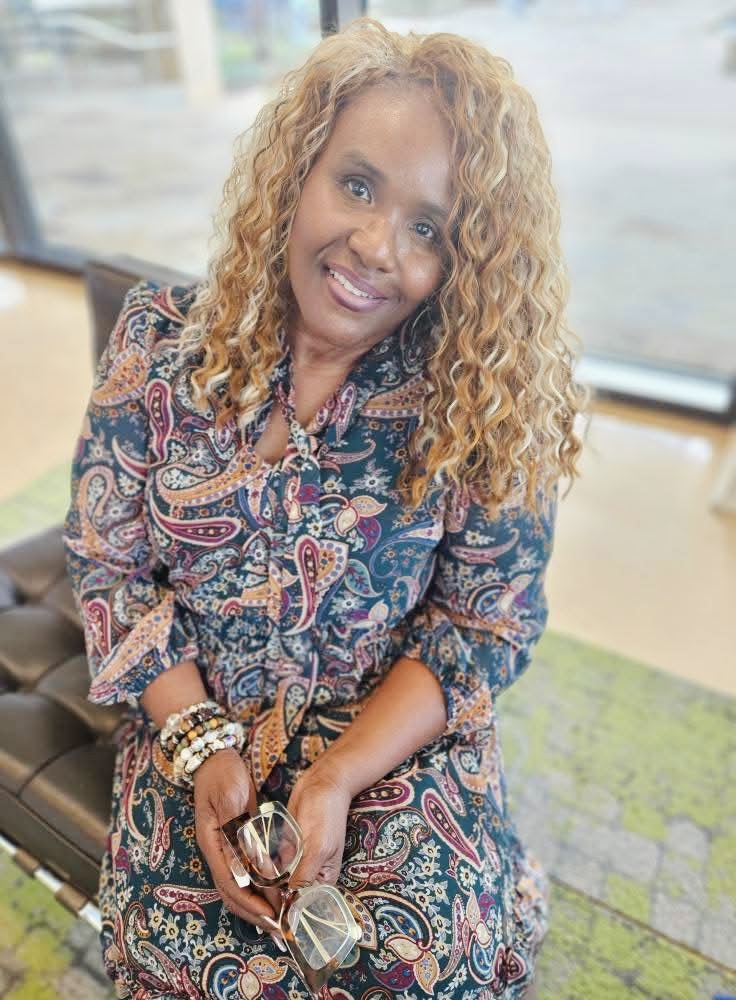
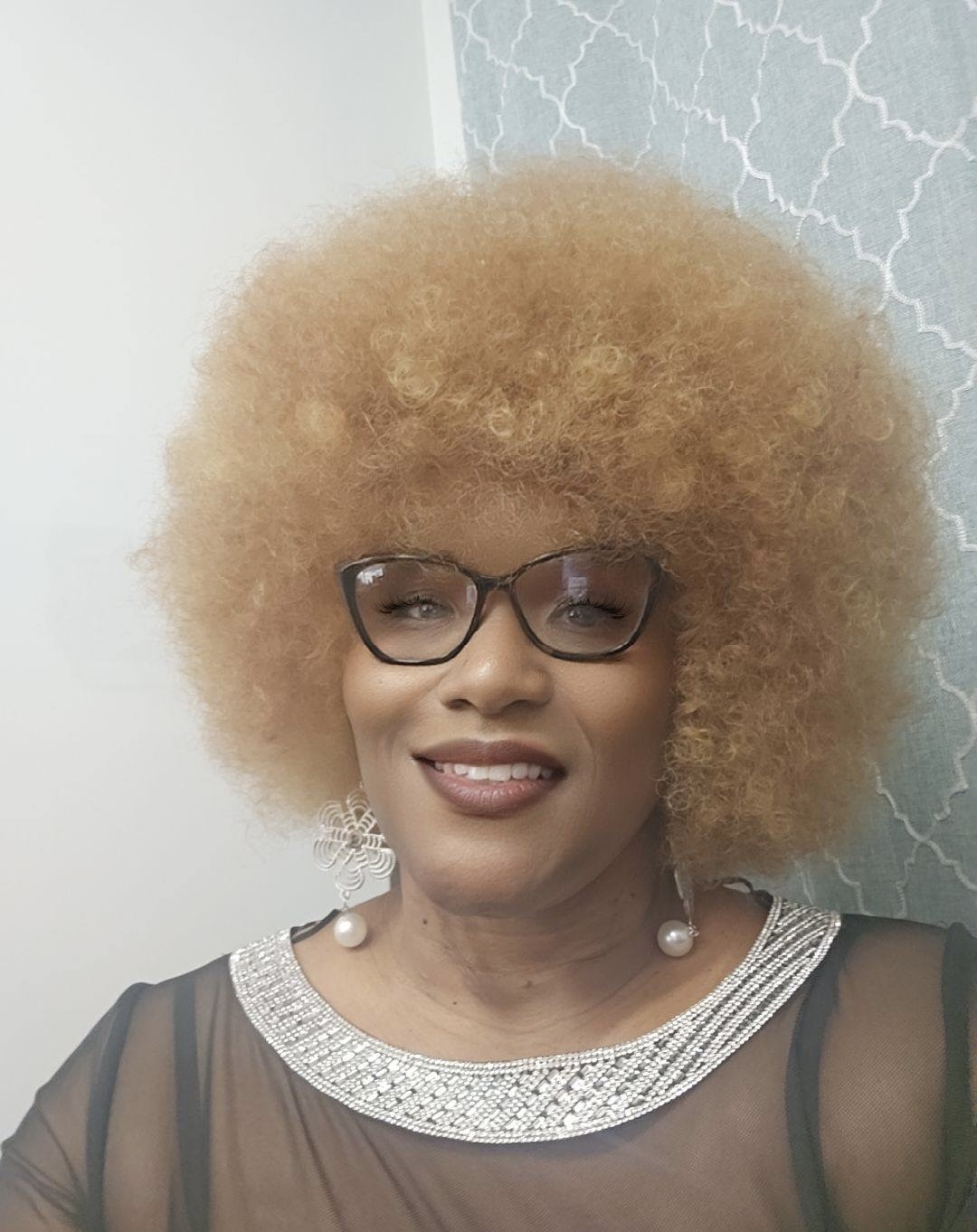
Featuring: Felicia Kelly-Brookins, 59 Entrepreneur | Methodology Creator | Author | Screenwriter Portrait Introduction Felicia Kelly-Brookins does not speak about healing as theory. She speaks about it as survival. At 59, she sits in the fullness of womanhood, a wife who chose differently, a mother who decided cycles would end with her, a survivor who refused to let sexual assault, emotional abuse, and mental health struggles define her narrative. She is layered, soft where she once was rigid, discerning where she once was silent, intentionally where she once was afraid. Her life reads like a series of chapters, some bruised, some bold. Sexual assault did not silence her permanently. Emotional and physical abuse did not convince her that her only escape was to take her life and Mental health struggles did not erase her brilliance. They tested it.
Raised by two imperfect parents who loved her in different ways at different stages of their own battles, she inherited both warmth and wounds, literacy and limitations, faith and fear, love and silence. She learned early that strength was often expected but vulnerability was rarely modeled. But Felicia did something sacred. She chose interruption over inheritance. Today, as a married woman, an award-winning author, screenwriter, and a methodology creator, she speaks openly about mental health, spiritual healing, and the courage required to forgive, shown to her by her father, to not be a sign of weakness, but as strategy. Healing, she says, is not a moment. It is a decision repeated daily.
The Conversation 1. When did you first realize that silence was impacting your mental or emotional health? I realized silence was harming me when I began reacting instead of responding. When my body would tense before my mind could process or I would lash out physical abuse instead of communicating my feelings with words. When I found myself strong in public but unraveling in private. Smiling and pretending became a survival strategy for me, a performance that I was good at growing up, but it was also slowly suffocating me. I learned that what you refuse to name will eventually control you.
2. What generational messages did you receive about mental health growing up? The message was simple: pray about it, endure it, don’t embarrass the family. Mental health wasn’t framed as something to tend to. My sisters and I didn’t discuss trauma. We born it. We lived in it not knowing what it was. We somehow survived it. We didn’t dissect emotional wounds. There was love in my home. But there was also emotional suppression, physical violence and verbal abuse. And they all shaped me.
3. What does healing look like for you now versus what you once thought it would look like? I never thought about healing. I just kept going. I just did outside my parent’s home what I did in it, I continued to function. Abuse was my almost unbearable normal. Healing looks like facing myself in the mirror and admitting that I put on a trauma coat and used it to attack other people while wearing it. Healing is accepting responsibility for my own wrongs and my relationship losses, Healing is deciding it ends with me finally. Healing is a conscious decision. It looks like saying “that hurt me” without shame. It looks like protecting my nervous system the way I once tried to protect others even when it cost me pain inflicted by the very person who was
supposed to protect me. I knew what it was like to feel half-loved so healing for me was also showing my son full love with no doubt. Healing is accepting the right way to love someone.
4. How did unspoken trauma show up in your body, relationships, or career? It showed up as hyper-independence. As overachievement. As exhaustion disguised as excellence. It showed up as an ulcer in my body at the age of fifteen. In relationships, it showed up as physical abuse, me being the abuser. It showed up in me communicating my feelings through profanity and aggressiveness yet never thinking it could cause a person to stop loving me. I guess that was due to my example. In my body, it also showed up as stress patterns I ignored for years. It showed up as fear gripping nightmares for years, it showed up as hyper alertness and it showed up at jumping when my name was called a certain way. It showed up as a heavy, heavy, burden to bear.
5. What role has faith, therapy, sisterhood, or solitude played in your healing journey? Faith anchored me. Transparency educated me. Solitude revealed me and Sisterhood with my biological sisters made me a protector, the one that made things right and gave me a place to focus on others instead of myself sometimes and that wasn’t a bad thing to me, it was my responsibility as a big sister, as a daughter and as the first recipient of passed down unrevealed trauma. Faith gave me language when I had none. Therapy gave me tools. Sisterhood reminded me I was not crazy, I was just carrying too much alone. And solitude forced me to confront the woman in the mirror and say the hard things out loud. I had to face them, and I had to humble myself. All four were necessary.
6. How do you define emotional maturity at this stage of life? Emotional maturity is responding without revenge. It is accountability without collapse. It is understanding that being triggered is information, not instruction. At 59, I define maturity as the ability to feel deeply without weaponizing those feelings against yourself or others.
7. What boundaries have you implemented after 50 that you wish you had earlier? I no longer remain in rooms that diminish my spirit. I protect my peace like it is an asset, because it is. I wish I had learned earlier that boundaries are not rejection. They are preservation.
8. How do you now respond differently to triggers that once controlled you? I pause. Before, I reacted from old wounds. Now I ask, “Is this going to benefit me in anyway? Will I be better for it if I respond to this emotion, this trigger in a negative way? Triggers used to control my tone, my body, my relationships. Now I breathe. I assess. I choose. Choosing to pause is why I am still married, choosing to pause is why my son will never have to experience the trauma his mother went through, and he will never ever not know that I love him. Pausing changed the model of motherhood for me. It changed me.
Legacy Statement “At 59, I now understand how important it is to give a child a mentally, emotionally, and spiritually safe home environment.”
Urban City Perspective Felicia Kelly-Brookins represents a generation of women who were raised to endure rather than articulate. Her healing journey reflects a broader cultural shift among women 50+ who are confronting inherited silence and reframing it as transformation. Women in this age group often experience what researchers describe as “delayed emotional processing” the unpacking of trauma once survival responsibilities lessen. With children grown, careers stabilized, and identity less externally defined, unresolved emotional patterns rise to the surface demanding attention. Felicia’s integration of faith, therapy, and personal accountability reflects a modern model of healing that rejects false binaries. It acknowledges that spiritual devotion does not replace psychological work and that forgiveness without boundaries perpetuates harm. Her narrative also disrupts the myth that resilience alone equals healing. Resilience kept her alive. Reflection made her whole.
Three Takeaways 1. Silence may protect you temporarily, but truth restores you permanently. 2. Healing is not forgetting your past, it is refusing to let it control your future. 3. Emotional maturity after 50 is the power to respond differently than you were taught.
Felicia Kelly-Brookins is a woman who chose to be different as a wife, as a mother, as a leader. She chose to love reading when distraction would have been easier. She chose to write when silence felt safer. She chose forgiveness when resentment felt justified. Raised by two imperfect parents who poured love into her imperfectly who showed her both devotion and dysfunction, she inherited both strength and chains. Those chains cost her relationships at times and peace so many times. But she faced them. She named them. She dismantled them. And in doing so, she did not become a perfect woman. She became a free one.