8 min read
Major Takeaways
Thurgood Marshall won 29 of the 32 cases he argued before the United States Supreme Court, a record no other American lawyer can match.
His victory in Brown v. Board of Education in 1954 struck down legal segregation in public schools and overturned a doctrine that had stood since 1896.
In 1967 he became the first Black justice on the Supreme Court, and he served on that court for 24 years.
His life proves a simple truth. A Black child told no by a segregated system can grow up to rewrite the rules of that system.
A Baltimore Boy Raised on the Constitution
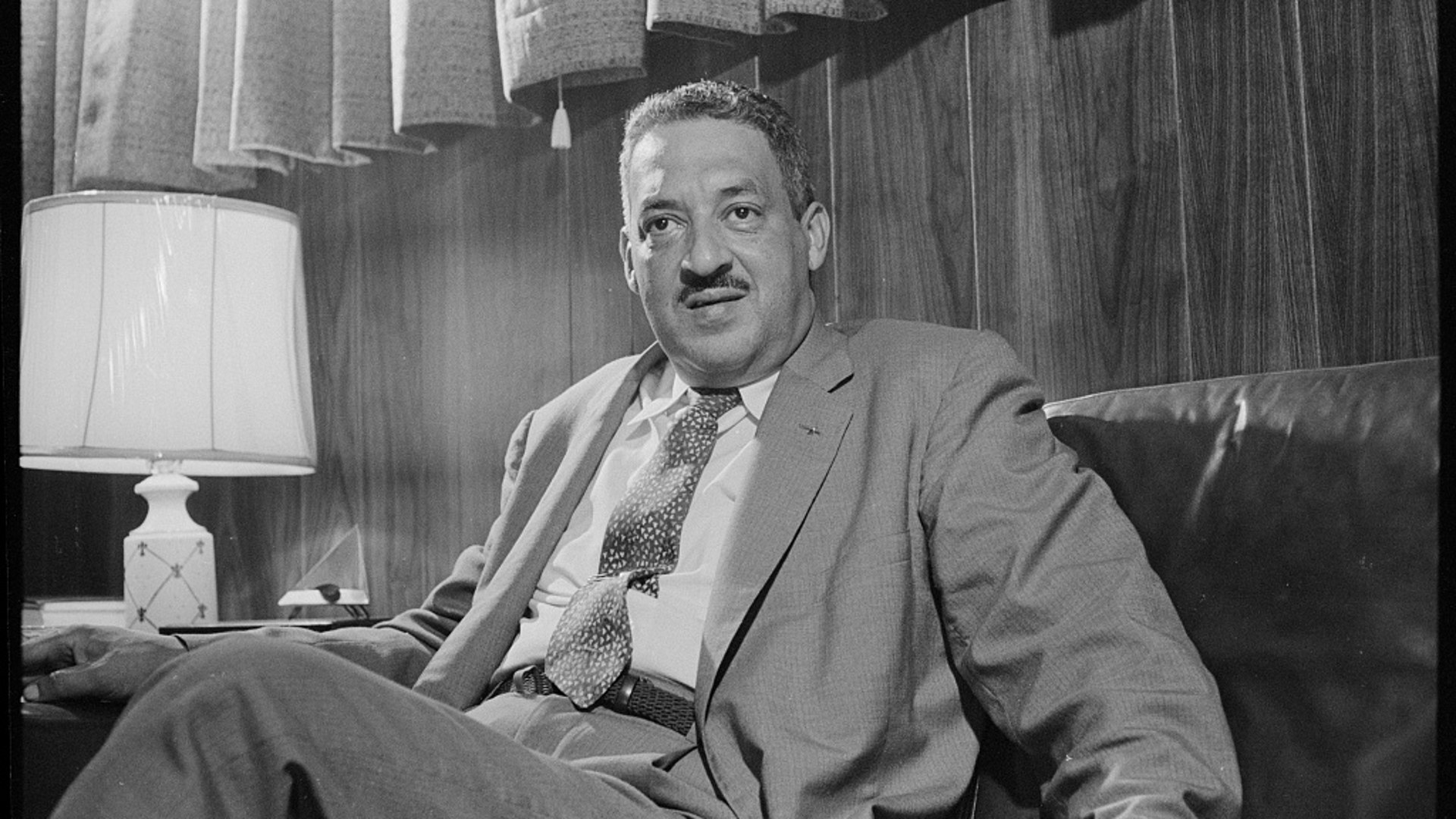
Thurgood Marshall was born on July 2, 1908, in Baltimore, Maryland, into a working family that took education seriously.
His father worked as a railroad porter and as a steward, and his mother taught elementary school. Dinner table talk in that house often turned to the law.
His father took him to watch court arguments and then made him defend his own opinions at home. The boy learned early that words, aimed well, could move powerful people.
Marshall graduated from Frederick Douglass High School in Baltimore and then from Lincoln University in Pennsylvania, where he finished with honors in 1930.
His Lincoln classmates included poet Langston Hughes. The campus was crowded with young Black talent that America had locked out of its white institutions.
Marshall applied to the University of Maryland School of Law, the law school in his own home state. The school rejected him because he was Black.
That rejection changed American history. He enrolled instead at Howard University School of Law in Washington, and he graduated first in his class in 1933.
At Howard, Dean Charles Hamilton Houston taught his students that a lawyer is either a social engineer or a parasite on society. Marshall chose engineering.
The Rejection He Answered in Court
Marshall opened a small law practice in Baltimore, but movement work pulled at him from the start.
In 1935 he and Houston sued the University of Maryland on behalf of Donald Gaines Murray, a Black graduate who had been denied admission to its law school.
They won. The very school that had turned Marshall away was ordered to admit a Black student, and the young lawyer had beaten his own rejection in open court.
In 1936 Marshall joined the staff of the NAACP, working under Houston. In 1940 he became head of the NAACP Legal Defense and Educational Fund.
For the next two decades he traveled the South by train and by car, often at real personal risk, carrying the legal fight into towns where a Black lawyer arguing against white officials could draw a mob.
Black families opened their homes to him. Black churches raised the money that kept the cases moving. The strategy was national, but the fuel was always local and Black.
Building the Road to Brown, One Case at a Time
Marshall and his team did not attack segregation all at once. They dismantled it brick by brick, choosing cases that forced the courts to narrow the ground Jim Crow could stand on.
In Chambers v. Florida in 1940, his first victory before the Supreme Court, the court reversed the convictions of Black men whose confessions had been coerced.
In Smith v. Allwright in 1944, the court struck down the white primary in Texas, reopening the ballot box to Black voters across the South.
In Shelley v. Kraemer in 1948, the court ruled that judges could not enforce housing covenants that barred Black families from buying homes.
In Sweatt v. Painter in 1950, the court ordered the University of Texas law school to admit a Black student, finding that a hastily built separate school could never be equal.
Each ruling taught the same lesson. Separate was a lie the nation told itself, and the lie got harder to defend every time Marshall stood up to argue.
Read more from this series: Montgomery Bus Boycott: 381 Days That Changed America.
May 17, 1954: The Day the Doctrine Fell
All of it led to Brown v. Board of Education of Topeka, the school segregation cases the Supreme Court decided together under one name.
Marshall argued that segregation in public schools violated the equal protection promise of the Fourteenth Amendment. He argued it for the children sitting in run down classrooms across the South.
On May 17, 1954, the court ruled unanimously for the families. Separate educational facilities, the justices declared, are inherently unequal.
The ruling overturned Plessy v. Ferguson, the 1896 decision that had blessed segregation as the law of the land for 58 years.
Marshall understood both the size of the win and the size of the fight still ahead. He warned supporters not to fool themselves, telling them the fight had just begun.
He was right. Three years later he was in Little Rock, Arkansas, fighting a governor who used state power to block nine Black students from Central High School.
In Cooper v. Aaron in 1958, the Supreme Court ruled unanimously again, holding that Arkansas officials could not delay integration and that Brown was the supreme law of the land.
From Advocate to the Bench Itself
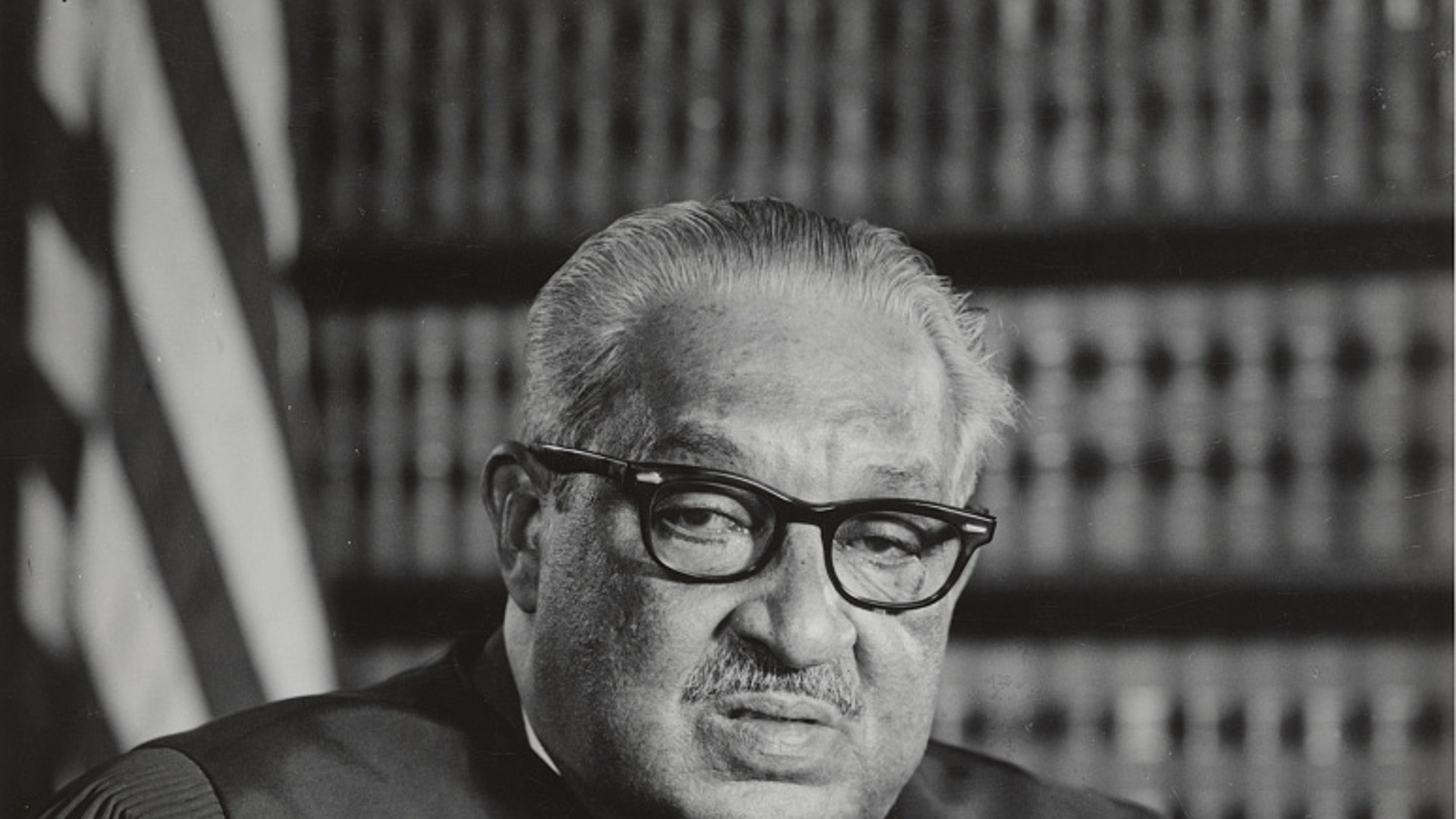
In 1961 President John F. Kennedy appointed Marshall to the United States Court of Appeals for the Second Circuit. Southern senators stalled his confirmation, but he took the seat and served until 1965.
That year President Lyndon B. Johnson named him Solicitor General of the United States, making him the highest ranking Black official in the federal government at that time.
As Solicitor General he argued for the United States itself, and he won 14 of the 19 cases he argued before the Supreme Court.
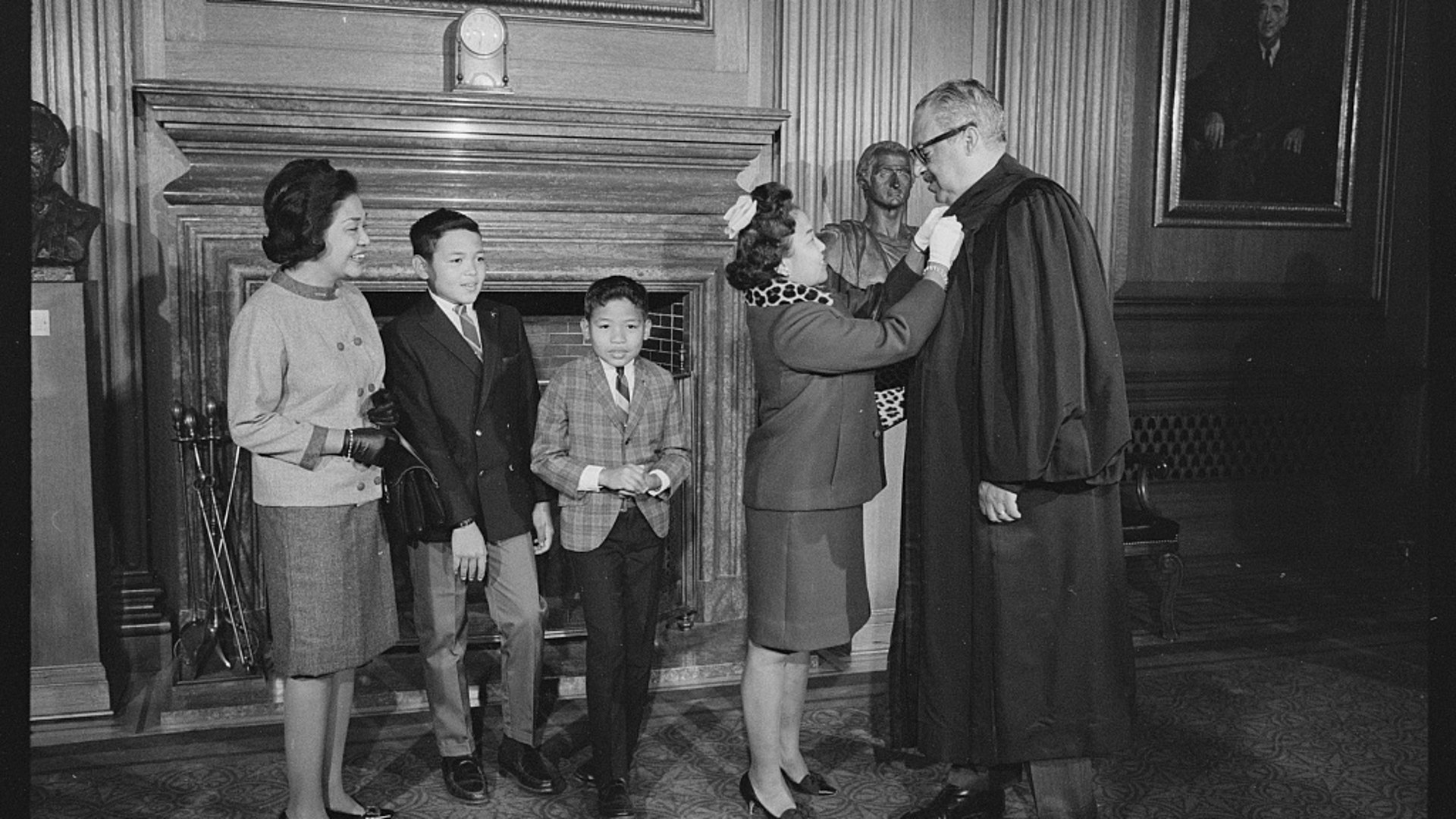
On June 13, 1967, Johnson nominated him to the Supreme Court. The Senate confirmed him on August 30, 1967, by a vote of 69 to 11.
The lawyer Maryland had refused to teach now sat on the highest court in the nation. He took his seat on October 2, 1967, the first Black justice in American history.
Explore more Black history features: Bayard Rustin Built the 1963 March That Moved America and Bessie Coleman: First Black Woman Pilot Took Flight.
24 Years Defending the People He Came From
Marshall served on the court for 24 years, and he never forgot the clients who had shaped him.
He stood consistently for equal treatment under the law, for the rights of people accused of crimes, and for the voting power of ordinary citizens.
He opposed the death penalty throughout his tenure, holding that it was cruel and that it fell hardest on the poor and the Black.
In 1987, as the nation marked two centuries of its Constitution, Marshall spoke with unusual candor. He called the original document defective from the start.
His point was not contempt. His point was credit. The promise of rights, he argued, became real only through amendment, through civil war, and through struggle by people the founders had excluded.
Failing health forced his retirement in 1991. He died on January 24, 1993, at the age of 84, and he was buried in Arlington National Cemetery.
Why Marshall Matters Right Now
Every fight over what Black children are taught, over who gets to vote, and over whether courts protect the powerless runs through ground Marshall broke.
Brown remains the foundation under every school equity case in America, even as courts and legislatures keep testing how far its promise still reaches.
His seat itself tells the story of change and of continuity. He was succeeded on the court by Clarence Thomas in 1991, and a generation later Ketanji Brown Jackson became the first Black woman to sit where Marshall once sat.
For Black families, his life carries a practical lesson, not just a proud one. He mastered the rules of a system built to exclude him, and then he used those rules as a lever to pry the system open.
He did it with preparation, with patience, and with a community behind him paying the costs and opening the doors.
The school that rejected him now sits in a state that studies him. The court that once upheld segregation now carries his portrait in its history.
Thurgood Marshall proved that the law is not magic and it is not a gift. It is a tool, and in disciplined Black hands, it changed the country.