

Major Takeaways
Malcolm X challenged America to confront racism honestly and directly.
His evolution reflects the power of growth, education, and global awareness.
His legacy continues to shape Black political thought and activism.
Thaddeus Myles here, family welcome back to Urban City’s Black Agenda, where we don’t water history down, we drink it straight and deal with the burn. Today is Day 9, and we’re talking about a man whose name still makes folks shift in their seats, clear their throats, and argue decades later. That’s how you know the truth landed.
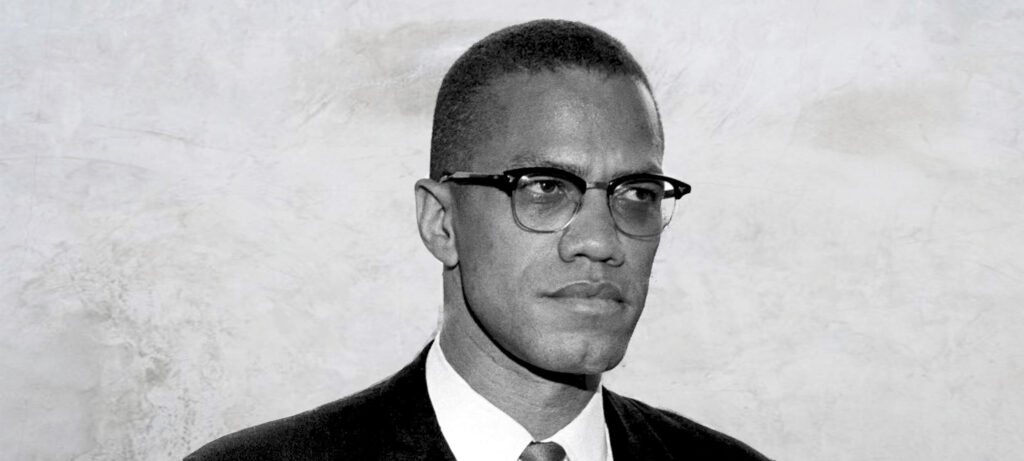
Today, we’re honoring Malcolm X the most misunderstood truth-teller in American history.
Born Malcolm Little in 1925 in Omaha, Nebraska, Malcolm’s life started in trauma and turbulence. His father, Earl Little, was a Black nationalist and outspoken supporter of Marcus Garvey and that made him a target. Malcolm was still a child when his father was murdered under suspicious circumstances that authorities conveniently labeled an “accident.”
His mother, Louise, slowly broke under the weight of poverty, racism, and loss, eventually institutionalized. And just like that, Malcolm’s childhood ended early. The system didn’t fail him it worked exactly the way it was designed to.
By his teens, Malcolm was surviving however he could. Hustling. Running numbers. Moving fast. Living reckless. And eventually, the streets caught up with him. Prison wasn’t a detour it was a turning point.
Behind bars, Malcolm did something radical:
he educated himself.
He read everything. History. Philosophy. Religion. Politics. Dictionaries literally page by page. While others did time, Malcolm did transformation. He found discipline. Purpose. Identity. And when he emerged from prison, he wasn’t just free he was focused.
As a minister in the Nation of Islam, Malcolm X became one of the most electrifying speakers the country had ever heard. He didn’t beg for acceptance. He didn’t soften the message. He called America out boldly, directly, unapologetically.
He said what many Black Americans felt but were afraid to say out loud:
That racism wasn’t accidental.
That violence against Black people wasn’t isolated.
That freedom shouldn’t come with conditions.
Malcolm challenged the idea that Black people had to suffer peacefully to be considered worthy of justice. His philosophy of self-defense “by any means necessary” wasn’t about chaos. It was about dignity. About refusing to be abused quietly.
And because he refused to play nice, the media painted him as dangerous. Politicians labeled him extreme. Even within Black leadership circles, he was seen as “too much.”
But here’s the part history finally caught up on:
Malcolm X evolved.
After breaking away from the Nation of Islam, Malcolm traveled the world. Africa. The Middle East. Europe. And what he discovered reshaped his thinking. He began to see racism not just as an American problem, but as a global system tied to colonialism and power.
His faith deepened. His politics sharpened. His message expanded.
And with that growth came something even more dangerous than his anger his clarity.
He began building bridges. Talking about human rights, not just civil rights. Connecting Black struggles in America to liberation movements worldwide. And that shift? That scared a lot of powerful people.
On February 21, 1965, Malcolm X was assassinated at the Audubon Ballroom in Harlem. He was 39 years old.
But let’s be clear:
Malcolm X didn’t die that day.
He multiplied.
His words continue to circulate. His ideas continue to challenge. His image continues to provoke. And his evolution continues to teach us something vital: growth is not betrayal.
Malcolm showed us that you can start in rage and still arrive at wisdom. That you can be fierce and still be thoughtful. That loving Black people doesn’t require hating anyone else it requires telling the truth without apology.
And today, when we talk about media narratives, political spin, protest tactics, global Black identity we’re still having conversations Malcolm X forced the world to start.
So on Day 9 of Urban City’s Black Agenda, we honor a man who refused silence, refused submission, and refused to let America lie to itself unchecked.
We honor Malcolm X the Unfiltered Truth that still echoes through generations.
I’m Thaddeus Myles, and you already know the assignment: keep it locked to urbancitypodcast.com and the Urban City Podcast app all month long for Urban City Podcast’s Black Agenda powered by 4AM Roastery at 4amroastery.com.