
Major Takeaways
• Democracy works best when security and accessibility move together rather than compete
• History shows that small administrative hurdles can create large civic consequences
• Voting policy ultimately reveals the nation’s moral priorities
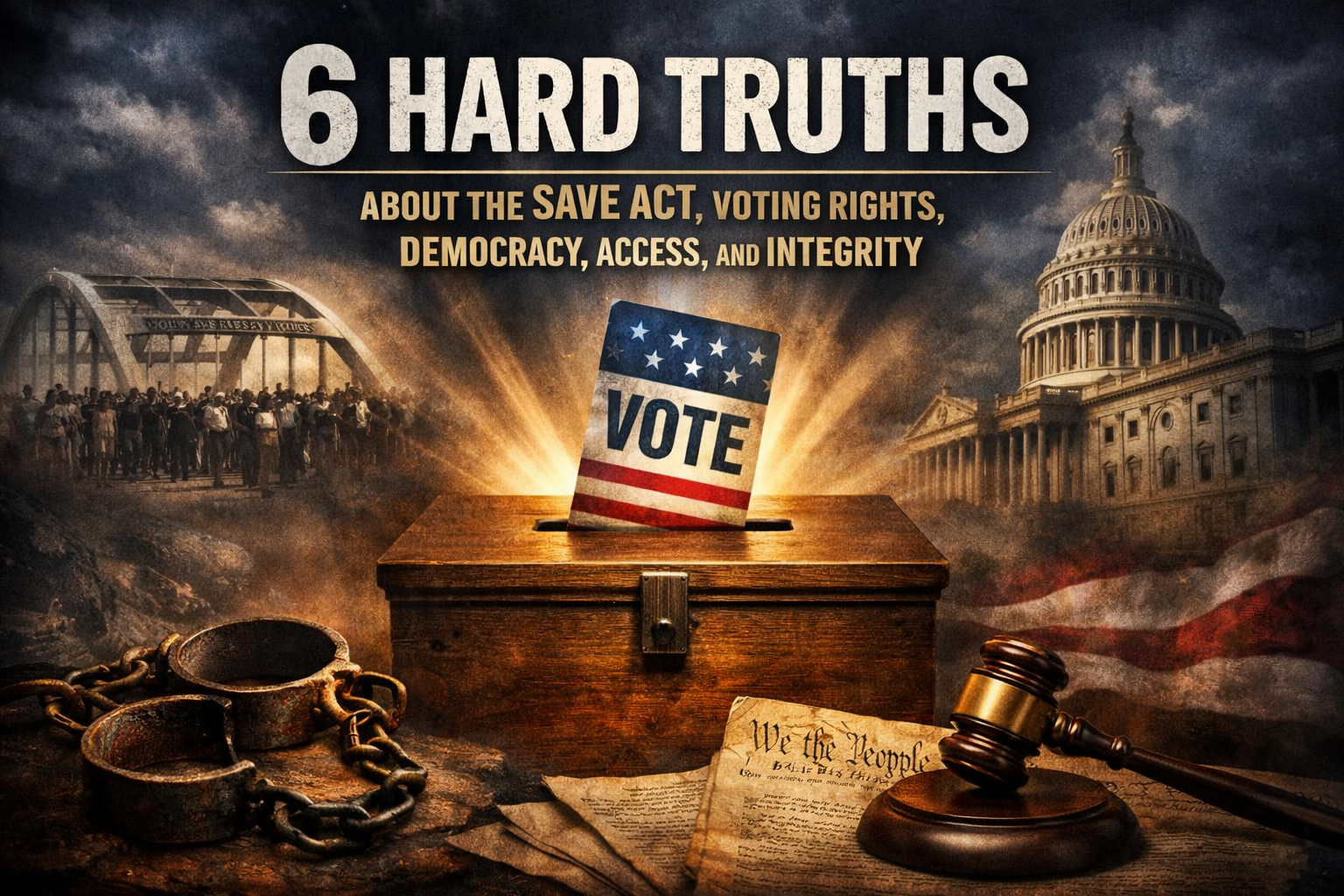
6 Hard Truths About the SAVE Act, Voting Rights, Democracy, Access, and Integrity
By Felicia Brookins• 6 min readDemocracy is often described as a system of laws, institutions, and procedures. But at its core, it is something far more personal. It is about belonging. It is about legitimacy. It is about who is welcomed into the civic family and who is asked, politely or otherwise, to prove they deserve a seat at the table.
Voting laws are never just administrative documents. They are moral ones.
The current debate surrounding the SAVE Act, legislation centered on requiring documentary proof of citizenship for voter registration, has reopened a long standing American conversation. Supporters argue the measure is common sense protection meant to safeguard elections from unlawful participation. Critics warn it risks placing new burdens on eligible citizens, particularly those who already face structural obstacles.
If this sounds familiar, it should.
History has a way of whispering before it starts shouting.
Black History Month is more than an annual reflection. It is a reminder that democratic participation in the United States did not expand naturally or effortlessly. It was demanded, defended, and often paid for with blood, endurance, and relentless civic pressure.
The right to vote was never simply handed over. It was fought for.
After Reconstruction, many state legislatures learned that openly denying Black Americans the ballot invited federal intervention. So they refined their strategy. Instead of outright bans, they introduced procedural barriers that appeared neutral on paper while proving devastating in practice. Poll taxes required payment. Literacy tests demanded arbitrary demonstrations of knowledge. Documentation rules created bureaucratic mazes.
None of these policies explicitly mentioned race.
Yet their outcomes spoke volumes.
The lesson was clear. Administrative barriers can function as instruments of exclusion when layered onto existing inequality.
Today, requiring documentary proof of citizenship may seem straightforward at first glance. Most people assume they have the necessary paperwork tucked away somewhere. But the reality is more complicated.
Consider the Americans who could face disproportionate challenges:
Elderly citizens born before standardized hospital record keeping
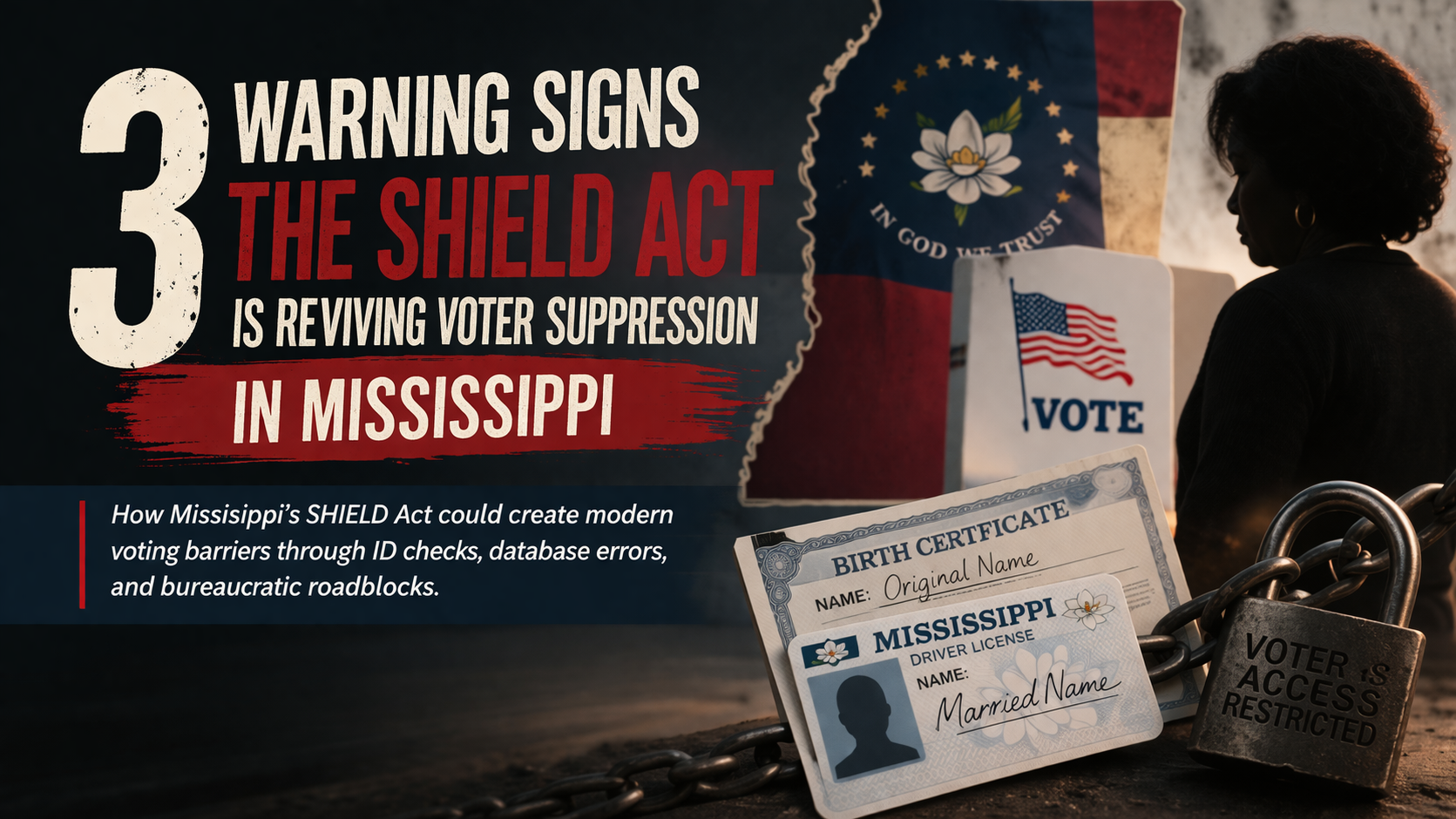
Married individuals whose legal names differ from their birth records
Rural residents who must travel significant distances to access issuing offices
Low income citizens for whom replacing documents means lost wages, transportation costs, and administrative fees
Voting is free in principle. But when participation requires time, money, and navigation through government systems, the cost becomes very real.
That tension between election integrity and voter access is not imaginary. Secure elections matter. Public trust matters. A democracy cannot function if citizens doubt its outcomes.
But access matters just as much.
Every major expansion of suffrage pushed the nation closer to its stated ideals. Each step forced the country to confront a difficult question: Do we operate from a presumption of trust in citizens, or from suspicion?
Black History Month asks Americans to remember moments when the answer carried enormous consequences. It calls to mind the courage displayed on the Edmund Pettus Bridge, now recognized as a Edmund Pettus Bridge, where ordinary people demanded extraordinary change. Their actions reshaped the electorate and, in doing so, reshaped American power itself.
Expansions of democracy have rarely occurred without resistance. When new voters enter the system, political calculations shift. Policies evolve. Leadership changes.
That is not a flaw of democracy. That is democracy working exactly as designed.
The debate over the SAVE Act is therefore not just about documentation. It is philosophical.
Do we design voting systems to maximize participation while maintaining security? Or do we prioritize gatekeeping in the hope that stricter controls guarantee legitimacy?
The challenge is refusing to sacrifice one value in pursuit of the other.
Because once participation becomes conditional, democracy becomes negotiable.
Critics of the legislation argue that documentation requirements could unintentionally recreate the quiet mechanics of exclusion that generations have worked to dismantle. Supporters counter that citizenship verification strengthens confidence in election outcomes.
Both concerns deserve serious consideration.
But history urges vigilance. Policies that appear neutral can still produce unequal effects. Good intentions do not always translate into equitable results.
The consequences of modern voting laws will echo far beyond a single election cycle. They shape who feels seen by their government and who feels pushed to the margins.
Award winning author and screenwriter Felicia Brookins frames the issue as one of moral clarity. The question is not whether Americans care about election integrity. The real question is whether the nation can protect that integrity without placing unnecessary hurdles between citizens and the ballot.
Democracy functions best when participation is both secure and accessible. Lean too far in either direction and the system strains.
There is also an unmistakably political dimension to the conversation. Parties naturally evaluate voting rules through the lens of electoral advantage. The Republican Party, like any major political organization, operates within strategic realities about turnout, demographics, and governance. That reality does not invalidate concerns about security, but it does underscore why transparency and balance are essential.
Ultimately, voting policy reflects national character. It reveals whether a country views participation as a right to be protected or a privilege to be scrutinized.
Black History Month reminds Americans that the arc of democracy has never been self correcting. Progress required attention. It required pressure. It required citizens willing to ask uncomfortable questions.
The SAVE Act now joins a long lineage of debates about the price of the ballot.
And that price is never purely administrative.
It is moral.