6 min read
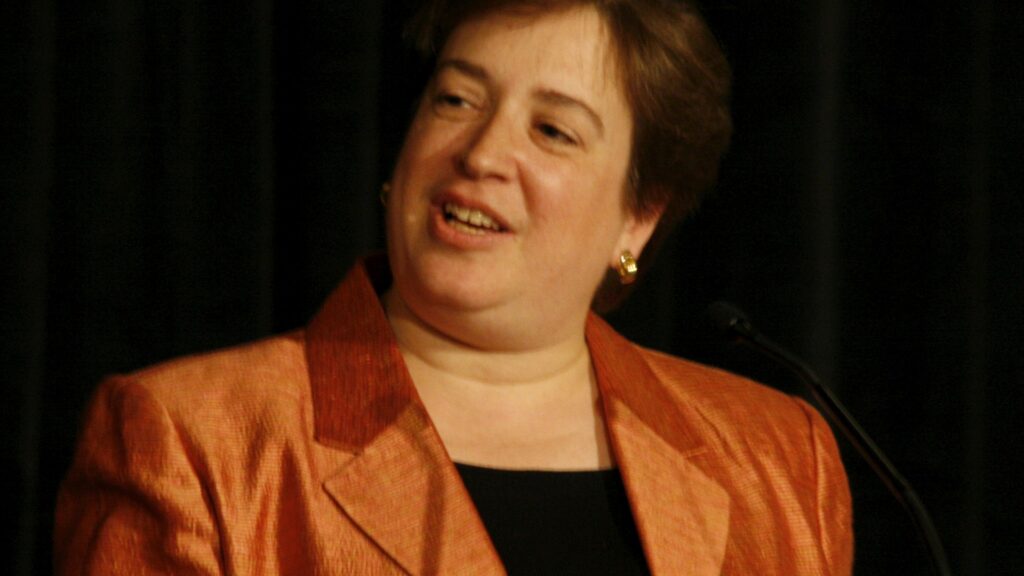
Justice Elena Kagan delivered a rare public warning on Tuesday about what Supreme Court rulings are doing to voting rights in America.
Speaking two weeks before the midterm elections, she said the conservative majority has made the country more polarized and less democratic.
For Black voters, her words landed on ground already shifting under their feet across the South.
Major Takeaways
- Justice Elena Kagan said Tuesday that Supreme Court rulings on voting and elections have undermined democracy and fueled polarization.
- She blamed the majority for refusing to rein in partisan gerrymandering, calling the map drawing fight a race to the bottom.
- The April ruling that gutted a pillar of the Voting Rights Act set off redistricting across the South aimed at districts where Black voters hold power.
- Kagan also warned that the June campaign finance ruling invites donor corruption, while noting the majority has sometimes pushed back against the president.
1. A Sitting Justice Sounds The Alarm Out Loud
Kagan is one of three liberal justices on a court held six to three by conservatives.
She spoke to students and professors at the Catholic University law school in Washington on Tuesday.
Sitting justices rarely grade their own court in public with this kind of bluntness.
She said both political parties have joined what she called a race to the bottom on partisan gerrymanders.
Those maps, she said, are effectively depriving masses of citizens of their rights to voting equality.
Partisan gerrymandering means redrawing district lines based on the partisan leanings of voters to boost one party.
Kagan said the practice pushes candidates toward the extremes because the only real threat is being primaried.
It is making what I think is unfortunately a too polarized country even more so, she said.
Large states, she warned, will be pushed to turn all red or all blue in coming elections.
That push, she said, is very destructive to our democracy.
2. The Voting Rights Act Ruling Sits At The Center
The court in April gutted a pillar of the Voting Rights Act, the landmark 1965 civil rights law.
That law was written to prevent racial discrimination in voting across the country.
Its protections helped increase minority representation in Congress and in statehouses for decades.
Kagan dissented from the decisions she criticized on Tuesday, as she has in past voting cases.
She said the majority showed a lack of appropriate concern or understanding of the consequences of its decisions.
I think part of the reason why the court got it wrong was that lack of concern, she said.
In her view, the court has blinded itself to the deleterious effects of its rulings on the political system.
Those rulings, she added, have created a democracy that does not work as well as it should.
For communities that fought and bled for the ballot, that sentence carries heavy historical weight.
The Voting Rights Act was born from Selma and from generations of organized Black pressure.
3. New Maps Across The South Target Black Power
The April ruling prompted a frenzied round of redistricting across the South this year.
Republican led states scrambled to eliminate House districts where Black voters make up a majority or near majority.
Each erased district means a community loses a voice it built over decades of organizing.
Control of Congress is at stake in the November midterms, and the new maps could help decide it.
At the urging of President Donald Trump, Republican governed Texas redrew its map last year.
That effort aimed to flip Democratic held House seats before voters ever cast a ballot.
Democratic led California then reconfigured its own map to target Republican held House seats.
Kagan framed the arms race itself as the problem, no matter which party draws the lines.
When maps decide elections before campaigns begin, voters stop choosing their leaders in any real sense.
Black voters in the South feel that squeeze first because their districts are the ones being dismantled.
4. Money In Politics Drew A Warning Too
Kagan also attacked the June decision that struck down a cap on party campaign spending.
That ruling removed limits on how much parties can spend in coordination with their candidates.
She said the decision has created fresh opportunities for donors to corrupt candidates.
The court, she noted, still allows rules aimed at stopping money for favors corruption.
Yet in her telling, the majority never seems to see the chances for exactly that corruption.
The people of America look around this political system and think all this money chasing candidates is a nightmare, she said.
And they are right, she added.
For Black candidates without wealthy donor networks, unlimited coordinated money widens an already steep hill.
Grassroots fundraising and church based organizing have long been the answer our communities built for that gap.

5. Kagan Says The Majority Is No Rubber Stamp
Her criticism came with an important note of fairness toward her own court.
She said it is unfair to claim the majority reflexively supports the president.
She pointed to areas where the court has pushed back against Trump.
Those areas include tariffs, birthright citizenship and mail ballots.
That distinction matters because it frames her warning as a defense of democracy itself.
She was not asking the court to pick a party, she was asking it to see consequences.
Still, the majority has long held that partisan map drawing is a political dispute courts cannot police.
That position, set in a 2019 ruling, is the door through which the current map wars walked in.
Conservatives on the court have also ruled that key campaign finance limits violate free speech.
6. What Black Voters Can Do With Days Left
Election Day is Tuesday, November 3, and early voting is already moving across the country.
Black voters are leading early voting surges in places like North Carolina, as our reporting has shown.
Texas metros like Houston and Dallas have shattered early voting records this cycle as well.
New district lines make checking your exact district and polling place more important than ever.
A map drawn to dilute your vote only works if discouragement keeps you home.
Verify your registration, learn your new district, and vote as early as your state allows.
Bring a neighbor, bring a first time voter, and make the line itself a statement.
Kagan cannot redraw a single map from the bench minority she sits in.
What she did Tuesday was tell the country plainly what these rulings are doing.
The answer from Black America has always been turnout, organization and memory.
This fall, all three are on the ballot right alongside the candidates.
Read more in our News coverage, see how Black voters are leading the North Carolina early voting surge and how Texas early voting is shattering records in Houston and Dallas, and visit Urban City Podcast for more stories.