


Major Takeaways
Katherine Johnson’s mathematical brilliance was essential to America’s space missions.
Her work broke racial and gender barriers in STEM fields.
Her legacy continues to inspire future generations in science and technology.
Thaddeus Myles here, family welcome back to Urban City’s Black Agenda, where we don’t just celebrate Black history, we decode it, dust it off, and show exactly how much of the world still runs on our brilliance. Today is Day 8, and we’re heading beyond marches, microphones, and legislation straight into outer space.
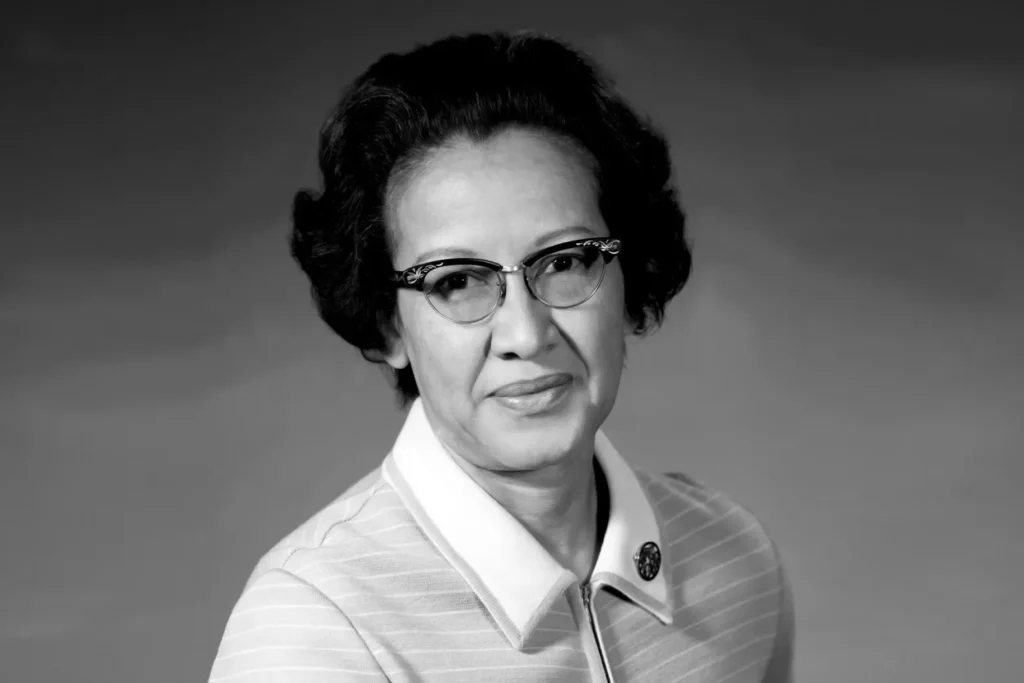
Because today, we’re honoring Katherine Johnson, the Black woman whose mind quite literally carried America into the space age.
Now let’s be real for a second. When people think about NASA, rockets, and astronauts, they usually picture white lab coats, white faces, and whitewashed stories. What they don’t picture but absolutely should is a Black woman sitting at a desk with a pencil, calculating trajectories that decided whether astronauts lived or died.
Katherine Johnson was born in 1918 in White Sulphur Springs, West Virginia. From an early age, it was obvious she wasn’t just smart she was wired differently. Numbers spoke to her. Patterns made sense. Math wasn’t a subject; it was a language.
She graduated high school at 14. College at 18. Let that sit for a second.
But even with all that brilliance, the world she entered wasn’t built to welcome a Black woman who knew more than everyone else in the room. When she joined NASA’s predecessor organization in the 1950s, she was hired as a “computer.” And no not a machine. A human calculator. A title that conveniently minimized genius while maximizing output.
She worked in segregated offices. Segregated bathrooms. Segregated cafeterias. And yet, her work crossed every barrier they tried to place in front of her.
Katherine Johnson didn’t raise her voice.
She raised the standard.
Her calculations were so precise, so dependable, that engineers began bypassing supervisors just to get her numbers. When NASA prepared to send John Glenn into orbit in 1962 one of the most high-stakes missions of the Cold War Glenn made a demand before launch:
“Get the girl to check the numbers.”
That “girl” was Katherine Johnson.
And when she verified the math, only then did Glenn step into the capsule.
Her work helped put Alan Shepard into space, John Glenn into orbit, and Apollo 11 onto the moon. That’s Mercury. That’s Gemini. That’s Apollo. Three of the most important programs in human history all resting on calculations done by a Black woman whose name the world didn’t bother to learn for decades.
Let that sink in.
Katherine Johnson wasn’t chasing fame. She wasn’t chasing headlines. She was chasing accuracy. And in science, accuracy is everything.
She also shattered barriers quietly but effectively. She insisted on being included in meetings where women especially Black women were never invited. She signed her name on research papers at a time when women were often erased from authorship. She asked questions others were afraid to ask, not because she wanted attention, but because lives depended on getting it right.
And here’s what makes her legacy hit even harder: she didn’t see herself as extraordinary. She saw herself as doing her job well.
That humility? That discipline? That refusal to complain while still refusing to accept injustice? That’s a masterclass.
It wasn’t until decades later with the book and film Hidden Figures that the world finally caught up to what NASA had known all along. Katherine Johnson wasn’t hidden because she lacked impact. She was hidden because America wasn’t ready to admit how much it relied on Black women’s brilliance.
In 2015, President Barack Obama awarded her the Presidential Medal of Freedom, the nation’s highest civilian honor. Long overdue but powerful nonetheless.
Katherine Johnson lived to see her flowers. She lived to see young Black girls look at space and say, “I belong there too.”
And that’s the real legacy: not just getting America to the moon, but expanding who gets to dream about the stars.
So today, Day 8, we salute Katherine Johnson the Invisible Genius whose math carried the nation beyond Earth and whose legacy continues to lift generations higher.
I’m Thaddeus Myles for the Urban City Podcast Network. and as always, lock into urbancitypodcast.com and the Urban City Podcast app all month long for Urban City Podcast’s Black Agenda powered by 4AM Roastery at 4amroastery.com.