6 min read
Major Takeaways
- A judge in New Mexico ordered Meta to pay $25 billion in civil penalties on Wednesday, a ruling Attorney General Raúl Torrez called one of the largest state verdicts against a company in American history.
- A Santa Fe jury found in September that Meta misled the public in 26 of 29 statements about privacy and content rules, adding up to more than 43 million violations of state consumer protection law.
- The case grew out of the Cambridge Analytica scandal, where personal data from as many as 87 million Facebook users was harvested without consent and used to target voters in the 2016 election.
- State law sends every dollar of the penalty to New Mexico public schools. Meta says it plans to appeal the ruling.
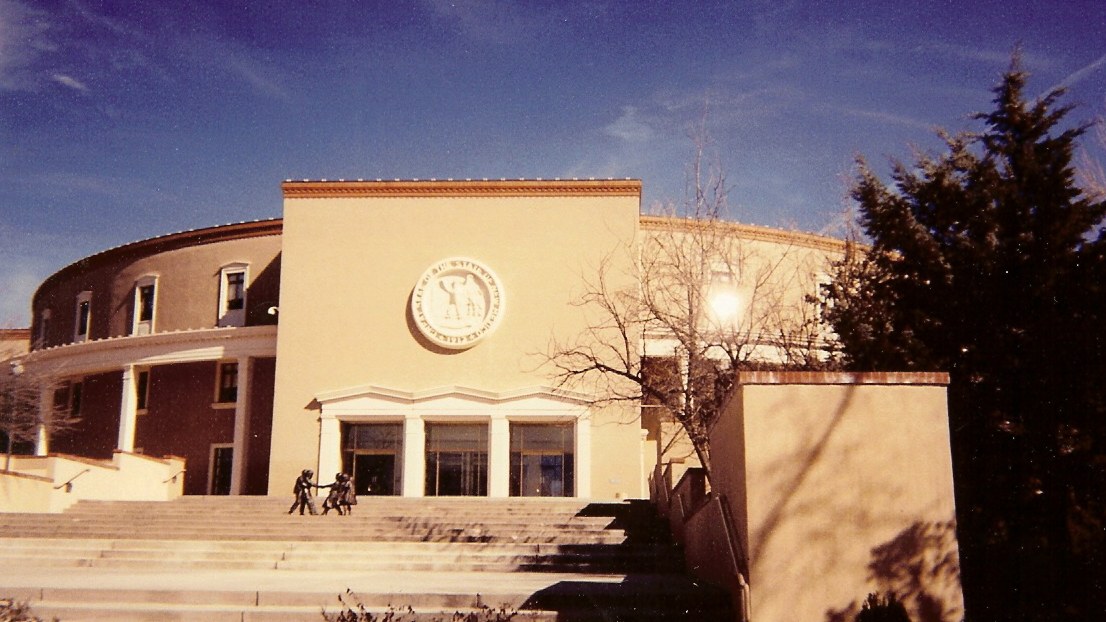
A state court judge in Santa Fe ordered Meta, the parent company of Facebook and Instagram, to pay $25 billion in civil penalties on Wednesday. The order closes the penalty phase of a consumer protection case that New Mexico carried to a jury on its own.
The ruling reaches back nearly a decade, to a scandal that showed how easily the personal data of millions of Facebook users could be pulled off the platform and turned into a political weapon.
How the Bill Reached $25 Billion
Judge Francis Mathew of the First Judicial District Court issued the order after a two week trial in Santa Fe. Jurors returned their verdict on September 25, ruling that 26 of 29 statements made by Meta and its leaders about privacy and content moderation were misleading.
The jury counted more than 43 million violations of the state Unfair Practices Act. Each violation was tallied from the number of New Mexico Facebook users who were the audience for each misleading statement.
State law allows a penalty of up to $5,000 for each violation. Mathew wrote that a penalty of more than $219 billion was warranted under the law, and he then lowered the final amount to $25 billion.
“Facebook’s wrongdoing goes to the heart of Facebook’s core business practices,” Mathew wrote in his order. He described deception that played out over the course of years and was broadcast to the public.
A Scandal Built on Harvested Data
New Mexico sued Meta in 2021. The case traces back to a personality quiz app that quietly pulled personal data from as many as 87 million Facebook users and passed that data to Cambridge Analytica.
Cambridge Analytica was a British political consulting firm that worked for the 2016 presidential campaign of Donald Trump. The firm built voter profiles from the harvested data and used those profiles to aim political ads with precision.
The state argued that Meta lied to its users in New Mexico about who could get access to their data. Prosecutors said the company knew outside developers held broad access to personal information while it told the public a different story.
The case also covered what Meta told the public about hate speech and misinformation on Facebook. The state said the company tolerated harmful content when that content helped its bottom line, and that prominent accounts escaped the scrutiny applied to everyday users.
Jurors watched video testimony from Meta chief executive Mark Zuckerberg and former chief operating officer Sheryl Sandberg before they ruled for the state.

Why This Ruling Lands Hard for Black Users
Facebook is woven into Black daily life in this country. It carries our family news, our church announcements, our reunions and our organizing, and it is one of the main roads that voting information travels.
That is what makes the history inside this case sting. The data pulled from Facebook in the Cambridge Analytica operation fed voter targeting in the 2016 election, and later reporting showed that millions of Black voters were sorted into a category built to discourage them from voting.
When a platform misleads the people on it about who holds their data, the damage is not abstract. It can be aimed straight at our votes, in a season when our turnout is being fought over in the open, including the push to mobilize Black voters before Election Day.
Torrez called the result “one of the largest, if not the single largest state verdict against a company in American history” at a news conference on Wednesday. Under state law, every dollar of the penalty goes to the public school system in New Mexico.
The ruling lands while the courts keep weighing the value of Black political power, a fight that also sits in front of the Supreme Court, where Justice Kagan has warned that recent rulings hurt Black voters.
Meta Plans to Fight On
Meta says it plans to appeal the ruling. In court filings, the company argued that it does not sell user data and that New Mexico never proved a single consumer was actually misled by its statements.
The company asked Mathew to cap the penalty at $3.45 billion, arguing that a higher figure could scare businesses away from the state. The state had asked the court for between $35 billion and $40 billion at a hearing on October 1.
“This court should speak to Meta in the only language it understands, which is money,” Randi McGinn, a lawyer for New Mexico, told the court at that hearing.
The verdict is the second loss Meta has taken in a Santa Fe courtroom in six months. In March, another jury ordered the company to pay $375 million in a child safety case, and a judge later directed $567 million into a state fund for teen mental health.
Meta has written big checks in this scandal before. It paid $5 billion to settle with the Federal Trade Commission in 2019 and $725 million to settle a consumer class action in 2022. New Mexico pursued its case on its own after other states settled theirs, including a $459 million agreement this summer that covered 46 states and two territories.
For the millions of Black users who built their digital lives on Facebook, the order out of Santa Fe draws a line. The trust of the people on the platform was never free for the taking, and now there is a number attached to that lesson.