8 min read
Major Takeaways
North Carolina voters cast more than 733000 ballots in five days.
Black turnout statewide is up 70 percent over the 2022 midterm.
Black voters now form about 24 percent of the early electorate.
Democrats hold a 175960 ballot edge in participation so far.
Early voting runs through October 31 ahead of the November 3 election.
North Carolina Early Voting Opens With Historic Energy
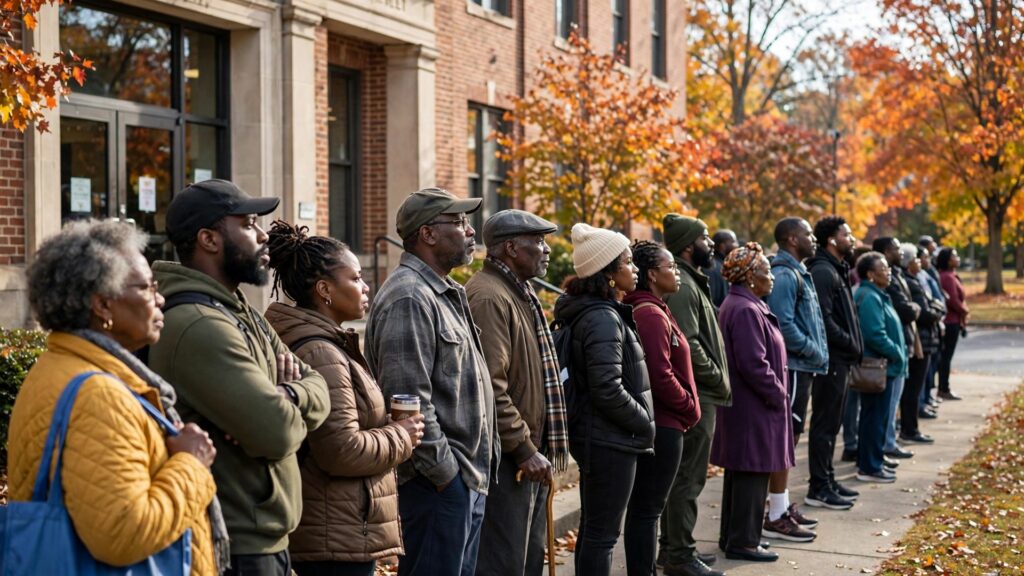
North Carolina early voting is producing the clearest turnout story in the South this fall.
Black voters are at the center of that story.
Through Monday evening, more than 733000 ballots had been cast statewide.
That total covers only the first five days of voting.
State election data put overall turnout more than 38 percent above 2022.
The comparison is to the same point in the last midterm election.
About 94 percent of those ballots came from in person early voting.
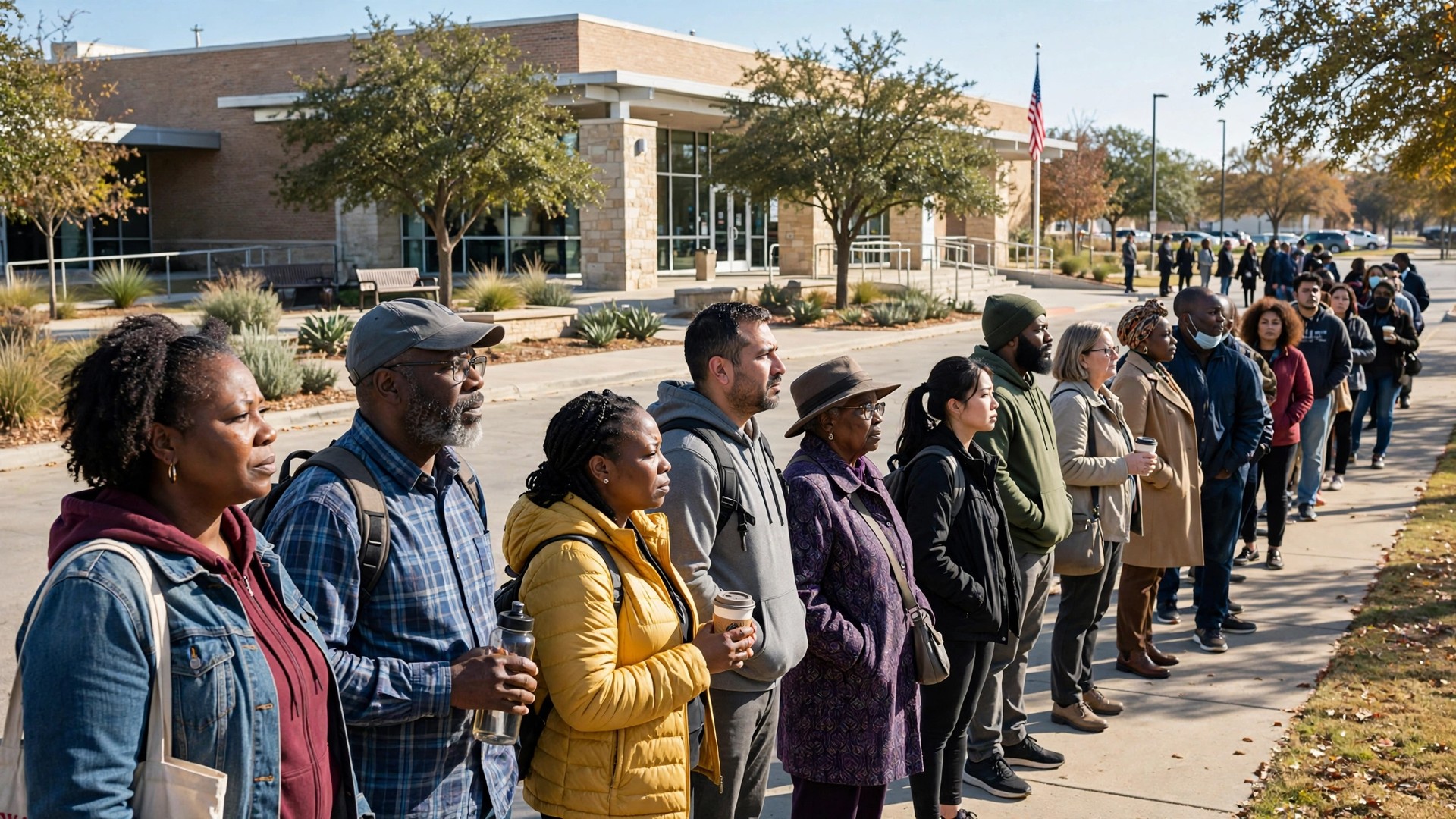
Voters are choosing to show up in person and be seen doing it.
For Black North Carolinians, this is more than a turnout update.
It is a statement about power in a state where races stay close.
Read more in our News coverage of the voting battles shaping this election.
Black Turnout Jumps 70 Percent Over The Last Midterm
Black turnout has risen 70 percent over the same point in 2022.
White turnout has risen 24 percent over that same point.
The gap between those two numbers tells the real story.
Black voters are not simply keeping pace with a busier election.
They are expanding their share of the early electorate itself.
Through Saturday, Black voters made up about 24 percent of early voters.
That share uses only ballots where race was recorded by officials.
On opening day in 2022, the comparable Black share sat near 18 percent.
In the 2024 presidential election, that opening share was near 19 percent.
A jump to 24 percent in a midterm year carries real weight.
Midterms usually draw a smaller and older electorate than presidential years.
Black voters are defying that pattern across North Carolina this October.
The numbers through Saturday already showed the surge holding firm.
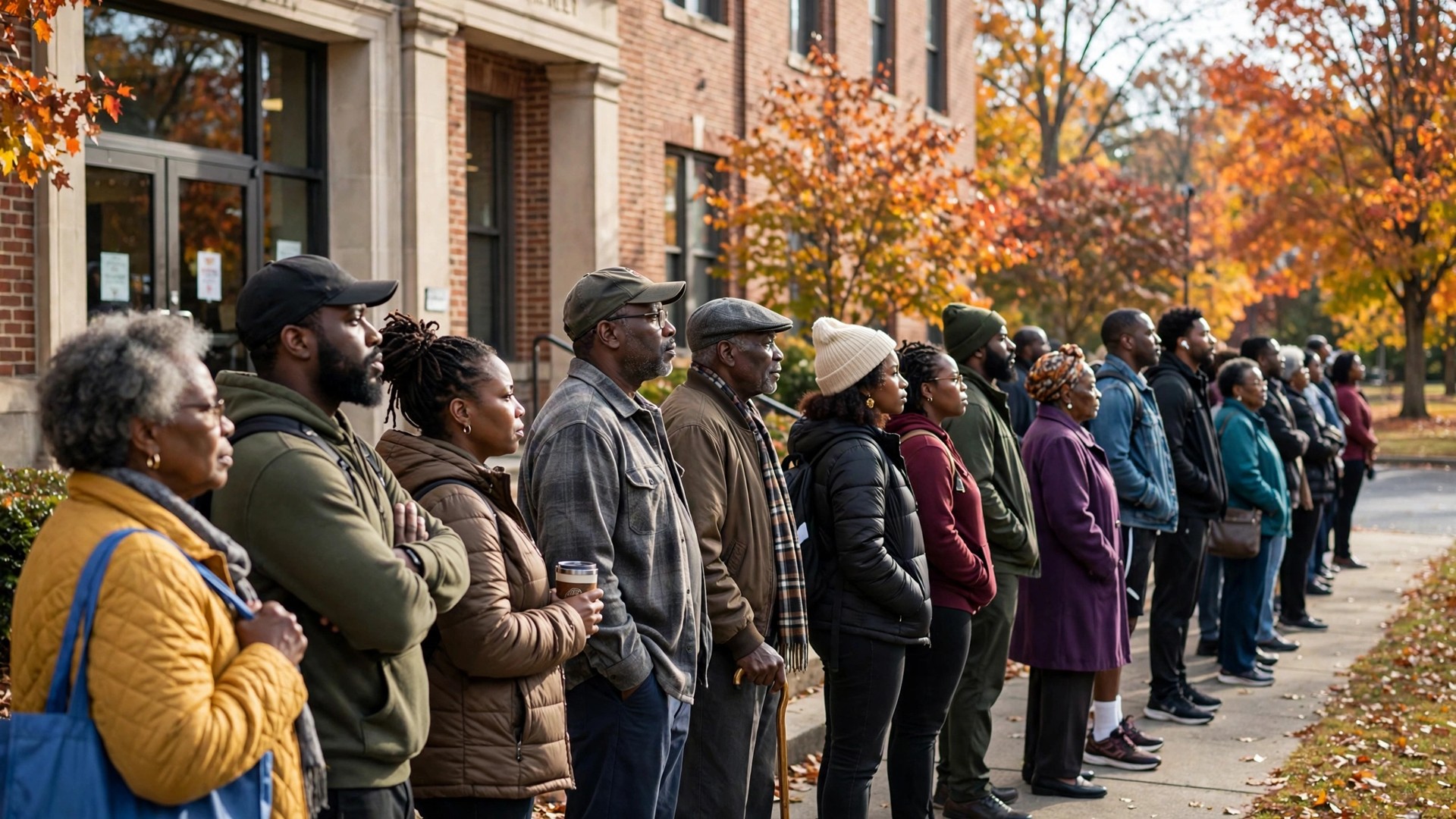
The state had recorded 501318 accepted ballots by the end of Saturday.
That was about 38 percent more than the comparable point in 2022.
Friday alone pushed the total from about 238000 to more than 437000.
Saturday added another 64104 ballots and crossed the half million mark.
This was not a single strong morning that faded by the weekend.
It was a pace that held across five straight days of voting.
Party Numbers Show A Lopsided Early Electorate
Registered Democrats cast more than 327000 ballots in five days.
In 2022, Democrats cast just over 214000 ballots in that window.
That is an increase of about 53 percent for Democratic voters.
Ballots from unaffiliated voters have risen about 62 percent as well.
Republican turnout, by contrast, is down nearly 5 percent so far.
Through Monday, 14.1 percent of registered Democrats had voted.
Only 6.5 percent of registered Republicans had cast a ballot.
That gap gave Democrats an edge of 175960 ballots cast.
At this point in 2022, the comparable party edge was 54267.
These figures describe participation, not the choices voters made.
A ballot cast early reveals registration, not the candidate selected.
Still, participation on this scale shapes every race on the ballot.
Campaigns now know exactly where the early energy is living.
The Black Belt Counties Are Setting The Pace
Some of the sharpest gains are coming from eastern North Carolina.
That region holds many of the state Black Belt counties.
In Edgecombe County, opening day voting rose from 674 to 1419.
That is an increase of about 111 percent in a single cycle.
In Hertford County, opening day voting rose from 229 to 486.
That is an increase of about 112 percent over 2022.
Both counties hold large Black populations and deep church networks.
Both sit inside the state closely watched First Congressional District.
In that district, 37526 ballots had been cast through Saturday.
Black voters made up about 41 percent of its early electorate.
At the comparable point in 2022, that share was 33 percent.
In 2024, that share stood at about 30 percent.
The district map was redrawn before this election cycle began.
The new map lowered the Black share of its voting age population.
It also added more coastal territory that leans Republican in elections.
Strong Black turnout is the counterweight voters themselves control.
Every early ballot from the Black Belt narrows the map advantage.
A Senate Seat And Control Of Congress Sit On The Ballot
North Carolina holds an open United States Senate seat this year.
Senator Thom Tillis chose not to seek another term in office.
Former Governor Roy Cooper is the Democratic nominee for the seat.
Former national party chair Michael Whatley is the Republican nominee.
Cooper cast his own ballot on October 15 as voting opened.
Whatley cast his ballot the following day, on October 16.
The seat could help decide which party controls the Senate.
Republicans currently hold 53 seats in the chamber overall.
Thirty five Senate seats are on ballots across the country.
North Carolina has a long history of painfully close statewide races.
A surge of this size can move a close race in November.
Tillis himself warned this week that his party faces a rough night.
He predicted Election Day could bring a severe defeat for Republicans.
That warning came from a retiring Republican senator, not a Democrat.
Our report on Texas early voting records in Houston and Dallas shows the same regional pattern.
Souls To The Polls Meets A Fight Over Sunday Voting
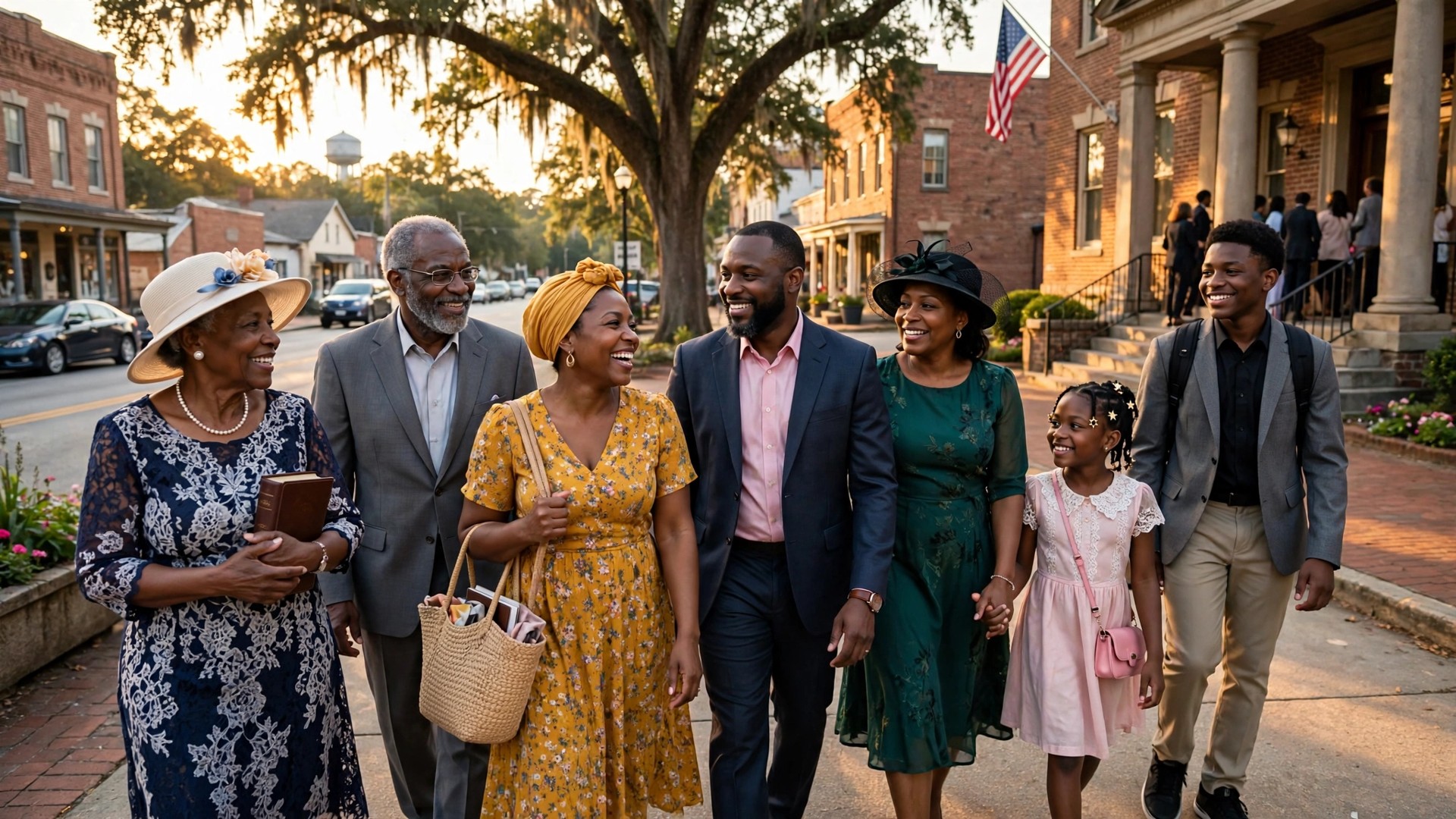
Black churches have powered North Carolina turnout for generations now.
The Souls to the Polls tradition moves congregations straight to voting sites.
Members leave Sunday worship together and cast ballots as a community.
That tradition faced new limits before this election even began.
In August, the state board cut Sunday voting days in many counties.
The board removed 16 proposed Sunday voting days in 13 counties.
Most of those decisions broke along party lines at the board.
Voting advocates argued the cuts ignored how Black churches organize.
For workers with long hours, Sunday can be the only free day.
For elders, a church ride can be the only reliable ride.
The early numbers suggest those cuts did not quiet the community.
If anything, Black voters appear to have answered with weekday lines.
The first full weekend of voting will test that answer further.
Churches across the state plan to keep the tradition alive anyway.
What Every North Carolina Voter Still Needs To Know
In person early voting runs through Saturday, October 31 statewide.
Sites close that final day at 3 p.m. in the afternoon.
Voters may register and vote on the same day during early voting.
That option ends when the early voting period ends on October 31.
The deadline to request a mail ballot was 5 p.m. on October 20.
That deadline passed on Tuesday, the day this report published.
Mail ballots must reach county officials by 7:30 p.m. on November 3.
Voters must show an accepted photo ID when voting in person.
Election Day itself is Tuesday, November 3 across the state.
Anyone still holding a mail ballot should move on it now.
Anyone planning to vote early should pick a day this week.
Lines tend to grow as the final Saturday of voting approaches.
Visit Urban City Podcast for daily coverage through Election Day.
Why This Surge Matters Beyond One State
North Carolina counts more than 1.7 million Black eligible voters.
That electorate alone can decide statewide races in a close year.
In the March primary, 309034 Black voters cast ballots statewide.
Black primary turnout reached 20.76 percent in that March vote.
That rate stood far above the 17.5 percent recorded in 2022.
The general election numbers now build on that primary signal.
Georgia voters have also passed one million ballots cast already.
Black voters cast 357693 of those Georgia ballots, or 34.8 percent.
Texas set first day records in Houston and Dallas on Monday.
Across the South, Black voters are voting early in unusual numbers.
No early total can declare a winner before November 3 arrives.
Republican voters often arrive in force on Election Day itself.
That pattern could still narrow the gaps seen this week.
But ballots already cast cannot be taken back or discounted.
They are locked in, counted in the participation record for good.
For Black communities, that is the point of voting early.
Our voice is recorded before the final day chaos even begins.