


Major Takeaways
-
Political decisions directly influence healthcare access, environmental conditions, and overall quality of life in African American communities
-
Health disparities are driven by systemic and social factors rather than biological differences
-
Community engagement in politics is essential to improving long term health outcomes
How political decisions continue to shape health outcomes and everyday life in Black communities across America
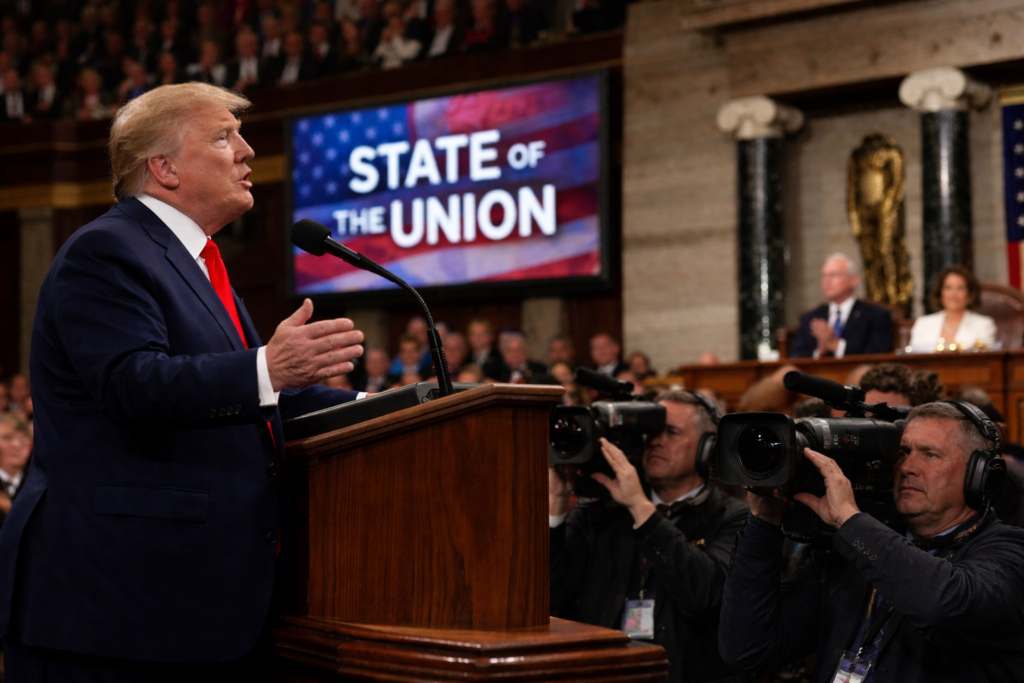
By Urban City Podcast Digital News Desk• 6 min readThe State of the Union is more than a speech. It is a roadmap. It tells the country what leadership values, what policies are coming, and where resources are likely to flow. When a president outlines priorities around the economy, healthcare, public safety, and infrastructure, those decisions carry real consequences.
For African Americans, the impact of these priorities is not theoretical. It affects access to care, economic opportunity, and overall quality of life. Looking at President Trump’s State of the Union through a fact-based lens reveals how politics and health remain tightly connected in shaping outcomes across Black communities.
Economic Messaging and Its Real Impact
President Trump has consistently emphasized economic growth, job creation, and low unemployment as central achievements. Prior to the COVID 19 pandemic, Black unemployment reached historically low levels, a point frequently highlighted in his speeches and supported by data from the Bureau of Labor Statistics.
That matters. Employment is directly tied to health outcomes. Individuals with stable jobs are more likely to have health insurance, access preventative care, and experience lower stress levels.
However, the question that always follows is this: who benefits long term?
Economic gains do not automatically close wealth gaps. The Federal Reserve has consistently reported that the median wealth of Black households remains significantly lower than that of white households. So while job numbers may improve, the deeper issue of economic equity remains unresolved.
And without wealth, access to quality healthcare, housing, and nutrition stays uneven.
Healthcare Policy and Access
Healthcare is where political decisions hit hardest.
During his presidency, Trump supported efforts to repeal and replace the Affordable Care Act. While full repeal did not occur, key provisions were weakened, including the removal of the individual mandate penalty.
Why does that matter for African Americans?
Because African Americans have historically had higher uninsured rates compared to white Americans. The Affordable Care Act helped reduce that gap. According to the Department of Health and Human Services, millions of Black Americans gained coverage during its expansion.
When policies shift away from expanding coverage, the impact is immediate. Fewer insured individuals means delayed care, fewer doctor visits, and higher rates of untreated conditions.
And here is the part people do not like to say out loud: access delayed is often access denied.
Medicaid Expansion and State Decisions
One of the most important healthcare issues tied to federal leadership is Medicaid expansion.
The Affordable Care Act allowed states to expand Medicaid eligibility, but not all states chose to do so. Many of the states that declined expansion have large African American populations.
While this decision is made at the state level, federal leadership and political messaging influence those choices.
The Kaiser Family Foundation has reported that a significant portion of uninsured African Americans fall into the coverage gap in non expansion states. That means they earn too much to qualify for traditional Medicaid but not enough to afford private insurance.
That gap is not accidental. It is policy driven.
Public Safety and Community Health
President Trump has also consistently emphasized law and order and increased funding for policing.
Public safety is important. No community benefits from violence or instability. However, policing policies also intersect with public health.
Research shows that high levels of aggressive policing and incarceration can contribute to stress, trauma, and long term mental health challenges in communities. African Americans are disproportionately represented in the criminal justice system, according to data from the Bureau of Justice Statistics.
This creates a ripple effect:
Families are disrupted
Economic stability is weakened
Mental health burdens increase
Health is not just about hospitals. It is about the conditions people live under every day.
Urban Investment and Opportunity Zones
One area that has received bipartisan attention is economic development in underserved communities.
The Opportunity Zone program, established under the Tax Cuts and Jobs Act, was designed to encourage investment in low income areas. Many of these areas include predominantly African American neighborhoods.
The idea sounds solid: bring in investment, create jobs, improve infrastructure.
But here is where skepticism is healthy.
Studies from organizations like the Urban Institute suggest that while investment increased, the benefits have not always reached long term residents. In some cases, development has led to rising property values and displacement rather than stability.
So the question becomes: investment for who?
If development does not include protections for existing communities, it can shift the landscape without improving outcomes for the people already living there.
Health Disparities Remain Consistent
Regardless of political messaging, the core health disparities remain unchanged.
Black Americans continue to experience:
Higher rates of heart disease
Higher maternal mortality rates
Higher rates of chronic illness
These outcomes are tied to long standing structural issues, including access to care, environmental exposure, and economic inequality.
No single speech changes that. Policy follow through does.
COVID 19 Lessons Still Matter
Even though the peak of the pandemic has passed, its lessons still apply.
African Americans were disproportionately affected by COVID 19 due to higher exposure risk, pre existing health conditions, and limited access to healthcare.
This highlighted a reality that has existed for decades: when systems are stressed, existing inequalities widen.
Any national health strategy moving forward must address these gaps directly, or history will repeat itself under a different name.
What This Means Moving Forward
The State of the Union sets direction, but outcomes depend on execution.
For African American communities, the key issues remain clear:
Access to affordable healthcare
Economic stability beyond employment
Investment that benefits existing residents
Policies that address mental and physical health together
Political engagement is critical because these decisions are not neutral. They shape everyday life.
Final Thought
Here is the truth, plain and simple:
A State of the Union speech can highlight progress and outline priorities, but it does not automatically create equity.
For African Americans, the connection between politics and health remains direct and unavoidable. Policy decisions determine access, environment, and opportunity. Health outcomes reflect those realities.
If the goal is real change, it will not come from speeches alone. It will come from consistent policy, accountability, and a clear focus on closing gaps that have existed for generations.











One Response
This article was so good! It still shows that when other folks get a ‘cold’ African Americans get the ‘flu’ if you understand what I’m sayin.