
Major Takeaways
Dehumanization is strategic, not accidental. It has historically been used to justify unequal treatment and normalize cruelty.
Language shapes policy and public behavior. Harmful imagery narrows empathy and makes injustice easier for societies to tolerate.
Ignoring history invites repetition. Democracies require vigilance, accountability, and deliberate protections to prevent old hierarchies from resurfacing.
Dehumanization Is Never Harmless: Why History Demands Our Refusal
By Felicia Brookins
The recent circulation of a video depicting Michelle Obama and Barack Obama as apes should have unsettled every American. One was the nation’s first Black president; the other, its first Black First Lady. To portray them in such a manner — and for that portrayal to be shared publicly by a sitting president — crossed more than a line of decorum. It entered the realm of historical warning.
This was not merely an insult. It was an expression of power.
Public disrespect is rarely politically neutral, particularly when it travels along the well-worn tracks of racial hierarchy. The message, implicit yet unmistakable, was that even the highest offices held by Black Americans do not guarantee protection from ridicule or degradation. Respect, it suggested, remains conditional.
Dehumanization is not the byproduct of carelessness or cultural misunderstanding. It is not a joke that traveled too far or a lapse in etiquette excusable by appeals to humor or free speech. It is a deliberate political practice — one refined across centuries of racial violence — that dissolves the ethical boundaries meant to safeguard human life.
History leaves little room for ambiguity.
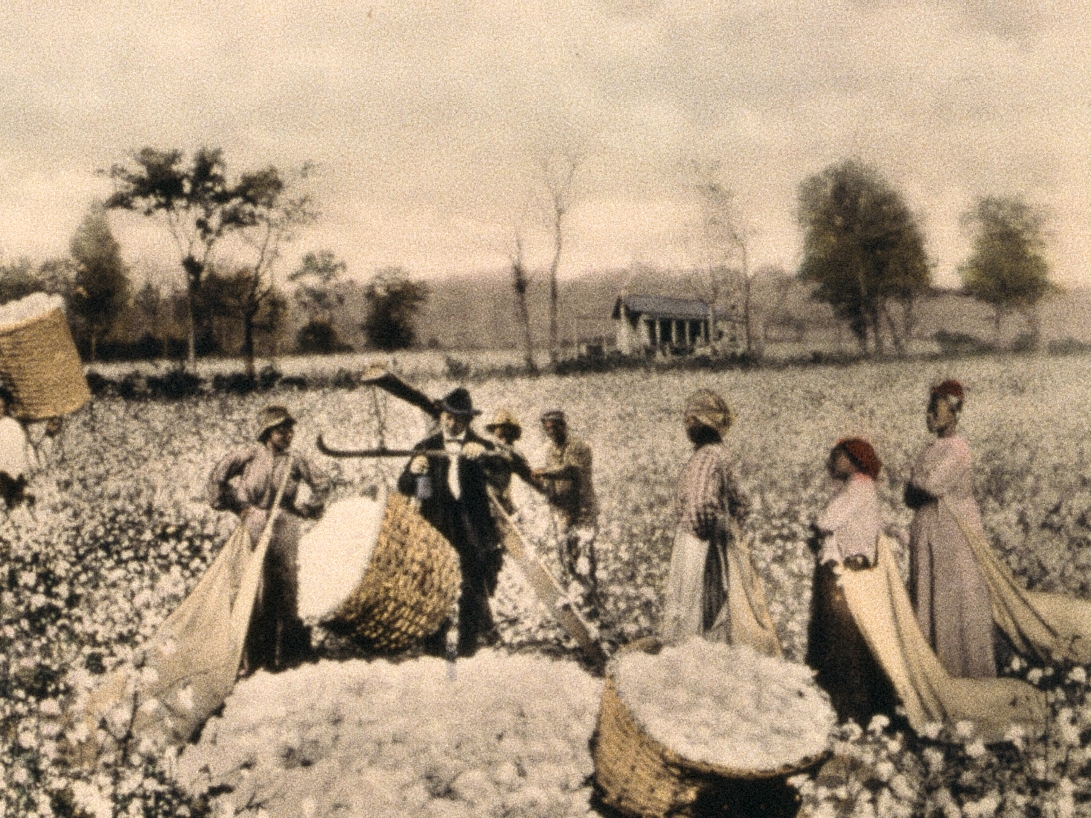
The animalization of Black people has long functioned as a mechanism of racial control. During chattel slavery, enslaved Africans were routinely depicted as subhuman in both visual culture and written text, providing moral justification for abduction, forced labor, sexual violence, and terror. By the nineteenth century, pseudoscientific theories attempted to legitimize racial inequality through fabricated evolutionary hierarchies and cranial measurements, recasting oppression as biological inevitability rather than political choice.
Under Jim Crow, these narratives migrated into cartoons, minstrel performances, advertising, and propaganda that portrayed Blackness itself as a threat to social order.
Such imagery was never incidental. It was infrastructural — necessary to the maintenance of both individual and mob violence.
When a population is marked as less than human, empathy is no longer presumed. Brutality becomes administratively manageable. Indifference begins to resemble normalcy. This is why these representations have always functioned as alarms rather than amusements. They prepare societies to tolerate cruelty in its many forms: lynching as spectacle, policing as domination, incarceration as routine governance, and neglect as public policy.
Today, when these tropes resurface through digital culture, caricature, or coded rhetoric, they are often dismissed as harmless provocation or defended as exercises in free expression. Those who object are frequently accused of oversensitivity.
But the issue is not emotional fragility. It is historical consciousness.
Dehumanizing imagery tends to emerge most forcefully during periods of social change — moments when demands for equity challenge entrenched structures of privilege. Its recurrence is rarely random; it is the language of backlash.
For this reason, legal and institutional interventions such as Diversity, Equity, and Inclusion initiatives and affirmative action are not excesses of reform but instruments of democratic repair.
These frameworks exist to interrupt systems shaped by centuries of exclusion and reinforced by narratives of inferiority. When public institutions have been organized around the denial of full humanity, claims of neutrality do not produce fairness; they protect inequality.
Affirmative action begins with the recognition that inequality is structural, not merely interpersonal. DEI initiatives insist that representation, access, and accountability matter because cultural narratives influence policy — and policy determines whose lives are safeguarded and whose are rendered expendable.
These measures are not about preference. They are about confronting harm that has been normalized across generations.
To dismantle such protections while dehumanizing language remains in circulation is to deny the continuity between past and present. Language shapes social conditions, and those conditions shape who receives care, protection, and recognition.
When people are positioned outside the boundaries of the human, the moral imagination contracts. Compassion is withdrawn. Cruelty becomes permissible. Social indifference is recast as common sense.
Dehumanizing imagery has never been harmless expression; it has always signaled danger. It trains the collective conscience to accept violence — whether through public terror, institutional force, mass incarceration, or the quieter abandonment of communities by the state.
This is not a question of being “too sensitive.” It is a matter of understanding that to liken Black people to animals has historically served as a declaration that they do not fully belong within the human family.
Any society that claims a commitment to justice must therefore be disciplined in its language, honest about its memory, and accountable through its laws. Silence, after all, has never been a neutral posture. Too often, it has been the companion of injustice.
History does not ask whether we recognize these patterns. It asks whether we are willing to interrupt them.