
Major Takeaways
• The U.S. confirmed military strikes in Venezuela as Trump claimed Nicolás Maduro was captured and removed from power
• Global leaders are scrambling to verify what happened as Venezuela demands proof of life and sovereignty
• The event could reshape Latin American politics and U.S. foreign policy for decades
What Trump’s shocking announcement and the overnight military operation mean for Venezuela, the region, and the world
The world woke up to one of the most dramatic geopolitical developments in decades as the United States confirmed it carried out military strikes inside Venezuela while President Donald Trump publicly announced that Venezuelan President Nicolás Maduro and his wife Cilia Flores had been captured and removed from the country. The claim instantly sent shockwaves through global markets, foreign capitals, and the streets of Caracas, raising urgent questions about the future of Venezuela and the stability of the entire region.
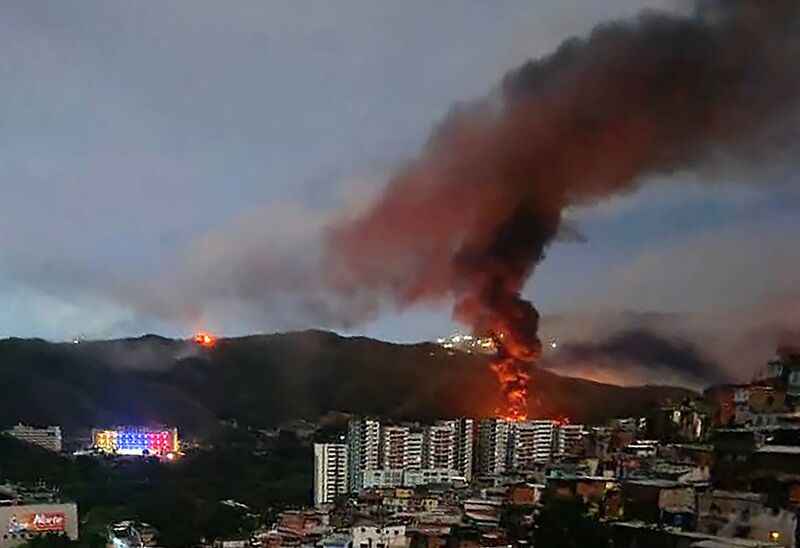
Reports from Venezuela indicated that explosions were heard in and around Caracas during the early morning hours. Venezuelan authorities declared a state of emergency as military installations and government facilities were placed on high alert. Power outages and communication disruptions were reported in several parts of the capital as citizens flooded social media with videos of aircraft, flashes in the sky, and heavy security movement.
President Trump took to social media to announce that U.S. forces had successfully carried out a targeted military operation. He stated that Nicolás Maduro and Cilia Flores had been captured and flown out of Venezuela. The White House later confirmed that U.S. forces conducted military strikes but stopped short of immediately providing physical proof of Maduro’s custody. That lack of immediate verification became the central point of tension as the story unfolded.
Inside Venezuela, the government moved quickly to denounce the strikes as a violation of national sovereignty. Vice President Delcy Rodríguez addressed the nation, accusing the United States of aggression and demanding proof of Maduro’s status. With the president absent and no public video or statement from him, confusion spread rapidly across the country. Government officials insisted Maduro was alive but did not clarify his location, while opposition leaders urged calm and called for international observers.
The United States has long accused Nicolás Maduro of leading a criminal enterprise that traffics drugs and money through the Venezuelan state. He has been under U.S. indictment for years, and American authorities have previously offered rewards for information leading to his arrest. The Trump administration framed the operation as a law enforcement and national security action rather than a war, arguing that Maduro was not simply a head of state but the leader of a criminal organization.
This distinction is critical because capturing a sitting foreign president through military force represents an extraordinary escalation. Critics immediately raised questions about the legality of the operation under U.S. and international law. Members of Congress from both parties demanded briefings and justification, warning that such actions could set dangerous precedents.
In Latin America, reactions were swift and divided. Some governments that have long opposed Maduro expressed quiet support, viewing his removal as a step toward democratic reform in Venezuela. Others condemned the U.S. action, warning that it undermines regional stability and could trigger wider conflict. Several countries called for emergency diplomatic meetings to prevent escalation.
Venezuela itself entered a fragile moment. With Maduro’s whereabouts unknown, attention shifted to the loyalty of the military and security forces. The Venezuelan armed forces have been the backbone of Maduro’s rule for years, and any fracture within their ranks could determine whether the government holds together or collapses. Reports indicated that key military bases remained operational and that senior commanders had not yet declared support for an alternative leader.
The economic implications were immediate. Venezuela sits on the largest proven oil reserves in the world, and any instability in the country has global energy consequences. Early reports suggested that oil facilities were largely intact and that production had not been significantly disrupted. However, markets reacted nervously, with traders bracing for potential supply shocks if unrest were to spread.
For ordinary Venezuelans, the uncertainty was overwhelming. After years of economic collapse, shortages, and political repression, many citizens viewed the news with cautious hope mixed with fear. The possibility of Maduro’s removal raised expectations of change, but the prospect of foreign military involvement also stirred memories of instability and violence.
What happens next depends on a few critical factors. First is confirmation of Maduro’s status. If U.S. authorities provide formal legal documentation showing he is in custody, it would mark the first time a sitting head of state has been captured by the United States through a direct military operation. Second is who governs Venezuela in the interim. Whether power shifts to an opposition leader, a military council, or Maduro loyalists will shape the country’s future.
The third factor is how the international community responds. Sanctions, diplomatic recognition, and humanitarian aid could all be reshaped based on who emerges as Venezuela’s legitimate authority. The U.S. has already indicated that it supports a transition to a democratic government, but the path to that outcome is far from clear.
Trump has scheduled a press conference to provide more details about the operation, and U.S. officials have indicated that further information about Maduro’s status will be released. Until then, Venezuela remains suspended in a dangerous political vacuum.
What is clear is that this moment represents a turning point not just for Venezuela but for U.S. foreign policy. Direct military intervention to remove a leader accused of criminal activity pushes the boundaries of how global power is exercised. Whether this becomes a model for future actions or a cautionary tale will depend on what happens in the days ahead.
For now, the world is watching Caracas, Washington, and every signal coming out of Venezuela. History is being written in real time, and the consequences of this operation will be felt far beyond the borders of one country.
Urban City will continue tracking every development as this story unfolds.