5 min read
Thanksgiving morning looks different this year in millions of Black kitchens.
The turkey costs more. The benefits card covers less ground than it once did.
And for many families, the help that filled the gap is simply gone.
That is not an accident of the economy. It is the result of policy choices made in Washington.
Major Takeaways
1. Federal food assistance has been cut by 186 billion dollars over ten years.
2. About 5.5 million people have already lost their SNAP benefits since last year.
3. A new federal proposal could remove about 6.3 million more people from the program.
4. Black adults report lacking money for food at more than double the rate of white adults.
5. The incoming Congress has vowed to restore the cuts when it takes power in January.
The Numbers Behind The Strain At The Table
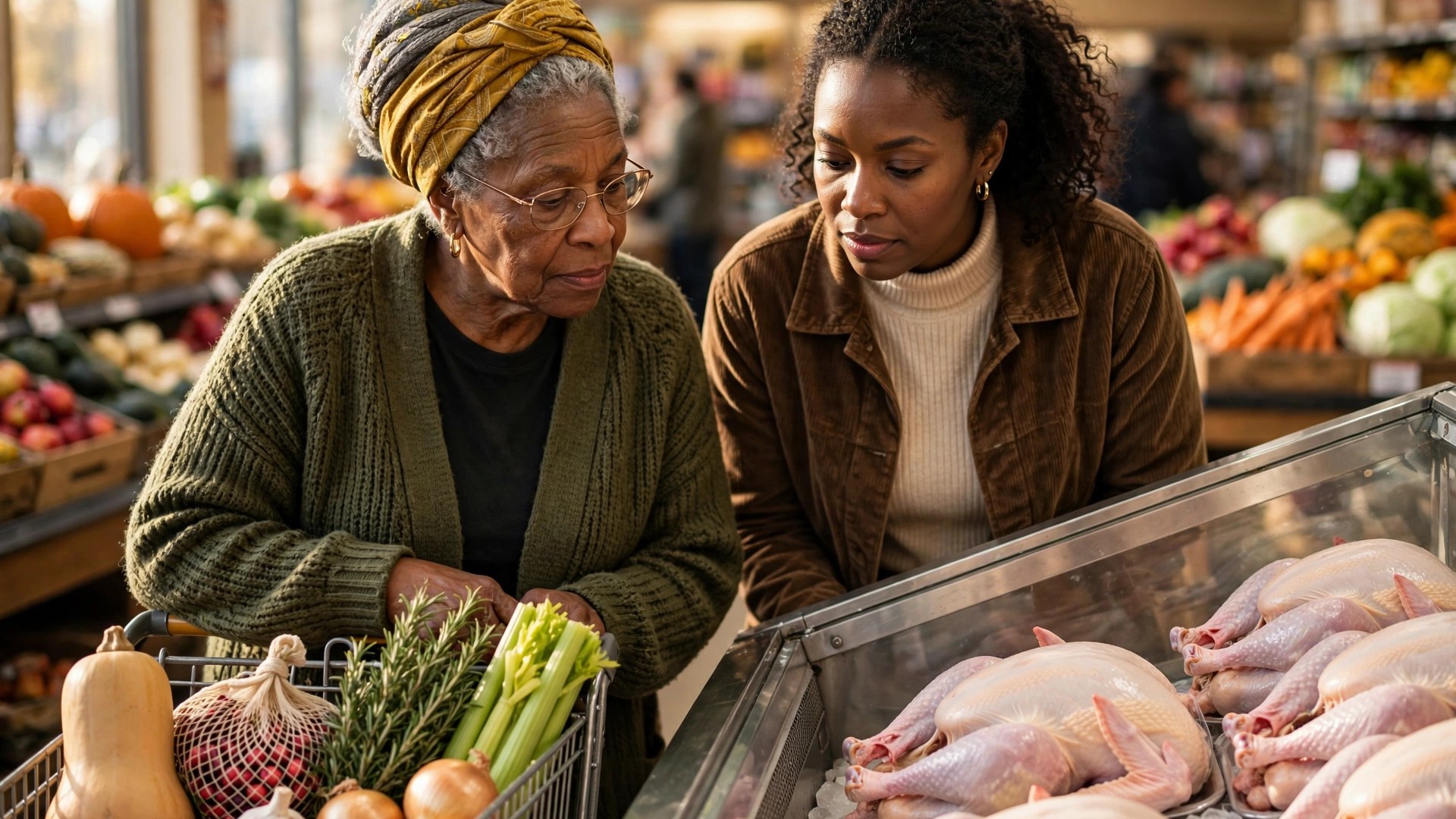
A classic Thanksgiving dinner for ten people costs 58 dollars and 63 cents this year.
That figure is up more than 6 percent from last year.
Turkey drove much of the rise, climbing about 10 percent to 1 dollar and 48 cents a pound.
Most Black family tables run larger than that survey menu.
Greens, dressing, and mac and cheese rarely appear in the official basket at all.
So the real bill for our gatherings starts higher and stretches further.
Families are absorbing those prices with less help than they had a year ago.
How The SNAP Cuts Reached This Thanksgiving
The cuts were written into the One Big Beautiful Bill Act.
President Donald Trump signed that budget and tax law in July 2025.
It reduced federal food assistance by 186 billion dollars over ten years.
The same law cut Medicaid by nearly 1 trillion dollars.
Since the law passed, about 5.5 million people have lost food assistance.
The benefit they lost averaged a little more than 6 dollars a day.
New work rules also tightened who can keep help and for how long.
Adults aged 18 to 64 must now work, volunteer, or train at least 80 hours a month.
Parents whose youngest child is 14 or older are now covered by those rules.
Older exemptions for veterans, people without housing, and young adults leaving foster care were repealed.
Miss the rule and benefits can shrink to three months in three years.
A New Proposal Could Take Millions More
On November 10 the Agriculture Department proposed another major change.
It would end a policy called broad based categorical eligibility.
Since 2008 that policy let people who qualify for other state aid qualify for food help as well.
The department estimates 17 percent of all SNAP households would lose benefits entirely.
That works out to about 6.3 million people across the country.
Federal spending on benefits would fall by about 44.6 billion dollars over five years.
About 1.78 million children would also lose automatic eligibility for free school meals.
Most of those children could still qualify through a separate and longer process.
A department spokesperson called the current policy a loophole that bloated the rolls.
Representative Jahana Hayes of Connecticut answered with a very different reading.
She said the rule targets the most vulnerable among us by narrowing eligibility and blocking families from vital food assistance.
Jenique Jones of WhyHunger said the change does not reduce hunger and does not improve program integrity.
She said it simply moves the cost of hunger onto food banks, pantries, schools, and families.
Public comments on the proposal are being accepted through December 10.
Why Black Families Feel These Cuts First
Almost one in four SNAP participants is Black.
Three quarters of SNAP households live at or below the poverty line.
Their average net monthly income is 551 dollars.
Most of those households include a child, an older adult, or a person with a disability.
A recent national poll found 30 percent of Black adults lacked enough money for food.
The rate for white adults was 14 percent.
The rate for Asian adults was 10 percent, and for Hispanic adults it was 24 percent.
Monifa Bandele of MomsRising put the moral case in plain words.
People should not go hungry in one of the wealthiest countries on the planet, she said.
She described a collision of pressures hitting Black communities at once.
Food costs, job losses, health care costs, child care, and housing are all pressing together.

What The Next Congress Has Promised To Do
Democrats will control Congress beginning in January.
Party leaders have vowed to reverse the SNAP cuts and other program reductions.
They have also pledged to end the new tariffs that threaten to push food prices higher.
Exit polls from the midterms showed the economy and health care drove most voters.
That gives the incoming majority a clear mandate on kitchen table costs.
Bandele urged families and advocates to hold the new Congress to specific demands.
She said restoring the cuts for Black families should be the floor and not the ceiling.
Our recent look at how Black Southern voters rewrote the midterm map shows where that political power came from.
The fight over public memory is unfolding too, in the lawsuit to restore the slavery exhibit in Philadelphia.
What Families Can Do Right Now
The November proposal is not final, and it changes nothing about benefits this month.
Anyone can file a public comment before the December 10 deadline.
Families who received a work rule notice should call a caseworker before any deadline passes.
Churches, food banks, and neighborhood pantries are running holiday distributions this week.
Asking for that help is not a failure. It is what community has always been for.
The policy fight will resume in January when the new Congress is seated.
Until then, Black tables will do what they have always done and make a way.
Follow every turn of this story in the Big Back Politics section.