


Major Takeaways
Black kitchens of the 1950s and ’60s served as cultural institutions where survival skills and family traditions were preserved.
• Cooking methods were rooted in intuition, observation, and generational trust rather than written measurements.
• Passing down these traditions remains essential to protecting cultural identity and family legacy.
Where the Grease Was Gold: A Black History Month Kitchen Testament
by Felicia Kelly Brookins, Award Winning Author and Screenwriter
Before soul food was ever labeled a cuisine, it was something far more essential. It was survival plated with dignity. It was love you could smell before you tasted it. It was memory served hot.
If you have ever watched the film Soul Food, you already understand that the kitchen was never just a room. It was the heartbeat of the family. Big Mama’s table was not simply where people gathered to eat; it was where grudges softened, laughter returned, children learned exactly who they belonged to, and recipes quietly became inheritance. The kitchen functioned as a classroom, a sanctuary, and when necessary, a courtroom. For Black families throughout the 1950s and ’60s, it was also the frontline where culture was preserved one skillet at a time.
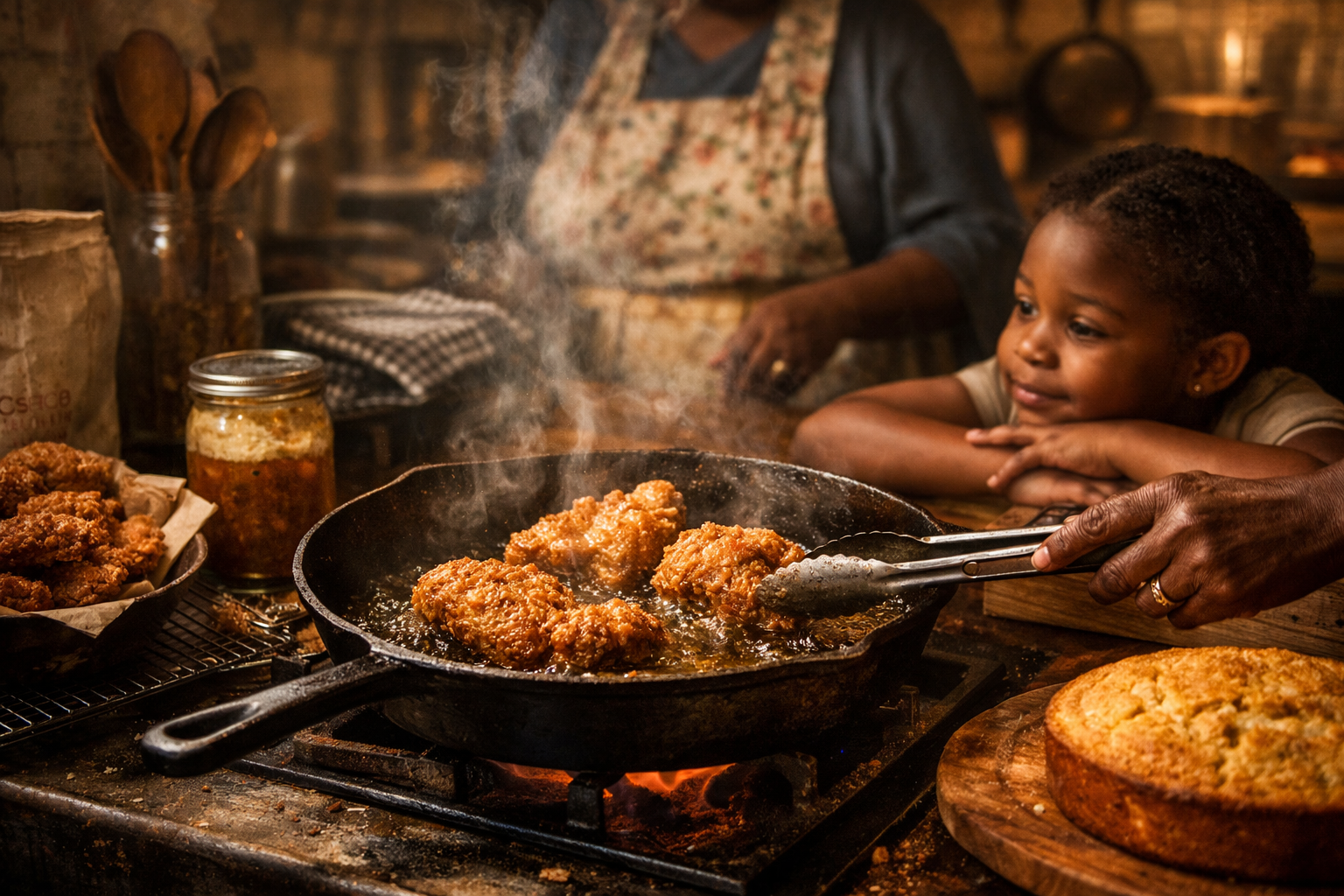
Knowledge in those kitchens rarely came from cookbooks. It arrived through sound, scent, and observation. You learned to cook by listening to the oil pop long before trusting your eyes. Patience was taught to children standing on chairs with elbows pressed into countertops, watching chicken transform into the precise shade of golden brown promised by a grandmother who cautioned, “Do not touch it yet,” and meant every word.
There were heirlooms long before stainless steel appliances claimed the spotlight. Seasoned cast iron skillets sat heavy on stovetops like respected elders, holding the memory of countless meals. Bacon grease was never discarded. It was strained carefully into jars and kept within reach, where flavor met frugality. Nothing was wasted. Not the grease. Not the bones. Not the lessons embedded within each dish.
Thermometers were uncommon, yet precision was not. Oil temperature was tested with a humble piece of bread. If it browned too quickly, the heat was too aggressive. If it sank quietly, the oil was not ready. But when it floated and turned the right color? That was gospel. Chicken required no timer. Doneness revealed itself in sound alone. Grandmothers read oil the way scholars read literature.
Flour found its place inside brown paper bags alongside fish, chicken, and pork chops. Seasoned generously, folded tight, and shaken with rhythm, the bag became both tool and tradition. Children participated eagerly, arms tiring but spirits high. One flip. That was the rule. Turning too often broke the crust and, symbolically, the trust. You learned to wait, to respect the heat, and to give the meat room in the pan because crowding was the enemy of crispness, in cooking and in life.
Buttermilk baths tenderized chicken for hours, sometimes brightened with a dash of hot sauce for both spirit and sting. Meat was always patted dry; moisture was managed with intention. Urban kitchens often leaned toward Crisco, while rural homes trusted lard rich with cracklins that promised unapologetic flavor.
Cornbread entered cast iron already hot, bacon grease shimmering before batter met metal. That first sizzle taught lessons no lecture ever could. Fish wore coats of cornmeal or flour depending on the desired crunch. Eggs delivered that unmistakable golden finish. Nearby, wire racks or brown paper bags waited like open arms to cradle chicken fresh from the oil.
Gravy emerged from what others might have overlooked, browned bits scraped lovingly from the skillet with onions, flour, hot water, and patience. Everything became something.
Cast iron was cleaned while still warm but never stripped of its seasoned memory. It was dried, oiled, and heated low to guard against rust, just like elders taught families to guard against bitterness. Forks stood in for whisks. Hands replaced gadgets. Knowledge outweighed measurements.
Leftover chicken returned to the skillet the next day without additional grease, flipped once, emerging still crisp and tender. This was apprenticeship in its purest form: watching, doing, and eventually being trusted with the flour bag while hearing the familiar refrain, “This is how my mother, grandmother, and aunties taught me.”
The film Soul Food captured something sacred about these spaces, including the way kitchens shaped gender roles within Black households. During the ’50s and ’60s, women commanded the stove. Cooking was labor, identity, expectation, and inheritance woven together.
The question now becomes unavoidable: What are we passing down today?
Do our children recognize the sound of ready oil? Do they understand why grease was saved? Do they know that recipes once functioned as survival maps?
Here is the invitation. Tell the stories. Teach the children. Pull out the cast iron. Let small hands shake the flour bag. Let young ears hear the oil talk back. Make sure they know who taught you and who taught them.
Because these kitchens were never merely about food. They were about memory. They were about endurance. They were about love made audible in a popping skillet.
Signature Closing:
“The incision is deep, but the truth is deeper. We have finished the work for today, but the anatomy of this country remains on the table. Join us next time as we continue to peel back the layers of the American narrative. I am Felicia Brookins, and this has been Cultural Autopsy, cutting open what America will not talk about. This is Sarah’s daughter…signing off.”