

Major Takeaways
James Brown pioneered funk and reshaped modern Black music.
His work promoted Black pride during a pivotal civil rights era.
His influence continues to shape music, fashion, and performance.
James Brown: The Godfather of Soul Who Turned Sound Into Power
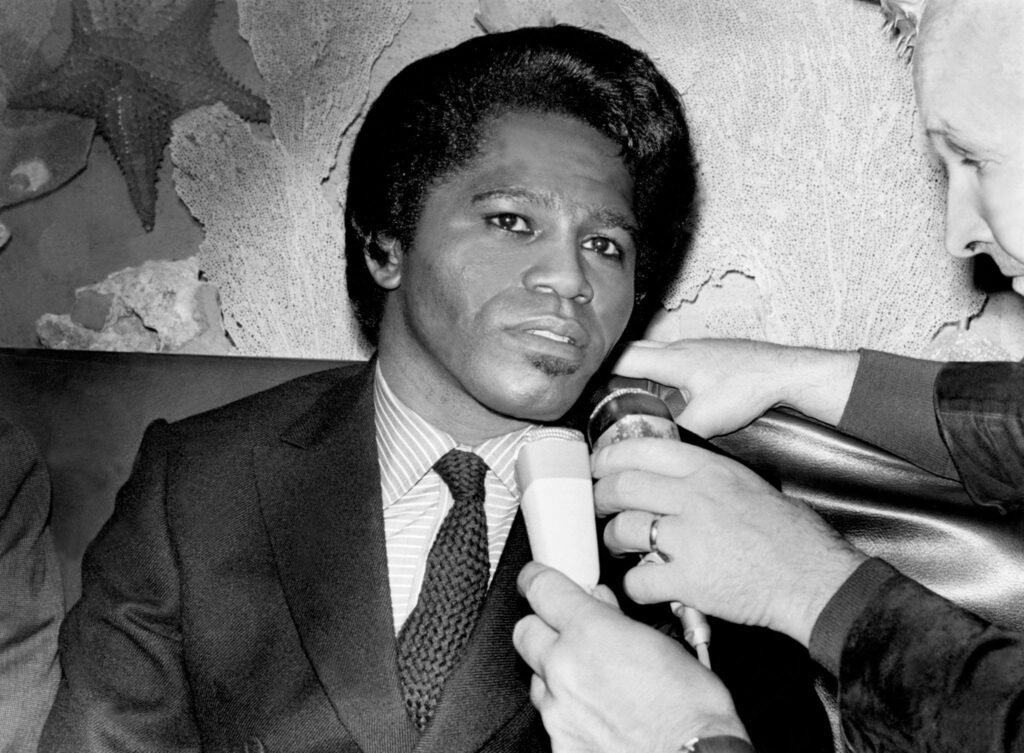
Thaddeus Myles here, family welcome back to Urban City’s Black Agenda, where every day in February we tap into the stories that made this culture what it is. Today is Day 10, and we’re stepping into the heartbeat of modern Black music, rhythm, swagger, and self-determination. Today, we honor James Brown the Godfather of Soul, the hardest-working man in show business, and the man who didn’t just change music… he changed identity.
James Brown was born in 1933 in Barnwell, South Carolina, and raised in extreme poverty in Augusta, Georgia. We’re talking dirt floors, hunger, instability the kind of environment that either crushes you or forges something unbreakable. For James, it did the latter. Music wasn’t just an escape it was survival!
As a teenager, he ran into trouble and ended up in a juvenile detention center, where he met Bobby Byrd a connection that would become the foundation of one of the most important musical partnerships in history. From there, the Famous Flames were born, and what followed was a sound that would shake the world.
James Brown didn’t just sing he worked.
He rehearsed his band like a drill sergeant.
He demanded perfection.
He fined musicians for missed notes.
Why? Because excellence wasn’t optional it was the mission!
And that discipline paid off. James Brown gave us songs that became cultural anchors:
“Please, Please, Please”
“Try Me”
“Papa’s Got a Brand New Bag”
“I Got You (I Feel Good)”
“It’s a Man’s World”
But the real seismic shift came when James Brown created funk!
Funk wasn’t just a genre it was a declaration. Heavy bass. Tight drums. Sharp horns. Every beat hitting like a heartbeat. Funk was Blackness turned into sound unapologetic, rhythmic, confident, and undeniable. It laid the groundwork for hip-hop, R&B, disco, and almost every modern genre that followed.
But James Brown’s influence didn’t stop at the charts. In 1968, after Dr. Martin Luther King Jr. was assassinated, cities across America were on the brink of burning. Tension was everywhere. Fear was everywhere.
James Brown went on national television and said, “We need to stay calm.”
And people listened.
That’s power!
And that same year, he released “Say It Loud I’m Black and I’m Proud.”
Now listen… that wasn’t just a song. That was a rallying cry. In a time when Black identity was still under attack, James Brown stood on the world’s biggest stages and declared Black pride with no shame.
Some radio stations refused to play it.
Some critics called it divisive.
Black folks called it liberation.
James Brown showed a generation that loving Blackness wasn’t dangerous it was necessary.
And while he wasn’t perfect far from it his legacy is undeniable. He created the blueprint for performance: the dancing, the capes, the drama, the showmanship all of that influenced Michael Jackson, Prince, Bruno Mars, Beyoncé, and countless others.
James Brown didn’t ask for a seat at the table.
He built the table, the stage, and the soundtrack.
He turned poverty into power.
He turned rhythm into revolution.
He turned Black pride into a global anthem!
So today, on Day 10 of Urban City’s Black Agenda, we honor James Brown the Explosive Rhythm who redefined Black music and reshaped how the world sees us!
I’m Thaddeus Myles, and you already know: keep it locked to urbancitypodcast.com and the Urban City Podcast app all month long for Urban City Podcast’s Black Agenda powered by 4AM Roastery at 4amroastery.com.