


Major Takeaways
The failed coup attempt in Benin revealed deep military grievances involving neglect, unfair promotions, and frustration over rising security threats in the north.
Despite the government quickly regaining control, the event exposed vulnerabilities in Benin’s political institutions ahead of the 2026 elections.
The attempt highlighted growing instability in a region already shaken by recent coups, raising concerns about long-term national and regional security.
Benin Coup Attempt Exposes 5 Issues. Military Grievances, Security Crisis, Political Tension, and Rising Instability
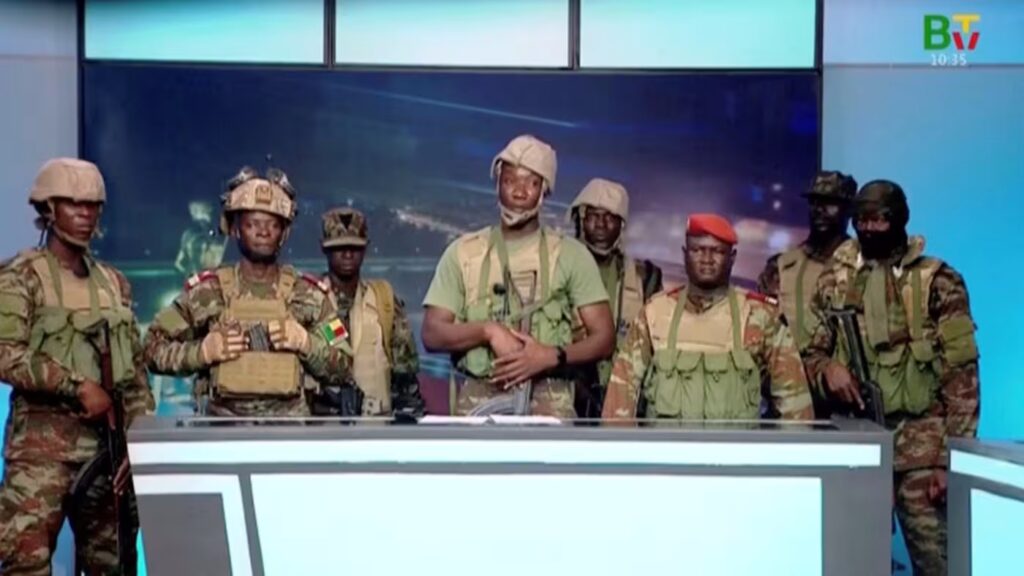
Before dawn on December 7, 2025, Benin woke up to a shock it had not seen in decades. A group of soldiers broke ranks, seized control of the national television station, and announced to the entire country that they were taking over. It was sudden, bold, and dangerous. And within hours, it was over. But the impact of that moment still hangs over the nation.
The rebel soldiers appeared on national television calling themselves the Military Committee for Refoundation. Their declared leader was Pascal Tigri, introduced as a lieutenant colonel. They said President Patrice Talon was removed from power. They declared that the constitution was suspended, that all political parties were frozen, and that every state institution was dissolved. They also said all borders were closed. It was a textbook coup announcement, delivered with confidence that suggested they believed the rest of the military might follow.
Gunfire was reportedly heard across parts of Cotonou, including near the presidential residence. Broadcast signals flickered, and for a moment, it seemed as though the country might actually shift into military rule. But the reality on the ground moved far faster than the rebels planned.
Within hours, loyalist forces regrouped, surrounded the areas under rebel control, and moved decisively to shut the entire operation down. By late morning, government officials appeared on television telling the public that the situation was under control. They confirmed that President Talon was safe and that the coup attempt had failed. At least fourteen soldiers involved were arrested before the day was over, though details about the arrests have not been fully made public.
The soldiers who attempted the takeover spoke about major grievances that had been ignored for too long. They said the security situation in northern Benin had deteriorated, especially as violent groups and extremist elements from neighboring regions continued to push southward. They accused the government of neglecting families of soldiers who had died in combat. They claimed there were unfair promotions within the military and said morale had collapsed. These complaints did not come out of nowhere. They reflected issues simmering quietly for several years.
This failed coup attempt matters because Benin has long been viewed as one of the more politically stable countries in West Africa. While other countries in the region have experienced waves of coups, transitions, and military takeovers, Benin had held onto its image as a functioning democracy with relatively predictable elections. President Talon was expected to step down in April 2026 at the end of his second term, which added even more weight to the political environment leading up to the attempt.
The coup attempt also pulled the curtain back on tensions that had not been addressed publicly. While the government insisted that everything was under control, it was obvious that frustration within the armed forces had reached a critical point. When soldiers are willing to risk prison or death to make their grievances known, it signals something deeper than simple political ambition. It signals a breach of trust within the institution meant to uphold national stability.
The aftermath of the attempt triggered strong reactions inside and outside Benin. Government officials reassured citizens that the nation remained stable. They urged calm and encouraged people to return to daily life. Regional organizations voiced support for Benin’s civilian leadership. The message from the outside world was clear: no appetite for a new military regime, not in Benin, not now, not in a region already struggling with military transitions.
Despite the swift response, the underlying issues raised by the mutineers are not going away. The northern region still faces growing security threats driven by extremist groups, smuggling networks, and cross-border instability. The military is stretched thin. Families of fallen soldiers continue to ask whether their sacrifices are being honored. And political pressure is rising ahead of the 2026 elections.
The failed coup also raises the question of whether this was an isolated act or a warning sign of deeper fractures. The loyalty of the armed forces held strong in this moment, but trust damaged once does not repair itself overnight. A country can declare victory against a coup attempt, but defeating the grievances behind the attempt is a longer, more complex challenge.
Historically, Benin has faced coups and attempted coups before. The most famous was in 1977 when mercenaries tried to overthrow the government in an operation that became known as Operation Shrimp. That attempt also failed, but like the 2025 incident, it highlighted vulnerabilities in the political and military structure of the country. These flashpoints tend to appear when institutional cracks grow wider than leaders realize.
This time, the government responded quickly enough to prevent a regime collapse. The country avoided a prolonged crisis. Businesses reopened. Air travel continued. The president remained in power. But the message delivered by the mutineers still lingers: something beneath the surface is not right. And unless those deeper issues are addressed with honesty and real solutions, the risk of future instability remains.
Benin now stands at a defining moment. Not because of what happened on that single December morning, but because of what the event exposed. The road to the 2026 election is already unfolding under new tension. The military leadership must rebuild trust. The government must show seriousness in addressing security and welfare concerns. And citizens must decide what kind of country they want as this chapter moves forward.
This story is not over. It is only the first strike of a warning bell. And if the nation pays attention, it has the chance to move toward stability stronger than before.