

Major Takeaways:
-
Public officials can be held accountable when transparency tools like body cameras are turned back on them
-
Narrative control is shifting from institutions to individuals with platforms and influence
-
Legal victories like this highlight gaps in accountability that still exist for everyday citizens
When the Cameras Turn Around
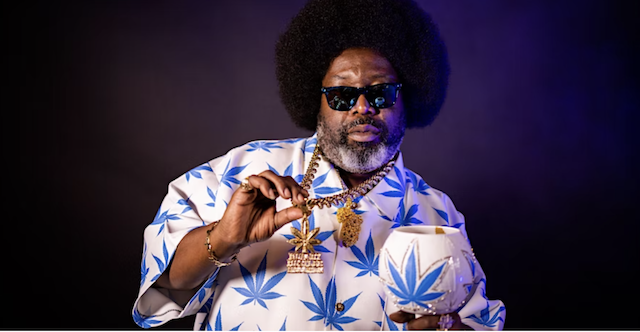
By Urban City Podcast Digital News Desk• 7 min readThere’s a certain irony in a man best known for a laid-back anthem like “Because I Got High” ending up at the center of one of the more serious conversations about police accountability in recent years. But that’s exactly what happened when Afroman, real name Joseph Foreman, won a civil lawsuit against officers who raided his home in Ohio.
This wasn’t just about a celebrity moment or something designed to go viral. The case forced a spotlight onto something communities, especially Black communities, have been saying for decades. When law enforcement oversteps, the consequences for citizens are immediate, but accountability for officers is often delayed, diluted, or denied entirely.
In 2022, sheriff’s deputies executed a search warrant at Afroman’s home. The allegations behind it were serious, involving drug trafficking and kidnapping. Situations like that justify urgency, but they do not justify carelessness.
Body camera footage later showed officers entering the home, searching rooms, and interacting with personal belongings in ways that raised real questions about professionalism. Officers were seen examining cash, commenting on it, and even appearing to take photos.
No charges were filed. Nothing meaningful was found to support the accusations. The raid produced no results.
If that situation were reversed, the outcome would likely look very different. A private citizen entering a government building, going through property, documenting it, and leaving with nothing would almost certainly face criminal consequences.
Instead of letting the situation fade, Afroman made a calculated move. He used portions of the body camera footage in music videos, merchandise, and social media. He turned official documentation into public commentary.
That decision triggered a lawsuit from the deputies involved. They claimed emotional distress, invasion of privacy, and reputational harm. In other words, the officers who conducted the raid positioned themselves as victims.
The court ruled in Afroman’s favor.
That decision carries weight far beyond one case. Police officers operate under public authority, and body cameras were introduced as tools for transparency. The ruling reinforces that transparency does not work selectively. When officers are performing official duties, the public has a legitimate interest in seeing that behavior.
It also highlights a shift in who controls the narrative. Traditionally, law enforcement shapes public perception through reports, press statements, and official channels. In this case, that control was disrupted. Afroman did not rely solely on the legal system. He used culture and media to tell his side of the story, and people paid attention.
There is also a broader issue of accountability. For years, there has been a pattern where mistakes made under the authority of a badge rarely lead to meaningful consequences. This case does not solve that problem, but it does challenge the idea that there are no repercussions.
The outcome is already influencing how people think about body camera footage. These devices were intended to protect both officers and civilians, but they also create a permanent record. That record can be used in ways that departments may not have fully anticipated.
Law enforcement agencies now face a balancing act. Limiting access to footage risks undermining transparency. Allowing open use increases the likelihood that questionable conduct will be publicly examined.
For citizens, especially those with platforms, the case suggests that using publicly obtained footage tied to official actions can fall within protected expression. That has implications in a media landscape where individuals, not just institutions, shape public discourse.
The cultural impact is also difficult to ignore. What could have remained a local legal matter became a national conversation. Attention increased, audiences engaged, and the situation became part of a larger discussion about power and accountability.
At its core, the case demonstrates that accountability is rarely automatic. It often requires persistence, visibility, and in some cases, a willingness to challenge systems publicly. It also shows how technology is shifting the balance of power. Tools designed to document behavior are now being used to examine it in ways that cannot easily be controlled.
It reinforces that freedom of expression remains a critical mechanism for pushing back, particularly when it involves public officials carrying out public responsibilities. It also introduces a reversal that is not often seen. Citizens frequently deal with reputational harm after accusations or law enforcement actions, even when they are cleared. In this instance, the dynamic shifted.
The larger issue is that this kind of outcome is not typical. Most people do not have the visibility or resources to turn a legal dispute into a broader public conversation. Without that leverage, many similar situations go unnoticed.
That raises a more important question about consistency. If accountability depends on visibility, then it is not being applied evenly. A system that works only when there is public attention is not functioning at its highest standard.
This case stands as more than a legal victory. It is a clear indication that authority does not equal immunity, that transparency can extend beyond its original intent, and that public scrutiny can reshape how power is exercised.