

6 min read
By Felicia Kelly-Brookins | Opinion for the UrbanCity Podcast
Jackson, Mississippi | November 9, 2026
Mississippi could send its first Black senator to Washington since Reconstruction. In a race this close, Black women have every reason to ask what Washington will do for them.
Major Takeaways
- Scott Colom leads Senator Cindy Hyde-Smith by roughly 2,500 votes as Mississippi counties finish counting, with certification due by November 13.
- If the lead holds, Colom would be the first Black senator from Mississippi since Blanche K. Bruce, whose service ended in 1881, and the first chosen directly by voters.
- In 2023, Hyde-Smith declined to return the blue slip that would have moved Colom’s federal judgeship nomination forward, and he never received a hearing.
- The piece cites research tying federal layoffs to a net loss of 113,000 jobs for Black women during 2025.
Let me tell you why a woman in a bookstore on Farish Street belongs in the story of Mississippi’s U.S. Senate race.
On Friday, Scott Colom stopped by Marshall’s Music & Bookstore in Jackson.
The owner, Maati Jone Primm, welcomed him and spoke of him as her representative.
Now, she knew what the rest of us knew. The ballots were still being counted.
But here was a Black woman, standing in a bookstore named for her grandmother, looking at a Black man from Mississippi who might soon represent her in the United States Senate.
I have to wonder what her grandmother would have said about that.
That’s where the excitement is for me.
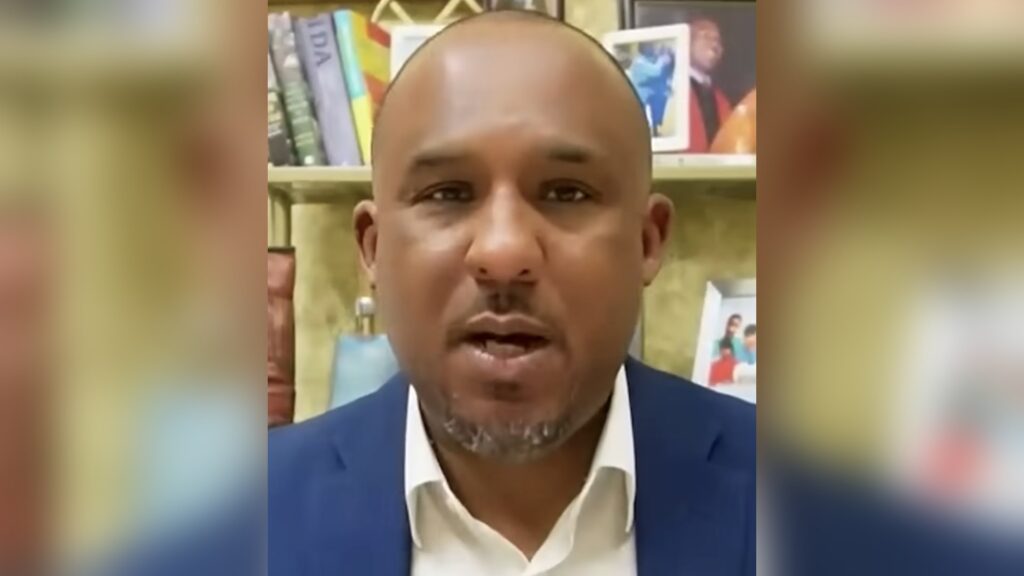
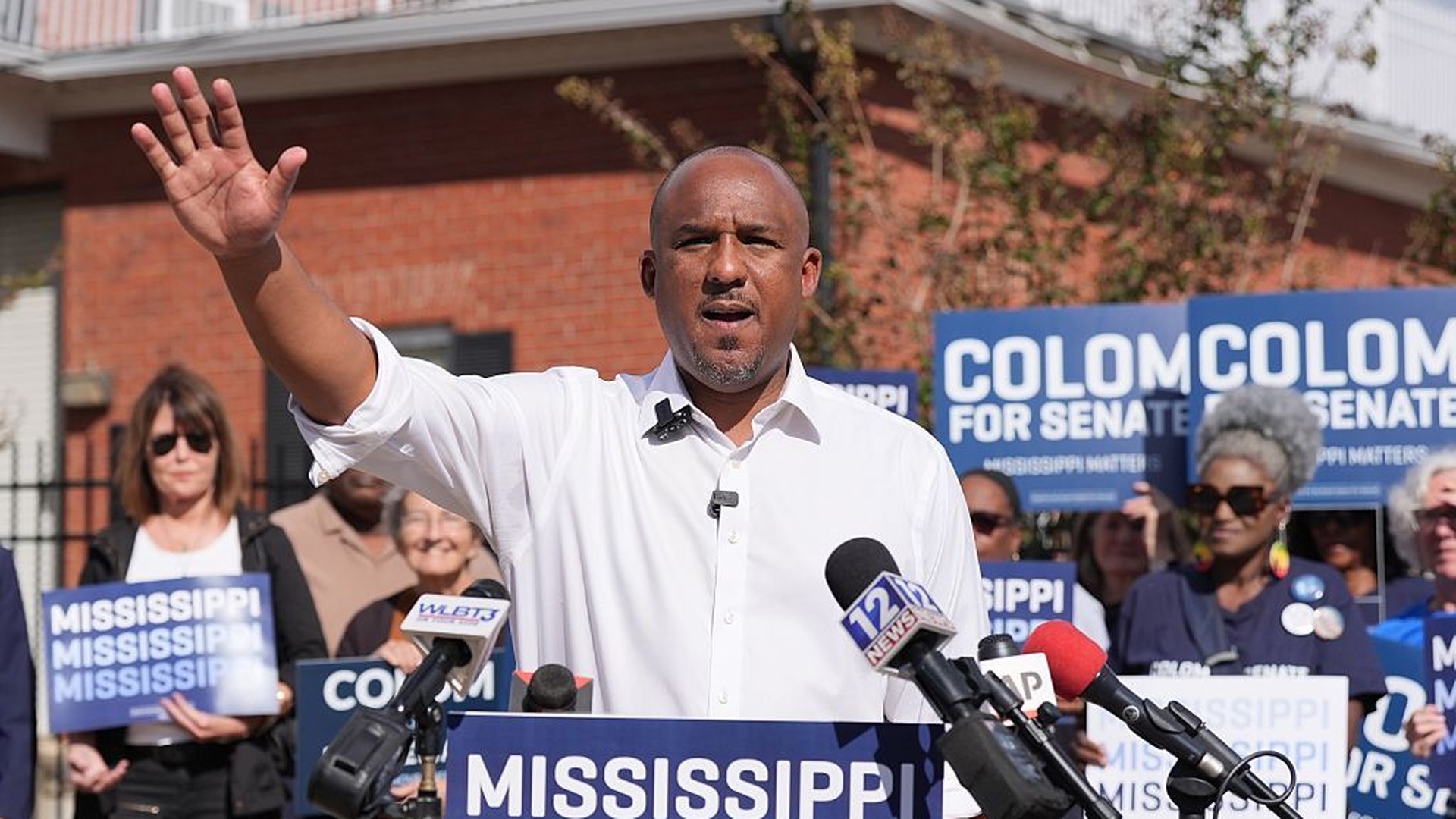
As of Monday afternoon, Colom, a Democrat and district attorney, led Republican Sen. Cindy Hyde-Smith by roughly 2,500 votes.
Election officials were still reviewing affidavit ballots, and Mississippi’s 82 counties had until November 13 to certify their results.
We can respect that process and still talk honestly about what Black Mississippians are feeling while we wait.
After all, the last time this state had a Black U.S. senator, nobody’s grandmother could reach for the telephone and call her family with the news the way we can today. The year was 1881.
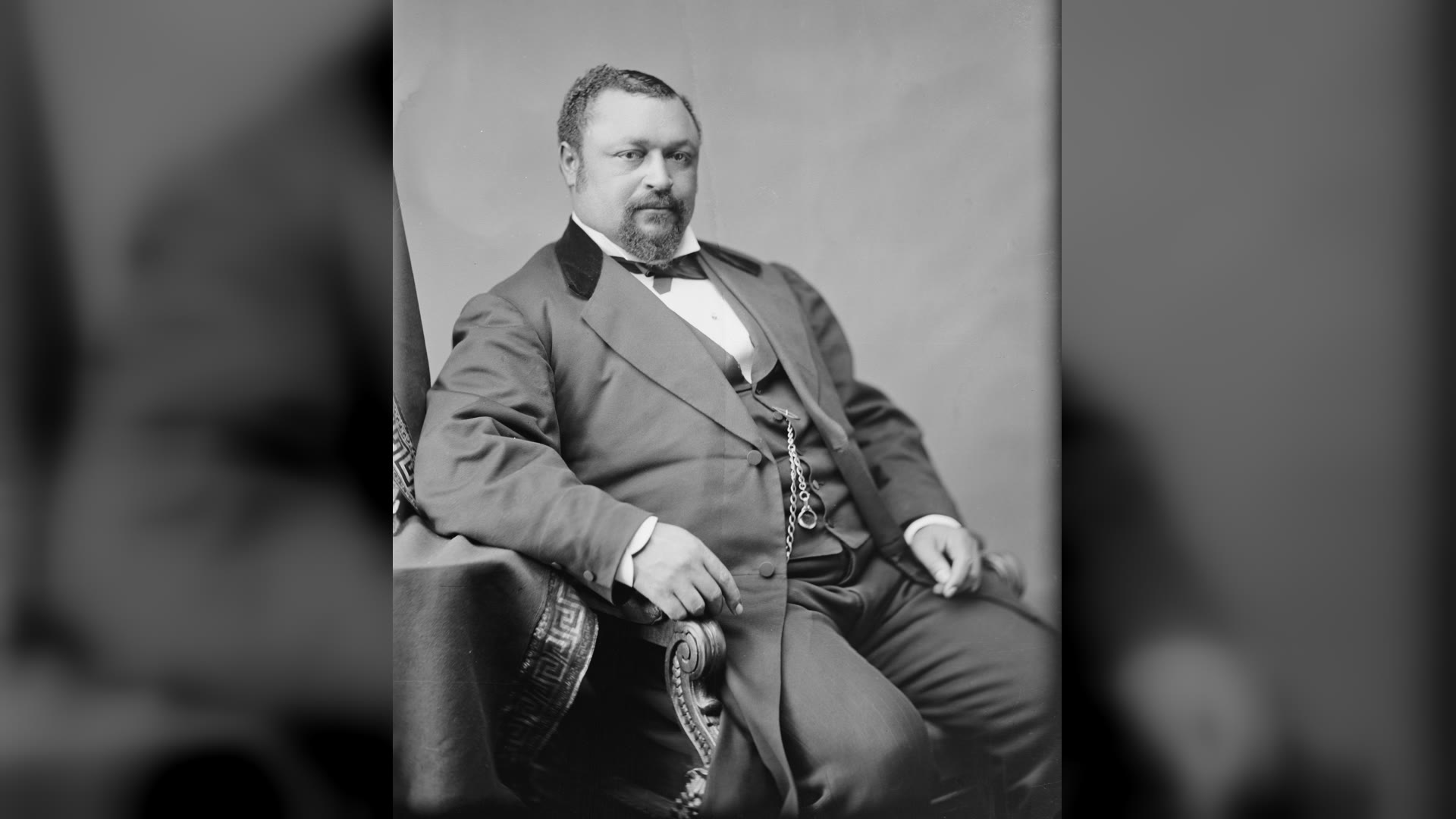
Mississippi sent Hiram Revels to the Senate in 1870 and Blanche K. Bruce in 1875. The state Legislature chose both men.
If Colom’s lead holds, he will be the first Black U.S. senator from Mississippi elected directly by its voters.
Think about the difference that makes in the telling.
A young person can read in a history book that Mississippi sent Revels and Bruce to Washington.
This time, a grandmother might get to sit beside that child, point to the screen and say, “See him? I voted for him.”
There’s another part of this story I’d want that grandmother to tell.
Three years before Scott Colom’s name appeared on a ballot alongside Cindy Hyde-Smith’s, his name came across her desk.
President Joe Biden had nominated him for a federal judgeship in northern Mississippi.
Under a Senate Judiciary Committee tradition, each senator from the nominee’s home state could return a form, known as a blue slip, to let the nomination move forward.
Mississippi’s senior senator, Roger Wicker, supported Colom. In April 2023, Hyde-Smith declined to return hers.
Colom never got a confirmation hearing.
Now imagine the question a child might ask halfway through that telling.
“Grandma, you mean the same woman he’s running against could have helped him become a judge?” Yes.
And had his nomination gone forward, Colom might be hearing cases in a Mississippi courtroom today.
Instead, Mississippi voters found his name on the ballot for the very seat Hyde-Smith holds.
Colom has said he didn’t run to settle a score. I take him at his word.
What interests me is how a decision made in Washington took on a meaning nobody in that room could have known at the time.
As a storyteller, I care about what happens next in that conversation.
Suppose the child asks, “Grandma, why did it take so long?”
Now we have to talk about what Mississippi did in those intervening years.
We have to explain how a poll tax could make the price of voting more than a family could spare.
We have to explain how a literacy requirement put a citizen’s right to vote in the hands of the person judging the answer.
And somewhere in that conversation, I hope somebody tells that child about Fannie Lou Hamer.
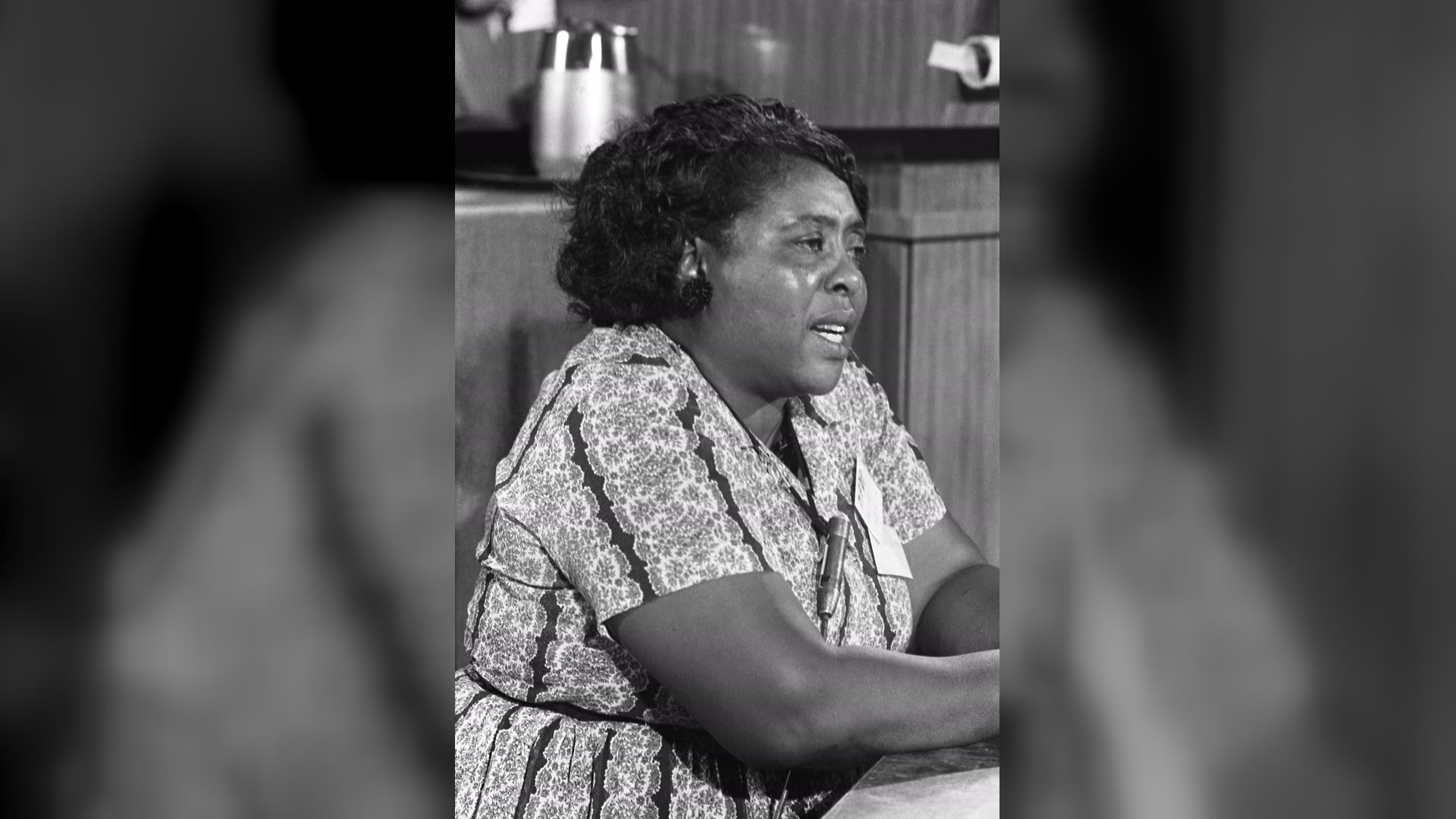
In 1962, Mrs. Hamer tried to register to vote in Sunflower County. That same day, she lost the plantation job she had held for 18 years.
I want us to sit with those 18 years for a moment.
Imagine coming home and having to explain that the work your family depended on was gone because you went to the courthouse.
That is why storytelling has mattered for generations in Black America.
I think about that connection between a paycheck and political power when I hear people discuss the Black woman’s vote today.
Come election night, there is always interest in whether Black women showed up for a candidate.
I’d like to hear an equally serious conversation the morning after about who will show up for the Black woman whose paycheck is gone.
Consider what families have been carrying into this election.
The Institute for Women’s Policy Research found that, nationwide, Black women’s employment fell by a net 113,000 jobs during 2025, the first year of President Trump’s second term.
The researchers identified the administration’s federal layoffs as one pressure behind those losses.
The effects of federal downsizing were still visible this year.
An analysis of federal workforce data estimated that, across the first nine months of 2026, federal employment among Black workers, women and men combined, averaged 20 percent below the same period in 2024.
What I want to hear now is the woman’s own account.
What did losing that job mean in her house?
What does she want her senator to ask the next time an administration official comes before Congress to explain a round of cuts?
Black women have different politics, different jobs and different expectations of the people we elect.
Taking our voting power seriously means listening long enough to hear those differences, even after the campaign has packed up and gone home.
That is part of why I tell stories and why I believe we still need places like Farish Street, Black bookstores and programs like the UrbanCity Podcast.
Somebody has to ask the second question. Somebody has to remember the woman’s name.
And somebody has to make room for the person who lived the experience to tell it in her own words.
In 2023, one senator could keep Scott Colom from getting a hearing.
In 2026, a Black woman in Mississippi could walk into her polling place, read those same two names and decide for herself which one she wanted speaking for her in Washington.
When we talk about the power of a Black woman’s vote, that is what I want us to picture.
For now, Mississippi is counting. I’ll be watching for the result, right along with everybody else.
But I already know whose part of this story I want us to remember. Her name is Maati Jone Primm.
She stood in her grandmother’s bookstore on Farish Street and welcomed a man she could imagine calling our senator.
After 145 years, I think we can understand both the care it takes to count every eligible ballot and the joy in her voice while she waits.




One Response
This is the heartbeat of a people. The power of the vote and the shoulders it is carried on. #WaitinginMS