


Major Takeaways
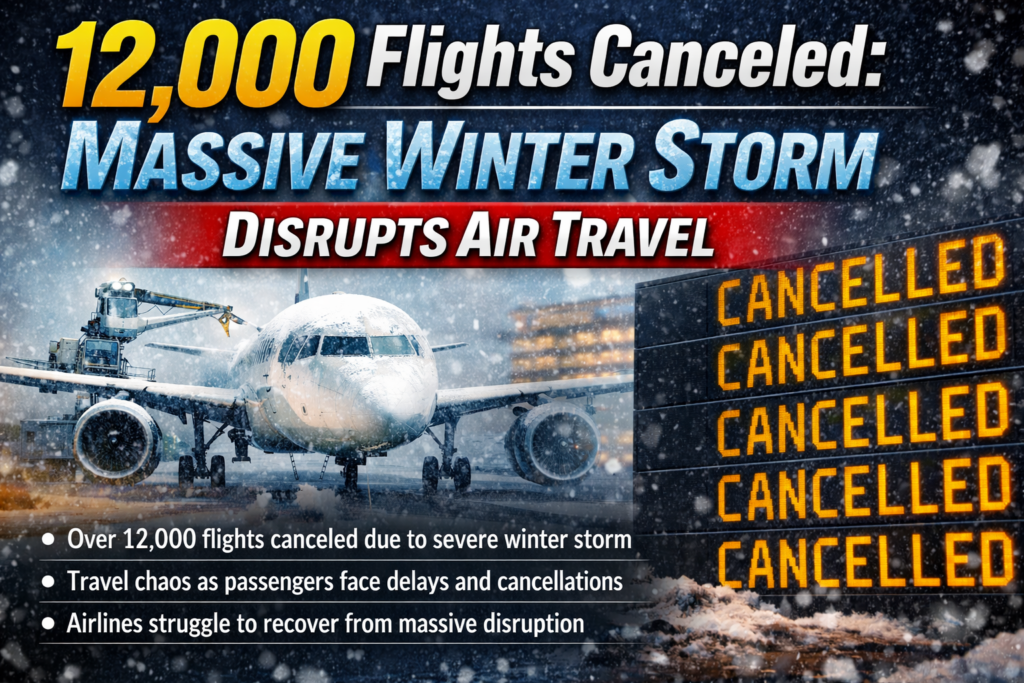
A large-scale winter storm forced airlines to cancel over 12,000 flights, triggering nationwide travel disruptions
Weather-driven airline shutdowns can create multi-day ripple effects across passengers, crews, cargo, and airport operations
The storm highlights ongoing challenges in airline resilience, infrastructure preparedness, and climate-driven travel risks
How a massive winter storm grounded thousands of planes, stranded travelers nationwide, and exposed the fragile reality of modern airline operations
A powerful winter storm sweeping across large portions of the United States has forced airlines to cancel more than 12,000 flights over the weekend, disrupting travel plans for millions of passengers and placing renewed attention on the vulnerability of the nation’s air travel system during extreme weather events. The storm, bringing heavy snow, ice, strong winds, and dangerous travel conditions, has impacted major airline hubs and regional airports alike, causing widespread delays, cancellations, and operational challenges.
The storm system moved across multiple regions, affecting airports in the Midwest, Northeast, Great Plains, and parts of the South. Airlines began proactively canceling flights days in advance as forecasts predicted hazardous runway conditions, reduced visibility, aircraft deicing delays, and staffing complications. Major carriers, including both legacy airlines and low-cost carriers, suspended operations at certain airports to ensure passenger and crew safety.
Flight cancellations surged as snowfall accumulated rapidly and ice made taxiways, runways, and airport roadways unsafe. Aircraft deicing procedures slowed operations, leading to cascading delays that forced airlines to ground planes and reroute crews. In many cases, incoming flights could not land, preventing outbound flights from departing due to aircraft and crew displacement.
Airlines typically cancel flights under these conditions to avoid stranding passengers in airports without available crews, aircraft, or safe operating windows. Severe winter weather can also impact air traffic control capacity, limit runway availability, and create congested airport conditions that make it difficult to maintain safe schedules. The cancellations reflect both immediate safety concerns and efforts to stabilize broader flight networks that become strained during weather disruptions.
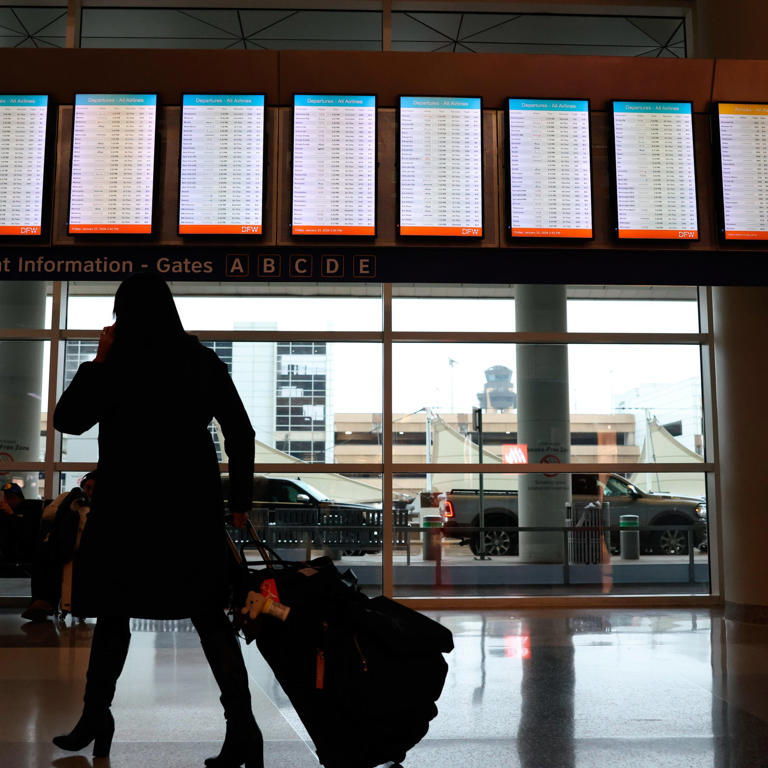
For travelers, the storm has caused significant inconvenience, including missed connections, extended airport stays, rebooking delays, and uncertainty about future travel plans. Many passengers reported spending hours in customer service lines or navigating airline apps to secure alternative flights. With aircraft seats filling quickly and limited rebooking availability, some travelers faced the prospect of waiting days before securing a replacement flight.
Airlines issued travel waivers allowing customers to change travel dates without penalty, although availability remained limited due to high demand and constrained schedules. Hotels near major airports filled quickly as travelers sought overnight accommodations. Rental car shortages also emerged in affected cities as stranded passengers attempted to continue their journeys by road.
The ripple effects of the storm extended beyond passenger travel. Cargo operations experienced delays, impacting supply chains for time-sensitive shipments such as medical supplies, e-commerce deliveries, and perishable goods. Crew members faced duty-time limitations and logistical challenges reaching repositioned aircraft, adding to airline recovery timelines.
Meteorologists warned that fluctuating temperatures could worsen conditions, especially as snow melts and refreezes into ice. Even after snowfall ends, airports often require additional time to clear runways, inspect aircraft, reposition crews, and resume normal schedules. As a result, disruptions can continue long after the storm passes.
The weekend travel disruption highlights ongoing challenges within the airline industry, including limited spare aircraft, tight crew scheduling, and highly interconnected flight networks that can quickly unravel when key hubs are disrupted. A single airport closure can trigger cancellations across dozens of cities due to aircraft rotation schedules and crew positioning requirements.
Winter storms historically remain one of the most disruptive weather events for U.S. aviation. Snow and ice can ground planes faster than thunderstorms or heavy rain, especially in regions less equipped for prolonged cold-weather operations. While northern airports often maintain robust snow-removal infrastructure, rapid storm intensity and freezing rain can still overwhelm even well-prepared facilities.
Airlines have increasingly leaned on predictive analytics and weather modeling to manage storm-related disruptions more efficiently. By canceling flights in advance, carriers aim to reduce airport congestion, limit aircraft displacement, and give travelers earlier notice. While preemptive cancellations can frustrate passengers, they are often designed to prevent more severe disruptions later.
Passenger safety remains the top priority during extreme weather conditions. Ice accumulation on aircraft surfaces poses significant risks if not properly treated. Wind gusts can make takeoffs and landings unsafe, and reduced visibility complicates navigation. Airlines and regulators enforce strict safety protocols that require halting operations when conditions fall below acceptable thresholds.
The storm also underscores the importance of travel preparedness during winter months. Experts recommend that travelers monitor weather forecasts closely, sign up for airline alerts, travel with carry-on essentials, and allow flexibility in itineraries when severe weather is possible. Travel insurance and refundable tickets can also help mitigate financial losses in the event of cancellations.
Looking ahead, airlines will likely face a multi-day recovery process. Restoring normal operations requires repositioning aircraft, reassigning crews, reaccommodating stranded passengers, and rebalancing flight schedules. Even a well-coordinated recovery effort can take several days, especially when weather disruptions span multiple regions.
As climate patterns continue to produce more intense and unpredictable storms, the aviation industry may face growing pressure to strengthen resilience strategies. Investments in airport snow-removal systems, enhanced weather forecasting, improved passenger communication, and more flexible flight networks could help reduce the impact of future disruptions.
For now, travelers affected by the weekend storm are urged to check flight status before heading to airports, maintain communication with airlines, and prepare for potential additional delays. While winter storms are an unavoidable part of seasonal travel, the scale of this disruption serves as a reminder of how quickly extreme weather can bring modern air travel to a halt.